Quick Navigation
- The Four Big Trout Lochs of the Orkney Mainland
- Smaller lochs worth a half-day
- Sea Trout — the Brig o' Waithe and the Stenness Run
- OTFA 2026 — Permits, Seasons, Size Limits
- What an Orkney Brown Trout Actually Looks Like
- Sea Angling — Charter Boats, Species, Records
- Charters running 2026
- Species and the records that go with them
- Shore Marks Worth a Tide
- Tackle, Tactics, and What to Pack
- Frequently Asked Questions
- Do I need a permit to fish in Orkney?
- When is the best time of year for trout fishing in Orkney?
- What is the biggest brown trout caught in Orkney?
- Can I rent a boat on the lochs?
- What sea fish can I catch around Orkney?
- Do I need to bring my own tackle?
- Sources & further reading
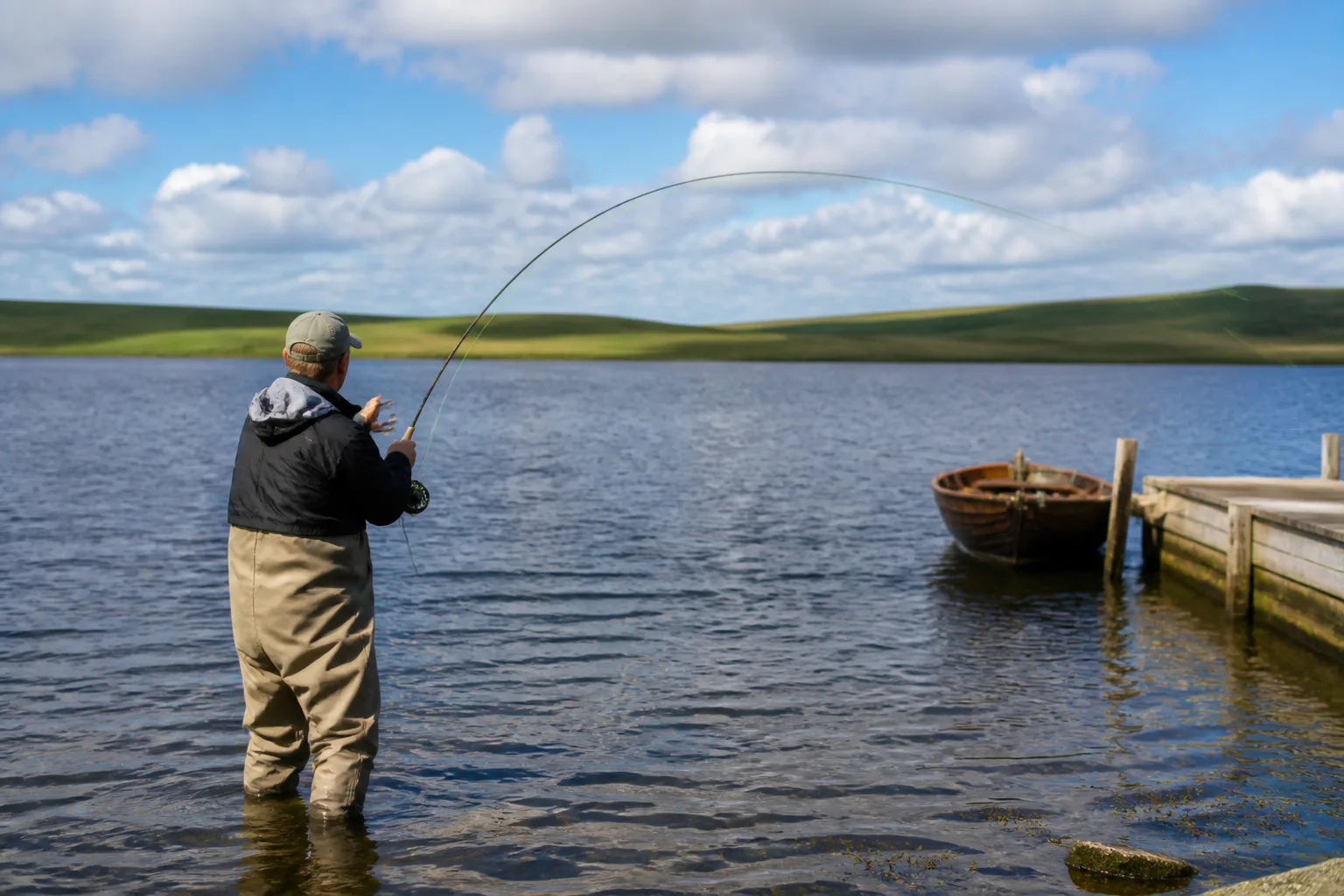
Fishing in Orkney is older than the Vikings and as good now as it has ever been. Wild brown trout in the four big freshwater lochs, sea trout running in from Hoy Sound through the Brig o' Waithe, cod and pollack and ling holding on the Scapa Flow wrecks — and a small angling community that runs everything on a tiny annual permit, takes 10-inch fish home, and puts the rest back. This is the 2026 guide: the lochs, the seasons, the boats, and what you actually need to fish here.
The Four Big Trout Lochs of the Orkney Mainland
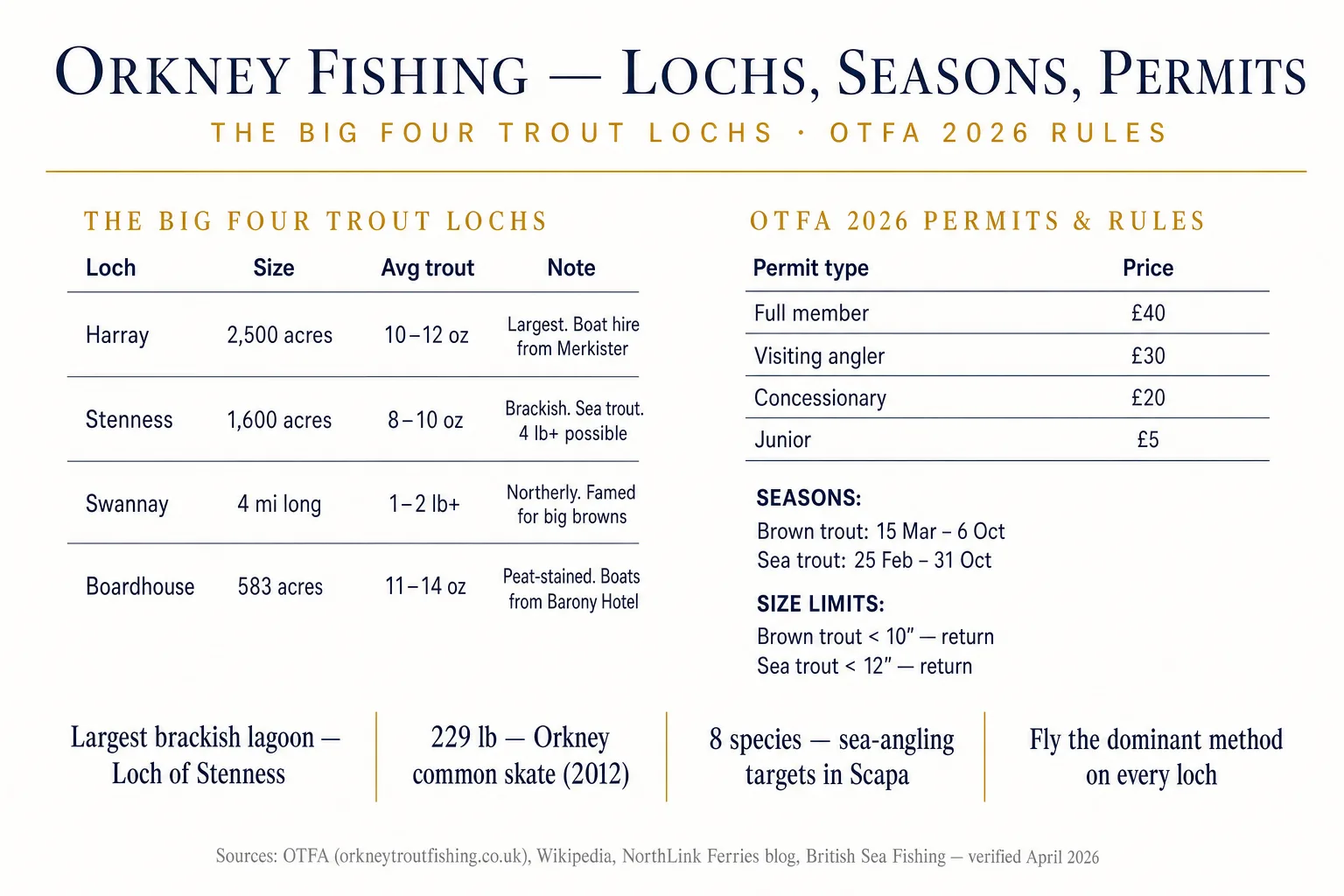
Most Orkney trout fishing happens on a handful of large, shallow, fertile lochs on the West Mainland. They're all wild fisheries — no stocked rainbows here — and each has its own character.
Smaller lochs worth a half-day
- Hundland — skerry-strewn brown-water loch, free-rising fish, demanding from a boat.
- Kirbister — small, shallow, full of free-rising small trout. The OTFA flag this as "splendid for those new to the sport" and juniors.
- Wasbister (Rousay), Tankerness, Sabiston — minor OTFA waters with thinner stocks and quieter days. Worth it if you want a loch entirely to yourself.
Sea Trout — the Brig o' Waithe and the Stenness Run
Sea trout get their own paragraph because they're a different fish on a different timetable. In Orkney they run into the Loch of Stenness from the open sea via the Brig o' Waithe — the old stone causeway where the loch meets Hoy Sound. The Norse name says it plainly: vað, the wading place. Best fishing is August and September on the spawning run, with saltwater fly tackle, working the shallows where the fishes' backs barely cover.
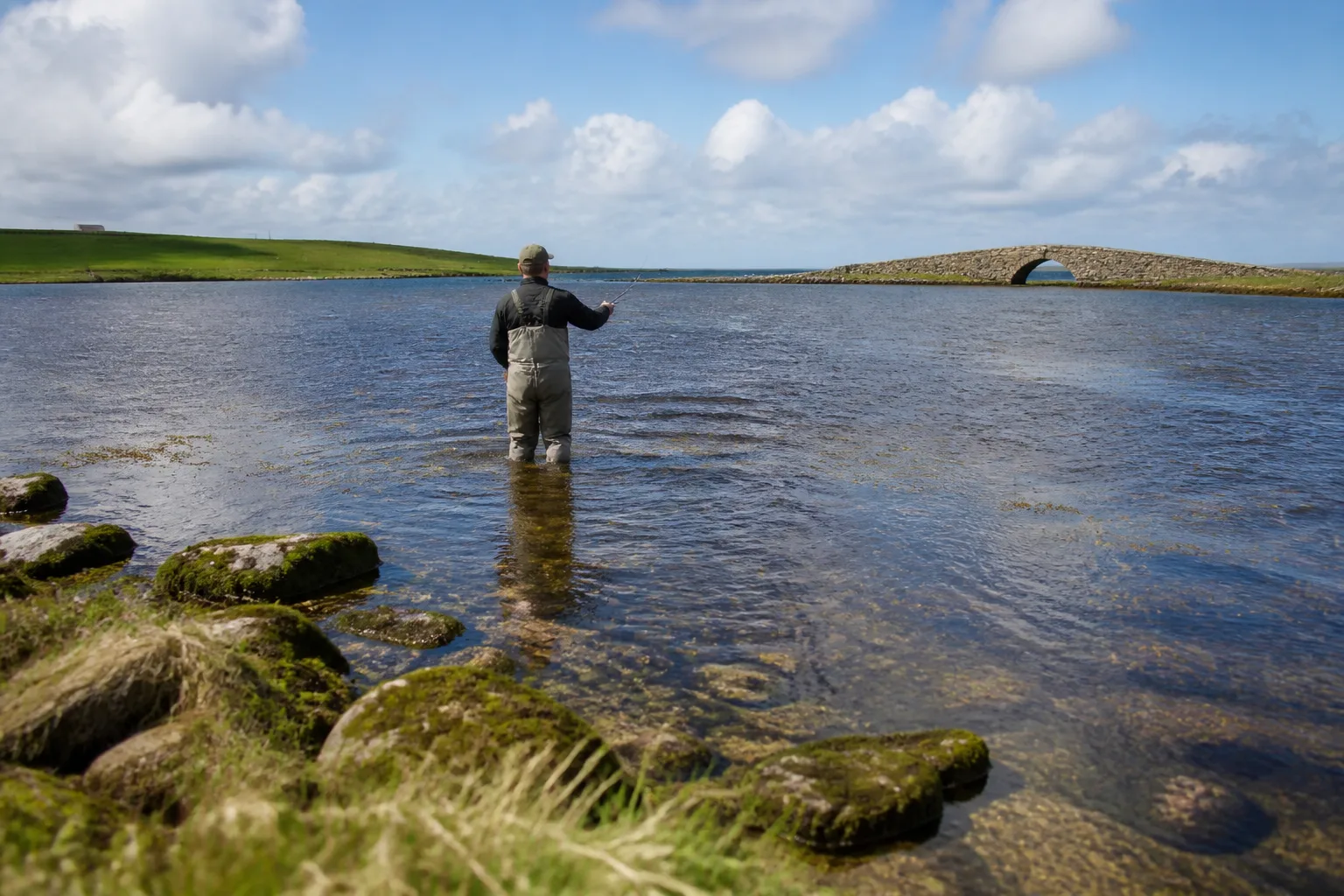
Other sheltered marks worth knowing: Bay of Ireland, Waulkmill Bay, Bay of Firth, Inganess, Deer Sound, the head of Scapa, plus Mill Bay and Pegal Bay on Hoy. Sea-trout tactics differ from brown-trout — fewer, bigger flies, more retrieval, more time spent reading the tide.
Planning your trip
Staying overnight? Compare live prices and availability across Orkney on Booking.com.
Compare Orkney staysWe earn a small commission if you book through this link, at no extra cost to you.
OTFA 2026 — Permits, Seasons, Size Limits
Orkney's lochs are managed by the Orkney Trout Fishing Association (OTFA, founded long before you'd think), and you need a permit to fish almost anywhere. The good news: it's the cheapest serious wild trout fishery in Britain.
- Full member £40 · Visiting angler £30 · Concessionary £20 · Junior £5 — annual rates. Sold cash-only at William Shearer in Kirkwall and Wisharts in Stromness. Day permits are available from the same shops.
- Brown-trout season: 15 March – 6 October. The real fishing starts mid-April once the water warms.
- Sea-trout season: 25 February – 31 October — longer because the fish are running into the sea-influenced lochs through the cooler months.
- Size limits: any brown trout under 10 inches and any sea trout under 12 inches must be returned. Most local anglers go further and release everything except a single supper fish.
- The OTFA website (orkneytroutfishing.co.uk) lists the boat-hire numbers, the day-permit shops, and the smaller waters not covered above.
What an Orkney Brown Trout Actually Looks Like
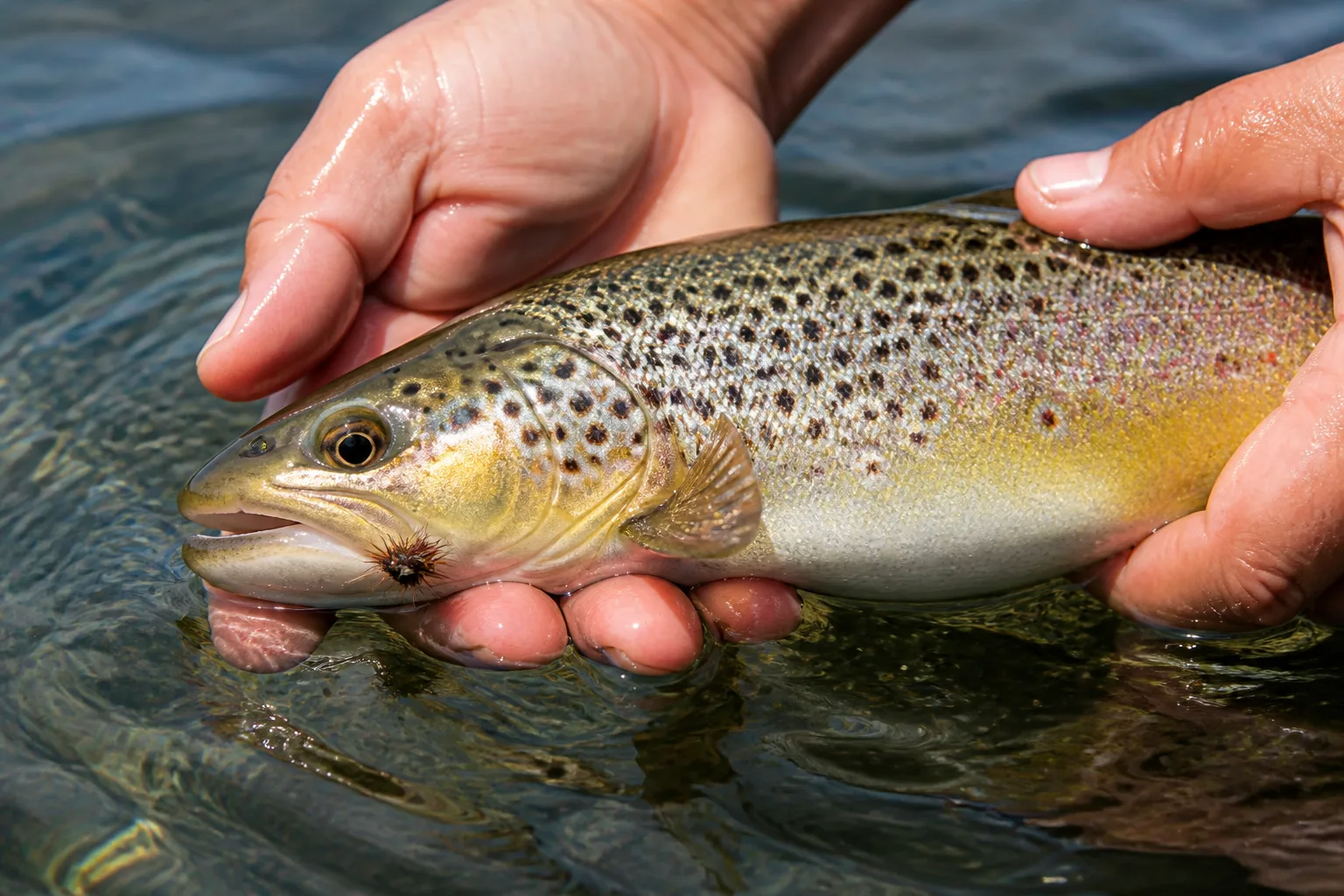
Orkney browns are not the silver, slim, hatchery-shaped fish that dominate stocked stillwaters down south. They're squat, broad-shouldered, and heavily marked: deep golden-bronze flanks with bold black and red spots, bright white bellies, intact fins. They fight hard for their size — a 1 lb Orkney fish gives more than a 2 lb stocked rainbow. Handle them wet, keep them in the water for the photo, and let them go for the next angler.
Sea Angling — Charter Boats, Species, Records
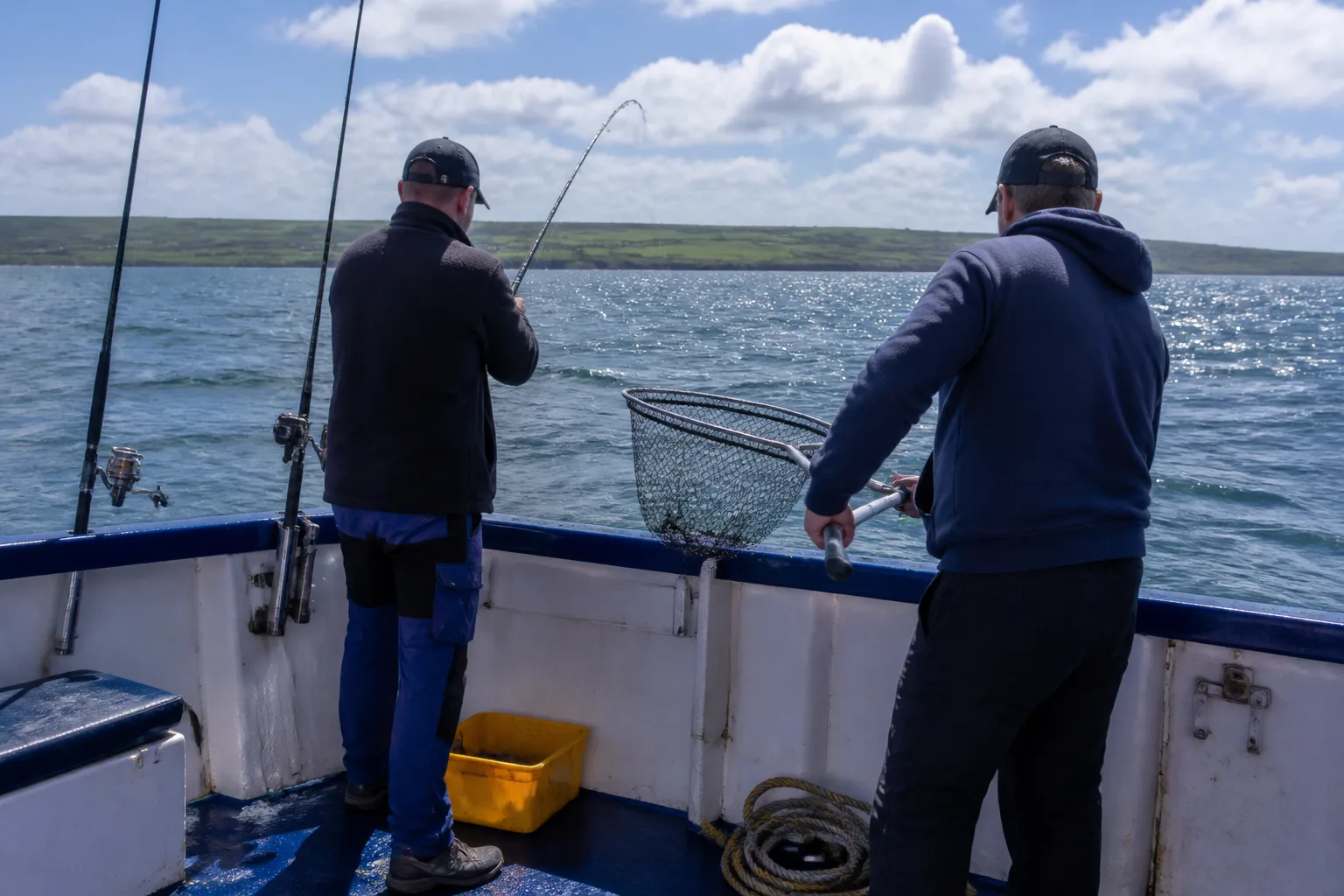
Once you turn from the lochs to the coast, the species list expands fast. Scapa Flow holds large cod, ling and coalfish around the scuttled German fleet wrecks; the outer firths produce pollack, mackerel, plaice, and the occasional very large fish indeed.
Charters running 2026
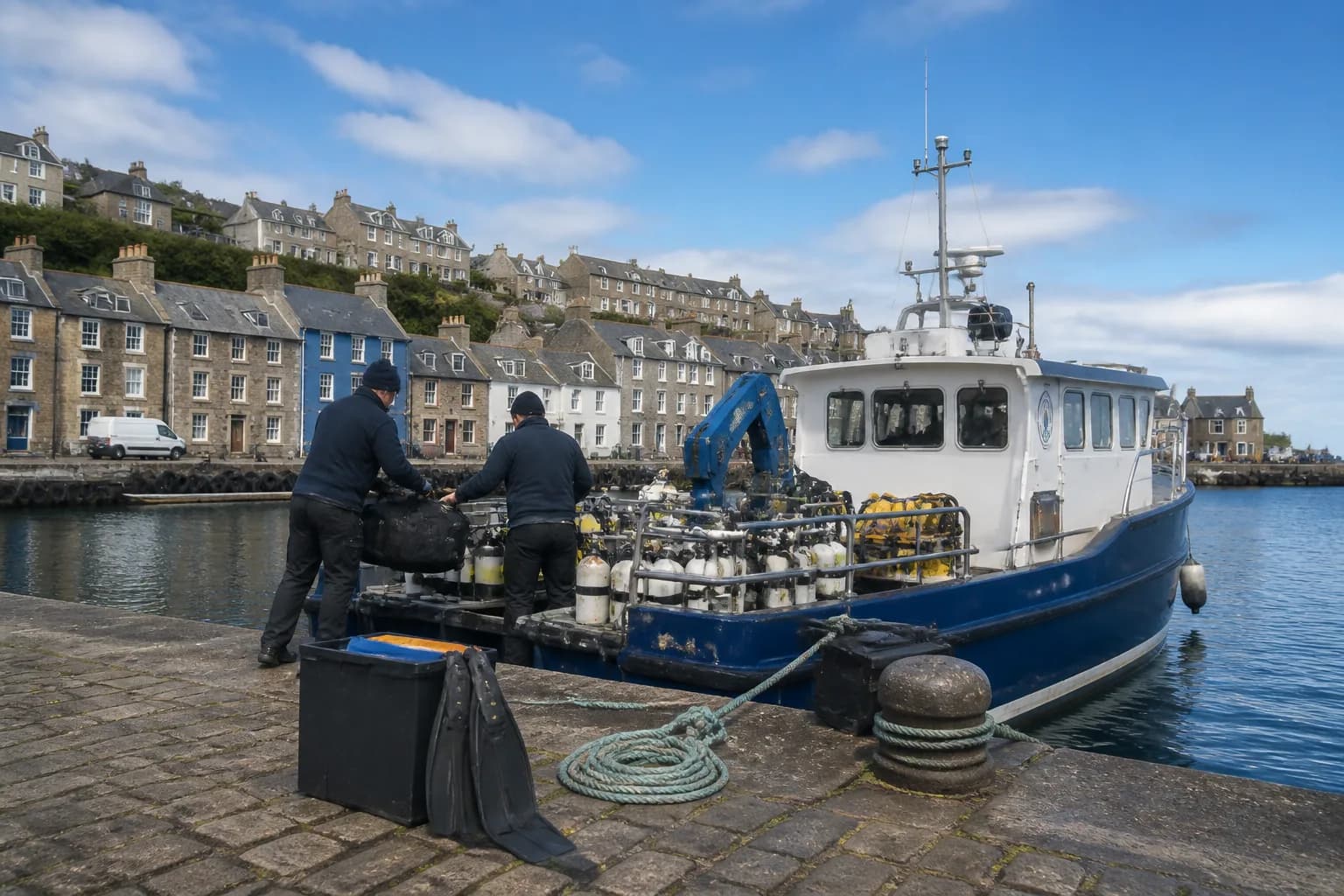
- Orkney Boat Charter — Kirkwall. Day Angler 21 (Scapa Protector), max 3 anglers, around £60 per person, year-round, 07908 483468.
- Orkney Islands Sea Angling Association (OISAA) — runs the club boat Welcome Home out of Kirkwall. Visitors can join.
- Out West Charters (Stromness) — sea angling and sightseeing.
- LV Charters — sea taxi and angling charter, useful for putting you on the small-island marks.
- Pomona Prefect (K34) — Stronsay-based vessel, sport diving and angling.
- Brian Foreman (trout guide, freshwater) — boat plus ghillie £140 single / £160 two anglers, eight-hour day.
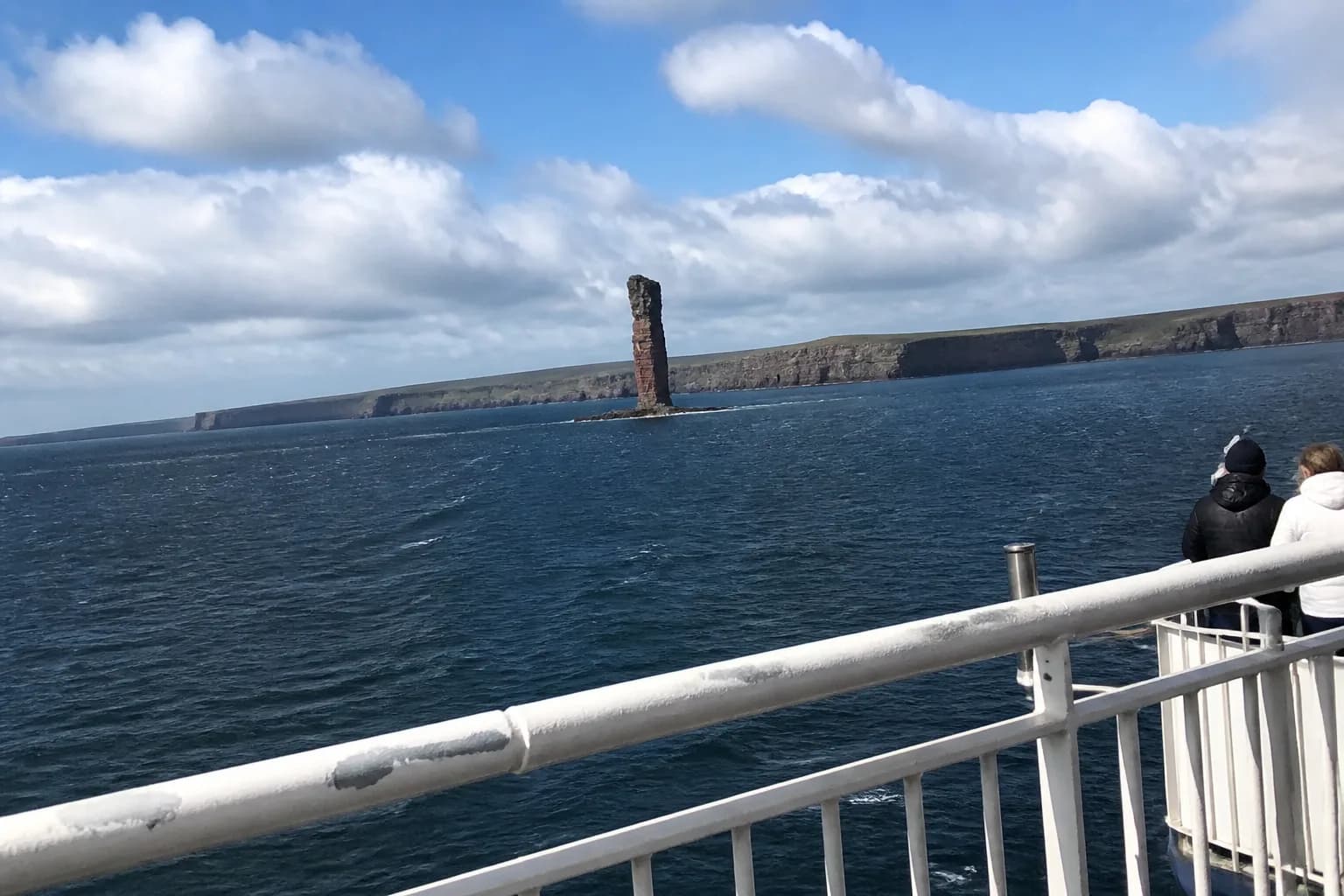
For the wider boat picture — wildlife trips, ferry crossings, the Old Man of Hoy from sea — read our guide to Orkney boat trips; many of the same skippers run angling and wildlife days on different weeks.
Species and the records that go with them
- Cod — Scapa Flow wreck fishing, year-round but best March–November.
- Pollack & coalfish — over the wrecks and on lures from rocky marks.
- Ling — deeper marks, big specimens.
- Mackerel & haddock — peak July–August on feathers.
- Plaice — Skaill Beach and other sandy strands.
- Common skate — resident inside Scapa Flow in 100 ft of water or less. Roy Anderson's 2012 Orkney boat-caught fish was estimated at 229 lb. Common skate are protected; tagged and released only.
- Conger and tope — for the dedicated specialist with the right rig.
Scapa Flow itself sits at the heart of all this — the geography of the harbour, the wrecks underneath, the wildlife that follows the bait fish. Our complete Scapa Flow guide sets the wider context.
Shore Marks Worth a Tide
You don't need a boat to catch fish in Orkney. The shoreline is honeycombed with rock platforms and sandy bays that produce throughout the season:
- Yesnaby (south to Garthna Geo) — long sandstone rock platform, pollack on lures, the best summer evenings of the year.
- Brough of Birsay — deep clear water rock stances at the foot of the lighthouse cliff. Tides matter; check the causeway.
- Skaill Beach — cod, pollack, saithe, plaice from the surf. Park at the Skara Brae visitor centre, walk down.
- Hoxa Head (South Ronaldsay) — coalfish, pollack, wrasse, mackerel on feathers. The cliff platform looks across the southern Scapa entrances.
- Deer Sound & Mull Head — sheltered bays with sea-trout possibilities on the right tide.
Tackle, Tactics, and What to Pack
- Loch tackle: 9–10 ft #6 fly rod, floating and intermediate lines, leaders to 6 lb. Classic team-of-three Orkney wets — Bibio, Soldier Palmer, Black Pennell, Zulu — early. Hoppers and sedges late summer. Dapping rods are still in active use locally; floss line and a long pole work the drift.
- Sea tackle: charter boats supply rods if needed, but bring your own pirks, feathers and shads if you have a preference.
- Wading: chest waders are useful at Stenness and the Brig o' Waithe; thigh boots are enough on Harray and Boardhouse.
- Weather: a wind from any direction is normal. A flat-calm day is rare and unproductive. Pack layers and waterproofs, sea temperatures are around 13 °C even in summer.
- Where to stay: for loch fishing on the Mainland, base yourself near Harray itself , or find a place to stay in Stromness — both put you within 15 minutes of every loch in this guide.
Frequently Asked Questions
Do I need a permit to fish in Orkney?
Yes — almost everywhere. The Orkney Trout Fishing Association sells annual permits at £30 for visiting anglers in 2026, plus day permits at the tackle shops in Kirkwall and Stromness. The only exception is sea fishing from the open coast, which is unregulated.
When is the best time of year for trout fishing in Orkney?
Mid-April to mid-June is the prime window — the lochs are warming, the trout are feeding hard after winter, and daylight runs to 18+ hours. Late August and September are second best, especially for sea trout in the Stenness system. The official brown-trout season runs from 15 March to 6 October.
What is the biggest brown trout caught in Orkney?
Specimen Orkney browns regularly run to 2 lb, with 4 lb-plus "yellowbellies" possible from the Loch of Stenness. The lochs aren't a venue for double-figure fish — they're a venue for averaging plenty of healthy 12–14 oz wild trout in genuine wilderness conditions.
Can I rent a boat on the lochs?
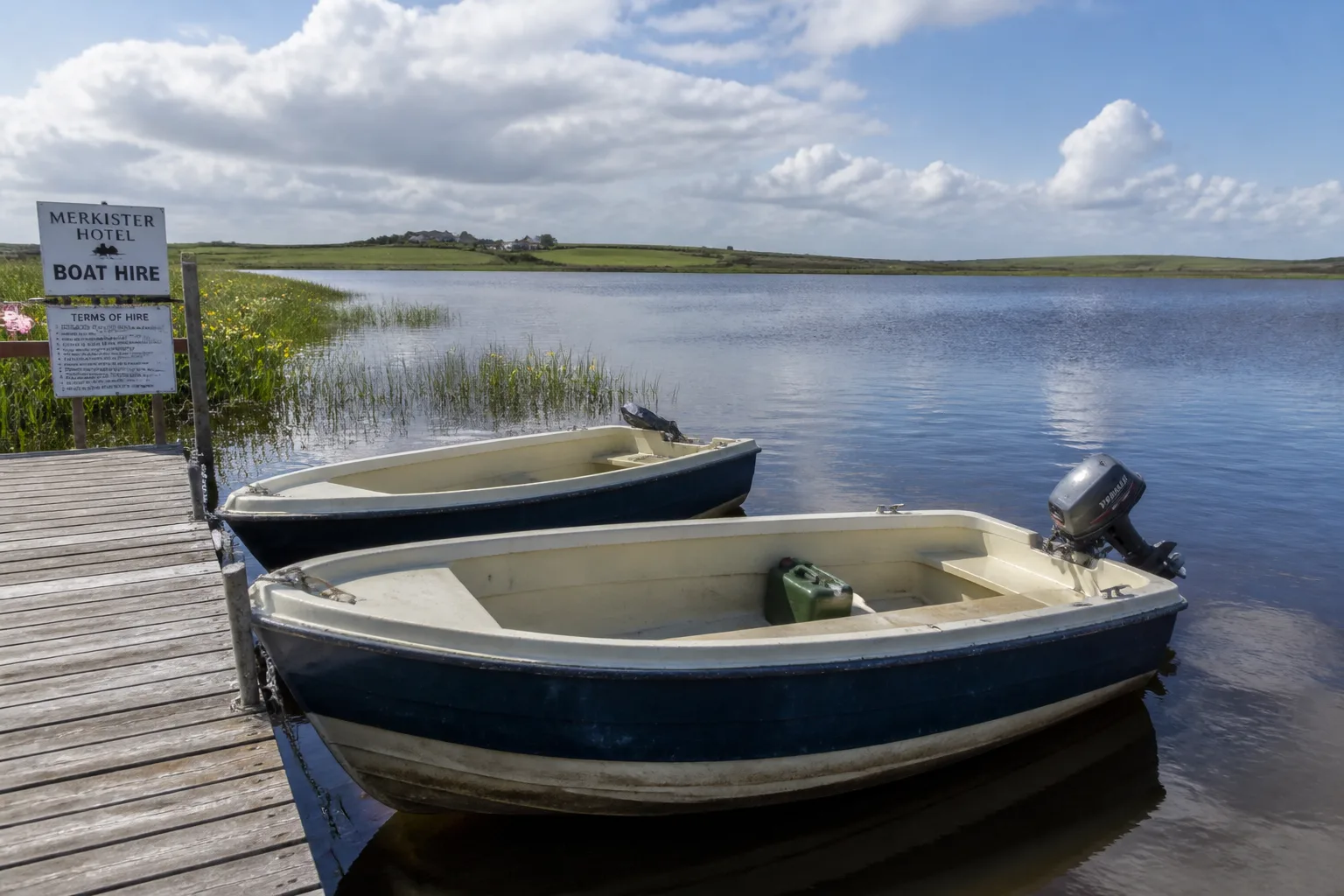
Yes — but only on three of the four big lochs. The Merkister Hotel runs the boat hire on Harray (£50–£75/day depending on outboard), the Barony Hotel handles Boardhouse, and Mr R Breck takes bookings on Swannay. Stenness also has boat hire available — contact the Stenness Hotel (01856 850449) for details.
What sea fish can I catch around Orkney?
Cod, pollack, ling, coalfish, mackerel, haddock, plaice, conger, common skate (tag and release), wrasse, and tope. The Scapa Flow wrecks hold bigger cod and ling than the open coast. For seasonal context on what wildlife you'll see while fishing offshore, see our Orkney marine life calendar — porpoises and seals are common companions on a charter day.
Do I need to bring my own tackle?
For the lochs, yes — bring fly tackle, dry flies, and a floating line at minimum. For sea-angling charters, most operators supply rods, reels and basic terminal tackle as part of the trip price; ask when booking.
Pick accommodation in Kirkwall (or anywhere on the West Mainland) and you can be at Merkister jetty for first light, fishing Harray by 5am, and back at base in time for breakfast. That's not optimistic — that's how Orkney anglers actually use their summer.
Sources & further reading
The facts in this guide were checked against the following authoritative sources.
- Orkney Trout Fishing Association — The Lochs — permits, loch details, boat hire
- Bathymetrical Survey of the Fresh-Water Lochs of Scotland (Murray & Pullar, 1910) — Lochs of Orkney, vol. II pt II pp. 224–227 — loch depths: Harray max 14 ft (mean 9 ft), Stenness 17 ft, Swannay 16 ft, Boardhouse 9 ft
- Orkney Ferries — Timetables — inter-island fishing access
- Orkney.com — Official Orkney Visitor Guide — sea angling context