
About Stromness
A guide to staying in Stromness
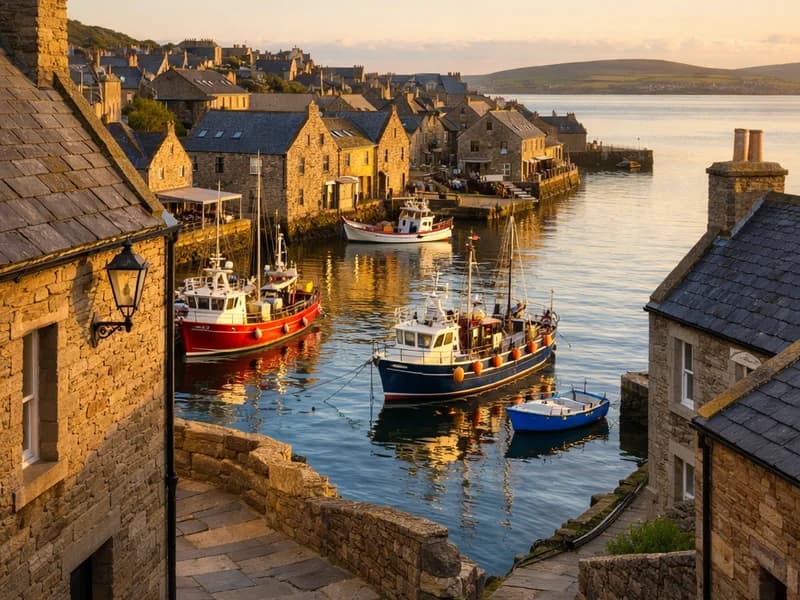
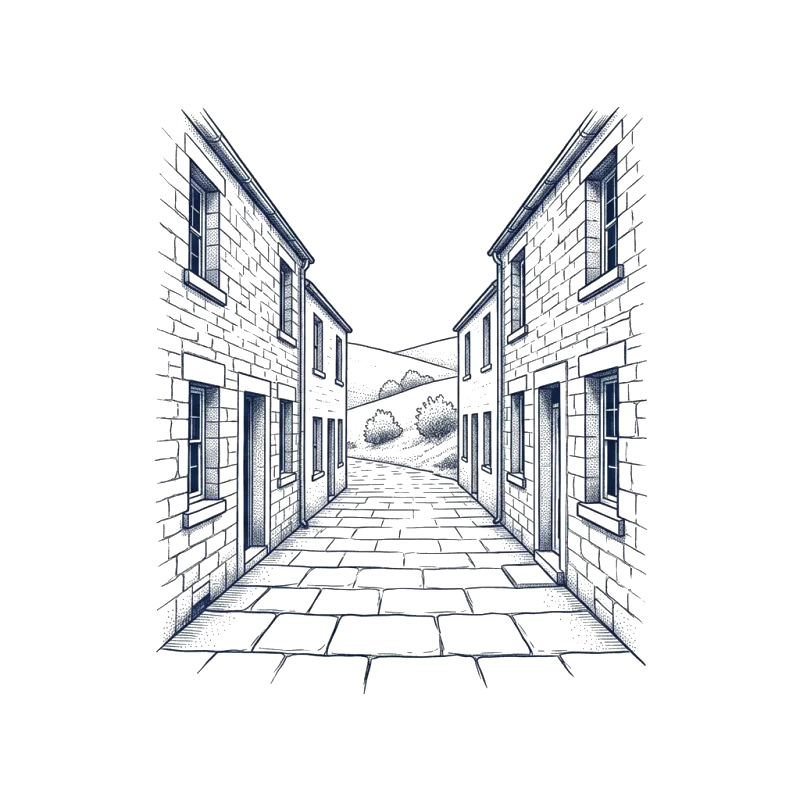
Stromness is Orkney's second town and, for many visitors, the more atmospheric of the two. It is built on a single curving flagstone street that runs for about a mile along the harbour, with stone houses dropping straight into the water on one side and rising up the slope of Brinkie's Brae on the other. The shops along it are almost all independent — galleries, craft shops, a dive shop and a long-standing bookshop, with a Co-op for the weekly shop — and the street is so narrow in places that two cars cannot pass, so most people walk. The town has about 1,700 residents at the 2022 census and a strong artistic identity, anchored by the Pier Arts Centre and a long line of writers, painters and musicians who have made it their base.
For travellers from mainland Scotland, Stromness is the obvious arrival point: the NorthLink ferry from Scrabster, just outside Thurso on the north Caithness coast, docks right in the middle of town. The crossing takes about 90 minutes across the Pentland Firth, often with sightings of porpoises, gannets, and the cliffs of Hoy on your right as you come in. From the ferry terminal you can step off the boat and be at your accommodation in under five minutes if you have booked in town.
Stromness is also the gateway to the West Mainland and to Hoy. A small passenger ferry leaves the pier daily for Moaness on Hoy, putting you within walking range of the Old Man of Hoy, Rackwick Bay and the Dwarfie Stane. By car, you are 15 minutes from Skara Brae, the Standing Stones of Stenness, the Ring of Brodgar and Maeshowe — the four sites that make up the Heart of Neolithic Orkney UNESCO World Heritage Site.
Accommodation here leans towards smaller, self-catering properties — harbourfront apartments, holiday homes and cottages — alongside three hotels and one long-established inn. The town fills up quickly in July and August. Late spring and early autumn are the easiest months to find a sea-view room and to walk the main street without sharing it with a tour group.
A quiet local tip: head up to the Brinkie's Brae viewpoint at the top of the town for one of the best free views in Orkney, especially at sunset over Hoy.