Quick Navigation
- What's the Weather in Orkney Really Like?
- Orkney Weather Month by Month — Temperature, Rain and Daylight
- The Wind — Orkney's Defining Weather Story
- Microclimate quirks worth knowing
- Simmer Dim, Six-Hour Days and Northern Lights
- Northern Lights — when, where, what to expect
- Storms, Ferries and How Often Weather Actually Breaks Plans
- What to Pack — A Local's Honest Take
- Frequently Asked Questions
- What is the weather like in Orkney?
- What is the best month to visit Orkney for good weather?
- Does it snow in Orkney?
- How windy is Orkney?
- When can I see the Northern Lights in Orkney?
- Sources & further reading
Orkney's weather has a reputation. It is not entirely fair: the islands are warmer in winter than most of inland Scotland, drier than Glasgow in summer, and lit for eighteen hours a day in midsummer. The reputation is for the wind. That part is fair. Here's the honest picture — month by month, with real numbers — and what it means for what you pack and when you go.
What's the Weather in Orkney Really Like?
Orkney has a cool temperate maritime climate — heavily moderated by the Norwegian Current branch of the Gulf Stream. Annual mean temperature is around 8 °C; the warmest month (August) averages a high of 16 °C, the coldest (January) a low of 2 °C. Hard frosts are rare; snow lies briefly when it falls, and almost never on the coast.
Annual rainfall is about 1,050 mm spread across 191 rain days — meaning Orkney doesn't get more rain than the Lake District or West Highlands; it just spreads it across more days, in shorter showers. The defining feature isn't the rain. It's the wind.
Latitude (59° N) shapes everything else: over 18 hours of daylight at midsummer, just 6 hours in late December, and a Northern Lights window from September through March.
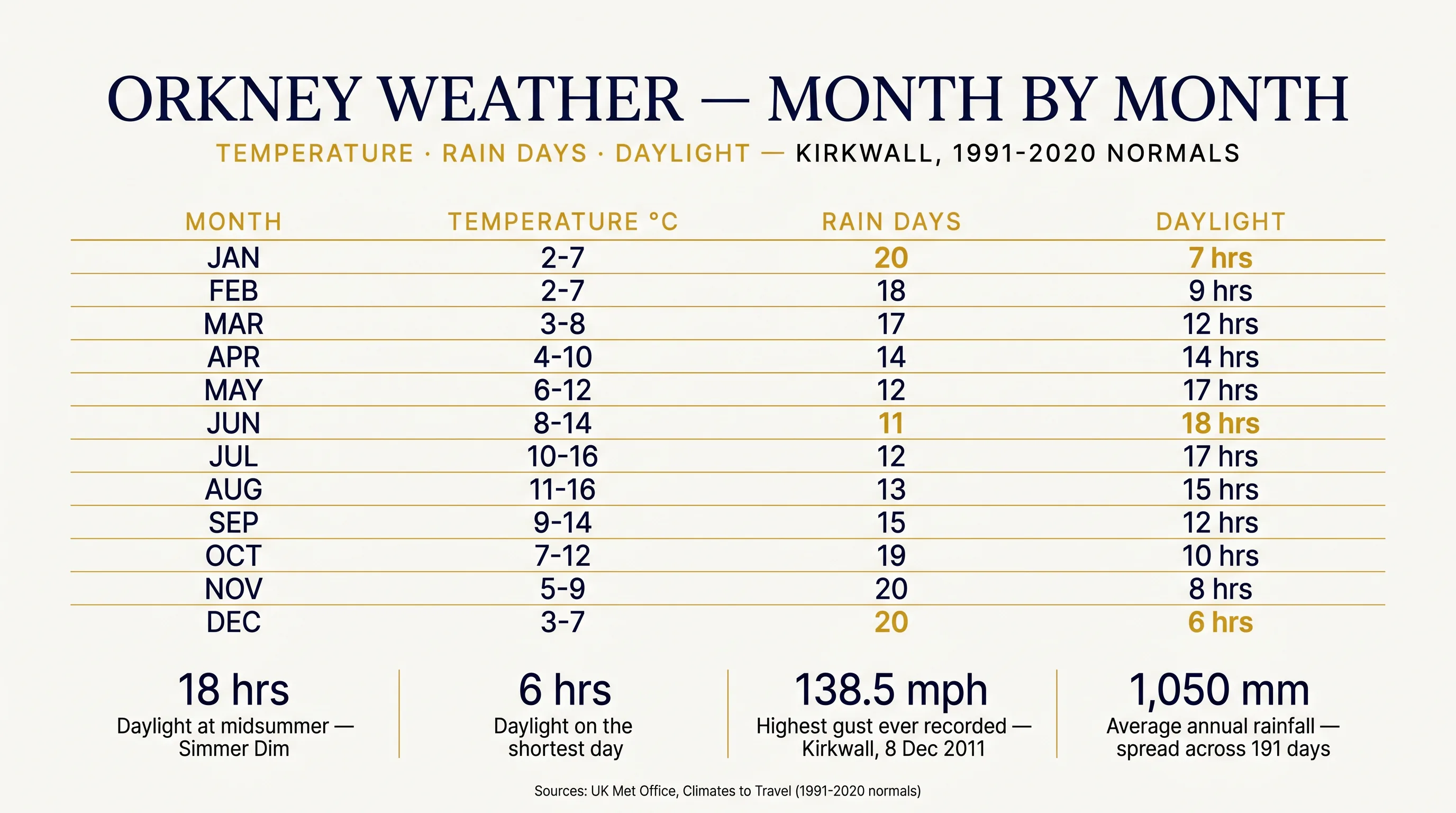
Orkney Weather Month by Month — Temperature, Rain and Daylight
| Month | Temp (°C) | Rainy days | Daylight |
|---|---|---|---|
| January | 2–7 | 20 | 7 h |
| February | 2–7 | 18 | 9 h |
| March | 3–8 | 17 | 12 h |
| April | 4–10 | 14 | 14 h |
| May | 6–12 | 12 | 17 h |
| June | 8–14 | 11 | 18 h |
| July | 10–16 | 12 | 17 h |
| August | 11–16 | 13 | 15 h |
| September | 9–14 | 15 | 12 h |
| October | 7–12 | 19 | 10 h |
| November | 4–9 | 20 | 8 h |
| December | 3–7 | 20 | 6 h |
The numbers below are Met Office climate normals for Kirkwall (1991–2020). Coastal sites are within a degree of these; Hoy and the higher ground of the West Mainland are wetter and windier.
For a deeper week-by-week breakdown, the first-timer's planning guide walks through which months suit which types of trip — birdwatching, walking, archaeology, family.
Planning your trip
Staying overnight? Compare live prices and availability across Orkney on Booking.com.
Compare Orkney staysWe earn a small commission if you book through this link, at no extra cost to you.
The Wind — Orkney's Defining Weather Story
Three things explain why Orkney is one of the windiest inhabited places in the UK:
- Position. 59° N, square in the North Atlantic storm track. Depressions roll off Iceland and Greenland on a near-permanent conveyor.
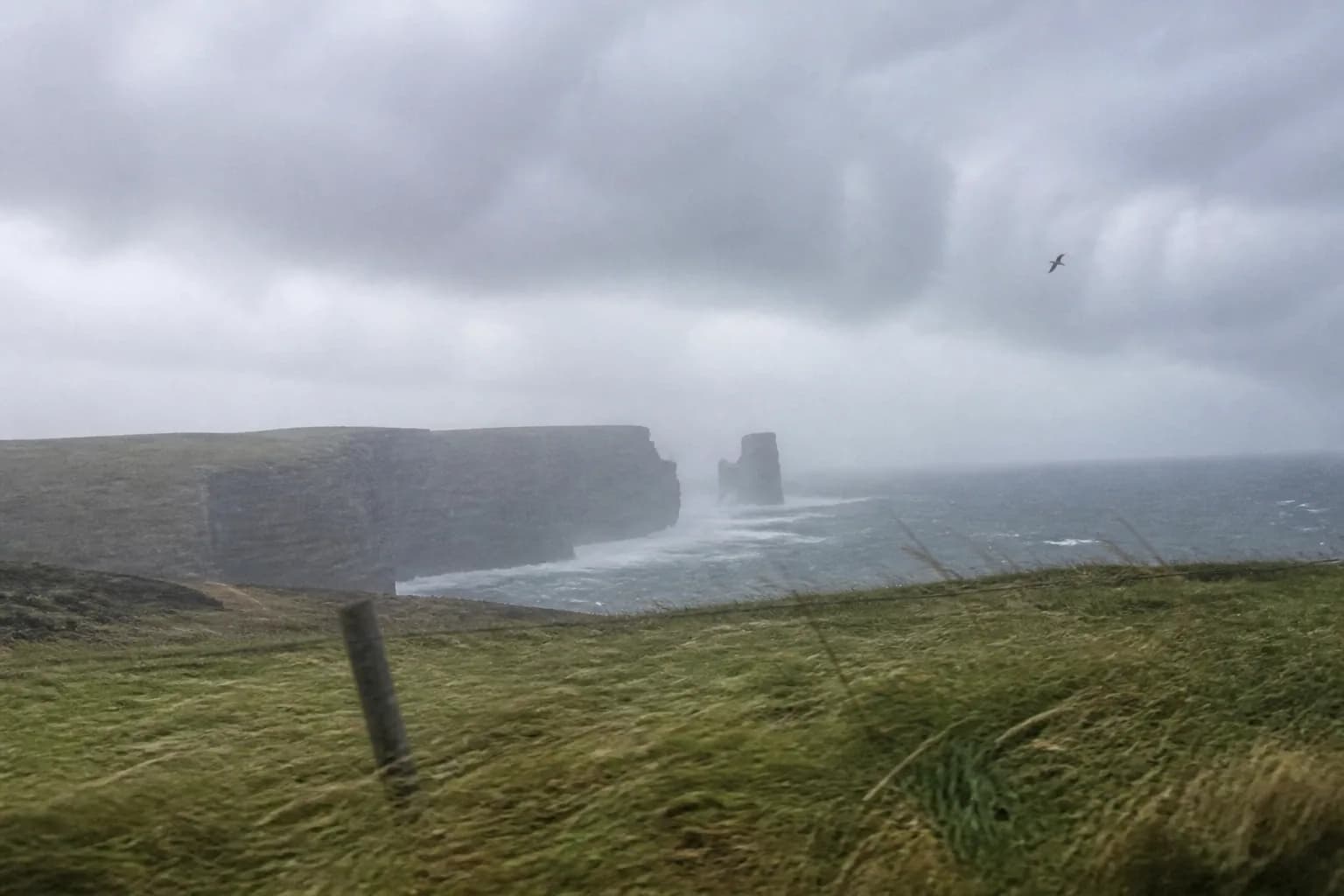
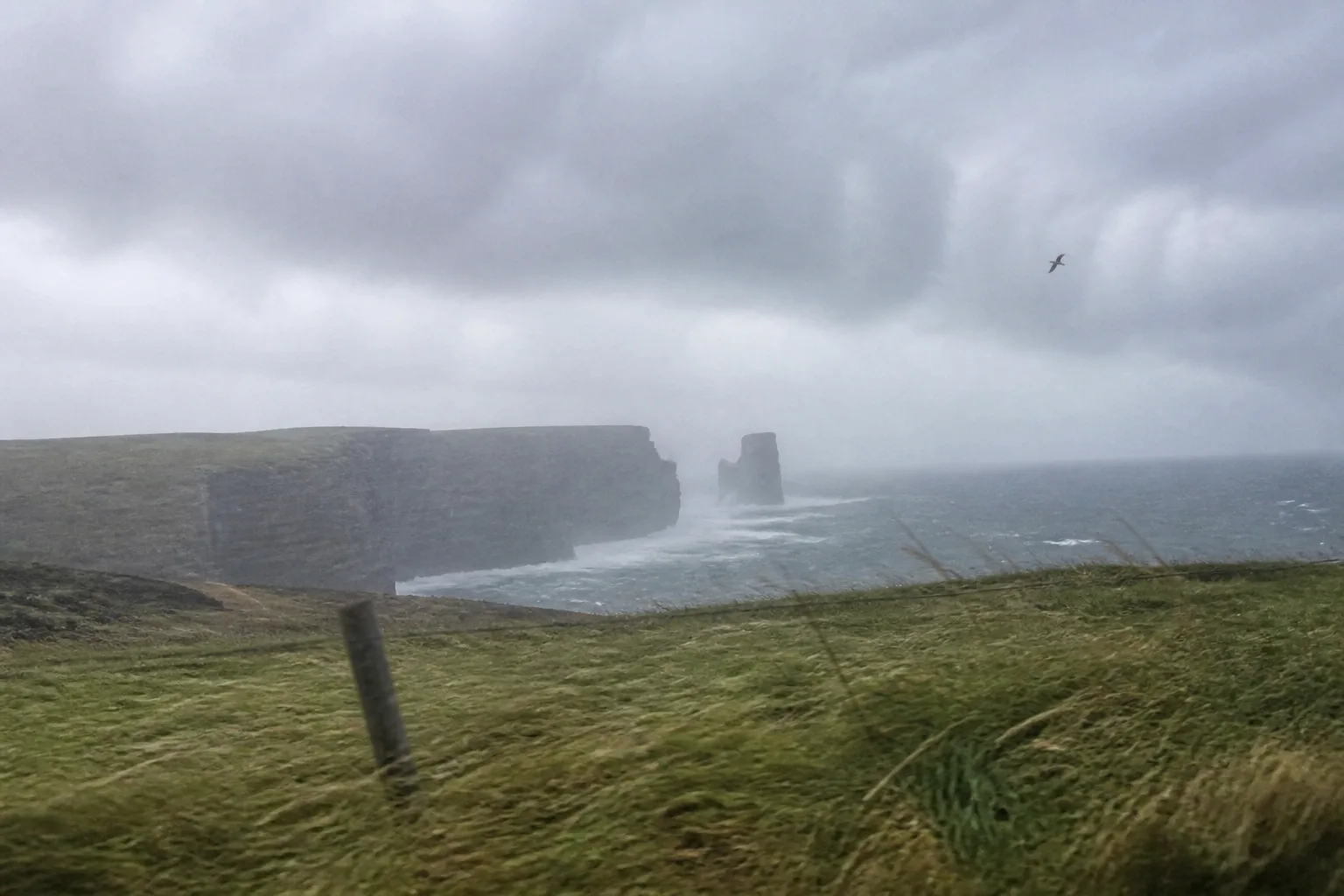
- Topography. Mainland Orkney is low, rolling and treeless. Nothing slows the surface wind down.
- History. The islands were largely deforested in the Neolithic. Salt-laden gales have stopped trees re-establishing in any quantity ever since — a self-reinforcing loop.
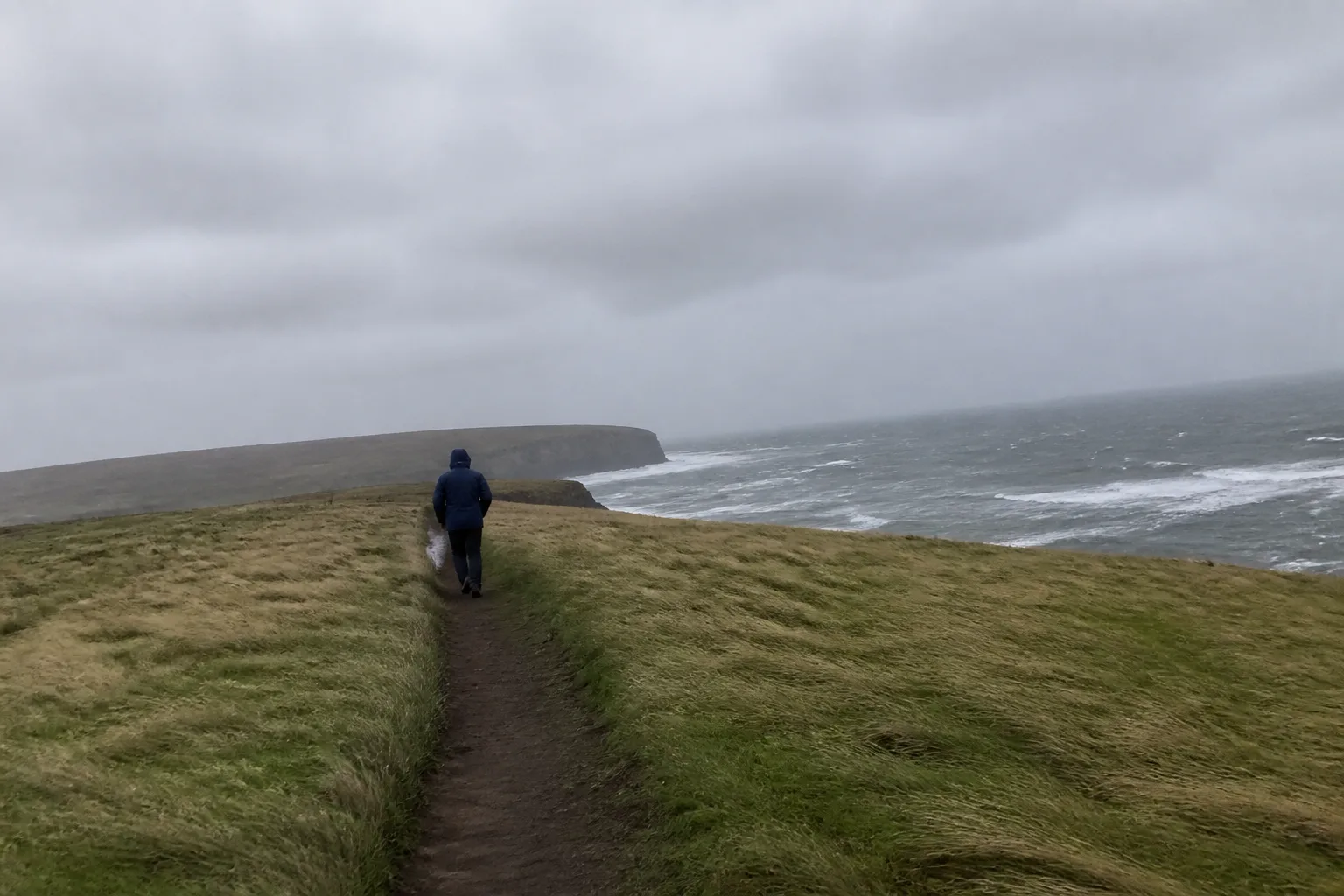
What this means in practice: locals don't bother with umbrellas — they break, and you look ridiculous. A proper waterproof shell with a good hood, plus waterproof trousers if you're walking, does ten times the work. Hat and gloves from October to April even on "warm" days, because wind chill is the active ingredient.
Microclimate quirks worth knowing
- Hoy is considerably wetter than Mainland — Ward Hill and the Cuilags force orographic uplift, pushing Hoy's annual rainfall to about 1,500 mm against the 1,050 mm recorded at Kirkwall.
- West Mainland is wetter than East. Stromness and the Birsay coast catch the first hit of Atlantic fronts; Kirkwall sits in a partial rain-shadow, so if you are picking a base on weather alone, the guest houses and B&Bs in Kirkwall put you on the drier side of Mainland.
- Thunder is almost unknown. Cold sea suppresses convection — Orkney averages fewer than three thunder-days a year.
- Frost is rare on the coast. The Norwegian Current keeps inshore sea temperatures around 7–8 °C even in February.
Simmer Dim, Six-Hour Days and Northern Lights
If wind is Orkney's defining weather feature, light is its defining seasonal feature. The latitude does extreme things on both ends of the year.
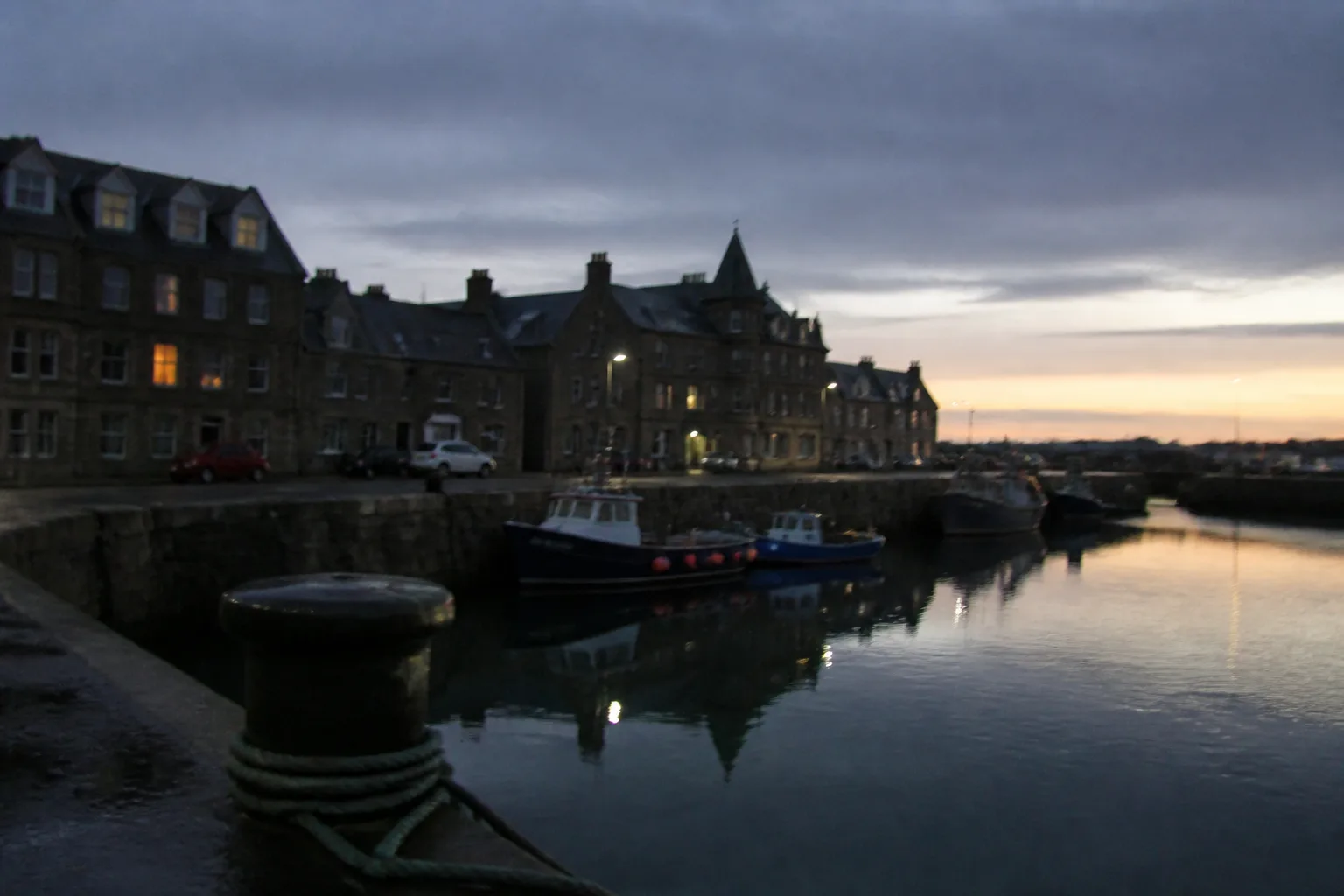
- Midsummer "Simmer Dim". Around the solstice (20–22 June), the sun barely sets. Twilight runs continuously from sunset (~22:30) to sunrise (~04:00). It is genuinely possible to read a book outside at midnight, and many locals are out walking, fishing or barbecuing well past 11pm in June.
- Shortest day. Around 21–22 December, sunrise is at 09:05 and sunset 15:16 — about six hours of daylight, with low-angle sun even at noon. The compensation is the Christmas-Day Ba' game in Kirkwall, the Yule traditions, and the Northern Lights season at peak.
- Equinoxes. Around 12 hours of light, like everywhere else — but the equinox storms can be Orkney's wildest weather of the year.
Northern Lights — when, where, what to expect
Orkney sits at one of the best UK latitudes for aurora outside Shetland. The lights are visible September through March, with peak window November through February — though many locals favour February and March, when nights are still long but the worst of winter weather is easing.
- What you need: Kp 5 or higher (geomagnetic storm class), a clear night, and a dark spot facing north or northwest.
- Best dark-sky spots: Brough of Birsay (the wide northern horizon), Sands of Evie, Wideford Hill above Kirkwall, Mull Head at Deerness, the north coast of Hoy. Stone-circle sites (Brodgar, Stenness) are atmospheric for night photography.
- Real-time alerts: the Orkney Aurora Group on Facebook (~30,000 members) is the de-facto local hotline. AuroraWatch UK and the Glendale app are useful supplements.
Storms, Ferries and How Often Weather Actually Breaks Plans
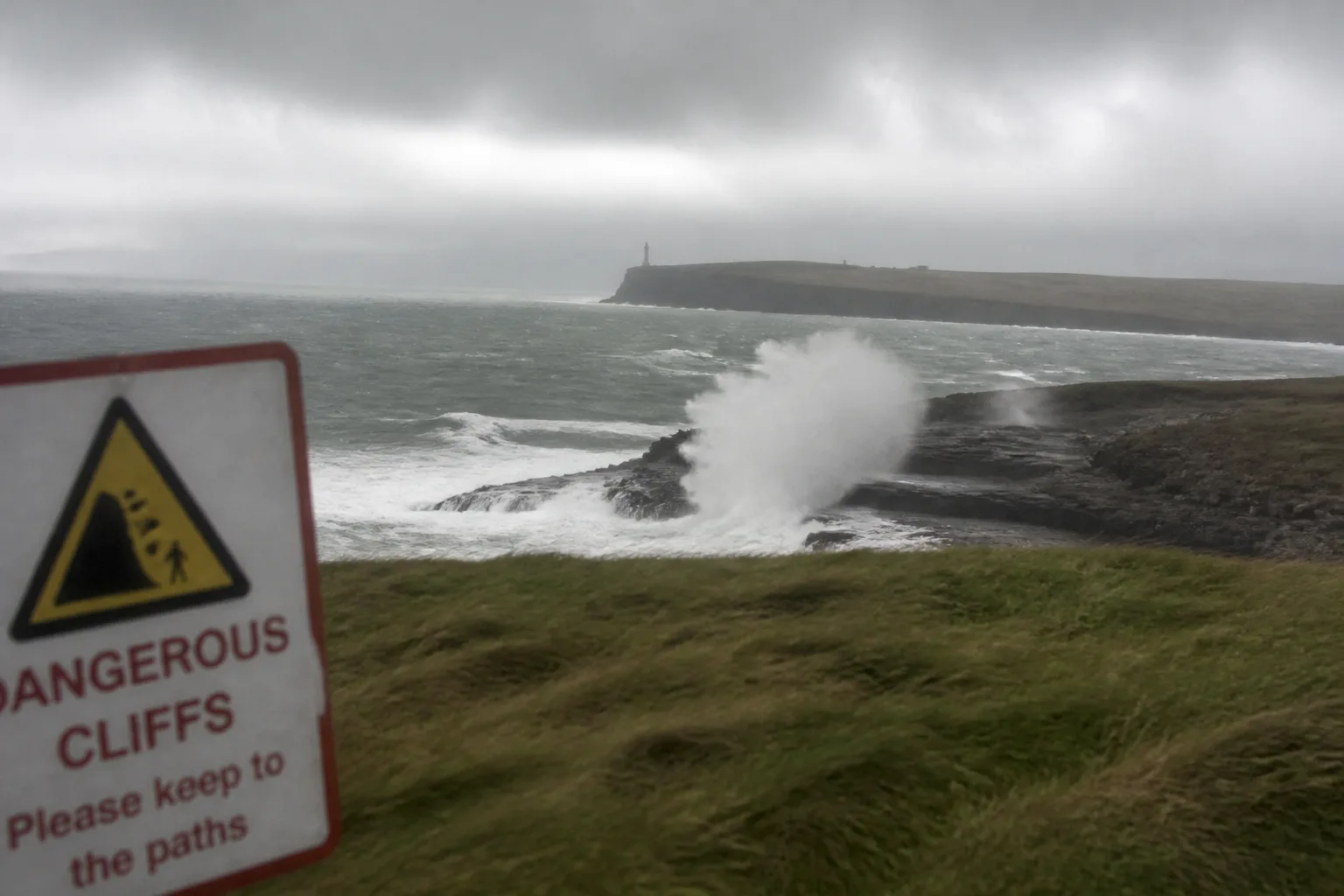
Most Orkney visitors arrive between May and September and never see the worst of the weather. If you're coming in winter, or you have to make a connection, three things to know:
- NorthLink Stromness ↔ Scrabster (MV Hamnavoe) crosses the Pentland Firth — one of the world's most challenging tidal waters, with currents up to 5 m/s on spring tides. Cancellations are common in any Met Office yellow-or-above wind warning, especially November to March.
- Pentland Ferries Gills Bay ↔ St Margaret's Hope takes a more sheltered route and often runs when NorthLink doesn't. Worth knowing if you're tight on dates in winter.
- Loganair flights to Kirkwall have strong on-time performance overall, but small island airports are exposed — build a buffer day either side of any winter flight.
- Inter-island ferries (Orkney Ferries) to Westray, Papa Westray and North Ronaldsay are the most weather-exposed; the sheltered Shapinsay route and Rousay keep running through more.
Recent named storms that disrupted travel: Storm Éowyn (24 January 2025) — the UK's most powerful storm in over a decade, with 100 mph gusts on the Scottish mainland and Orkney inside the amber warning area; Storm Babet (October 2023); the 2023–24 storm season with twelve named storms in total, the busiest since the naming system began.
What to Pack — A Local's Honest Take
Three rules cover most of it:
- Layer, don't bulk. A thin merino base, a fleece mid-layer, and a hard-shell waterproof do more work than a single heavy coat — and let you adapt as conditions change every couple of hours.
- Waterproof your trousers, not just your top. Horizontal rain on a 30 km/h wind soaks jeans in five minutes.
- A real hat. Wool or fleece, properly snug. Wind chill is the active ingredient eight months of the year.
For a full season-by-season list — including the items locals swear by and the ones tourists routinely overpack — see our detailed Orkney packing list.
Frequently Asked Questions
What is the weather like in Orkney?
Cool temperate maritime — heavily moderated by the Gulf Stream. Annual mean around 8 °C, summer highs 14–16 °C, winter lows 2–4 °C. Annual rainfall about 1,050 mm spread across 191 days, so showers are short and frequent rather than long and heavy. The defining feature is wind, not rain.
What is the best month to visit Orkney for good weather?
Statistically, May and June — fewest rain days, longest daylight, least wind. July and August are warmest but busiest. September is many locals' favourite: still mild, light still long, crowds gone.
Does it snow in Orkney?
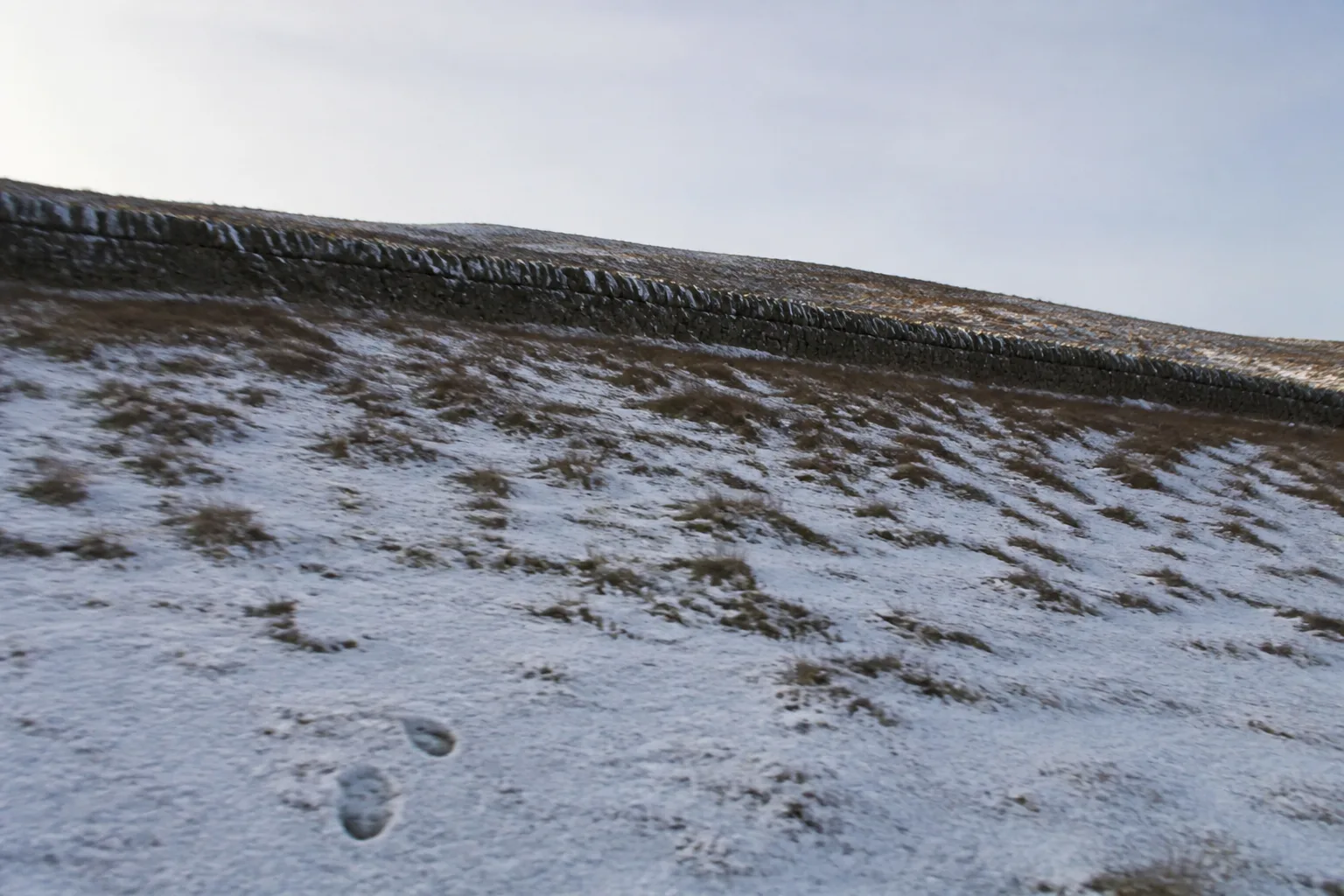
Rarely on the coast. Hard frost and lying snow are uncommon, kept off by the relatively warm sea. Higher ground on Hoy and the West Mainland gets brief light snowfalls in January and February, usually melted within a day or two.
How windy is Orkney?
Genuinely windy. Mean annual wind speed at Kirkwall is around 28 km/h; the highest gust ever recorded was 138.5 mph at Hatston, Kirkwall, on 8 December 2011. Long-term average gale hours per year: 52. Bring a proper hood, not an umbrella.
When can I see the Northern Lights in Orkney?
Visible September through March, peak window November through February. You need a clear sky, a dark spot facing north, and a Kp index of 5 or higher. Best spots: Brough of Birsay, Sands of Evie, Wideford Hill, Mull Head, north Hoy.
Whatever month you pick, Orkney rewards visitors who travel like the locals — packed for two seasons in one day, and ready to change plans around the wind. Find a sea-view base in Kirkwall, Stromness or the West Mainland and you'll have somewhere warm to dry kit between weather windows.
Sources & further reading
The facts in this guide were checked against the following authoritative sources.
- Kirkwall Climate Averages 1991-2020 — Met Office — Kirkwall long-term climate normals
- Orkney — VisitScotland — official Orkney visitor information
- Visit Orkney — Orkney.com — official Orkney guide
- NorthLink Ferries — seasonal ferry travel planning