Quick Navigation
- What is Scapa Flow?
- Geography and Location
- Why is Scapa Flow Famous?
- The History of Scapa Flow
- World War I and the Grand Fleet
- The Scuttling of the German High Seas Fleet (1919)
- Watch: Scuttling of the High Seas Fleet at Scapa Flow (The History Guy)
- The Salvage Operations
- World War II — HMS Royal Oak and the U-47 Raid
- The Churchill Barriers
- Diving Scapa Flow — World-Class Wreck Diving
- The Diveable Wrecks
- Best Dive Operators in Orkney
- When to Dive Scapa Flow
- Diver Requirements and Conditions
- Watch: Diving Scapa Flow, Scotland (PADI)
- Visiting Scapa Flow Without Diving
- Scapa Flow Museum (Lyness, Hoy)
- The Churchill Barriers and Italian Chapel
- Ness Battery
- Scapa Distillery
- Scapa Beach: Kirkwall's Sandy Bay on the Flow
- How to Get to Scapa Flow
- Ferries to Orkney
- Getting Around the Islands
- Where to Stay Near Scapa Flow
- Frequently Asked Questions About Scapa Flow
- Which island group is Scapa Flow in?
- Can you visit Scapa Flow?
- How many wrecks are in Scapa Flow?
- How deep is Scapa Flow?
- Can beginners dive Scapa Flow?
- What happened to the German fleet at Scapa Flow?
- Is HMS Royal Oak still in Scapa Flow?
- Can you see the wrecks without diving?
- When is the best time to visit Scapa Flow?
- How many ships were scuttled at Scapa Flow?
- Why was Scapa Flow closed?
- Is Scapa Flow still a naval base?
- Why was the German fleet scuttled?
- Where is Scapa Flow exactly?
- Sources & further reading
Scapa Flow is one of the most remarkable natural harbours in the world and one of the most compelling reasons to visit Orkney. Sheltered by a ring of islands at the southern end of the archipelago, Scapa Flow has played a pivotal role in two world wars, witnessed the largest act of naval self-destruction in history, and today ranks among the planet's finest wreck diving destinations. Whether you are a diver, a history enthusiast, or simply a traveller drawn to extraordinary landscapes with extraordinary stories, this guide covers everything you need to plan your visit.
What is Scapa Flow?
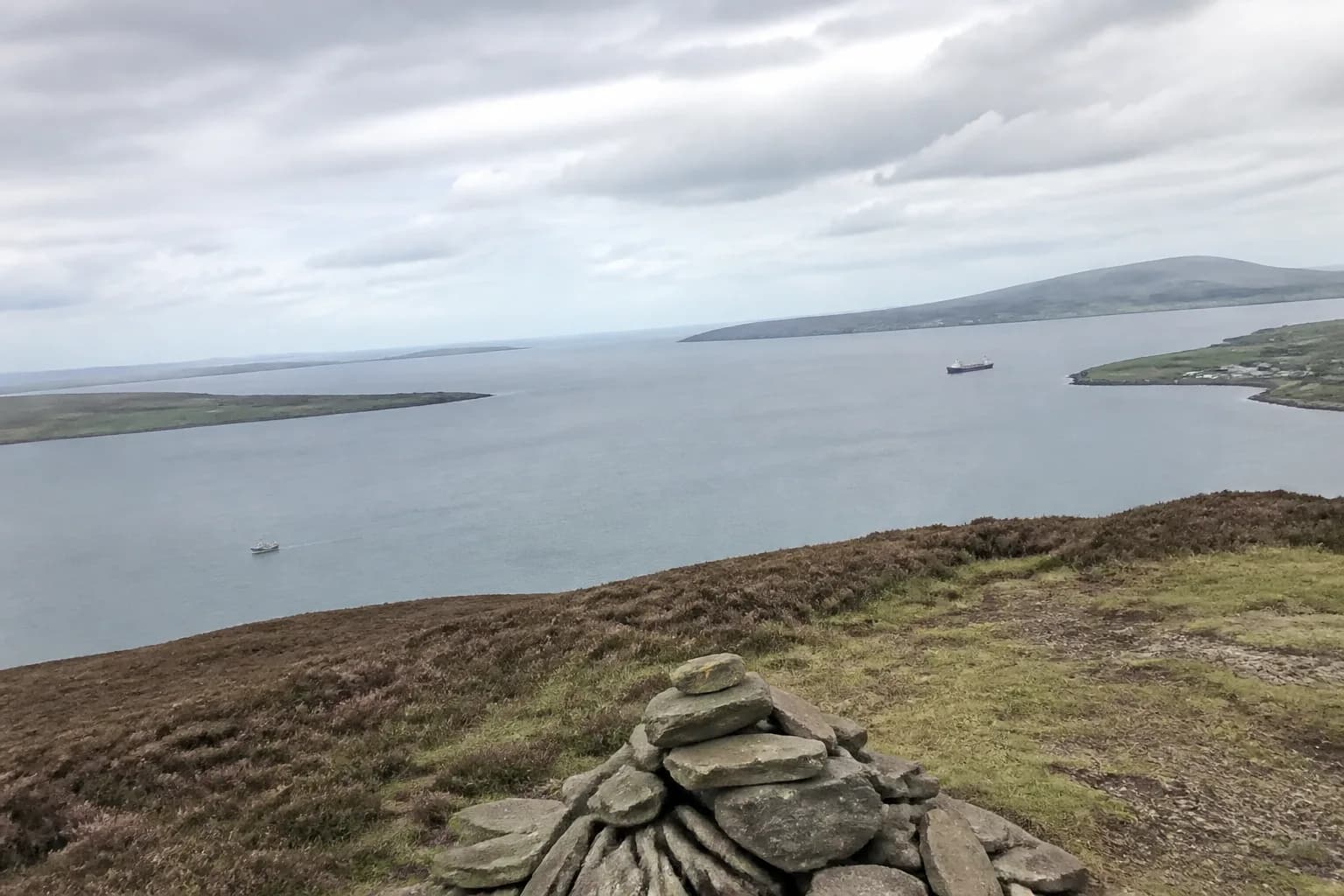
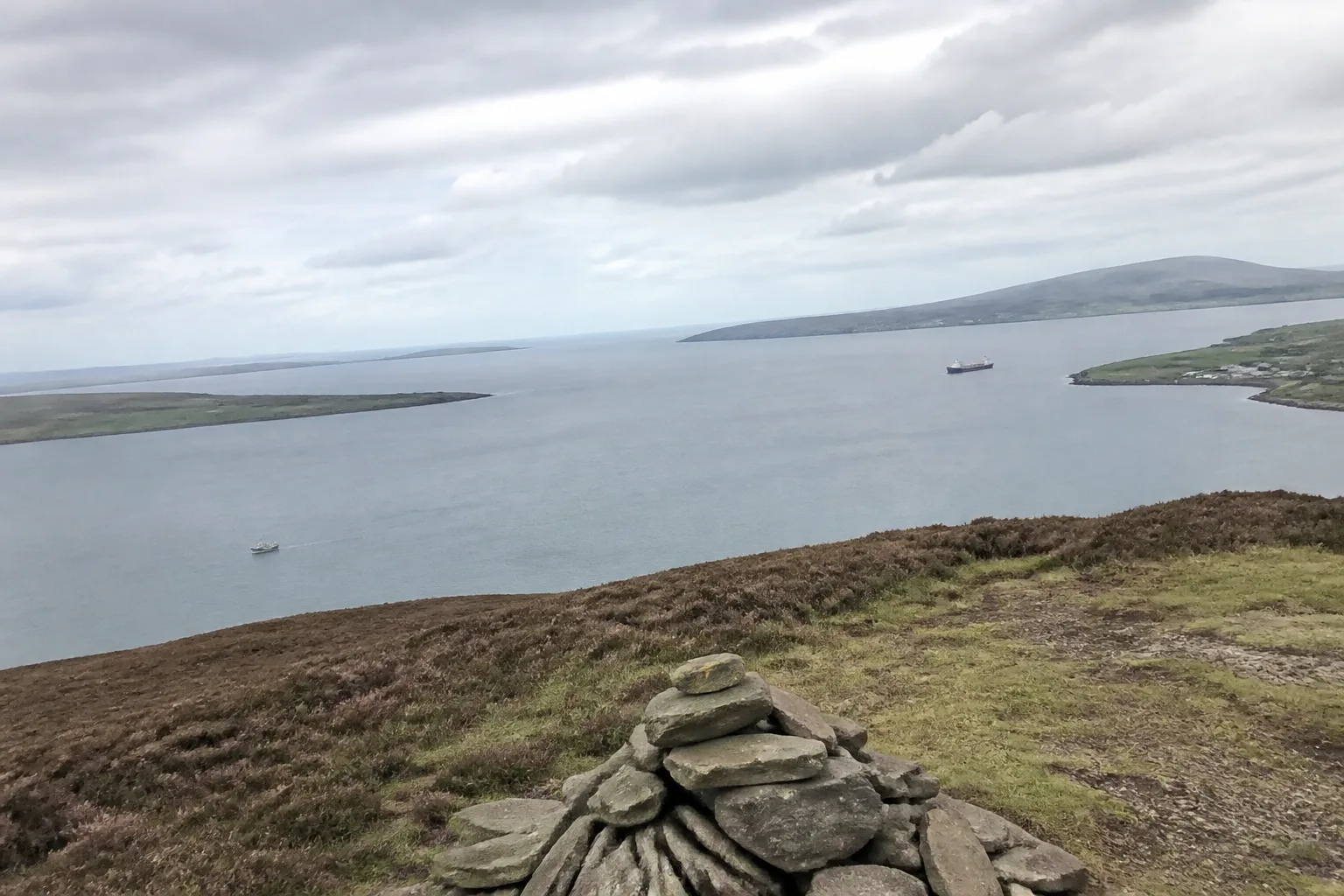
Scapa Flow is a body of water of about 324.5 square kilometres (125 square miles), enclosed by the Orkney Mainland to the north, the island of Hoy to the west and south-west, South Ronaldsay to the south-east, and the smaller islands of Burray, Flotta, and Graemsay in between. The name derives from the Old Norse Skalpaflói, meaning "bay of the long isthmus."
Geography and Location
Scapa Flow sits at roughly 58.88°N, 3.10°W, placing it firmly in the cool northern waters of the North Atlantic. Despite its northerly latitude, the harbour is remarkably sheltered. The surrounding islands break the force of Atlantic swells, creating a vast anchorage with depths ranging from 20 to 45 metres across most of the basin.
The eastern approaches were historically guarded by narrow channels between the islands — Kirk Sound, Skerry Sound, East Weddel Sound, and Water Sound. These gaps, once considered defensible by blockships and anti-submarine nets, would prove fatally vulnerable in October 1939. The western entrance, Hoy Sound, separates the Mainland from Hoy and remains the primary shipping channel today.
Why is Scapa Flow Famous?
Scapa Flow owes its fame to three interconnected chapters of naval history. First, the Royal Navy chose it as its principal fleet anchorage during both world wars, making it one of the most strategically important locations in the British Isles. Second, on 21 June 1919, the interned German High Seas Fleet scuttled itself here — 52 warships sinking in a single afternoon. Third, on 14 October 1939, a German U-boat penetrated the defences and sank HMS Royal Oak, killing 835 crew members.
Today, the sunken warships make Scapa Flow one of the world's top wreck diving sites, while the military heritage draws thousands of non-diving visitors each year to its museums, memorials, and the iconic Churchill Barriers.
The History of Scapa Flow
The history of Scapa Flow as a naval base stretches back centuries — Viking longships sheltered here, and the harbour saw use during the Napoleonic Wars. But it was the twentieth century that transformed this Orkney anchorage into a name known around the world.
World War I and the Grand Fleet
When war broke out in August 1914, the Royal Navy's Grand Fleet — the most powerful naval force on Earth — made Scapa Flow its main base. At its peak, over 100 warships rode at anchor here, including dreadnought battleships, battlecruisers, cruisers, and destroyers. The location was ideal: far enough north to control the exits from the North Sea, yet sheltered enough to offer safe anchorage for the fleet.
Admiral John Jellicoe commanded the Grand Fleet from Scapa Flow, and it was from here that the fleet sailed to fight the Battle of Jutland on 31 May 1916 — the largest naval battle of the war. Life for the thousands of sailors stationed at Scapa Flow was often monotonous, with long periods of waiting punctuated by the constant tension of potential German attack. Shore facilities were minimal, and the Orkney weather was relentless.
Despite concerns about submarine attack, no successful U-boat penetration occurred during WWI. The narrow eastern channels were blocked with sunken ships and defended by booms, nets, and patrols.
The Scuttling of the German High Seas Fleet (1919)
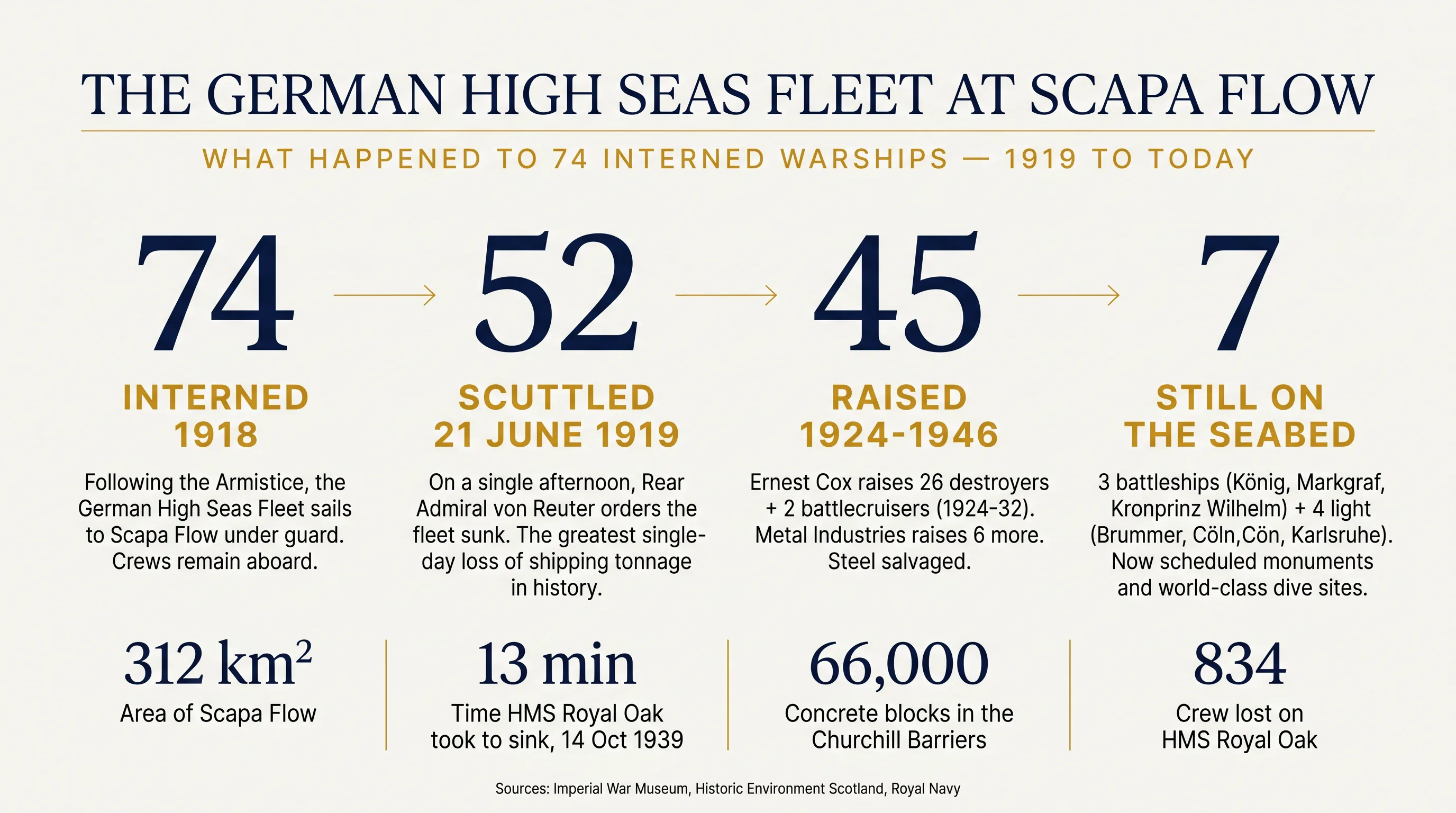
The scuttling of the German fleet at Scapa Flow remains one of the most dramatic events in naval history. Following the Armistice of November 1918, 74 ships of the German High Seas Fleet were interned at Scapa Flow under the terms of the surrender. The crews remained aboard, growing increasingly demoralised through months of confinement.
On 21 June 1919, Rear Admiral Ludwig von Reuter, believing the Armistice was about to expire and the Allies would seize the fleet, gave the prearranged order to scuttle. Seacocks were opened, watertight doors left ajar, and condenser covers smashed. Within hours, 52 of the 74 ships had sunk, including 10 battleships, 5 battlecruisers, 5 light cruisers and 32 destroyers. It was the greatest loss of shipping tonnage in a single day in history.
The British were furious. Guards opened fire on German sailors abandoning ship, killing nine men — the last casualties of World War I. You can read more about this extraordinary event in the Imperial War Museums’ account of the scuttling.
The Salvage Operations
The wrecks immediately became both a hazard and an opportunity. Between the wars, entrepreneur Ernest Cox purchased the salvage rights and raised 26 destroyers, four battlecruisers and two battleships between 1924 and 1932. His methods were innovative and often dangerous — he pumped compressed air into upturned hulls to float them, then towed them to Rosyth for scrapping.
After Cox gave up, Metal Industries Ltd took over and raised a further 6 ships, including the massive battleships SMS Bayern and SMS Grosser Kurfürst. By 1946, a total of 45 of the 52 scuttled ships had been raised. The seven that remain on the seabed — three battleships and four light cruisers — are now protected as scheduled monuments and form the core of the Scapa Flow diving experience.
Interestingly, the salvaged steel has scientific value. Steel produced before the first nuclear test in 1945 is free from background radiation, making "pre-atomic" or "low-background" steel from the German fleet highly sought after for sensitive scientific instruments.
World War II — HMS Royal Oak and the U-47 Raid
When World War II began in September 1939, Scapa Flow once again became the Royal Navy's main fleet base. But the defences that had held during WWI proved inadequate against the newer, more capable U-boats.
On the night of 13-14 October 1939, Kapitänleutnant Günther Prien navigated U-47 through Kirk Sound on the eastern side of the anchorage, threading between the blockships that were supposed to seal the channel. He found the battleship HMS Royal Oak at anchor and fired a spread of torpedoes. The first salvo caused only minor damage, but a second attack struck the ship's magazine. HMS Royal Oak capsized and sank in just 13 minutes, taking 835 of her 1,234 crew to their deaths.
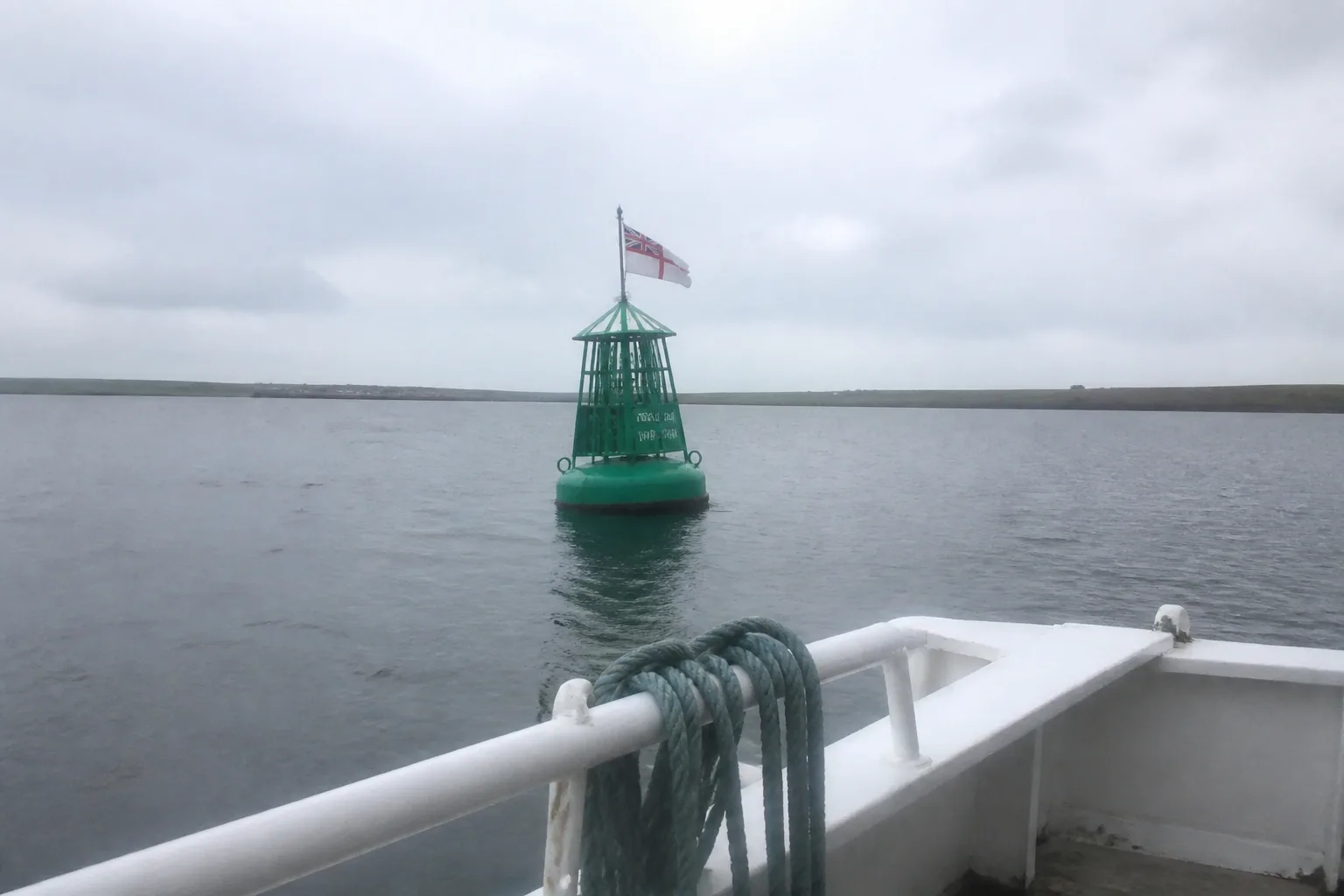
It was a devastating blow to British morale and a stunning achievement for the German navy. Prien returned to Germany a national hero. The wreck of HMS Royal Oak remains where she sank, designated a war grave and protected as a Controlled Site under the Protection of Military Remains Act 1986 — a UK Ministry of Defence responsibility, under which all diving on the wreck is prohibited. The Royal Navy marks the site with a green buoy, and navy divers visit annually to place a fresh White Ensign on the wreck.
The Churchill Barriers
The sinking of HMS Royal Oak prompted an immediate response. Winston Churchill, then First Lord of the Admiralty, ordered the construction of permanent barriers to seal the eastern channels into Scapa Flow. Work began in May 1940, with the contract awarded to the civil engineering contractor Balfour Beatty. The first Italian prisoners of war — captured in North Africa and held in camps on Lamb Holm and Burray — did not arrive to join the workforce until early January 1942.
The four Churchill Barriers were built by laying enormous concrete blocks — over 66,000 blocks totalling 250,000 tonnes — across Kirk Sound, East Weddel Sound, Skerry Sound, and Water Sound. The barriers permanently linked the Orkney Mainland to the islands of Lamb Holm, Glimps Holm, Burray, and South Ronaldsay. Today, they carry the main road (the A961) and are one of Orkney's most visited landmarks.
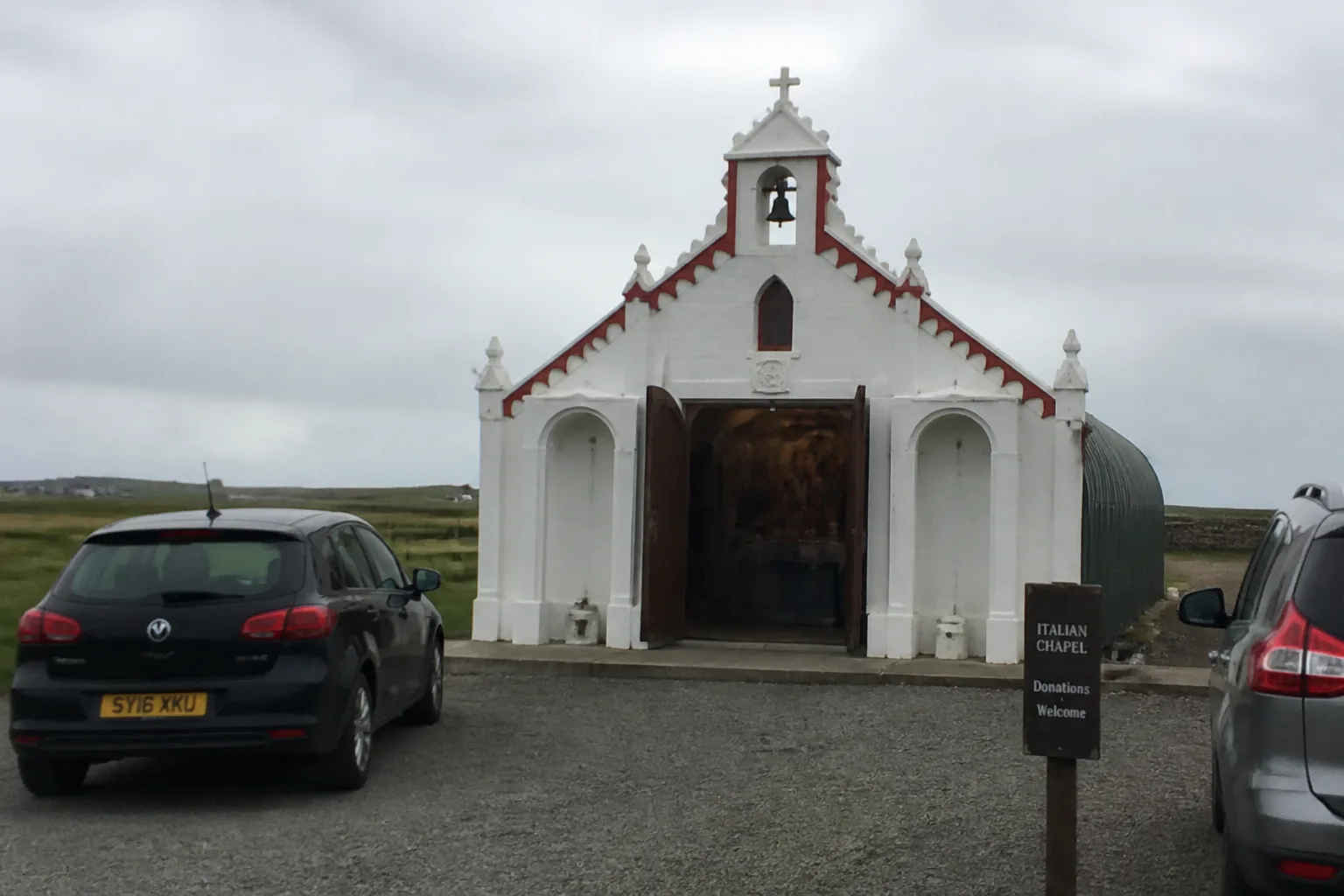
The Italian prisoners also built the remarkable Italian Chapel on Lamb Holm — two Nissen huts transformed into an ornate Catholic chapel, a testament to faith and artistry in the most unlikely circumstances. It remains one of Orkney's most beloved attractions.
Planning your trip
Staying overnight? Compare live prices and availability across Orkney on Booking.com.
Compare Orkney staysWe earn a small commission if you book through this link, at no extra cost to you.
Diving Scapa Flow — World-Class Wreck Diving
For recreational and technical divers, Scapa Flow is a bucket-list destination. The combination of accessible depths, historically significant wrecks, and relatively sheltered conditions makes it one of the best wreck diving locations anywhere in the world. Every year, divers from across the globe travel to Orkney specifically to explore these German warships resting on the seabed.
That is the overview — for full dive-planning detail (every wreck by depth, the 2026 charter boats, kit and certification minimums, and a real cost breakdown), see our complete Scapa Flow diving guide.
The Diveable Wrecks
Seven German warships from the 1919 scuttling remain on the seabed of Scapa Flow, all designated as scheduled monuments. Three are battleships and four are light cruisers:
Battleships
- 25,796 t
- Depth 35–40 m
- Upside down
One of the most impressive dives — her massive hull creates a dramatic underwater landscape, with the 30.5cm gun turrets visible beneath it.
- 25,796 t
- Depth 35–40 m
- Inverted
Rated by many divers the best of the three battleships, for the variety of features along her 175-metre length.
- 25,796 t
- Depth 33–38 m
- Capsized
The shallowest battleship and popular for longer bottom times; her propellers and rudders are particularly photogenic.
Light Cruisers
- 4,385 t
- Depth 30–36 m
- Upright
The upright orientation makes her one of the most rewarding dives — deck features, gun mountings and the bridge structure are all accessible.
- 5,531 t
- On starboard side
Her guns, torpedo tubes and engine-room skylights are the highlights.
- 5,531 t
- On her side
A sister-ship layout to SMS Cöln, with excellent penetration opportunities for qualified divers.
- 5,440 t
- Partially broken up
The most collapsed of the cruisers, but still offers her bow section and armour plating.
In addition to the German wrecks, divers can explore several WWI and WWII blockships in shallower water around the Churchill Barriers, making excellent second dives or warm-up dives. The remains of HMS Royal Oak are off-limits to civilian divers as she is a designated war grave.
Best Dive Operators in Orkney
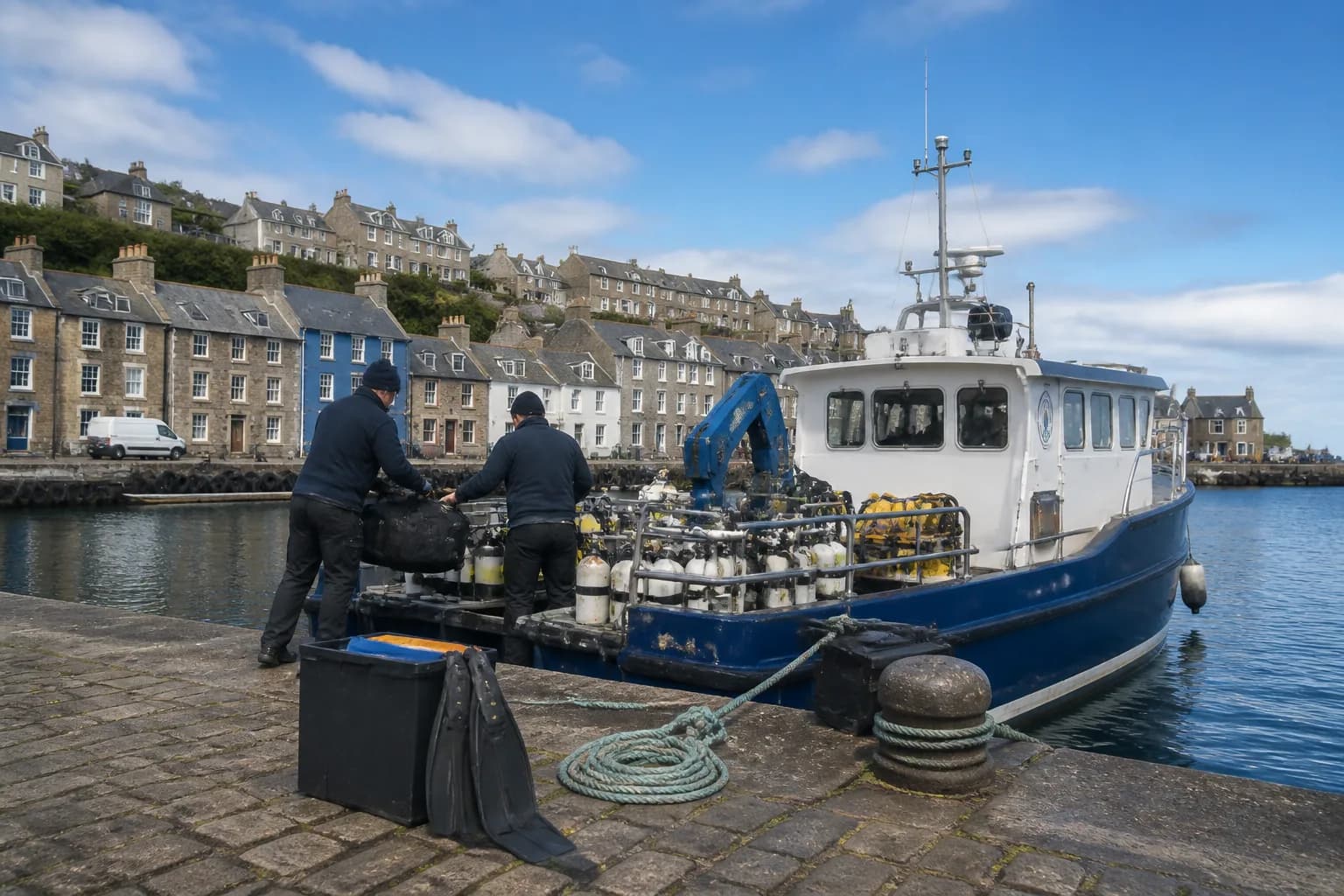
Several professional dive operators run daily trips to the Scapa Flow wrecks throughout the diving season. All provide experienced skippers, knowledgeable dive guides, and well-maintained boats:
- Scapa Scuba — A long-established PADI 5-star centre in Stromness, best known for guided dives, training and try-dives on the shallower Churchill Barrier blockships — the ideal first port of call for newer divers and equipment hire.
- The Diving Cellar — Based in Stromness, offering hard-boat charter diving on the wrecks with equipment rental available. Well-regarded for their local knowledge and flexible scheduling.
- MV Huskyan — A hard boat operating wreck diving charters to all the major sites in Scapa Flow. Popular with groups and clubs booking dedicated weeks.
Most operators are based in Stromness, the natural jumping-off point for Scapa Flow diving. Booking well in advance is essential, particularly for peak season weeks in June through August.
When to Dive Scapa Flow
The diving season at Scapa Flow typically runs from April to October, with the best conditions generally found between May and September. Key factors by season:
- Water 7–9°C
- Vis 10–15 m+
Visibility is often excellent before the plankton blooms start, with daylight lengthening fast and few visiting divers about.
- Water 10–13°C
- Vis 5–8 m
Near-24-hour daylight means flexible scheduling, though visibility can drop during plankton blooms. The peak booking period.
- Water 10–12°C
- Vis improving
Visibility improves again as the plankton subsides; the weather is more changeable but it's excellent value as the crowds thin out.
Drysuits are essential year-round. Most visiting divers bring their own exposure suits but rent cylinders and weights locally.
Diver Requirements and Conditions
Diving the Scapa Flow wrecks is not for absolute beginners, but nor does it require extreme technical expertise. General requirements:
- Minimum certification: PADI Advanced Open Water or equivalent (BSAC Sports Diver, SSI Advanced). Some operators accept Open Water divers for shallower blockship dives.
- Experience level: A minimum of 30-50 logged dives is recommended, with some deepwater and UK/cold water experience preferred.
- Depths: Most wreck dives are in the 25-45 metre range. The shallowest sites (blockships) start at 8-12 metres. Nitrox is widely available and recommended for extending bottom times.
- Currents: Tidal streams can be significant, and dive times are planned around slack water. Your operator will handle all tidal planning.
- Visibility: Typically 5-15 metres depending on season and conditions. Rarely less than 3 metres.
Visiting Scapa Flow Without Diving
You absolutely do not need to be a diver to appreciate Scapa Flow. The naval history is powerfully told through several outstanding museums, monuments, and heritage sites scattered across the islands surrounding the anchorage. A full day exploring these sites is one of the best activities in Orkney.
Scapa Flow Museum (Lyness, Hoy)
The Scapa Flow Museum at Lyness on the island of Hoy — reopened in July 2022 after a major refurbishment, and renamed from the old Scapa Flow Visitor Centre — is the definitive museum for the naval history of the area. Housed in a former naval pumphouse, the centre covers both world wars with an impressive collection of artefacts, photographs, personal accounts, and interactive displays.
Outside, you can see the massive oil tanks that fuelled the fleet, remnants of the military infrastructure, and a propeller from HMS Hampshire — the cruiser that sank off Orkney in 1916 carrying Lord Kitchener to his death. The museum is free to enter (donations welcome) and is run by Orkney Islands Council's Orkney Museums service. The Lyness Naval Cemetery nearby is also worth a quiet visit.
Getting to Lyness requires a ferry from Houton on the Orkney Mainland (approximately 35 minutes). The service runs several times daily and should be booked in advance during summer.
The Churchill Barriers and Italian Chapel
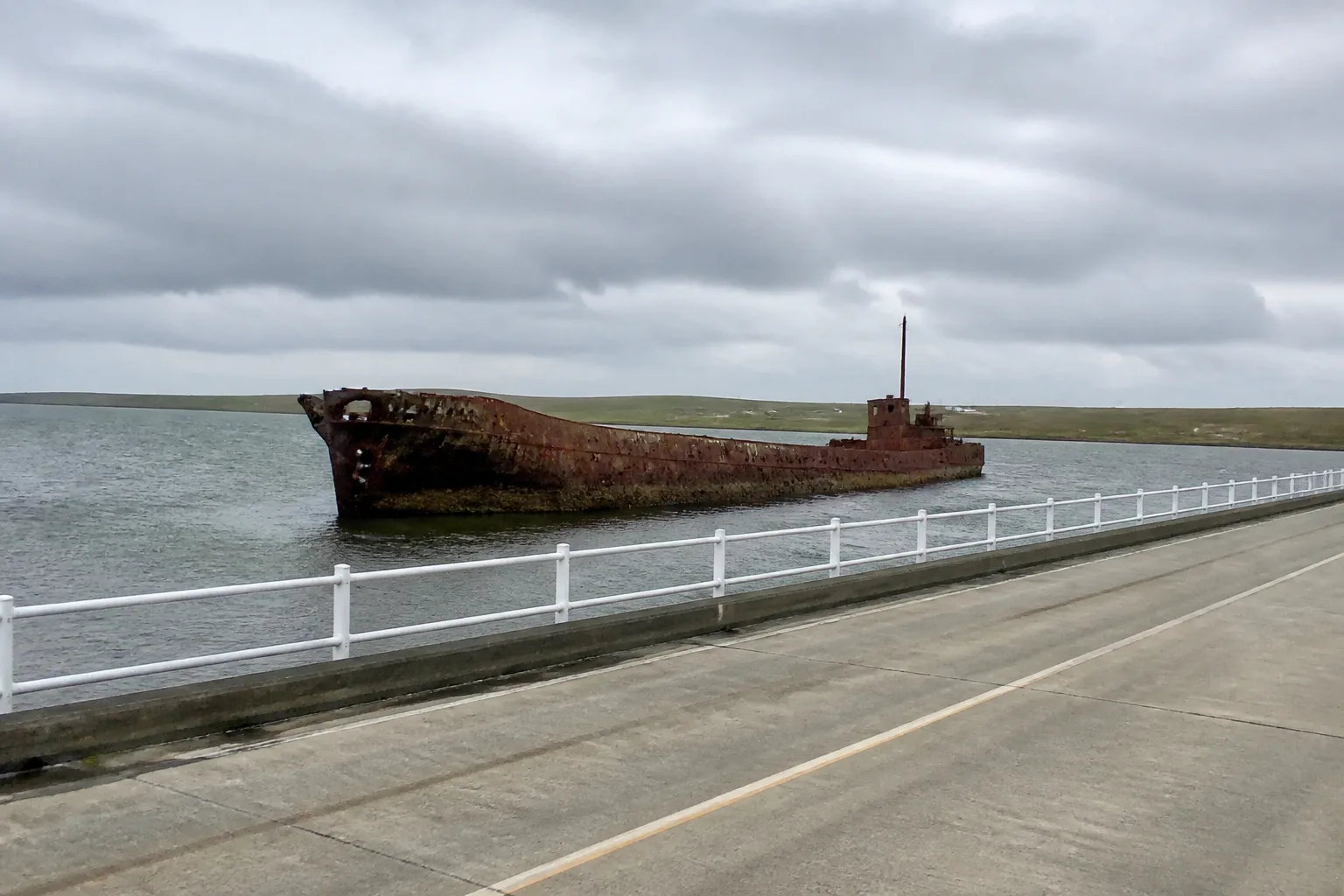
The four Churchill Barriers are accessible by road from Kirkwall, making them one of the easiest Scapa Flow heritage sites to visit. Drive south on the A961 and you cross all four barriers in succession, with the sea on both sides and the remains of rusting blockships visible in the channels.
Stop at Barrier No. 1 on Lamb Holm to visit the Italian Chapel. This tiny, exquisitely decorated chapel was built by Italian POWs who were brought to Orkney to construct the barriers. Using scrap metal, concrete, and whatever materials they could find, prisoner Domenico Chiocchetti painted the interior with stunning trompe-l'oeil work. The chapel opens to visitors every day except Christmas Day and New Year's Day, on shorter hours through the winter and longer ones from May to August. Admission was £4 per person with under-12s free when we checked in August 2026, and it goes towards the upkeep — confirm current hours on orkney.com before a special trip. For a deeper look at Orkney's military heritage and WWII sites — including Hoxa Head, Ness Battery and the Scapa Flow Museum — see our dedicated guide.
Continuing south across the barriers takes you to Burray and then St Margaret's Hope, a charming village with accommodation options well-positioned for exploring the southern approaches to Scapa Flow.
Ness Battery
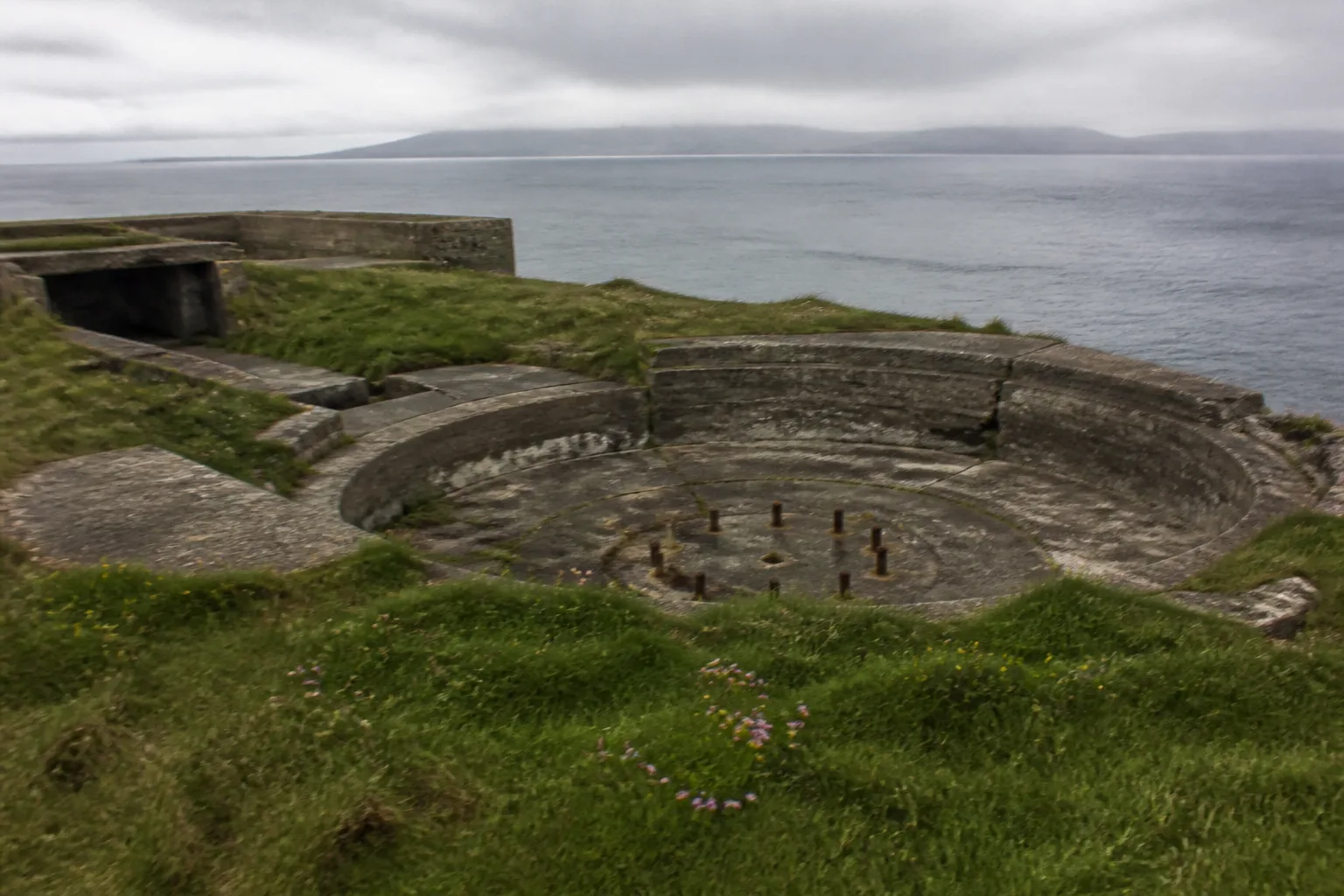
Located at the tip of the Stromness headland, Ness Battery was one of the coastal gun emplacements defending the western entrance to Scapa Flow during World War II. The battery housed twin 6-inch naval guns and operated from 1940 to 1945. After decades of neglect, volunteers have restored the site, including the underground magazine, gun emplacements, engine room, and barracks.
Guided tours run during summer months and offer a vivid picture of wartime life at the edge of the empire's most important naval base. The views across Hoy Sound from the battery are spectacular.
Scapa Distillery
For those who prefer their Scapa Flow experience with a dram, Scapa Distillery sits on the shore of the flow just outside Kirkwall. Founded in 1885, it is one of the most northerly whisky distilleries in Scotland and produces a smooth, honeyed single malt with a distinctive maritime character.
Distillery tours and tastings are available, but every experience must be booked online in advance and is strictly 18+. Several of the guided tours finish with a tasting in the Scapa Noust, and the location itself is part of the appeal — the distillery overlooks the very waters where the German fleet sank. It pairs perfectly with a visit to the nearby Kirkwall hotels and restaurants for an afternoon of whisky and history. Check the distillery's own booking page for the current experiences and to reserve a place.
Scapa Beach: Kirkwall's Sandy Bay on the Flow
Not everyone arriving at Scapa Flow is here for the wrecks. Scapa Beach is a sheltered crescent of sand on the north shore of the Flow, barely a mile and a half south of Kirkwall — an easy walk or cycle from town. It is a quiet spot for a stroll with wide views across the water to Hoy, a slipway and the old pier nearby, and the Scapa Distillery a short way up the hill. On a calm day it is one of the most accessible pieces of Scapa Flow you can reach without a boat.
How to Get to Scapa Flow
Reaching Scapa Flow means getting to Orkney first, and then navigating between the islands. The good news is that Orkney is well connected by sea and air, and getting around the islands is straightforward.
Ferries to Orkney
The main ferry routes to Orkney are:
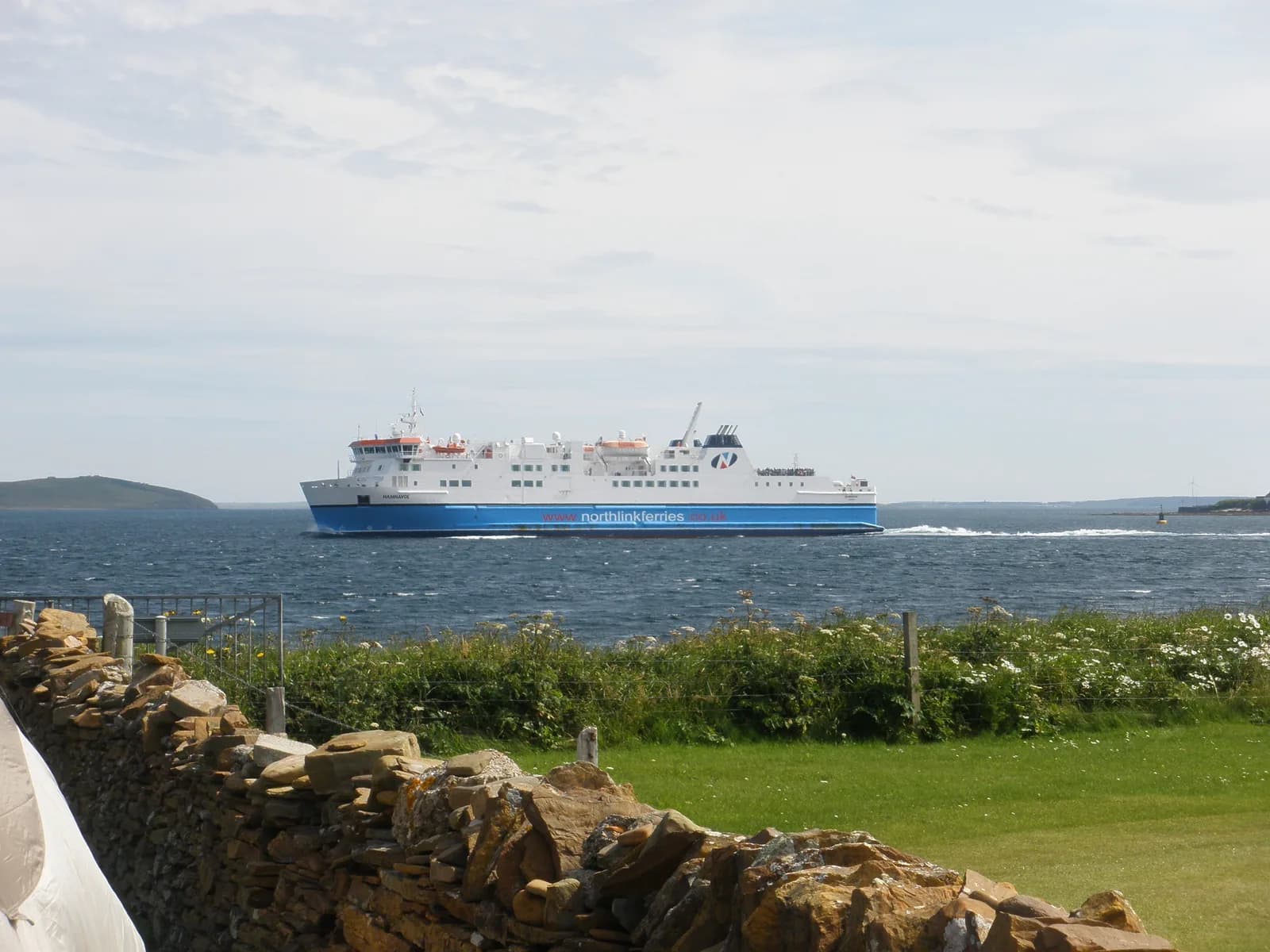
- NorthLink Ferries
- 90 minutes
The most popular route for visitors bringing a car, from Scrabster near Thurso — it lands you in Stromness, the closest town to most Scapa Flow dive sites.
- NorthLink Ferries
- ~6 hr · overnight
An overnight sailing arriving in Kirkwall — a good option if you're travelling up from central or southern Scotland.
- Pentland Ferries
- ~1 hour
From Gills Bay on the Caithness coast, arriving in St Margaret's Hope on South Ronaldsay — the south-eastern edge of Scapa Flow.
Flights: Loganair operates daily flights from Edinburgh, Glasgow, Aberdeen, Inverness, and Sumburgh (Shetland) to Kirkwall Airport. Flight times are typically 1-1.5 hours from the central belt.
Getting Around the Islands
Once on Orkney, a hire car is the most practical way to explore the Scapa Flow area. The Churchill Barriers, Italian Chapel, and southern islands are all connected by road. Key distances from Kirkwall:
Inter-island ferries operated by Orkney Ferries connect the Mainland with Hoy, Flotta, and other islands. For visiting the Scapa Flow Museum at Lyness, take the ferry from Houton to Lyness (bookable online). Stagecoach also operates bus services across the Mainland and connected islands.
Where to Stay Near Scapa Flow
Scapa Flow is surrounded by several of Orkney's main settlements, each offering a different character and range of accommodation. Your choice of base will depend on whether you are diving, sightseeing, or combining both.
The top choice for divers — all the major operators are based here, and the town has real character with its flagstone streets, harbourside restaurants and real-ale pubs. The NorthLink ferry from Scrabster docks here, so it's the most convenient base if you're bringing gear by car.
Orkney's capital and largest town, with the widest range of hotels in Kirkwall, restaurants and amenities. Central for both the Churchill Barriers and Stromness, and an excellent base for non-divers combining Scapa Flow history with the cathedral and museums.
A peaceful village on South Ronaldsay, right beside the Churchill Barriers and the Pentland Ferries terminal. Perfect for the Italian Chapel and the southern heritage sites — quieter than Kirkwall or Stromness, with a lovely community feel and some excellent places to eat.
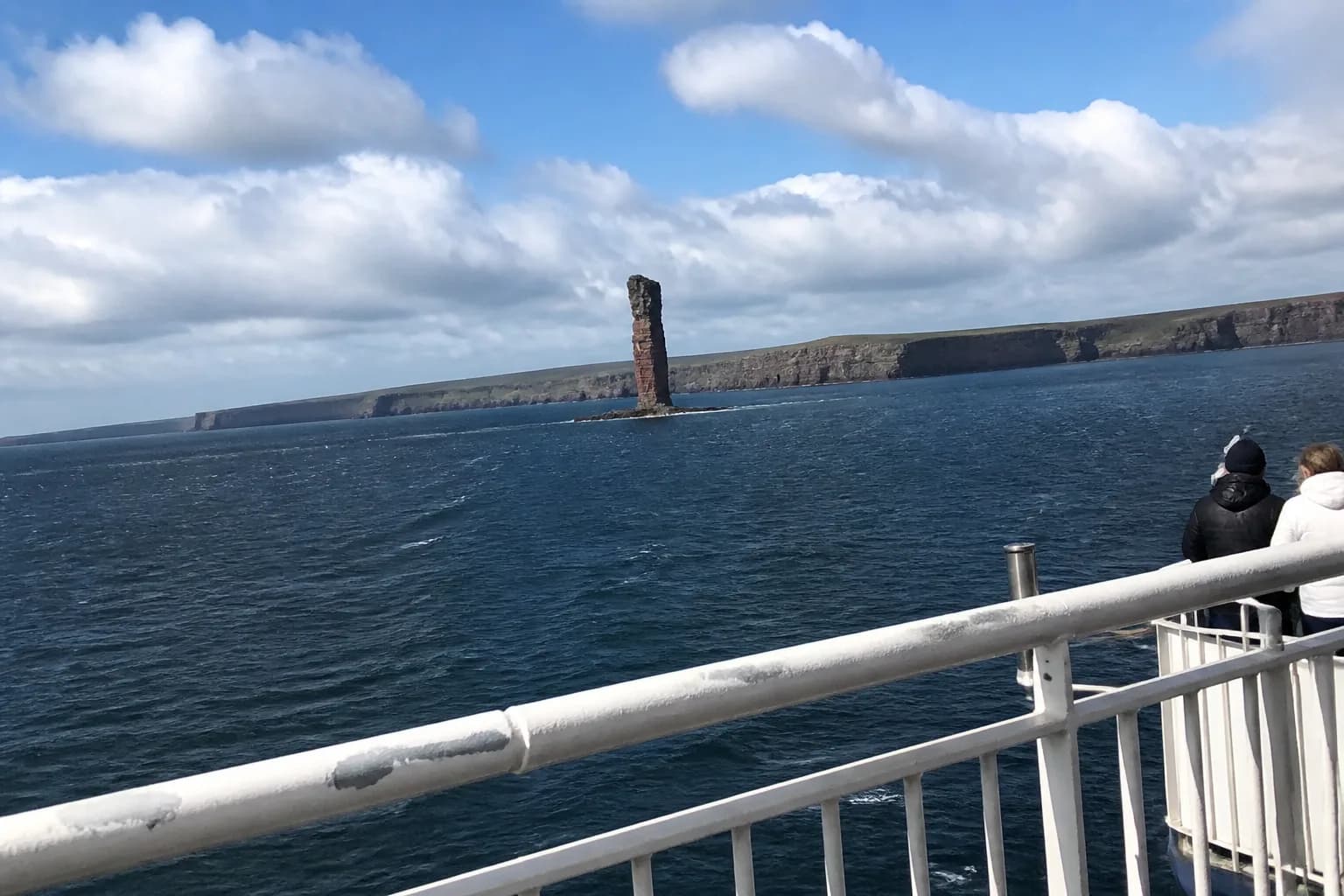
Hoy forms Scapa Flow's western wall, and the Scapa Flow Museum at Lyness sits on its shore — our full guide to Hoy covers the ferry crossings, the museum and the walk out to the Old Man.
Frequently Asked Questions About Scapa Flow
Which island group is Scapa Flow in?
Scapa Flow is in the Orkney Islands, an archipelago off the north coast of Scotland. It sits at the southern end of Orkney, sheltered by the Mainland to the north, Hoy to the west, South Ronaldsay to the south-east and the smaller islands of Burray, Flotta and Graemsay in between. The Churchill Barriers now connect Mainland to South Ronaldsay across the eastern channels.
Can you visit Scapa Flow?
Yes, absolutely. Scapa Flow is a public body of water and the surrounding islands are freely accessible. You can drive across the Churchill Barriers, visit the Scapa Flow Museum on Hoy, see the Italian Chapel, and explore numerous other heritage sites. The only restriction is that the wreck of HMS Royal Oak is a protected war grave and cannot be dived by civilians.
How many wrecks are in Scapa Flow?
There are seven major German warships remaining from the 1919 scuttling — three battleships (SMS König, SMS Markgraf, SMS Kronprinz Wilhelm) and four light cruisers (SMS Brummer, SMS Cöln, SMS Dresden, SMS Karlsruhe). In addition, the wreck of HMS Royal Oak (sunk 1939) lies on the seabed, along with numerous blockships deliberately sunk in the eastern channels during both wars. In total, there are over 20 identifiable wrecks in and around Scapa Flow.
How deep is Scapa Flow?
The average depth of Scapa Flow is approximately 30 metres, with the deepest areas reaching around 55-60 metres. The German wrecks lie at depths between 25 and 45 metres, while blockship dives near the Churchill Barriers can be as shallow as 8-12 metres. These moderate depths are one reason Scapa Flow is so accessible to recreational divers.
Can beginners dive Scapa Flow?
The deeper German wrecks require at least an Advanced Open Water certification (or equivalent) and ideally 30-50 logged dives. However, beginners with an Open Water certification can dive the shallower blockships near the Churchill Barriers, which sit in 8-16 metres and provide an excellent introduction to wreck diving. All divers need cold-water experience and a drysuit.
What happened to the German fleet at Scapa Flow?
After the Armistice ending World War I in November 1918, 74 ships of the German High Seas Fleet were interned at Scapa Flow pending a peace settlement. On 21 June 1919, fearing the fleet would be seized and divided among the Allies, Rear Admiral Ludwig von Reuter ordered the ships scuttled. The crews opened seacocks and flooded the vessels. 52 ships sank, including battleships, battlecruisers, and light cruisers. It was the largest loss of shipping in a single event in history.
Is HMS Royal Oak still in Scapa Flow?
Yes. HMS Royal Oak lies on the seabed of Scapa Flow where she sank on 14 October 1939, in approximately 30 metres of water near the eastern shore of the anchorage. The wreck is designated as an official war grave under the Protection of Military Remains Act 1986. 835 sailors died in the sinking, and many remain entombed within the hull. A green buoy marks the site, and the Royal Navy conducts an annual dive to place the White Ensign on the wreck.
Can you see the wrecks without diving?
The German warships lie too deep to be seen from the surface. However, you can see the remains of blockships from the Churchill Barriers — rusting hulks protrude above the waterline at several points, particularly visible at low tide around Barriers 1-3. These are some of the most photographed features on the drive south from Kirkwall. Glass-bottom boat tours have operated intermittently but are not currently a regular service.
When is the best time to visit Scapa Flow?
For diving, the season runs April to October, with May-June and September offering the best balance of visibility and weather. For general sightseeing, May to September provides the longest days and mildest weather — Orkney enjoys over 18 hours of daylight in midsummer. The Italian Chapel is open year-round, while the Scapa Flow Museum on Hoy closes completely for January and February and runs reduced days either side of summer, so check its hours before travelling. Some other attractions also have reduced winter hours.
How many ships were scuttled at Scapa Flow?
52 German warships were successfully scuttled on 21 June 1919 out of the 74 interned. The remaining 22 ships were beached or saved by British personnel who boarded and closed seacocks once they realised what was happening. Of the 52 that sank, 45 were subsequently salvaged between the 1920s and 1940s. Seven German wrecks remain on the seabed today.
Why was Scapa Flow closed?
Scapa Flow was decommissioned as an active Royal Navy base in 1956, after which it gradually reverted from a fortified anchorage to civilian use. The decision reflected the post-war strategic shift away from large surface fleets towards aircraft carriers and submarine bases located further south. Today the waters host commercial shipping, oil terminal traffic at Flotta, recreational divers, and small craft, but no active naval garrison.
Is Scapa Flow still a naval base?
No. The Royal Navy left Scapa Flow in 1956 and the major shore facilities at Lyness on Hoy were progressively dismantled. The pumphouse, oil tanks, and naval cemetery survive as heritage sites, with the former pumphouse now home to the Scapa Flow Museum. The flow itself remains a working harbour for civilian shipping and the Flotta oil terminal, which handles North Sea crude, but it is no longer a military installation.
Why was the German fleet scuttled?
The German High Seas Fleet was scuttled on 21 June 1919 on the personal order of Rear Admiral Ludwig von Reuter, who commanded the interned ships at Scapa Flow. Reuter believed — based on outdated newspapers, the only news source available to the German crews — that peace negotiations had broken down and that the Allies were about to seize the fleet by force. To deny the British and French the prize, he gave the prearranged signal to open seacocks and flood the ships. Within hours, 52 of the 74 interned warships had sunk, in what remains the largest single-day loss of warships in naval history.
Where is Scapa Flow exactly?
Scapa Flow is located in the Orkney Islands, an archipelago off the northern tip of mainland Scotland. Specifically, it is the large body of sheltered water enclosed by the Orkney Mainland (north), Hoy (west), South Ronaldsay (southeast), and the islands of Burray, Flotta, and Graemsay. The nearest towns are Kirkwall (Orkney's capital, on the north shore) and Stromness (on the western approach). Orkney lies approximately 16 km north of the Scottish mainland across the Pentland Firth.
Sources & further reading
The facts in this guide were checked against the following authoritative sources.
- Orkney Museums — Scapa Flow Museum, Lyness — official museum 2022 relaunch
- Royal Navy — Royal Oak memorial plans, January 2025 — casualty figure, and the 134 boy seamen among the dead
- Orkney Islands Council — HMS Royal Oak and Scapa Flow Memorial Project — ship's company of 1,234 and the 835 lost
- Commonwealth War Graves Commission — military memorial authority
- Orkney.com — Italian Chapel listing — official chapel listing