Quick Navigation
- Where is Shapinsay, and what makes it different?
- Balfour Castle — David Bryce's Scottish Baronial Calendar House
- Burroughston Broch — Iron Age Walls and the Seal Headland
- Mill Dam RSPB — Pintails, Sedge Warblers and the Great Yellow Bumblebee
- Balfour Village, the Smithy and Shapinsay's Green-Hydrogen First
- Getting to Shapinsay — Ferry from Kirkwall in 25 Minutes
- The Day-Trip Plan — One Bike, One Ferry, One Café
- Frequently Asked Questions
- Can you visit Balfour Castle on Shapinsay?
- How long does the ferry to Shapinsay take from Kirkwall?
- Is there anywhere to stay on Shapinsay?
- Is Shapinsay good for children?
- What does Shapinsay have to do with Washington Irving?
- Sources & further reading
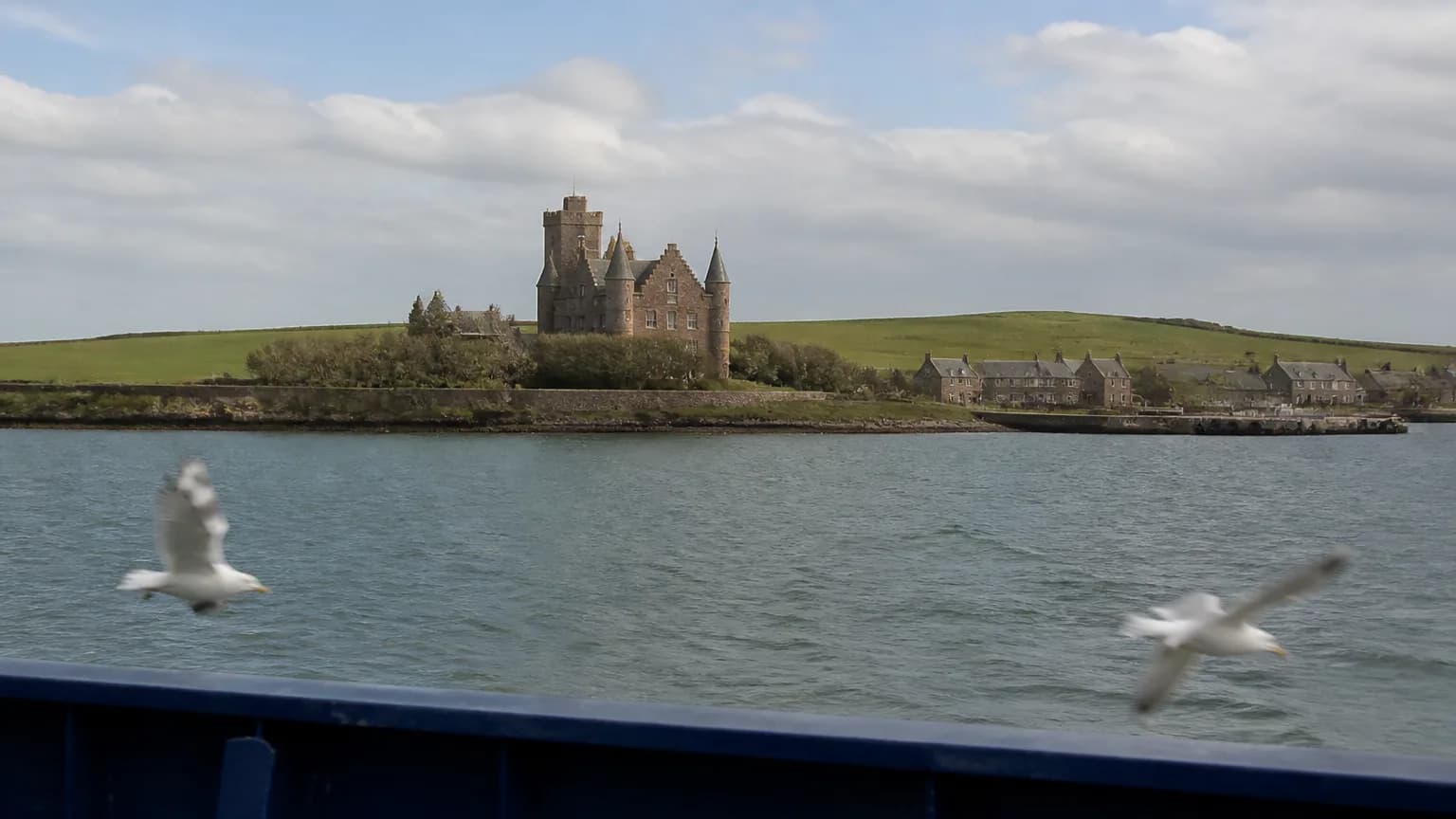
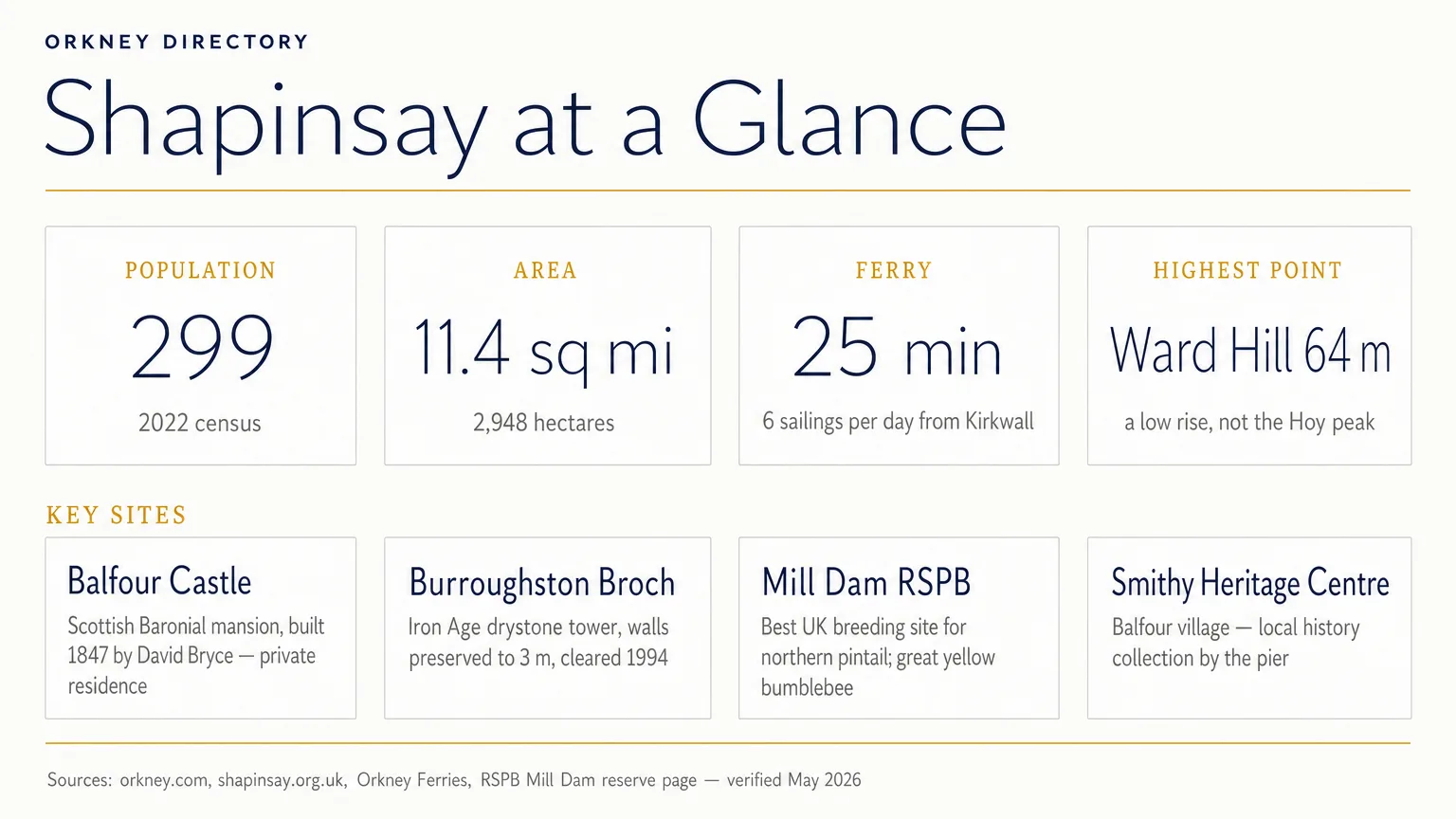
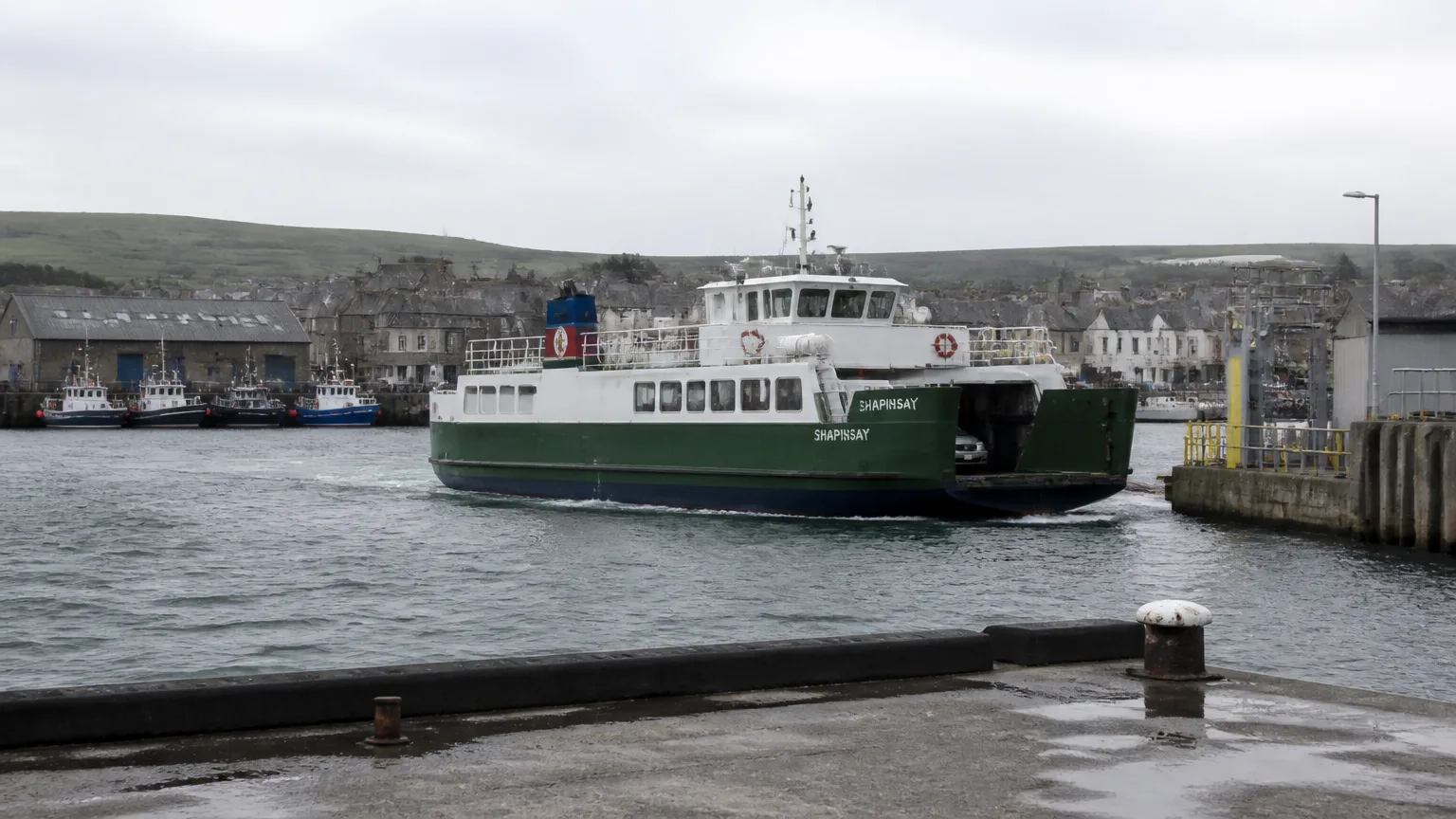
The ferry from Kirkwall takes twenty-five minutes — long enough for a cup of tea on the open deck before Shapinsay comes up bow-on across the Wide Firth. The silhouette of Balfour Castle's seven turrets sharpens against the green; the low headland of Burroughston tapers north; behind it sits the gentle 64-metre rise of Ward Hill (not the 479-metre Ward Hill on Hoy — Shapinsay's namesake is a friendly bump, not a mountain). By the time MV Shapinsay nudges the pier you can see the gulls over the RSPB hide at Mill Dam, where pintails breed in numbers almost no other corner of the UK matches. It is the rare Orkney island you can do justice to in a day, on a bike, one ferry there and one back. This is how.
Where is Shapinsay, and what makes it different?
Shapinsay sits immediately northeast of the Orkney Mainland, across the Wide Firth from Kirkwall. The journey aboard MV Shapinsay (built 1988 at Yorkshire Drydock) takes 25 minutes pier-to-pier — the easiest Orkney island day trip from the capital. Small islets break the firth on the southern side: Helliar Holm with its lighthouse, Broad Shoal, Grass Holm and the Skerry of Vasa, all visible off the port bow as you leave the harbour.
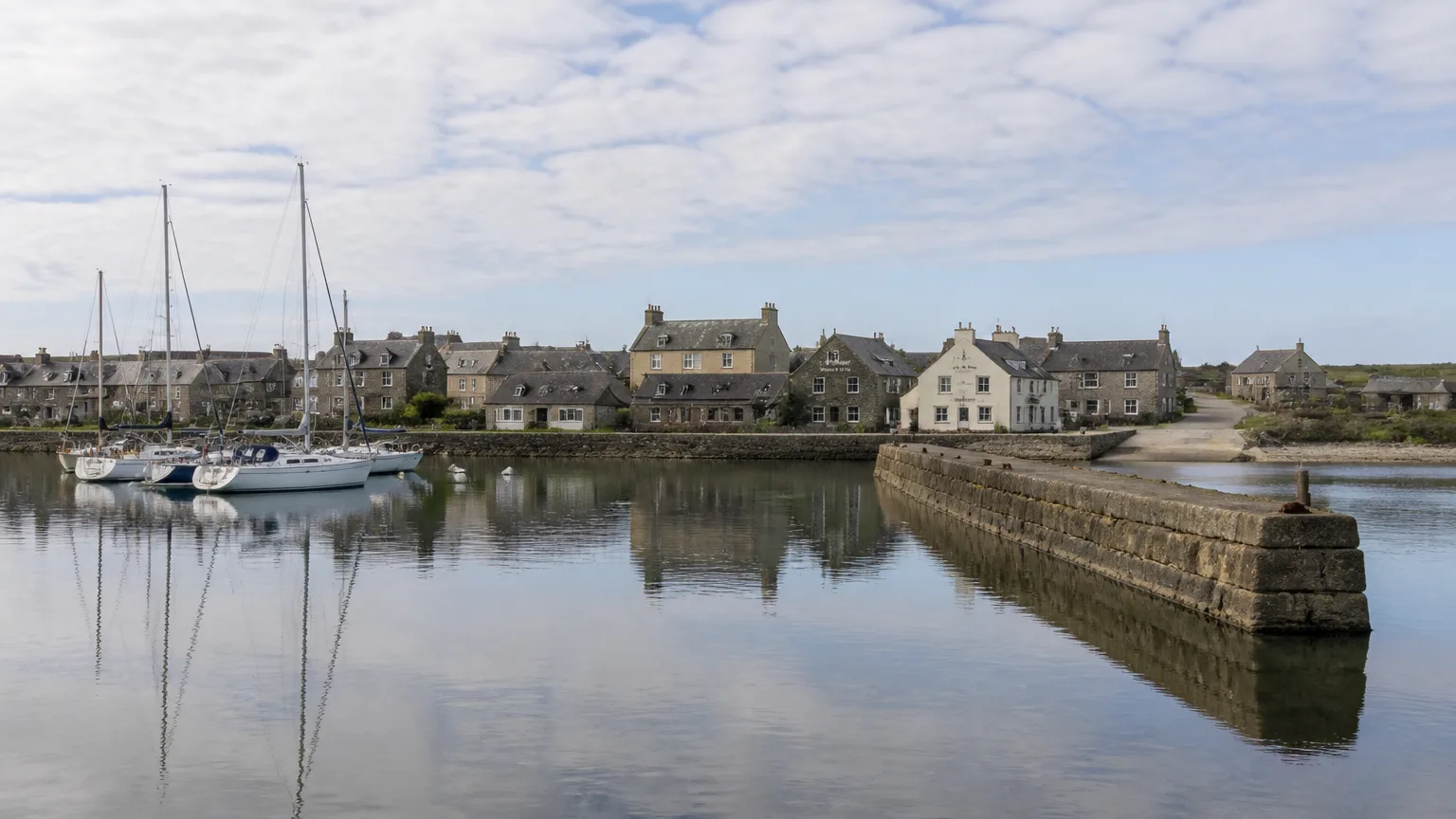
What sets Shapinsay apart is the deliberate, almost civic feel of the landfall. Balfour village is a planned 19th-century settlement, symmetrically arranged around the pier under the eye of the Balfour family who built the castle behind it. You step off into an estate village — gatehouse, salt store, pier buildings, neat stone terraces — because that is what it was designed to be.
Balfour Castle — David Bryce's Scottish Baronial Calendar House
The building you see from the ferry is the work of David Bryce, the Edinburgh architect whose name is shorthand for Victorian Scottish Baronial. Commissioned by Colonel David Balfour in 1843–4; it took more than three years to build, largely from stone quarried on the island, and was completed in 1847.
Where Bryce indulged the client was the conceit of the calendar house. Balfour Castle was originally planned with 7 turrets for the days, 12 external doors for the months, 52 rooms for the weeks, and 365 window sections for the days — one of the more elegant pieces of architectural numerology in Scotland.
The clarifying point: as of 2026, Balfour Castle has returned to being a private family home. It is not open as a hotel, exclusive-use venue, or for the Wednesday/Sunday tours older guides still list (confirmed across Undiscovered Scotland and the Shapinsay Development Trust). Current owners purchased it in February 2009 and ran it commercially for about seven years — first as a country-house hotel, then as an exclusive-use venue — before it became a private house again in 2017; the Balfour family held it from construction until the early 1960s, when it passed to Captain Tadeusz Zawadski and his wife Catherine, who restored it. Anything advertising the contrary is obsolete.
What you can do is admire it from the village and the public road. The pier view looks straight up the avenue; the shore path past the salt store and Dishan Tower gives the long elevation; a quarter-mile towards Burroughston opens a third angle across the parkland.
Planning your trip
Staying overnight? Compare live prices and availability across Orkney on Booking.com.
Compare Orkney staysWe earn a small commission if you book through this link, at no extra cost to you.
Burroughston Broch — Iron Age Walls and the Seal Headland
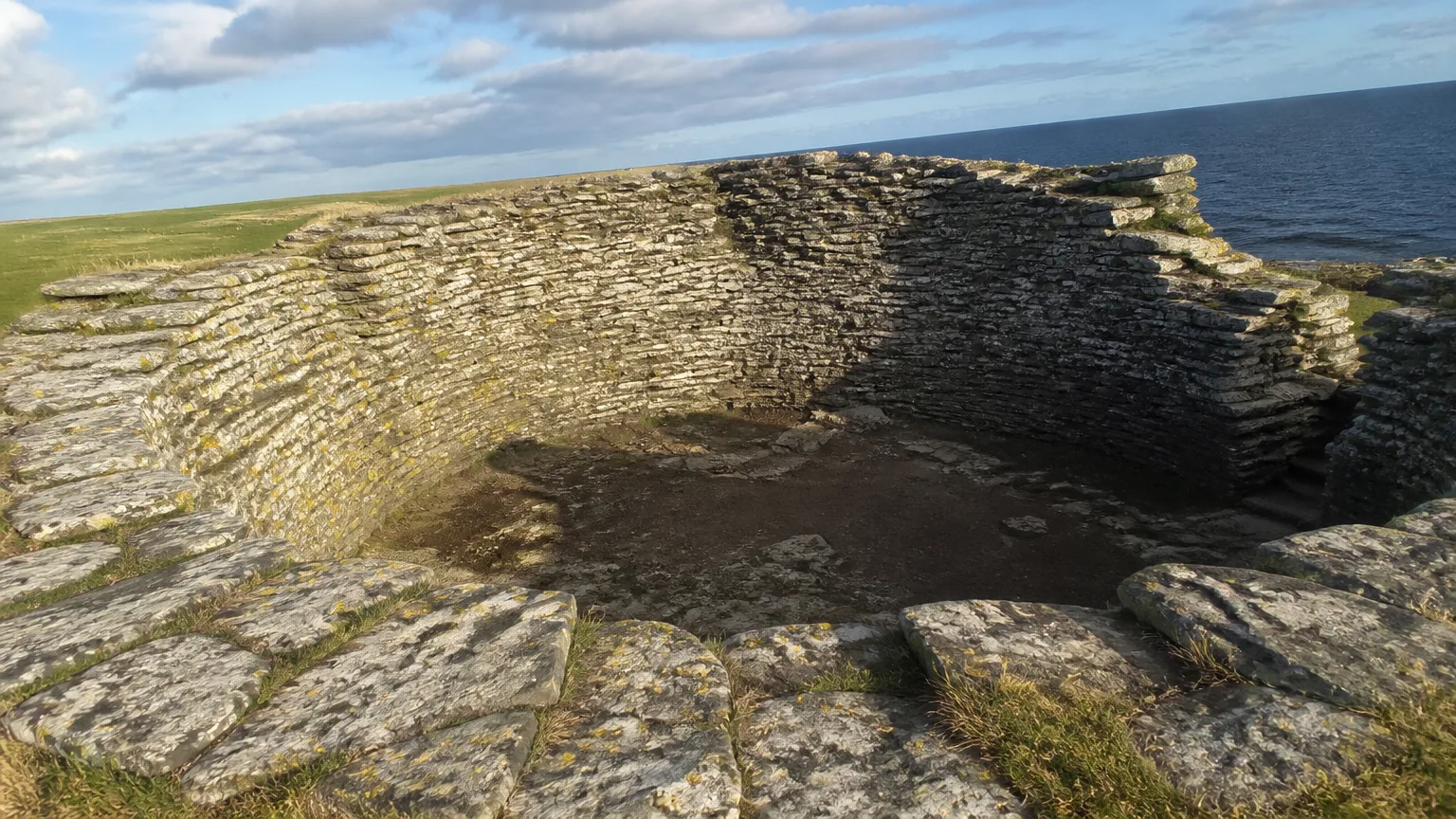
Four miles north of Balfour pier, a mile south of the Ness of Ork, sits Burroughston Broch — one of the most accessible and intact small brochs in Orkney. Iron Age, drystone, excavated around 1862 by Colonel David Balfour's estate workers under the direction of George Petrie, with Sir Henry Dryden recording the plans, and cleared out and consolidated again in 1994. No ticket office, no shop — just a small parking area at the road end and a short grassy path through grazing fields.
The walls stand to roughly 3 metres (10 ft) in places and are over 4 metres (13 ft) thick at the base — fortified towers with intramural galleries and a cleared interior you can walk into. You step down through the entrance passage, look up at the line of the wall, and feel the weight of the building in a way the more famous Broch of Gurness doesn't always allow.
The other reason to come is the wildlife. The headland overlooks rocks frequented by basking grey seals — on a calm summer afternoon you can stand on the wall and watch a colony hauled out below. Archaeology and seal-watching from the same point, dovetailing with Orkney's seals, whales and dolphins guide. Walk in is short and mostly level; not wheelchair-friendly. No facilities; bring water.
Mill Dam RSPB — Pintails, Sedge Warblers and the Great Yellow Bumblebee
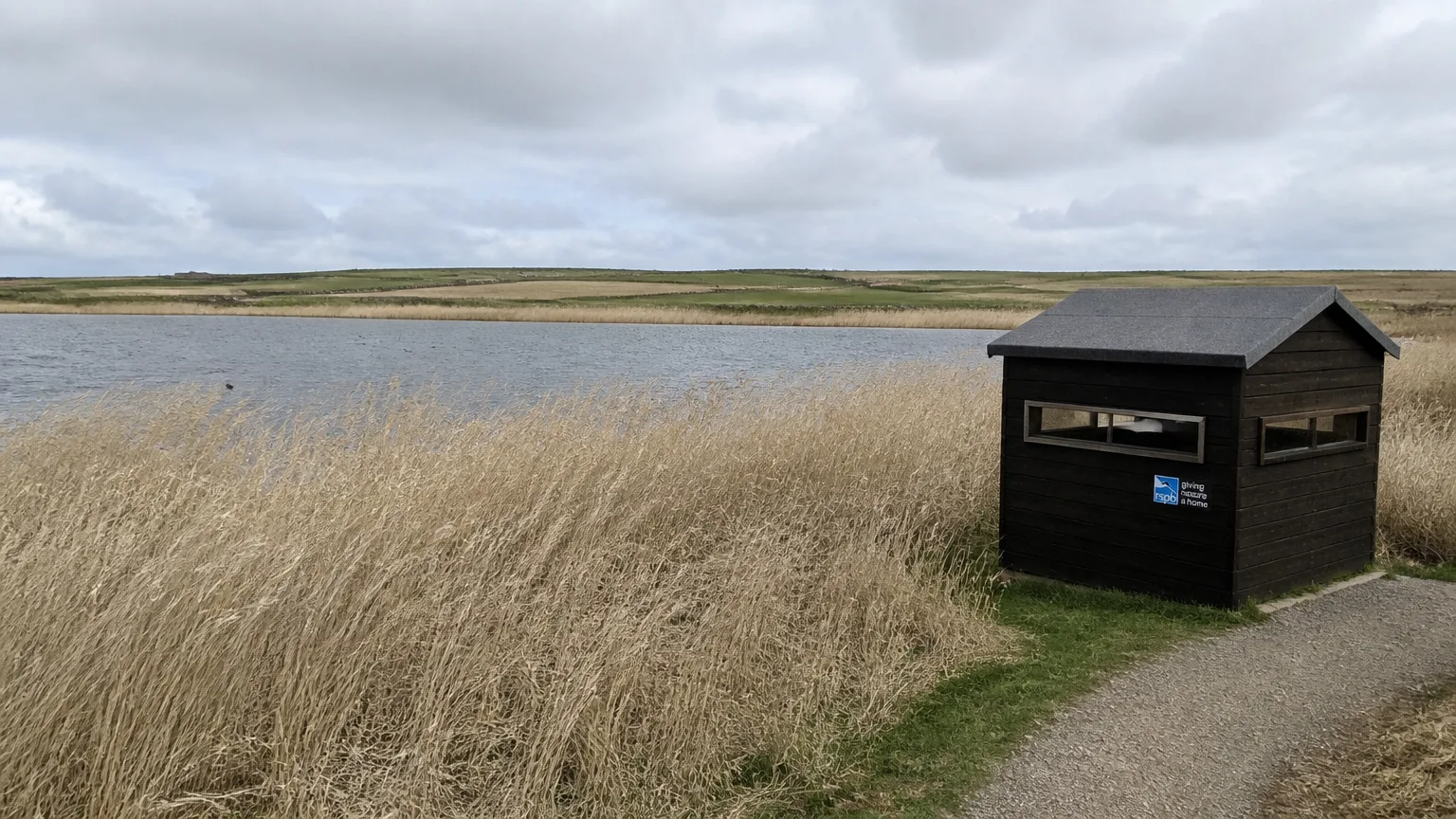
A mile north of Balfour pier — a 20-minute walk or a 5-minute cycle — the road slips past a freshwater wetland that quietly punches above its weight. Mill Dam was created in the mid-1800s when a natural marsh was dammed to power a small mill; it is now owned by the RSPB. Its standing comes from two species: resident breeding northern pintail in summer, and large flocks of wintering whooper swans.
The pintail is the headline. Mill Dam is one of a small number of UK sites associated with breeding pintail — though the RSPB's own reserve listing records pintail among its wintering wildfowl, so treat a summer sighting as a bonus rather than a certainty. Summer brings shoveler, tufted duck, wigeon, redshank, curlew, snipe and lapwing; winter fills it with wigeon, teal and mallard plus smaller numbers of shoveler, pintail, gadwall and whooper swan, while hen harrier, peregrine, merlin and sparrowhawk hunt the slopes above. The wildflower banks support the very rare great yellow bumblebee (Bombus distinguendus), one of the UK's most threatened bee species.
There is a single hide — not multiple — with panoramic views, level wheelchair access, and accessible toilets on the approach. Open at all times; no public access onto the reserve itself. May and June are best for pintail; August brings passage waders. For a wider seasonal calendar covering every Orkney birding hotspot, see the seasonal birdwatching calendar.
Balfour Village, the Smithy and Shapinsay's Green-Hydrogen First
Back in Balfour village, the amenities are small but real: Thomas Sinclair's general shop and post office (01856 711300), public toilets at the pier and the Boathouse, the Shapinsay Healthy Living Centre, and the focus of village life — The Smithy. A 19th-century blacksmith's workshop until recently, the Trust bought it in 2022, renovated it through 2023, and reopened it as a café, restaurant and bar on 12 July 2023 (01856 711243). Upstairs, the Shapinsay Heritage Centre is volunteer-run with seasonal, variable hours — ring the Trust before relying on it being open. Same caveat for The Smithy itself.
The bigger story most visitors miss is behind the village. Shapinsay is known in renewable-energy circles as a green-hydrogen pioneer. In August 2011 the Trust erected a community-owned 900 kW Enercon E44 wind turbine, operated by Shapinsay Renewables Ltd with profits flowing into community projects. In 2016 the island became a test bed for the BIG HIT project — Building Innovative Green Hydrogen systems in an Isolated Territory — a €10.9 million EU-funded scheme that installed a 1 MW electrolyser, splitting surplus turbine electricity into hydrogen.
That hydrogen heats the primary school, fuels council vehicles and has powered Orkney's first hydrogen fuel-cell vans. When you stand in the village by the pier — population 299, primary school of 23 — you are standing in the middle of an EU-funded science project most visitors don't realise they are walking through.
Getting to Shapinsay — Ferry from Kirkwall in 25 Minutes
The crossing is the easy bit. Orkney Ferries operates the OF4 route between Kirkwall and Balfour aboard MV Shapinsay, built 1988 at Yorkshire Drydock (35 m, 219 GT, 11 knots) — plenty for a 25-minute hop. The 2026 summer timetable runs 3 May to 27 September, with thinner winter timetables either side.
Third-party transit data lists approximately six sailings per day on weekdays (first typically around 08:15, last return around 17:30), shifting on Sundays and in winter — always check the current PDF on the Orkney Ferries website. Vehicle booking strongly recommended at book.orkneyferries.co.uk; the small ferry fills quickly on summer Saturdays. Foot passengers and bicycles do not need to book, and bicycles travel free — a quietly excellent piece of policy.
The Trust also runs an out-of-hours passenger-only ferry, bookable on 07901 575 162 or [email protected] — useful if you miss the last scheduled return. Winter crossings can be cancelled in southeasterly gales; check the live status in November–March. For wider context on flights, NorthLink ferries and inter-island connections, see how to get to Orkney.
The Day-Trip Plan — One Bike, One Ferry, One Café
Shapinsay is one of the rare Orkney islands you can fairly call a day trip. Quiet single-track roads, low terrain (Ward Hill is a 64-metre pedal, not a climb), and a coastal loop of roughly 17–20 km — longer than the 14 km some older guides quote, but well within reach for a confident family on hybrid bikes. A realistic 6–7 hour plan:
- 08:15 sailing from Kirkwall with a hire bike (the Trust also runs an island e-bike scheme via shapinsay.org.uk). Ashore at Balfour around 08:40. For shop names and rental logistics, see Orkney's island-hopping cycling routes.
- 09:00 — Burroughston Broch. North on the east coast road, roughly 6 km from the pier, 45 minutes at family pace. Half an hour at the broch and the seal headland.
- 10:30 — Mill Dam RSPB. Loop back via Mill Dam, another 4 km. Half an hour in the hide.
- 12:00 — Lunch at The Smithy in Balfour (call 01856 711243 ahead to confirm hours).
- 13:30 — Castle, salt store, shoreline walk. Past the Dishan Tower; the castle from the public road; Thomas Sinclair's for supplies.
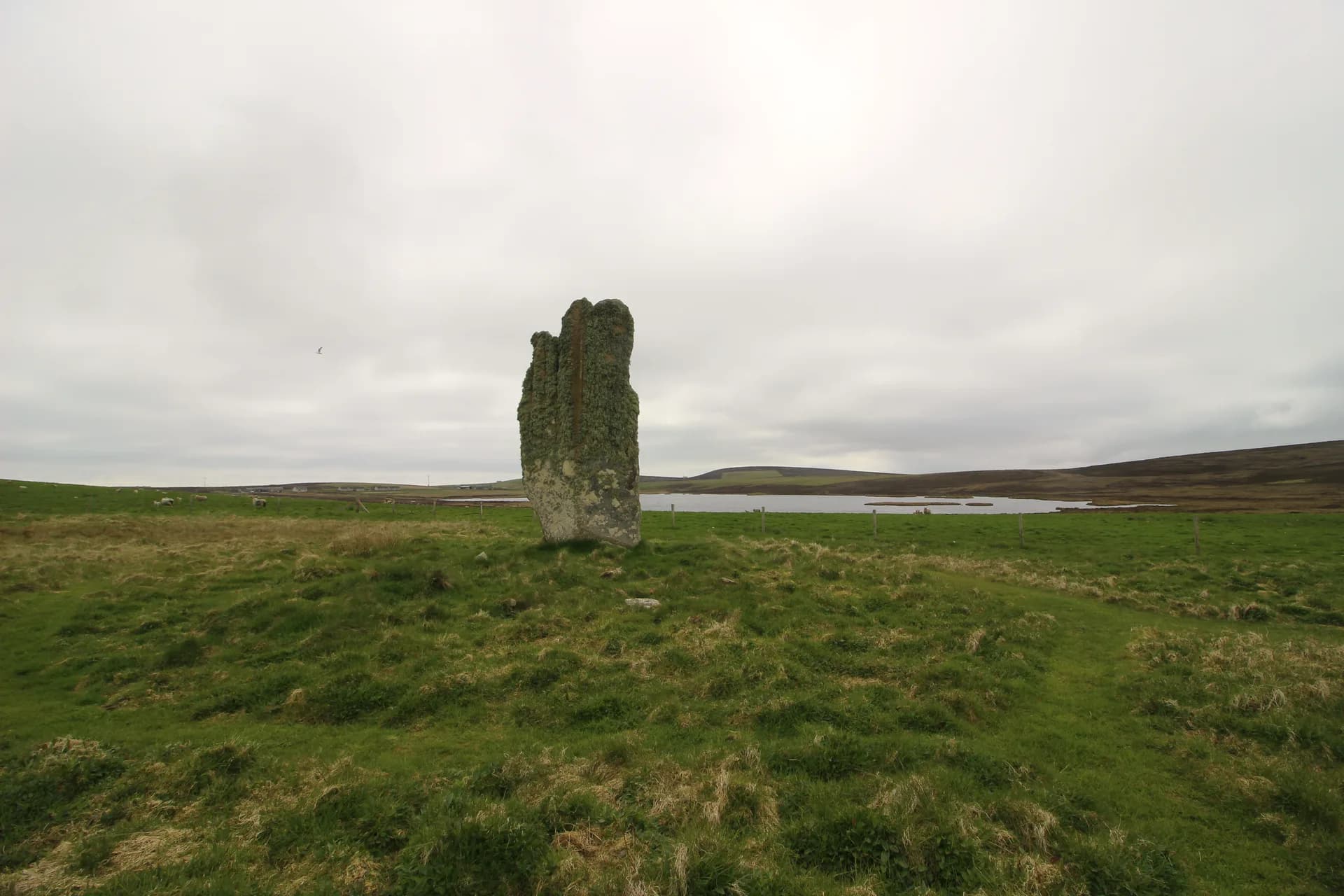
- 14:30 — Mor Stein (optional). The 5,000-year-old, 2.9-metre standing stone is a short cycle inland — Orkney's quietest Neolithic monument.
- Mid-afternoon return. Catch a ferry back to Kirkwall (in winter the last return is around 17:30).
The only thing that breaks the plan is the weather. Bring layers and a waterproof; if a squall blows through, the Smithy will look after you and the next ferry will still be there.
Frequently Asked Questions
Can you visit Balfour Castle on Shapinsay?
Not in 2026. Balfour Castle has returned to being a private family home — it is not a hotel, an exclusive-use venue, or open for the Wednesday/Sunday tours older guides still list. Triple-confirmed across Undiscovered Scotland, the 2026 Wikipedia entry and the Shapinsay Development Trust. You can admire it from the village, the pier and the public road; you cannot book a room or join a tour. Anything advertising the contrary is out of date.
How long does the ferry to Shapinsay take from Kirkwall?
About 25 minutes pier-to-pier on the Orkney Ferries OF4 route, aboard MV Shapinsay (built 1988 at Yorkshire Drydock). Approximately six sailings a day on weekdays (typically first around 08:15, last return around 17:30), reduced on Sundays and in winter. The 2026 summer timetable runs 3 May to 27 September — always check the live PDF on orkneyferries.co.uk. Vehicle bookings via book.orkneyferries.co.uk; foot passengers and bicycles travel without booking, and bicycles travel free.
Is there anywhere to stay on Shapinsay?
As of 2026 the Trust lists only two self-catering options: Iona Cottage at Elwick Bay (sleeps 6) and Greenatang on Airbnb. There is no hotel and no confirmed full-service guest house operating on the island. Older Tripadvisor listings reference B&Bs (Girnigoe, Karrawa, Hilton Farmhouse) that have not been confirmed as currently trading — verify directly. Many visitors book one of the hotels and guest houses in Orkney's capital and treat Shapinsay as a day trip.
Is Shapinsay good for children?
Yes for older children who can handle the 17–20 km cycle, and yes for younger children whose day revolves around the broch and the RSPB hide. Burroughston Broch is fun to clamber around (under supervision — walls are 3 m high with no railings); the seal-watching from the same headland holds attention; Mill Dam's accessible hide is a quiet half-hour. There is no playground or public toilet outside Balfour village — bring snacks, water and a sensible bathroom plan.
What does Shapinsay have to do with Washington Irving?
Washington Irving — author of Rip Van Winkle and The Legend of Sleepy Hollow, arguably the first internationally famous American writer — traces his paternal line directly to Shapinsay. His father William Irving Sr. was born here around 1731 at Quholme, a hamlet in the northeast of the island. He went to sea, served as a petty officer on the Falmouth–New York packet, married Sarah Sanders in Falmouth, and emigrated to America in 1763 (not 1731 — two dates some sources merge). Washington himself was born in New York in 1783. Quholme is private farmland today, but the literary-tourism connection is genuine and largely undeveloped.
Sources & further reading
The facts in this guide were checked against the following authoritative sources.
- RSPB — Mill Dam Reserve, Shapinsay — reserve species, creation date
- Historic Environment Scotland — Balfour Castle designed landscape — architect, patron and construction dates
- Shapinsay Development Trust — Balfour Castle — the calendar-house design
- Historic Environment Scotland — Hillock of Burroughston, broch (SM1421) — scheduled monument designation and location
- Orkney Ferries — Timetables — Kirkwall-Shapinsay crossing