Quick Navigation
- A Thirteen-Hundred-Year Neolithic Civilisation
- The Standing Stones of Orkney: Ring of Brodgar & Stones of Stenness
- The Heart of Neolithic Orkney — Four Monuments, One Inscription
- Ness of Brodgar — A 20-Year Excavation, Reburied in 2024
- Maeshowe and the Winter Solstice Alignment
- Knap of Howar — Even Older, on Papa Westray
- Visiting the WHS — Practical Notes
- Conservation Pressures — Erosion, Climate, Visitor Wear
- Frequently Asked Questions
- What is the Heart of Neolithic Orkney?
- How old are the Neolithic sites in Orkney?
- Are these sites really older than the Pyramids?
- Can you still visit the Ness of Brodgar?
- Do you need to book Maeshowe in advance?
- Sources & further reading
Five thousand years before the Vikings, a thousand years before the Pyramids of Giza, farmers on the Orkney Mainland built a stone village, raised a passage tomb that catches the winter solstice sun, and erected two stone circles either side of a strip of land they kept for themselves. Four of those sites became a UNESCO World Heritage Site in 1999. A fifth — the Ness of Brodgar — was excavated for twenty years and quietly buried again in 2024. This is what's still there to see, and how to plan a visit.
A Thirteen-Hundred-Year Neolithic Civilisation
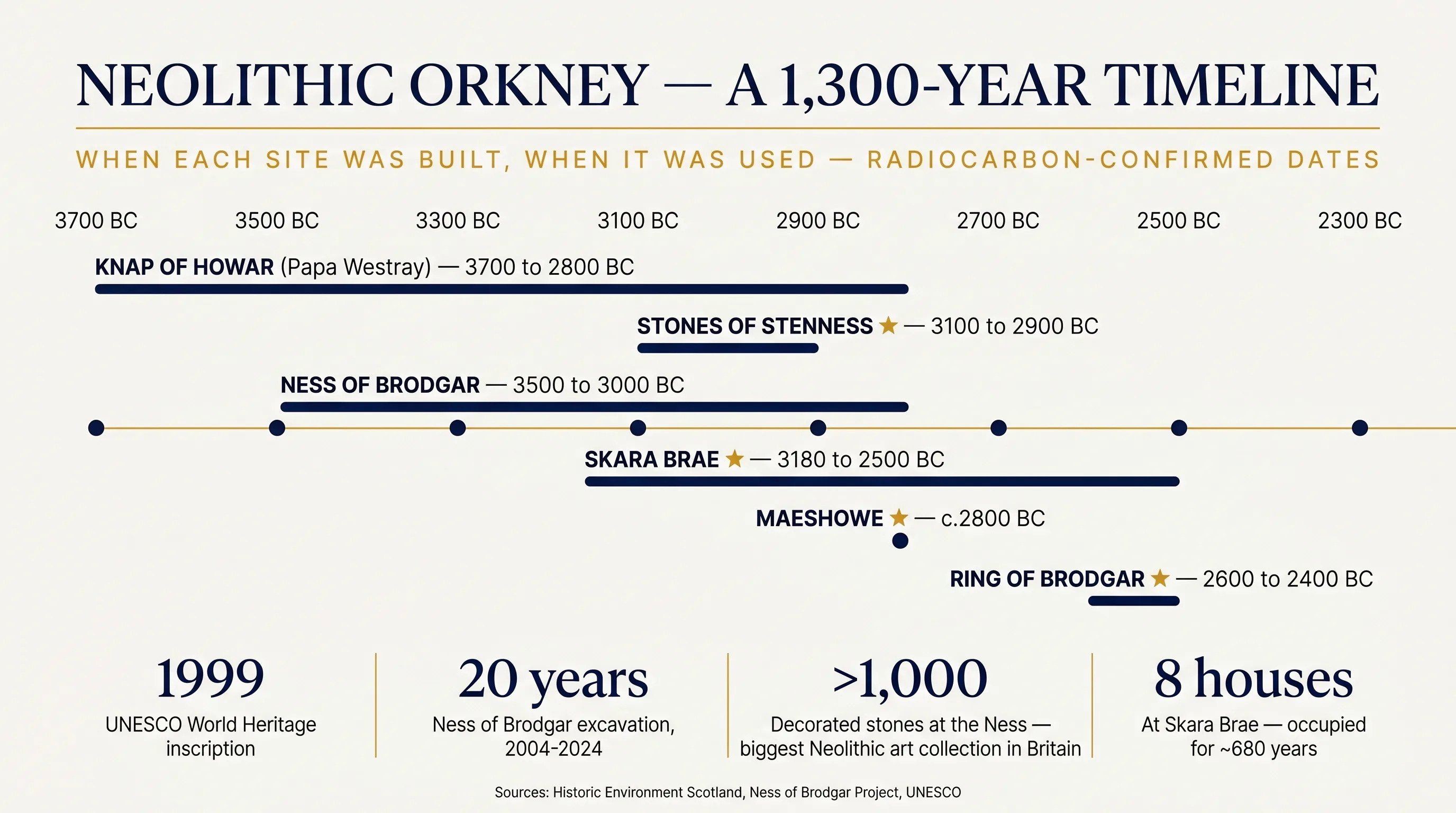
The Neolithic on Orkney runs from about 3700 BC (Knap of Howar on Papa Westray) to about 2400 BC (Ring of Brodgar) — a longer continuous occupation than the entire span between us and Charlemagne. The first stone houses at Knap of Howar were standing centuries before the Pyramids of Giza; Skara Brae and the Stones of Stenness are still older than Stonehenge's stone phase by some 600 years.
What makes Orkney unusual is not just the age of the sites but their density. Within an eight-kilometre radius on the West Mainland — roughly the area of central Edinburgh — sit the four UNESCO-inscribed monuments plus the Ness of Brodgar, the Barnhouse village, and dozens of unexcavated mounds and cairns. This was a Neolithic capital.
The Standing Stones of Orkney: Ring of Brodgar & Stones of Stenness
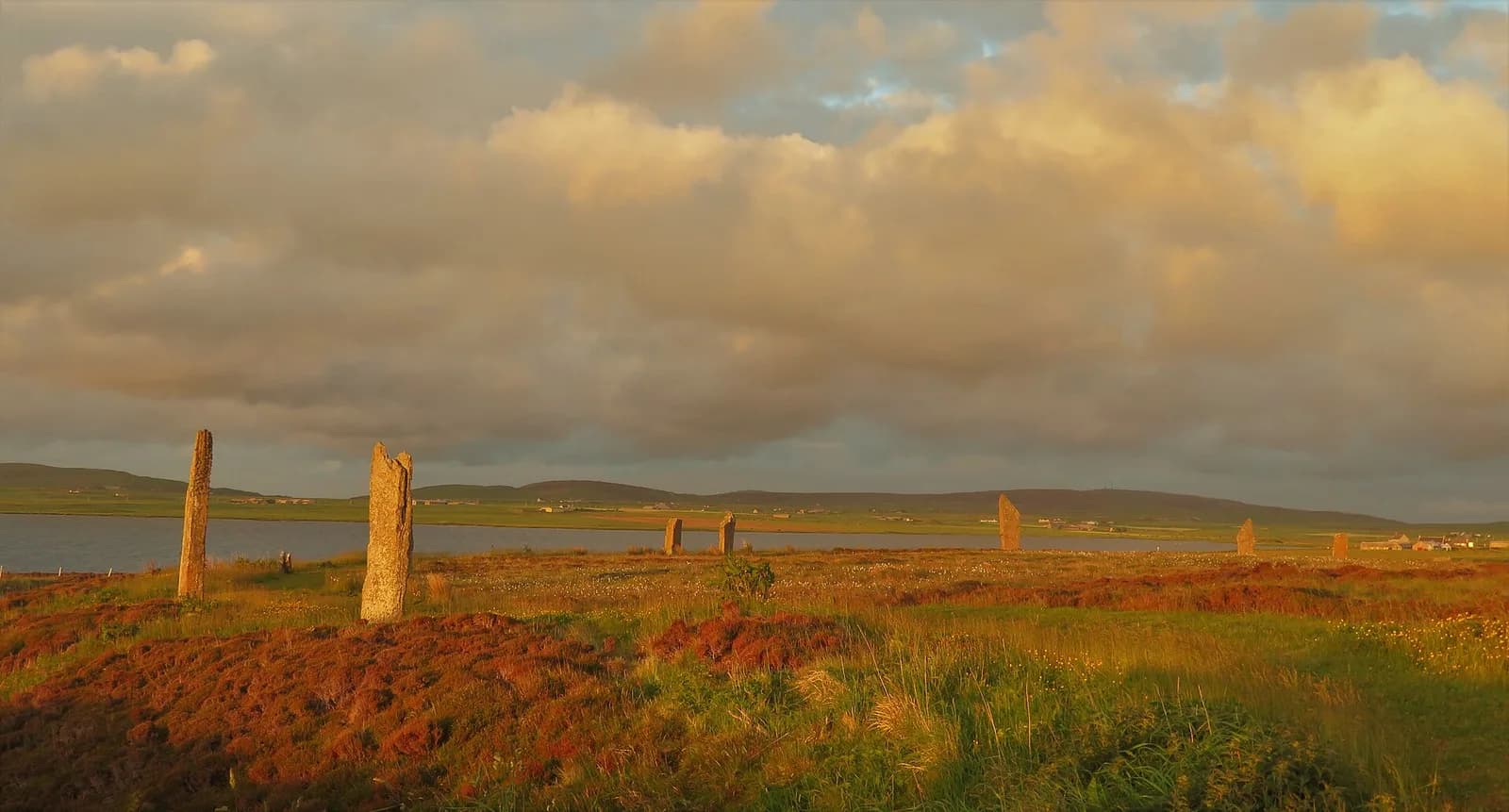
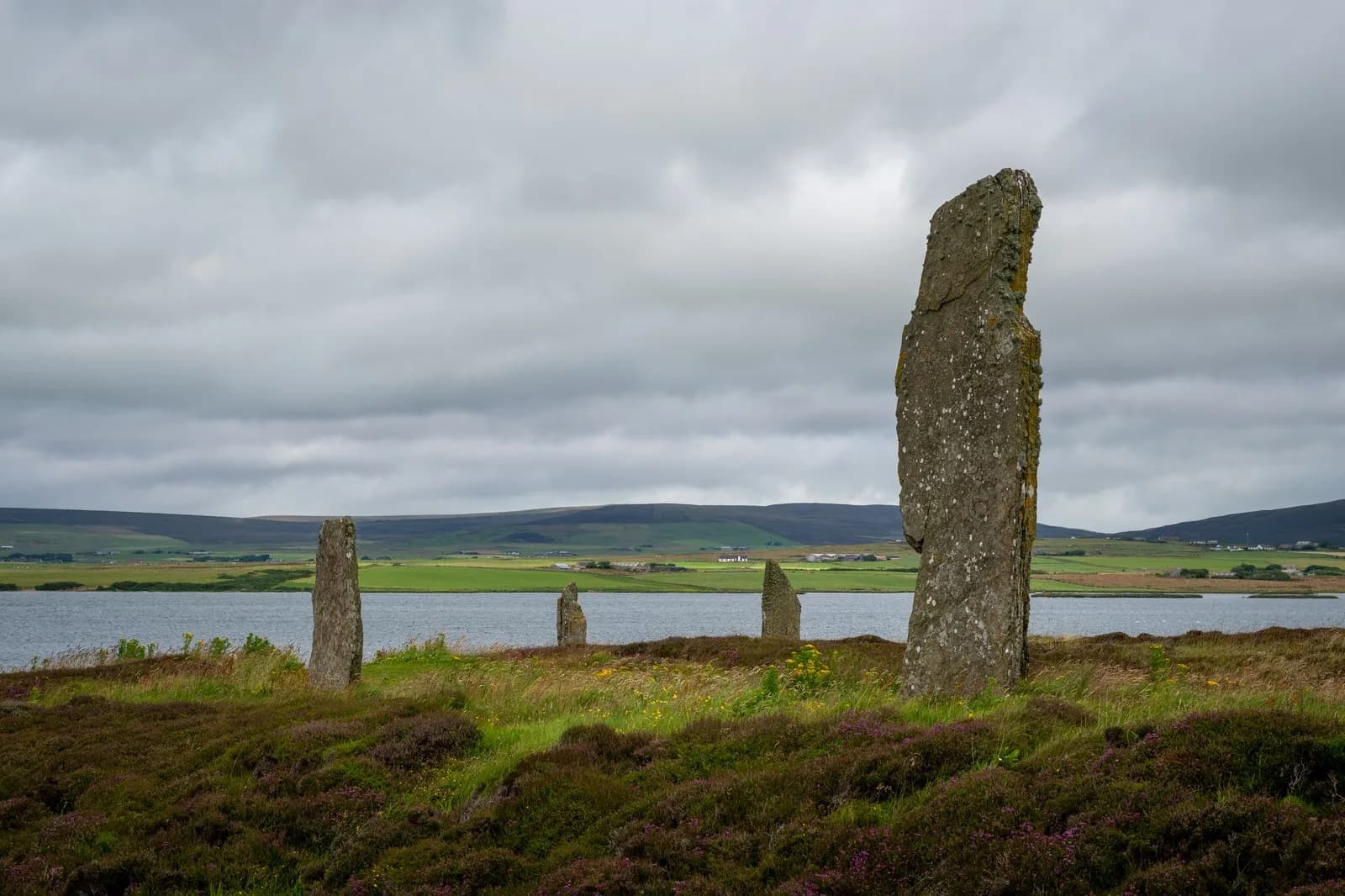
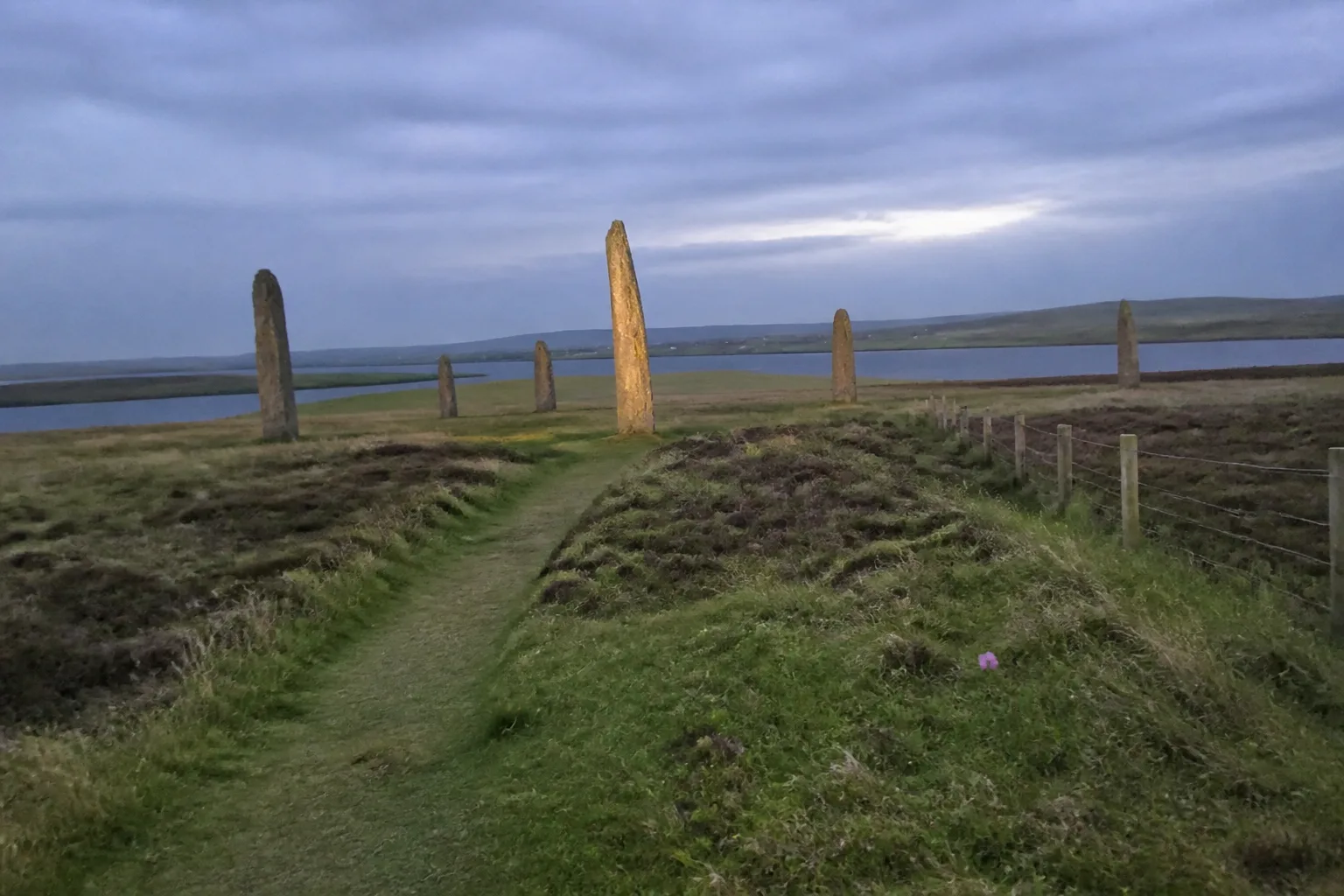
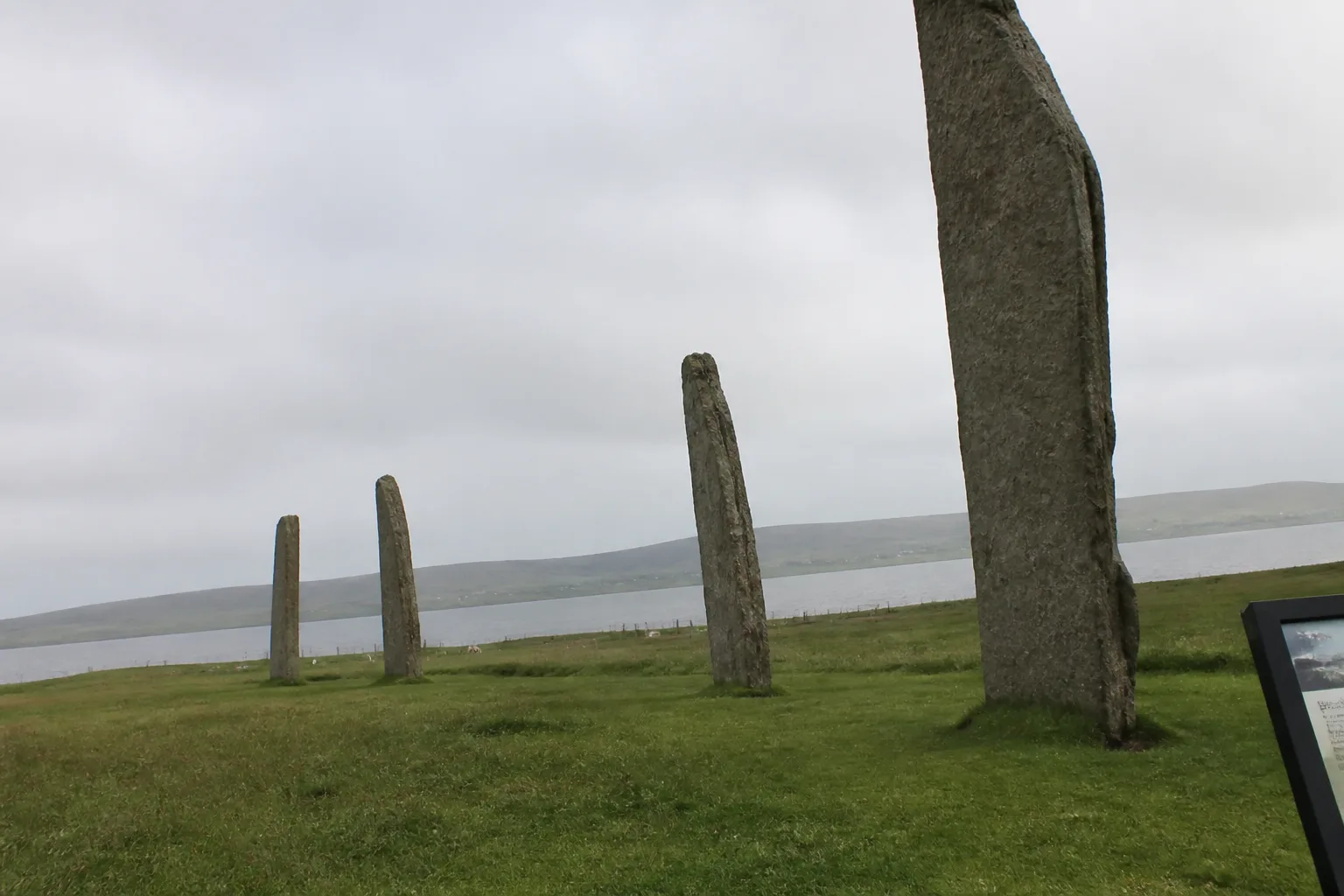
Orkney's standing stones are two Neolithic circles a mile apart on the West Mainland. The Ring of Brodgar, raised around 2600–2400 BC, keeps 36 of its original 60 stones across a 104-metre ring; the older Stones of Stenness, erected by about 3100 BC, keeps 4 of 12, the tallest near 5.7 metres. Both are free to visit, open 24/7, and form part of the same UNESCO World Heritage Site detailed below.
Planning your trip
Staying overnight? Compare live prices and availability across Orkney on Booking.com.
Compare Orkney staysWe earn a small commission if you book through this link, at no extra cost to you.
The Heart of Neolithic Orkney — Four Monuments, One Inscription
Inscribed by UNESCO on 2 December 1999 under criteria (i), (ii), (iii) and (iv) — masterpiece of human creative genius, exchange of human values, unique testimony to a vanished culture, outstanding architectural ensemble.
Ness of Brodgar — A 20-Year Excavation, Reburied in 2024
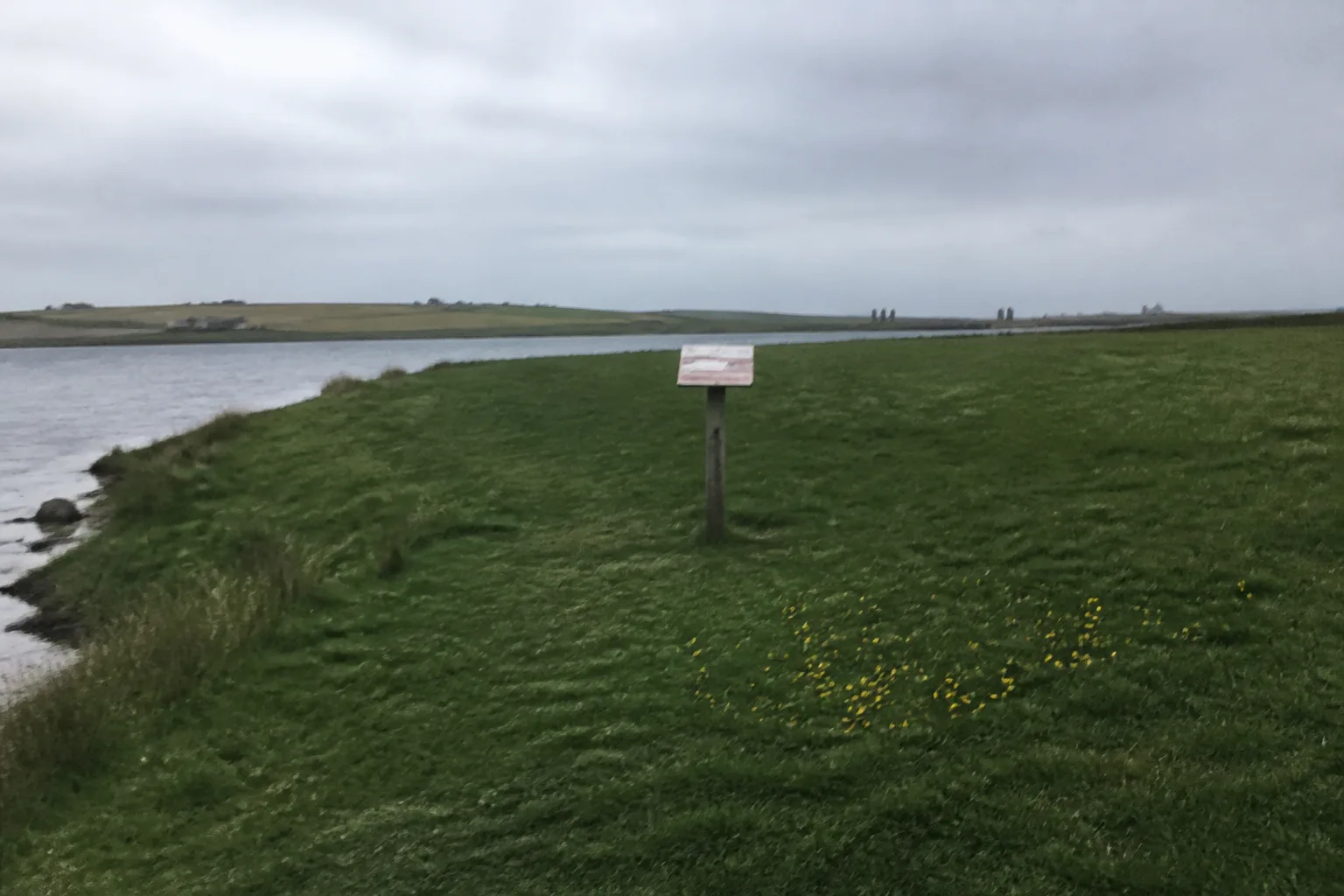
Between the Ring of Brodgar and the Stones of Stenness, on a narrow neck of land between two lochs, lies the most important Neolithic discovery of the last quarter-century. The Ness of Brodgar was excavated from 2004 to summer 2024 — 20 years of fieldwork that fundamentally changed how archaeologists understand Neolithic Britain.
- What was found: a monumental building — nicknamed the "Cathedral" in press coverage, though the excavators themselves don't use the term — measuring over 20 m × 19 m externally, with walls over 4 m thick, a complex of inter-connected stone structures spanning the centuries 3500–3000 BC, and the largest assemblage of Neolithic art anywhere in Britain — over 1,000 decorated stones with chevrons, zigzags, the "Brodgar Butterfly" motif, and cup-marks.
- The painted walls. In July 2010 the team found the first evidence of Neolithic painted decoration in Britain — about 30 stones with haematite-red ochre mixed with milk, fat or egg as a binder. Confirms that these monuments were not the bare grey we see now; they were colourful.
- Why bury it again? The local sandstone laminates and crumbles when exposed to weather (unlike Skara Brae's harder beach stone). Twenty years of seasonal exposure meant accelerating damage. The site has been backfilled to protect what remains for future archaeology with techniques we don't have yet.
- What you can see now. A grass field. The interpretation panels are still there. Pre-booked private tours (£13 per person donation, minimum £300) are available through the Ness of Brodgar Trust. Virtual tours and the multi-volume publication programme will keep the site accessible to researchers and the public for decades.
Maeshowe and the Winter Solstice Alignment
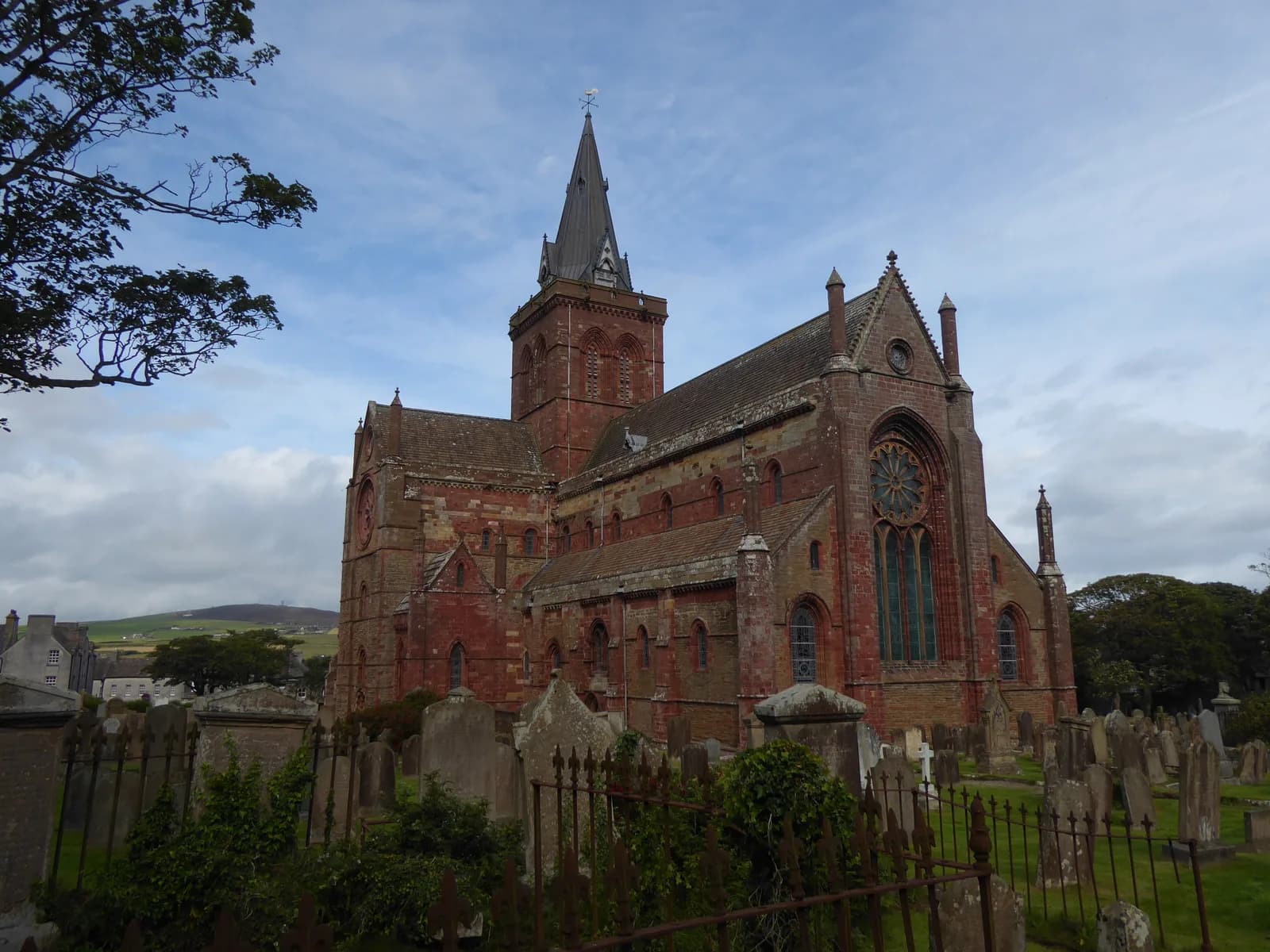
From mid-November to mid-January, as the setting sun drops behind the Ward Hill of Hoy, light shines straight down the 10-metre entrance passage of Maeshowe and lights the rear wall of the central chamber. On winter solstice (21 or 22 December), the shaft of light hits the back wall at ~14:40 GMT and disappears by ~15:05.
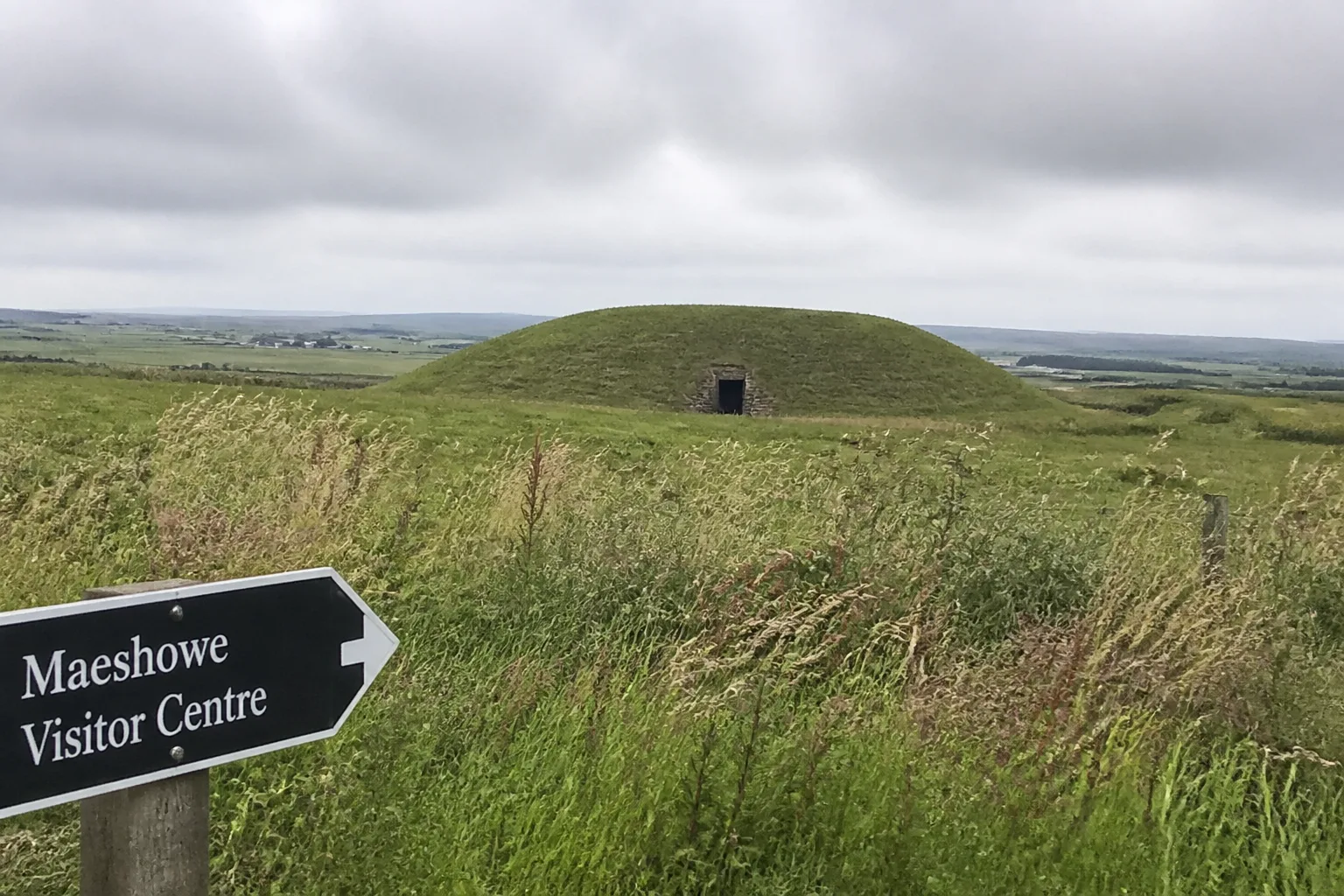
The alignment is too precise to be coincidence. The sun on solstice day aligns Maeshowe's passage with the Barnhouse Stone, an outlying monolith ~800 m to the south-west. Historic Environment Scotland has supported a livestream tradition in recent years — the 2024 winter solstice was filmed live as the light entered the chamber, and the recording remains available on the Archaeology Orkney site.
If you can't be there in December, the Maeshowe webcam runs through the solstice window each year so you can watch the sun set into Hoy in real time.
Knap of Howar — Even Older, on Papa Westray
The four inscribed sites are world-famous, but they are not Orkney's oldest. Out on the small island of Papa Westray sits Knap of Howar — two stone-built farmhouses on a site occupied from about 3700 BC. The surviving buildings themselves went up in the latter part of the fourth millennium BC — a 2025 re-dating commissioned by Historic Environment Scotland moved them later than the long-quoted figure — and they are still the oldest preserved standing houses in Northern Europe, up before Skara Brae.
- Two adjoining houses with internal stone benches, dressers, and partition slabs — the same Orkney Neolithic architectural vocabulary that would later appear at Skara Brae.
- Free open access; reach Papa Westray by inter-island ferry from Westray, or by Loganair's Westray–Papa Westray flight, the world's shortest scheduled flight at 90 seconds.
- Day trippers can comfortably do Knap of Howar, the Holm of Papay chambered cairn and the cliff-top RSPB reserve in a single visit.
Visiting the WHS — Practical Notes
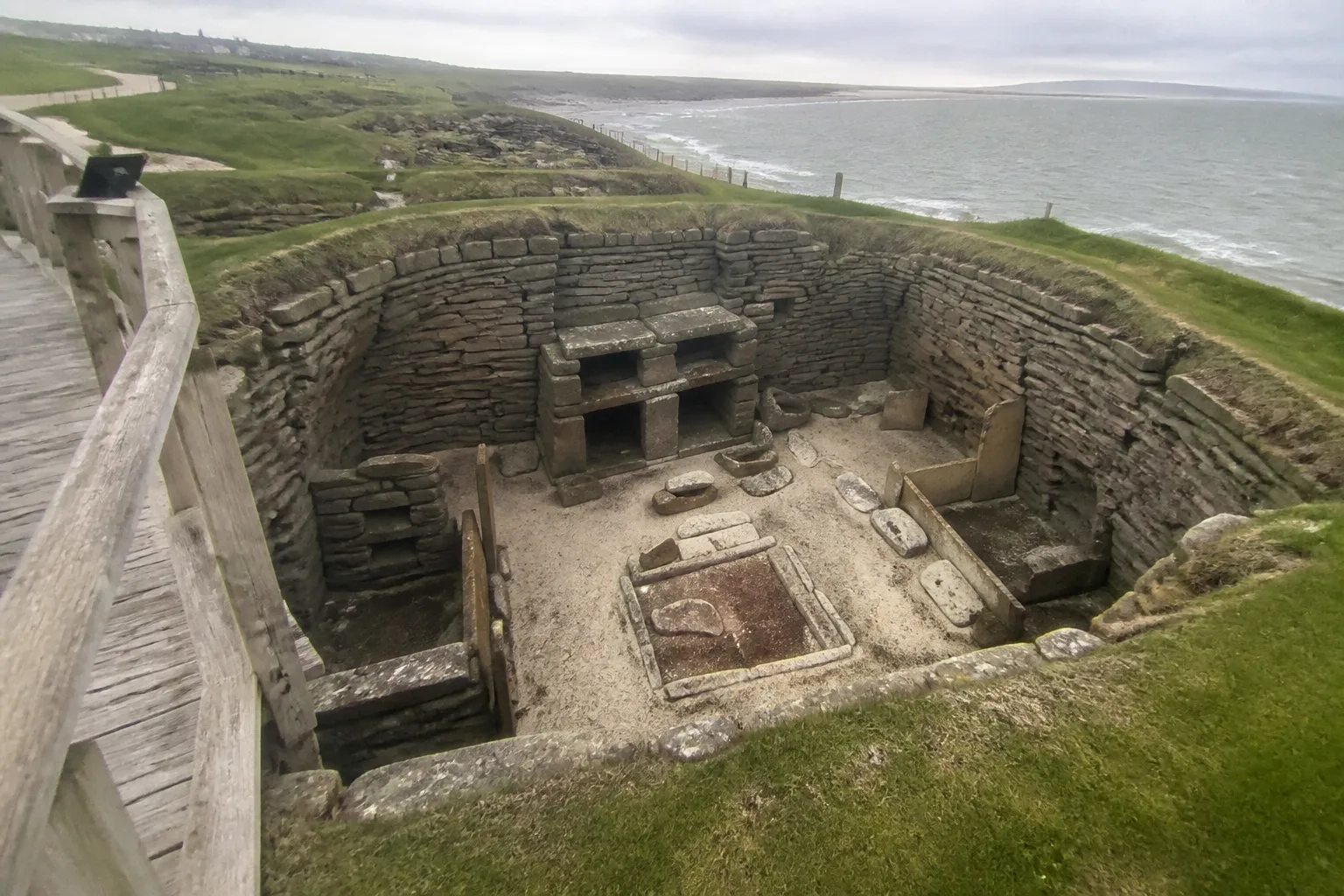
- Skara Brae & Skaill House — combined ticket Apr–Oct (Skaill House closed in winter). Apr–Sep daily 09:30–17:30 (last entry 16:30); Oct–Mar 10:00–16:00. Pre-booking essential in summer. New evening tours added for the 2025 season.
- Maeshowe — guided tour only from the visitor centre at Stenness. Pre-booking is effectively mandatory; the small chamber takes only about 25 people per tour. Check in 15 minutes early.
- Stones of Stenness — free, open access 24/7 from a small lay-by car park.
- Ring of Brodgar — free, open access 24/7 from the dedicated car park. Follow the one-way path; periodic inner-path closures protect the turf from visitor wear.
- Where to base yourself — the West Mainland is the closest area, with Finstown putting you a 10-minute drive from the WHS sites and 20 minutes from Stromness. Stromness itself works well if you also want easy access to the Hoy ferry.
- Tour vs self-drive. Self-drive gives you flexibility and the chance to catch Brodgar in evening light without the day-trip crowds. A private guided tour is the better choice if you want context and stories tied to specific stones.
Conservation Pressures — Erosion, Climate, Visitor Wear
- Skara Brae and the sea. Historic Environment Scotland classes Skara Brae among Scotland's most climate-vulnerable sites. The Bay of Skaill has been monitored by laser scan and drone since the early 2010s. Current strategy is "twin-track" — managed retreat across most of the bay, sea-defence improvements at the Skara Brae frontage itself.
- Climate stress on heritage sites generally. HES recorded 281 weather-related closures across its sites in 2025, the highest in a decade.
- Ring of Brodgar visitor wear. 80,000+ visitors a year on a low-lying grass site between two lochs makes drainage and turf management a constant battle. The HES Monument Monitor citizen-science project crowdsources visitor photos to track wear over time.
- The historic vandalism. The Stones of Stenness lost the famous Odin Stone in 1814 (a tenant farmer trying to clear his field; locals stopped him before he toppled more). A 1972 party brought down another stone, since reset. The Ring of Brodgar's stones have been graffiti-carved sporadically since the Victorian era.
Frequently Asked Questions
What is the Heart of Neolithic Orkney?
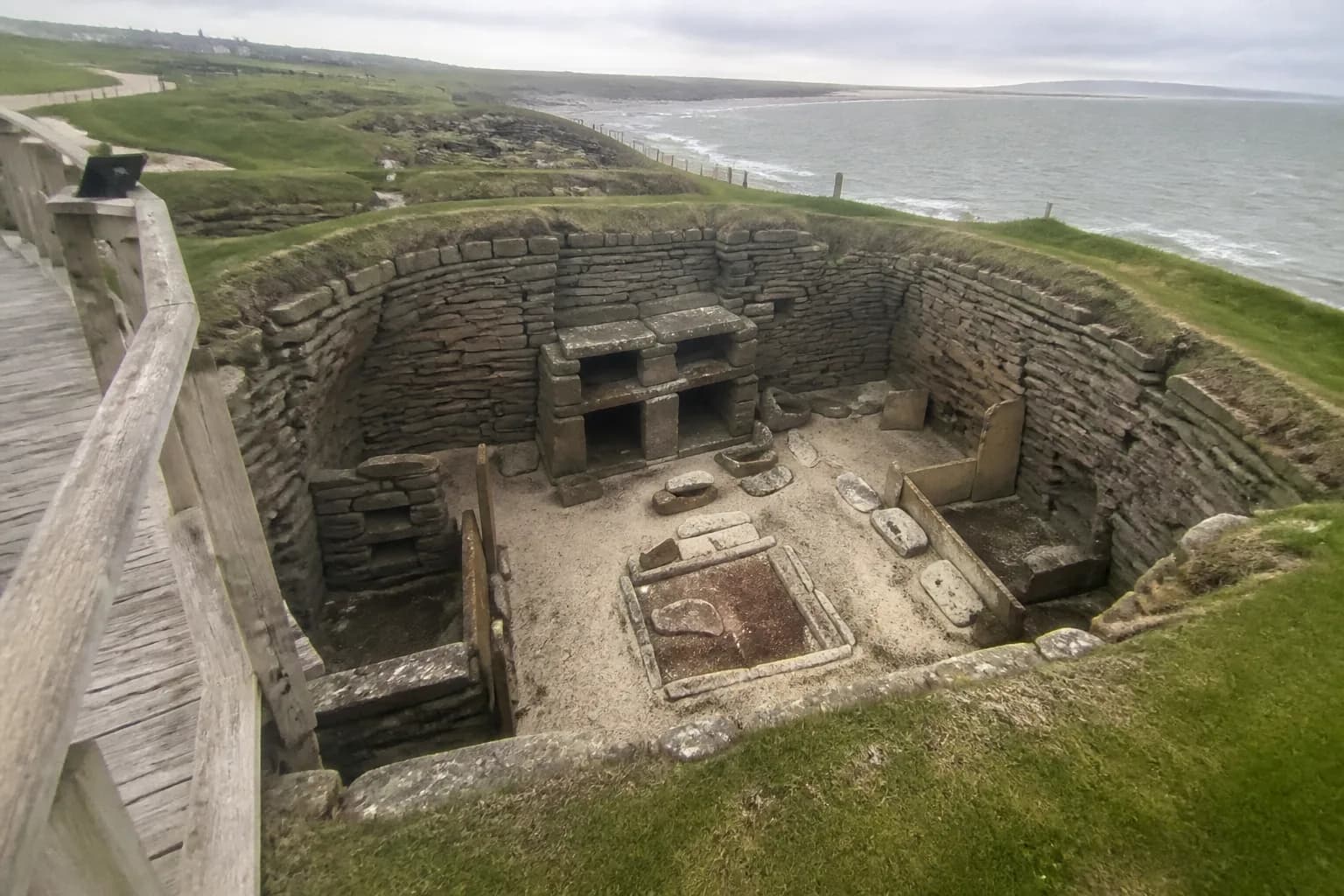
It is the UNESCO World Heritage Site inscribed in 1999, comprising four monuments on the Orkney Mainland: Skara Brae (a stone-built village), Maeshowe (a passage tomb), the Stones of Stenness (a stone circle and henge), and the Ring of Brodgar (a much larger stone circle and henge). The buffer zone includes a number of other Neolithic sites, including the Ness of Brodgar.
How old are the Neolithic sites in Orkney?
The earliest, Knap of Howar on Papa Westray, dates from about 3700 BC. The four inscribed sites range from the Stones of Stenness (c. 3100 BC) and Skara Brae (c. 3180–2500 BC) through Maeshowe (c. 2800 BC) to the Ring of Brodgar (c. 2600–2400 BC). The whole Neolithic phase on Orkney lasts about 1,300 years.
Are these sites really older than the Pyramids?
Skara Brae and the Stones of Stenness are. Both predate the Great Pyramid of Giza (c. 2560 BC) by roughly 500 years. The Ring of Brodgar is roughly contemporary with the Pyramids and Stonehenge's stone phase. The "older than Stonehenge / older than the Pyramids" framing applies precisely to Stenness and Skara Brae, not to Brodgar.
Can you still visit the Ness of Brodgar?
The active dig closed at the end of summer 2024 and the site has been reburied. Pre-booked private tours (minimum donation of £300, or £13 per person, whichever is greater) are available through the Ness of Brodgar Trust. Otherwise, the site is now grassed over — interpretation panels remain, but there is nothing to see at ground level.
Do you need to book Maeshowe in advance?
Yes — guided tours have limited capacity and sell out, particularly in summer and during the December solstice window. Book through Historic Environment Scotland; tours leave from the visitor centre on the A965 at Stenness. Check in 15 minutes early.
A self-drive day takes in Stenness, Brodgar, Maeshowe and Skara Brae comfortably; add Skaill House and the Bay of Skaill clifftop walk for a fuller picture. A 3-day Orkney itinerary typically gives the WHS sites a full morning plus a return at sunset to Brodgar. Stay in Stromness or the West Mainland and you'll be a fifteen-minute drive from every monument that matters.
Sources & further reading
The facts in this guide were checked against the following authoritative sources.
- Maeshowe Chambered Cairn — Historic Scotland — passage length and site facts
- Ness of Brodgar Project — Maeshowe winter solstice — solstice alignment and light shaft details
- The Ness of Brodgar Project — Structure Ten — building dimensions and wall thickness
- The Ness of Brodgar Project — painted walls — which structures the pigment was actually found in
- Orkney.com — Orkney history — UNESCO Heart of Neolithic Orkney context