Quick Navigation
- Key Takeaways
- Why the Orkney Sky Is a Destination in Its Own Right
- What Cloud Tourism Actually Looks Like on These Islands
- Sky-Gazing and Cloud Tourism: The Orkney Weather Calendar
- The Simmer Dim: Orkney's Most Extraordinary Sky-Gazing Phenomenon
- Dark Skies, Starbathing, and the Aurora Above the Archipelago
- Atlantic Storm-Watching: The Cloud Tourism Case for Autumn and Winter
- Self-Catering Accommodation Orkney: Best for Sky-Gazing Stays
- Orkney Islands Accommodation: Best for Different Sky-Gazing Budgets
- Planning Your Sky-Gazing and Cloud Tourism Trip: Practical Notes for 2026
- Orkney Islands Accommodation: Our Recommendations by Sky-Gazing Priority
- Conclusion
- Frequently Asked Questions
- Is Orkney worth visiting specifically for sky-gazing and cloud tourism in 2026?
- What is the best month for aurora viewing and dark-sky stargazing in Orkney?
- Can I do cloud tourism in Orkney without a car?
- What is self-catering accommodation in Orkney like for sky-gazing trips?
- Is the Simmer Dim actually visible, or is it overhyped?
- How do I find Orkney islands accommodation close to the best dark-sky spots?
- What does a sky-gazing trip to Orkney actually cost in 2026?
- Sources & further reading
A remarkable 62% of global travelers told Booking.com they were considering a dark-sky destination — the top trend in its 2025 Travel Predictions, drawn from a survey of 27,000 travelers to experience what tourism researchers now call "starbathing" — and if you are among them, sky-gazing and cloud tourism in Orkney belongs near the top of your shortlist. The archipelago sits at nearly 59° north latitude, a position that delivers eighteen hours of midsummer daylight, six-hour winter days of extraordinary low-angle gold, and a sky so actively theatrical — in all four seasons — that the horizon itself becomes the main attraction.
Key Takeaways
| Question | Answer |
|---|---|
| Is Orkney good for sky-gazing and cloud tourism? | Exceptionally so. Low light pollution, a dramatic Atlantic sky, 18 hours of midsummer light, and the famous Simmer Dim make Orkney one of Britain's finest destinations for cloud watching and celestial observation. |
| When is the best time for sky-gazing in Orkney? | Midsummer for the Simmer Dim and prolonged twilight. Autumn and winter for Aurora Borealis and dark-sky stargazing. Spring for dramatic cloud formations and fast-moving Atlantic weather systems. |
| What is cloud tourism? | A growing travel trend where visitors choose destinations specifically for their cloudscapes, dramatic weather, and atmospheric sky conditions — the opposite of sun-chasing. |
| What Orkney islands accommodation suits sky-gazers? | Self-catering properties in rural locations offer the best unobstructed sky views. We cover the best options in detail below, from budget stays to luxury properties across the Mainland. |
| Do I need specialist equipment for cloud tourism in Orkney? | No. The Orkney sky performs without prompting. A good waterproof jacket matters far more than a telescope on most visits. |
| Is Orkney a dark-sky destination? | The outer isles and rural Mainland carry very low light pollution readings. Orkney is not formally designated, but in practice the sky conditions rival certified dark-sky sites across Scotland. |
| What does it cost to base yourself in Orkney for sky-gazing? | It depends heavily on season and property, so compare a few before booking. Self-catering accommodation in Orkney often represents better value for multi-night sky-watching stays, particularly outside peak summer weeks. |
Why the Orkney Sky Is a Destination in Its Own Right
Most people fly into Orkney for the Neolithic monuments — the Ring of Brodgar, Skara Brae, the flagstone lanes of Kirkwall. What they rarely anticipate is how completely the sky will steal the itinerary.
The archipelago sits in the path of the North Atlantic jet stream, which means the sky here does not stay still. Cumulonimbus towers build and collapse in an afternoon. Light slants in at angles that turn ordinary moorland into something that feels charged with significance. On a clear winter night, the Milky Way is overhead without competing with a single streetlight for twenty miles in any direction.
This is why sky-gazing and cloud tourism in Orkney is not a niche add-on to a heritage trip. For a growing number of visitors in 2026, it is the entire reason to come.
Planning your trip
Staying overnight? Compare live prices and availability across Orkney on Booking.com.
Compare Orkney staysWe earn a small commission if you book through this link, at no extra cost to you.
What Cloud Tourism Actually Looks Like on These Islands
Cloud tourism is, at its simplest, the practice of travelling to a place specifically because of its sky — its weather, its cloudscapes, its atmospheric personality. It is the anti-Instagram impulse: choosing drama over sunshine, texture over clarity.
Orkney is one of the most naturally qualified cloud tourism destinations on the planet. The Met Office Kirkwall climate normals record around 1,050 mm of annual rainfall, spread across enough rainy days that you will almost certainly encounter the signature Orcadian sky — enormous, fast-moving, and lit from below by the sea — regardless of when you arrive.
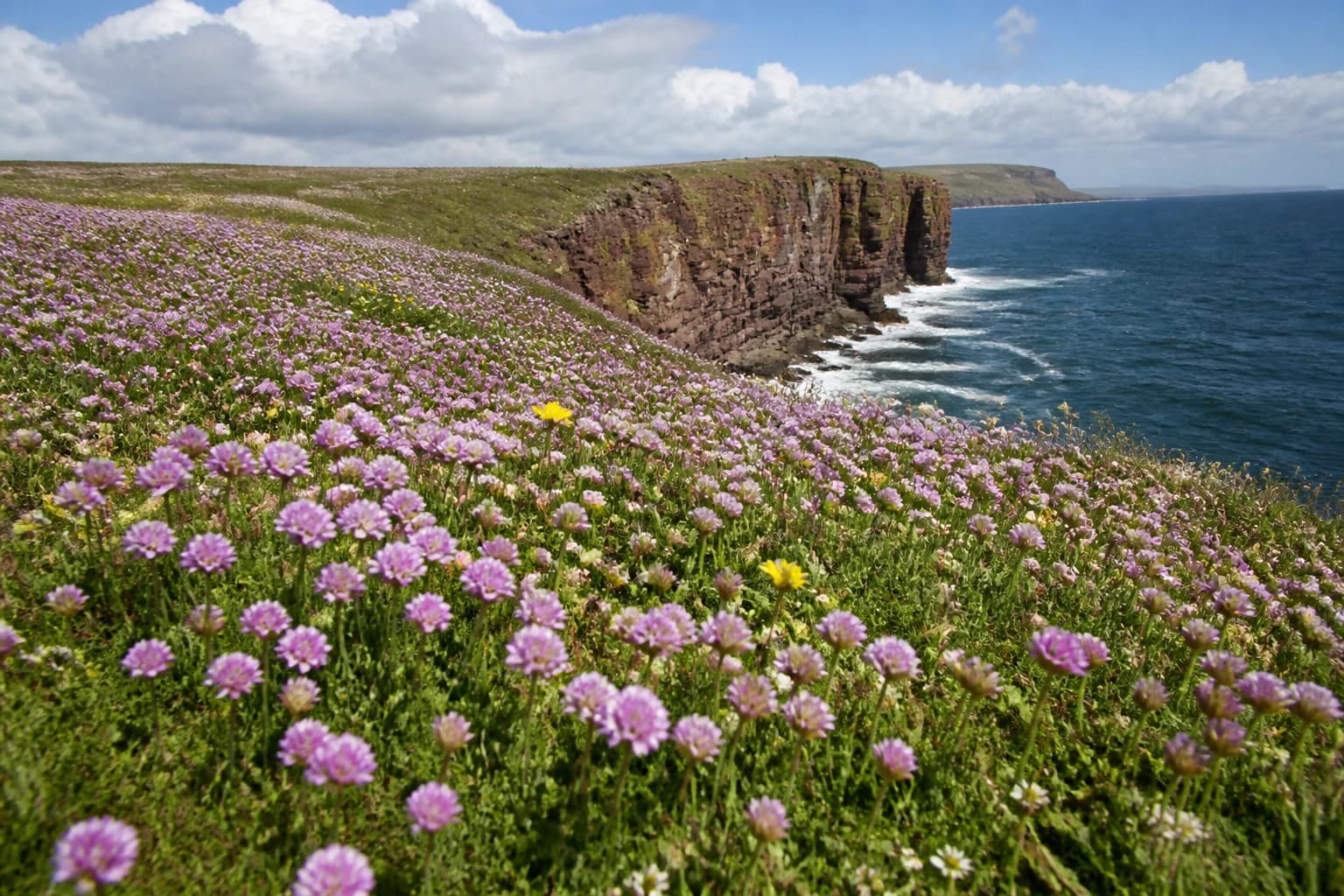
What makes this particular sky so compelling is the treelessness. There is almost nothing between the horizon and your eyes. The clouds come in full, unobstructed, at a scale that makes you recalibrate your sense of ordinary weather entirely.
Sky-Gazing and Cloud Tourism: The Orkney Weather Calendar
Timing a sky-gazing and cloud tourism visit to Orkney is less about finding the "best" weather and more about choosing which kind of sky you want to stand under. Each season delivers something genuinely distinct — and the numbers on the page confirm it.
- January to February: Temperatures between 2–7°C, short days of around six to seven hours, and a low pale winter sun that barely clears the horizon before the light turns amber again. Storm season at its peak. The sky is cinematic in its darkness and scale.
- March to May: The light begins its extraordinary return. Fast-moving spring cloud systems produce those stacked, backlit cumulus formations that cloud tourism photographers prize above everything else. Fewer visitors, lower accommodation prices.
- June to July: The Simmer Dim. Eighteen hours of daylight at midsummer. The sky never fully darkens. Stargazing is limited, but prolonged twilight sky-gazing — the sky cycling through rose, apricot, pale grey, and back again for hours — is an experience with few equivalents in Britain.
- August to October: Aurora Borealis season begins in earnest from late August. Atlantic storms build for spectacular cloud tourism conditions. The first serious dark-sky nights return from September onward.
- November to December: True dark-sky territory. Aurora alerts are frequent. The sky between storms is black, clear, and astonishing.
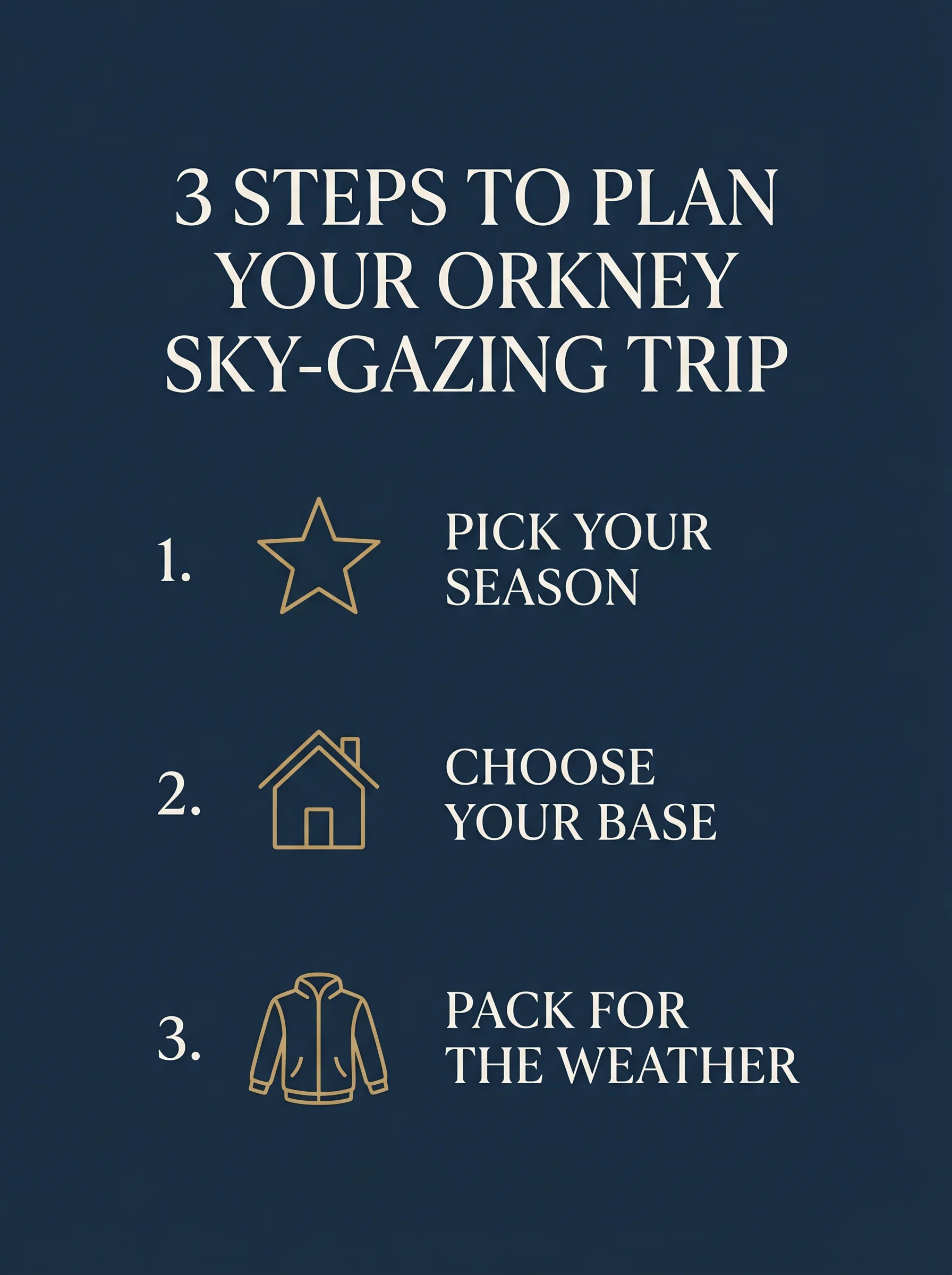
Three simple steps to plan your Orkney sky-gazing and cloud tourism trip — from timing the season to choosing a base under open sky.
The Simmer Dim: Orkney's Most Extraordinary Sky-Gazing Phenomenon
The Simmer Dim is the local name for the prolonged northern twilight that lingers across Orkney around midsummer. It is not a weather event. It is a latitude event — a consequence of sitting so far north that the sun barely descends below the horizon before reversing course.
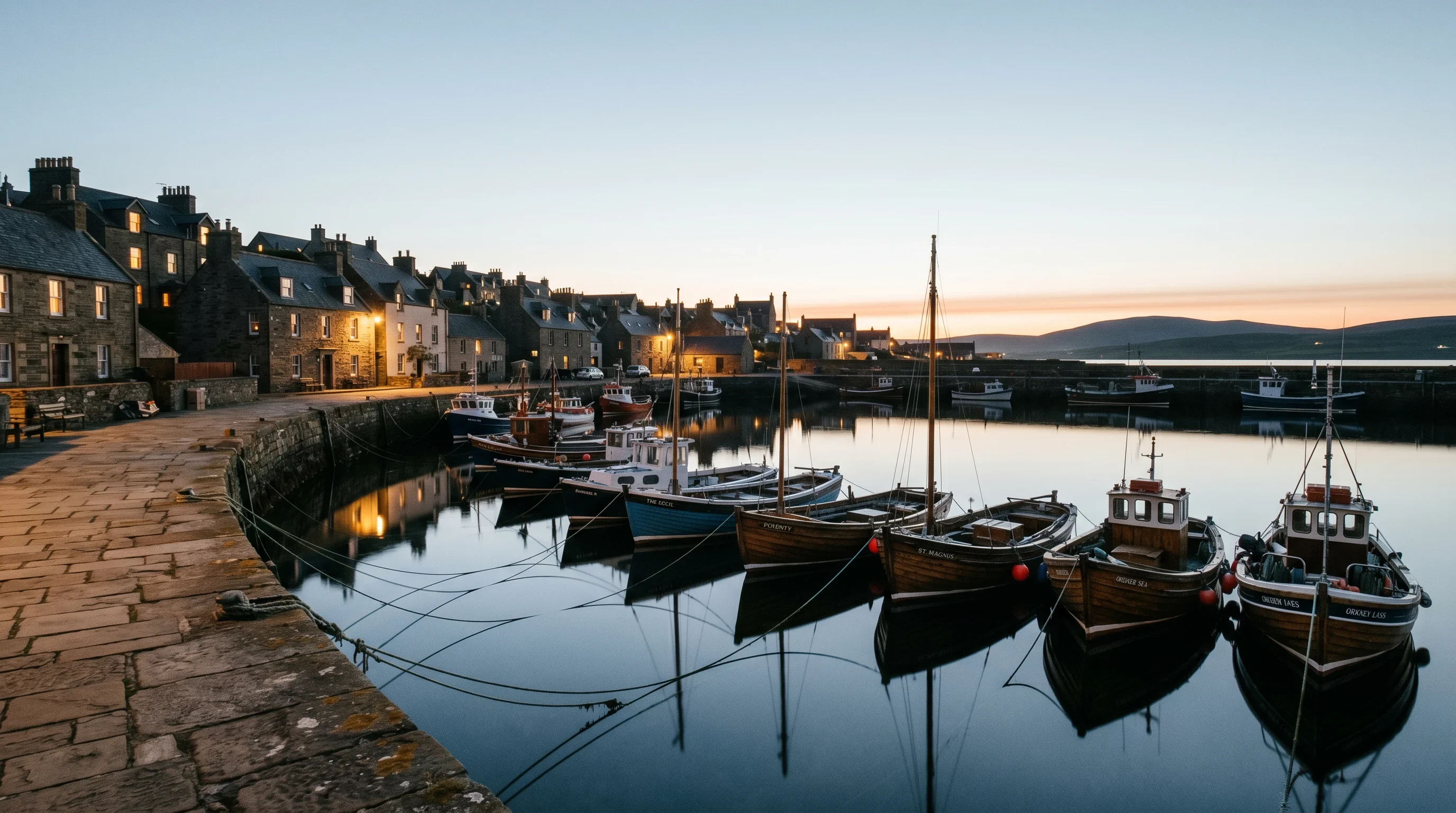
At 11pm on a mid-June night in Stromness harbour, the sky holds a luminous pale blue-grey with a soft orange band sitting low above the water. The fishing boats at the stone pier are reflected in water that is too calm for the season. Nothing about it looks real in photographs. Standing in it, it feels permanent — like the day simply decided not to end.
For sky-gazing tourism specifically, the Simmer Dim delivers something no dark-sky destination can: a sky that is never black, never harshly bright, but cycling perpetually through the softest registers of the colour spectrum for weeks at a time. It is, by any measure, one of the most sustained natural sky spectacles in northern Europe.
Dark Skies, Starbathing, and the Aurora Above the Archipelago
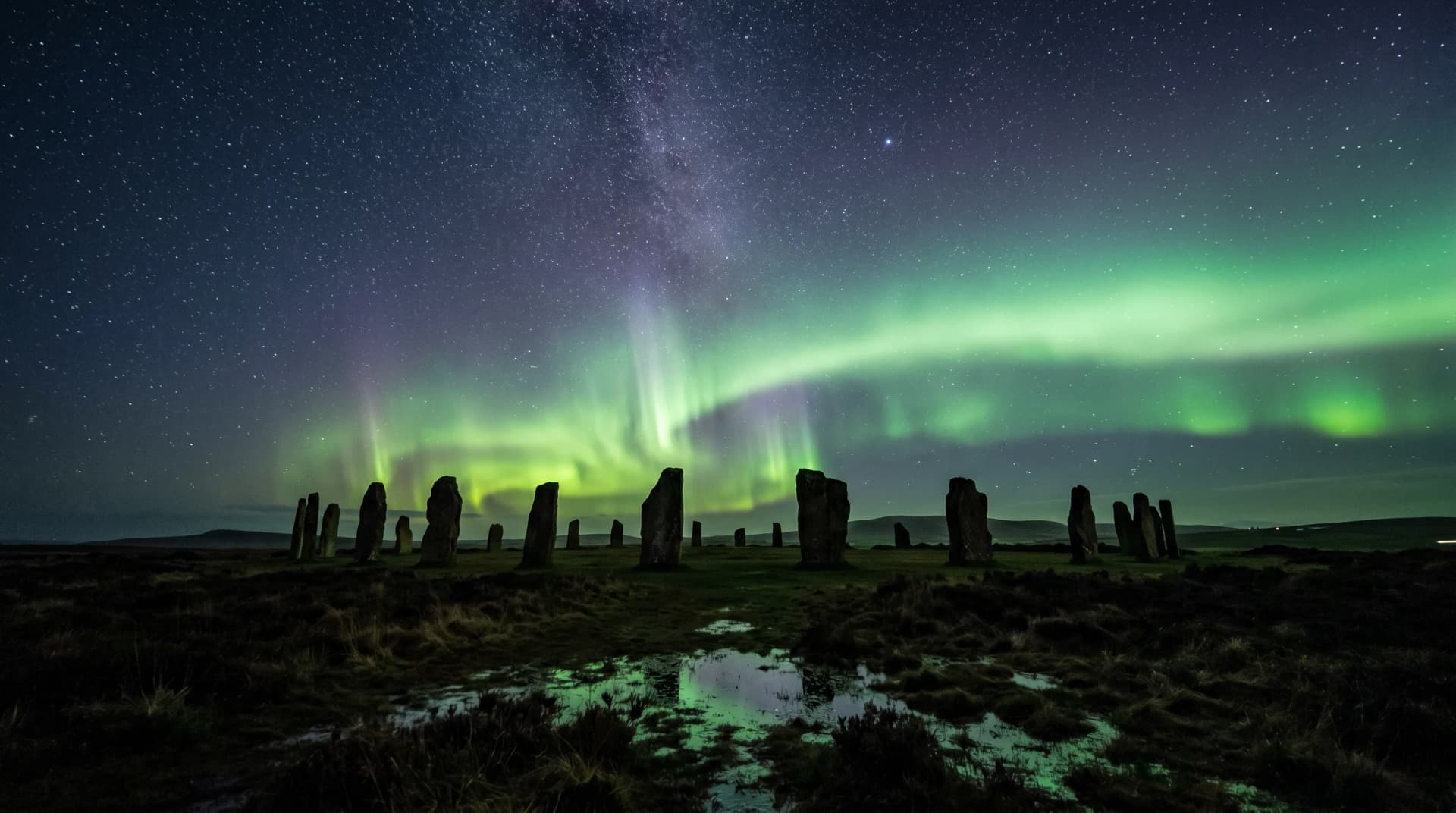
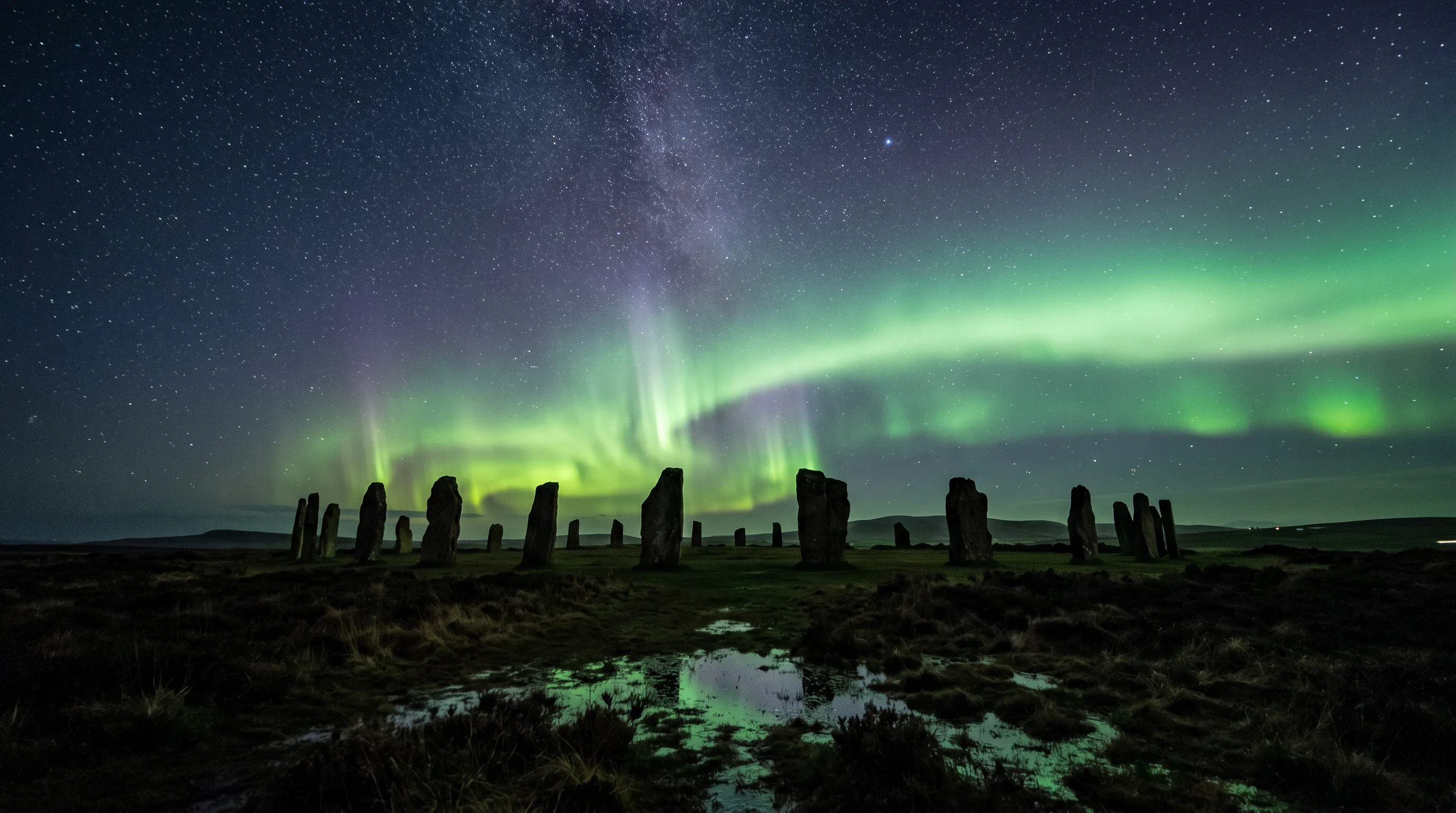
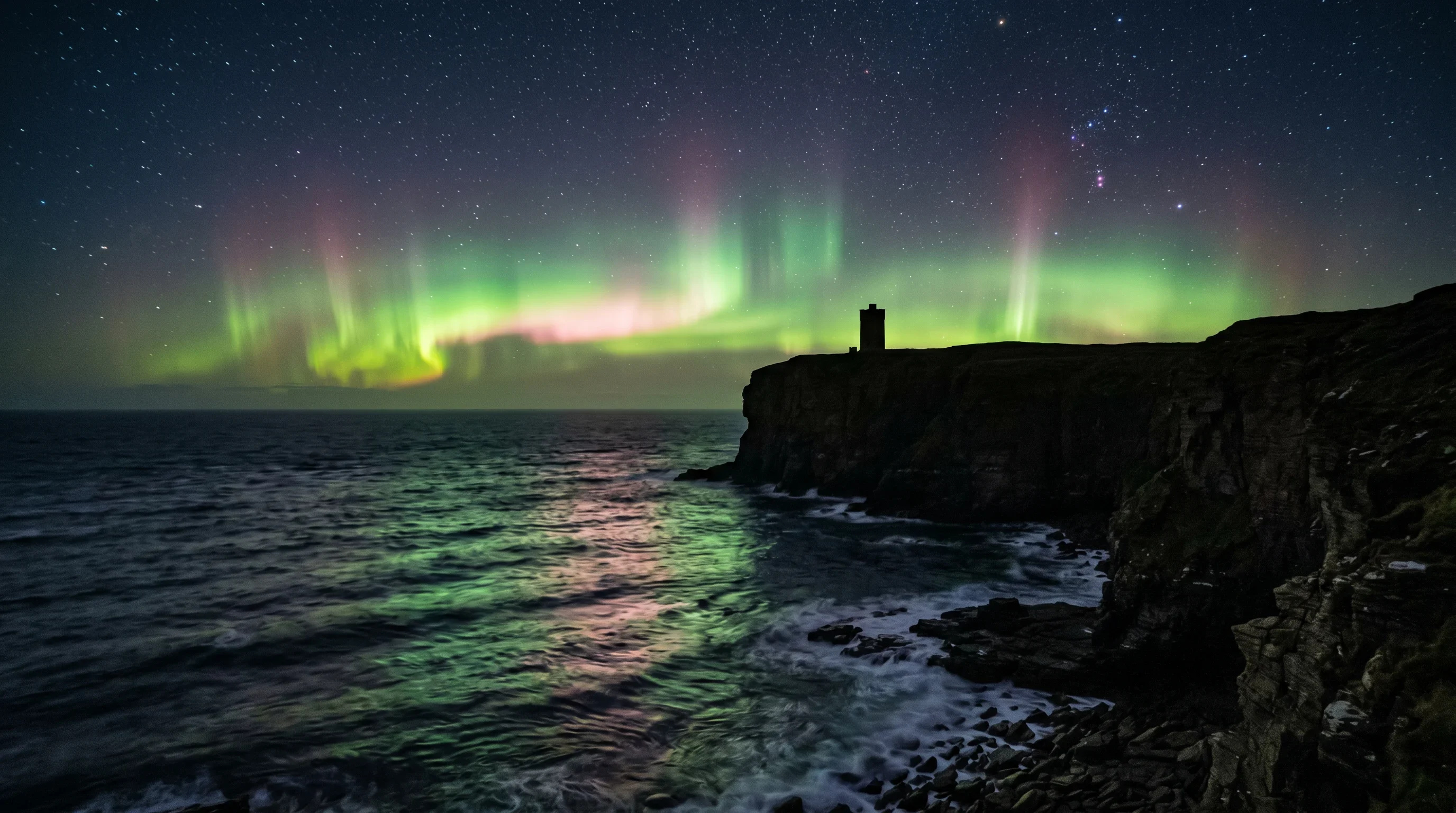
The other half of the sky-gazing and cloud tourism calendar here belongs to the darkness. From late August through to April, Orkney's minimal light pollution and northern position make it one of the most reliable places in Britain to observe the Aurora Borealis — not as a rare, once-in-a-decade event, but as a recurring possibility that experienced Orcadians track with casual familiarity. For the full aurora-hunting playbook — KP-index timing, the darkest months, and where the Mirrie Dancers show most reliably — see our Orkney Northern Lights and dark skies guide.
The best viewing positions combine open sky in every direction with proximity to the sea, so that the aurora reflects off moving water. Yesnaby on the west coast, the clifftops above Marwick Head, and the unpeopled western shore of Hoy all deliver this combination. No ticket. No booking. No coach party.
"Most of what people fly here for is free: the Ring of Brodgar, the cliffs at Yesnaby, the Italian Chapel, the long honey-coloured beaches." The same is absolutely true of the sky. The Aurora, the Simmer Dim, the Atlantic storm clouds — none of it costs a penny to stand beneath.
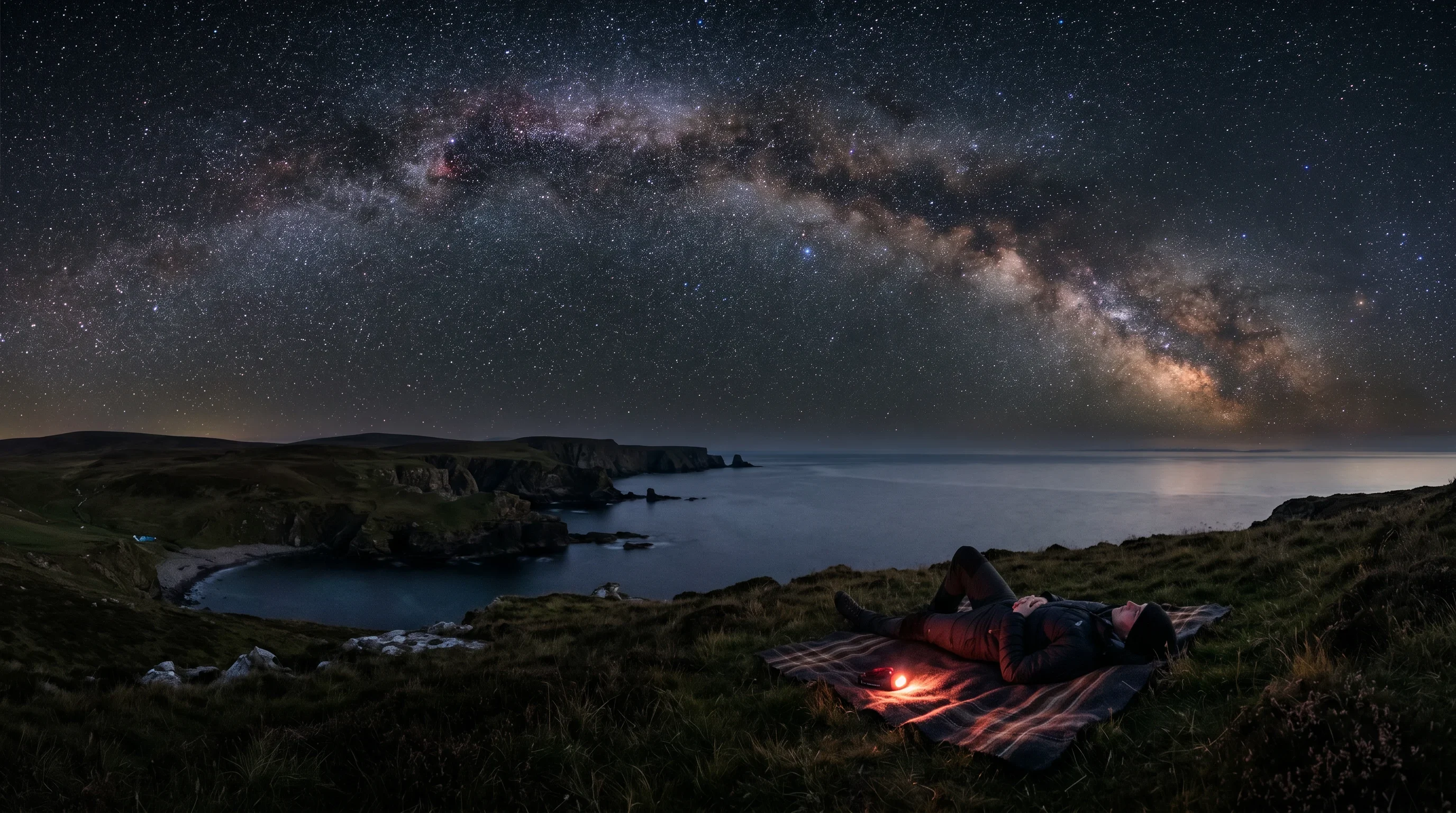
Starbathing — lying or sitting outdoors specifically to absorb the night sky rather than observe particular objects — is the practice driving this shift. Orkney is one of the few places in Britain where it is genuinely practical across a sustained season, rather than requiring a specific weather window and a long drive to a remote hillside.
Atlantic Storm-Watching: The Cloud Tourism Case for Autumn and Winter
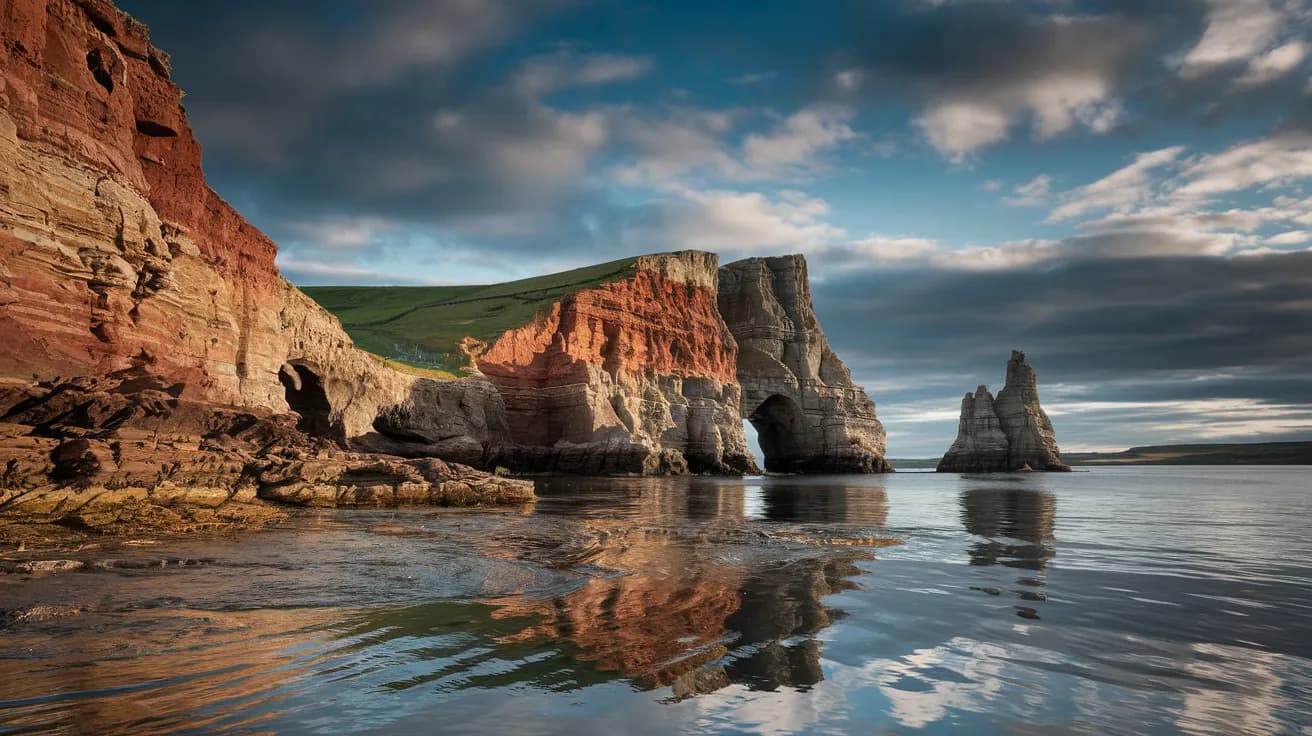
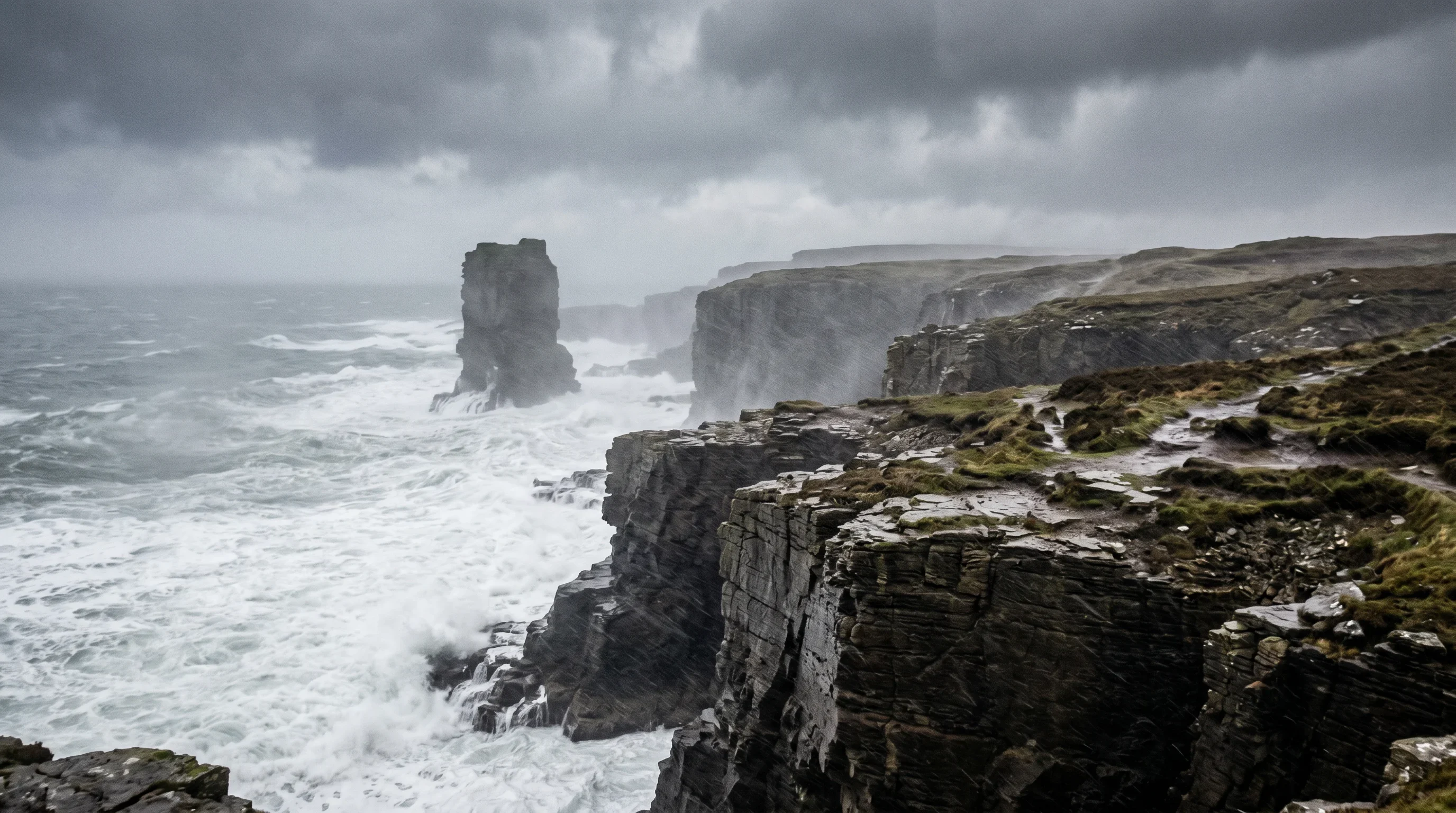
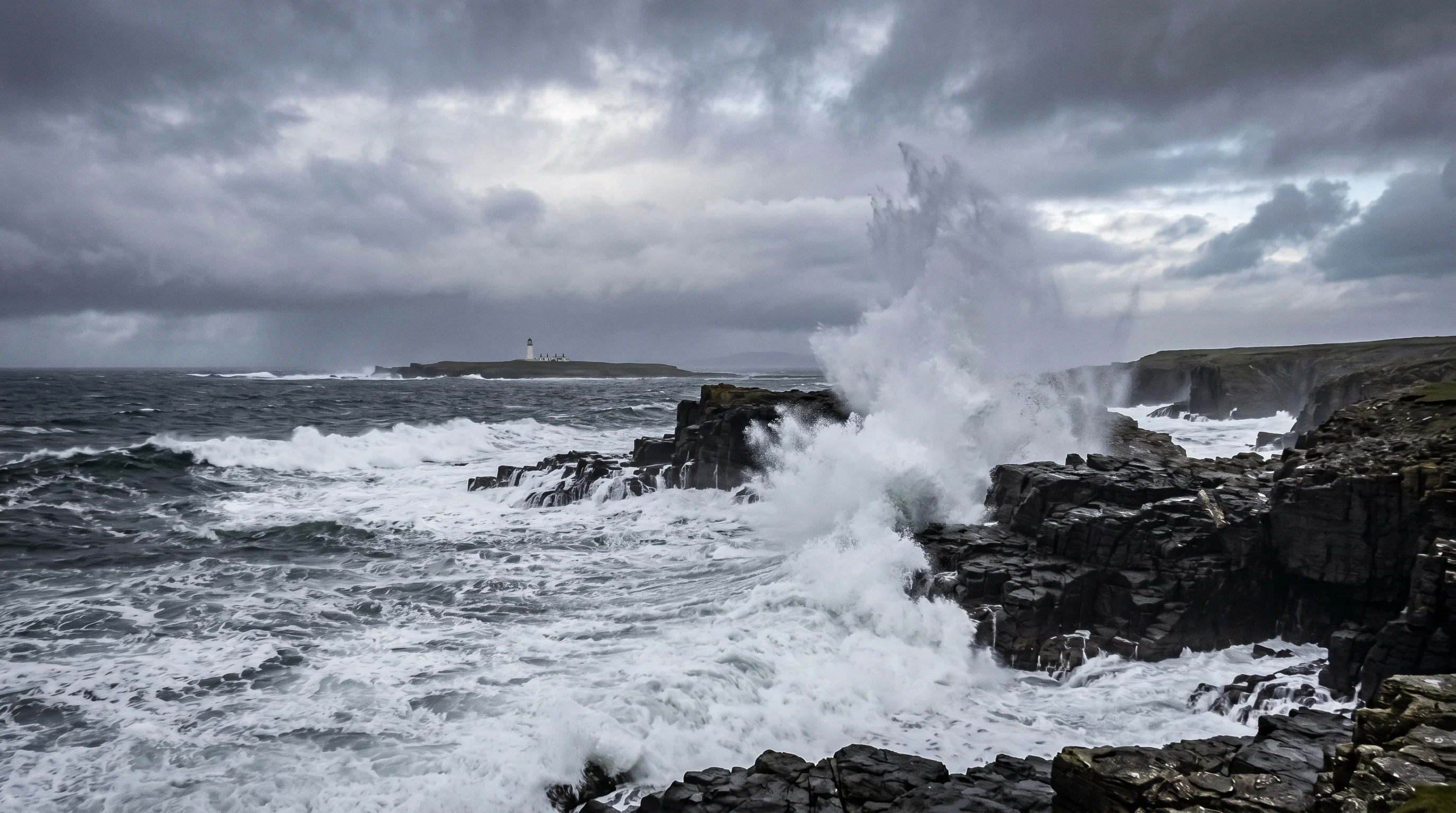
There is a category of sky-gazing and cloud tourism that does not require darkness or celestial events — and Orkney may be its finest British expression. Atlantic storm-watching is the art of positioning yourself at a safe clifftop vantage point to observe the sea and sky doing something genuinely violent and extraordinary.
In October, the waves at Birsay Bay send spray ten metres into the air against dark basalt rocks. The Brough of Birsay lighthouse sits just visible through low cloud. Above, the sky stacks into layers of grey, white, and improbable silver that move at different speeds, creating a sky that feels three-dimensional. Photographers and painters have been making the journey specifically for this for generations.
This is cloud tourism in its most elemental form. It costs nothing. It requires no planning beyond checking the tide and wearing the right jacket.
Self-Catering Accommodation Orkney: Best for Sky-Gazing Stays
Where you sleep genuinely shapes your sky-gazing experience here. A town-centre hotel in Kirkwall is perfectly comfortable — and walking distance from excellent food and the cathedral — but it is not where you see the stars come out, or watch the Simmer Dim cycle through its colours at midnight.
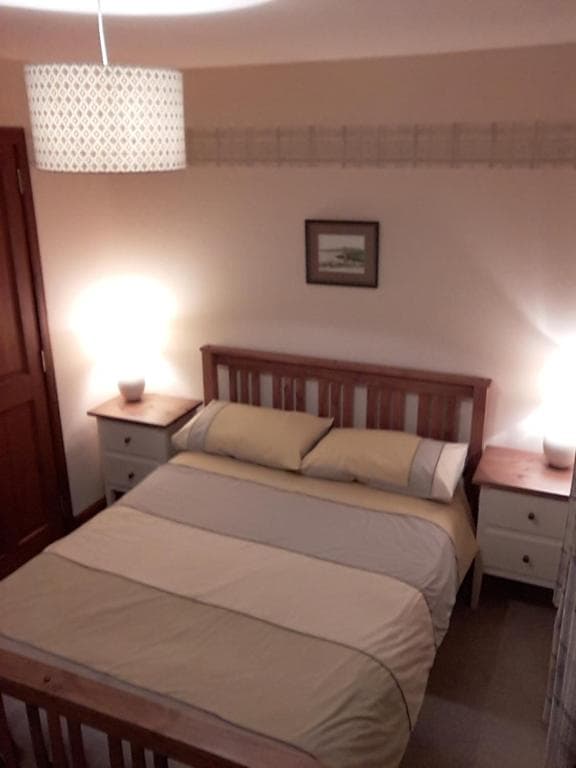
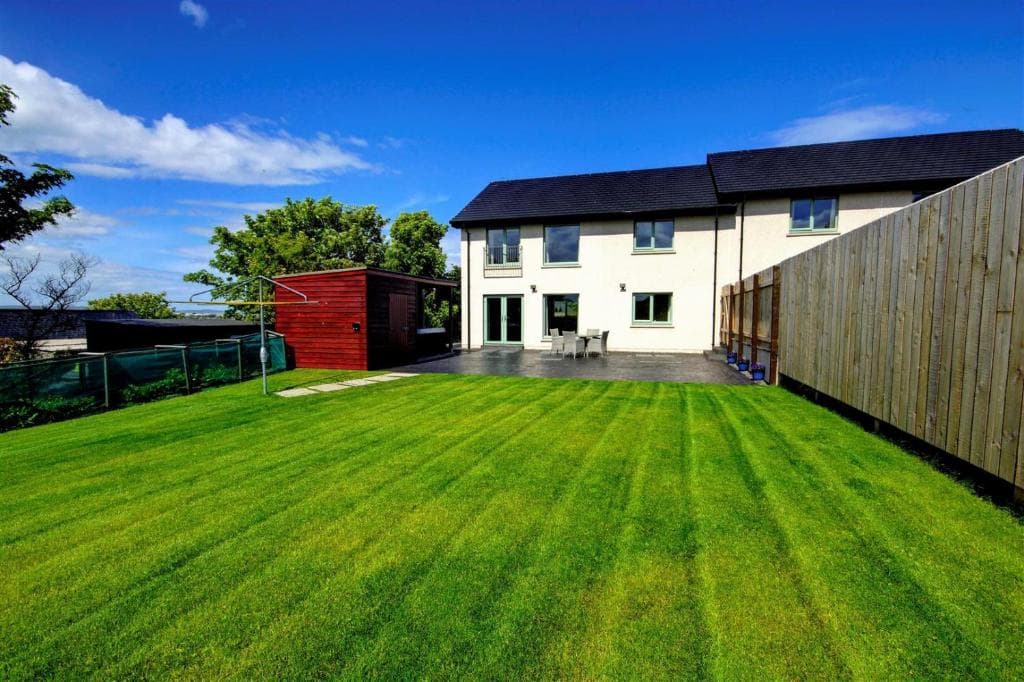
Self-catering accommodation in Orkney — particularly rural cottages and smaller properties on the Mainland's western or northern shores — puts you directly under the sky with no obligation to drive home afterward. You can step outside in the small hours for an aurora alert without disturbing anyone. You can have coffee at 5am and watch the light begin its winter return from your own window.
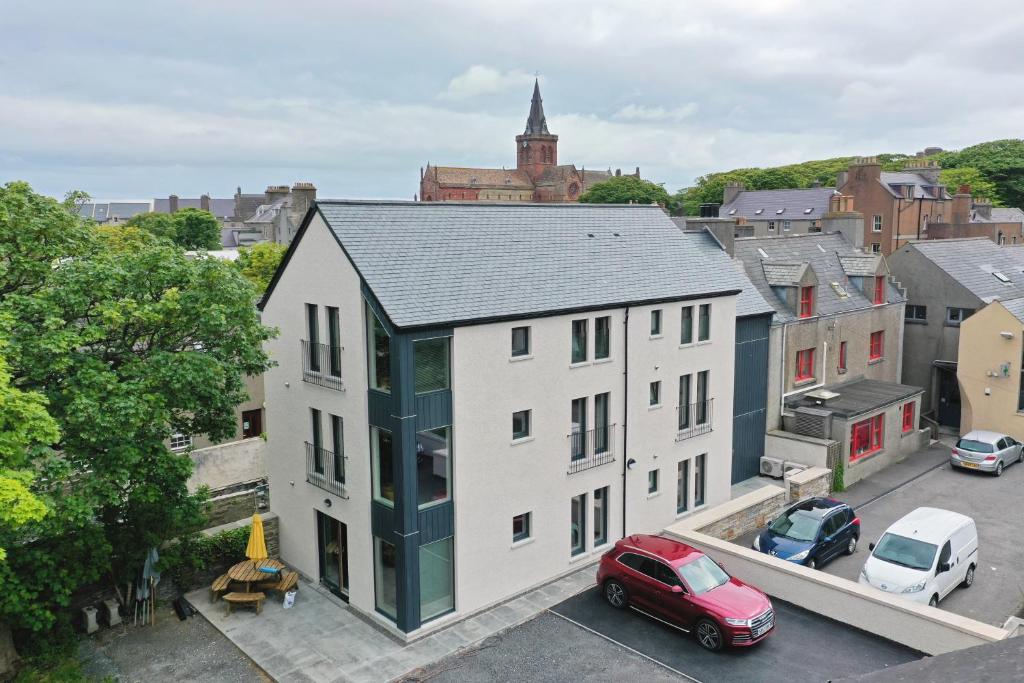
Kirkwall apartments represent the best middle ground for those who want town amenities combined with easy access to dark-sky viewing spots — the western parishes of the Mainland are under twenty minutes by car from most Kirkwall properties.
We have curated a full selection of self-catering accommodation in Orkney specifically with the sky-gazer in mind. Properties range from compact one-bedroom apartments well-suited to solo travelers and couples through to larger houses for groups who want a full week of sky-watching from a single base.

Orkney Islands Accommodation: Best for Different Sky-Gazing Budgets
Orkney is not a cheap place to stay — but it is a cheap place to be. The sky itself is free, and the best sky-gazing positions require nothing more than the will to put on waterproof trousers and walk to a clifftop.
Here is what the 2026 numbers on the page actually look like for sky-gazing trips at three different budget levels.
| Budget Tier | Accommodation Type | Starting Price (2026) | Best For |
|---|---|---|---|
| Shoestring | Budget B&Bs and guesthouses | Compare live rates on Booking.com | Solo travelers and couples who want a cooked breakfast before early morning sky watches |
| Comfortable | Self-catering apartments, Kirkwall | Mid-range — click through for live pricing | Couples and small groups who want flexibility for late-night/early-morning sky watching |
| Splurge | Luxury rural properties | Premium — live pricing via Booking.com | Families and groups wanting maximum sky access from a private rural base |
Our budget Orkney accommodation pages gather the stays worth considering in one place; live prices and availability are shown on Booking.com when you click through. We are an affiliate partner of Booking.com, and all booking happens through their secure platform — but the curation and the local knowledge are entirely ours.
For the sky-gazing traveler specifically, the Stromness holiday homes deserve particular attention. Stromness sits on the west coast, facing open Atlantic sky, and the harbour's stone piers and calm water are the setting for some of the finest Simmer Dim viewing in the islands.
Planning Your Sky-Gazing and Cloud Tourism Trip: Practical Notes for 2026
A few logistics worth fixing in your mind before you book.
- Getting here: Loganair operates direct flights into Kirkwall from several Scottish cities. NorthLink Ferries run overnight from Aberdeen (Kirkwall route) — the Scrabster–Stromness crossing is a short 90-minute daytime service — the crossing itself provides excellent open-sea cloud watching, particularly in autumn.
- Getting around: A hire car gives you genuine sky-gazing flexibility. Aurora alerts come at inconvenient hours, and the best dark-sky spots are rural. Public transport is serviceable for daytime heritage visits; it is limiting for spontaneous midnight cliff walks.
- What to pack: The Met Office's Kirkwall record includes a 138.5 mph gust. Waterproof layers, thermals, and a headtorch are non-negotiable. For photography, a sturdy tripod rated for high wind. For aurora hunting, a sky-alert app tuned to the KP index.
- Guided options: If you want local knowledge on the best sky-watching positions and storm-watching vantage points, our private tours with a local driver-guide cover the key Mainland sites and can be tailored toward the natural landscape rather than purely the archaeological circuit.
The full breakdown of what to pack, what to expect month by month, and which weather windows suit which activities is covered in depth in our Orkney weather and packing guide.
Orkney Islands Accommodation: Our Recommendations by Sky-Gazing Priority
We have built our curation of Orkney islands accommodation around travelers who want to be immersed in the landscape — and there is no more immersive Orcadian experience than sleeping somewhere with a genuinely open sky above you.
For aurora hunters and dark-sky enthusiasts, rural Mainland properties west of the A964 corridor consistently deliver the lowest ambient light and the widest unobstructed horizon. For Simmer Dim watchers and cloud tourism visitors who want the drama of the Atlantic sky above moving water, Stromness and the western parishes of the Mainland are the correct side of the island.
For those who prefer a town base with day-trip access to the best sky-watching positions, Kirkwall holiday homes put you within thirty minutes of virtually every significant sky-gazing location on the Mainland.
Our luxury Orkney accommodation collection includes boutique stays and premium guest houses where the sky tends to be a considered feature of the property, rather than an afterthought. These are not resort hotels facing a car park. These are properties chosen by people who understand what this particular place offers.
Self-catering accommodation in Orkney remains our strongest recommendation for the dedicated sky-gazer. Your own kitchen means you eat when the sky clears, not when the restaurant opens. Your own front door means the aurora does not require a conversation with a night porter. These are small logistics. They are also the difference between seeing something extraordinary and almost seeing it.
Conclusion
Sky-gazing and cloud tourism in Orkney is not a trend the islands have manufactured for visiting travelers. It is what the archipelago has always offered to anyone who arrived with their eyes open — a sky of extraordinary scale, personality, and variety, performing continuously from the moment you step off the ferry or the plane.
In 2026, as starbathing, cool-cationing, and noctourism reshape how people think about travel, Orkney finds itself at the intersection of several major currents without having changed anything about itself to get there. The Simmer Dim has been burning through midsummer nights since long before it had a name. The Aurora has been folding across the northern sky since long before anyone thought to call it a tourism product.
What has changed is that more people are ready to prioritize the sky. We think that is the right instinct — and the right islands.
Browse our curated Orkney experiences for guided options, explore our self-catering accommodation in Orkney listings for stays that match your sky-gazing ambitions, and read the full weather guide before you pack. The sky will do the rest.
Frequently Asked Questions
Is Orkney worth visiting specifically for sky-gazing and cloud tourism in 2026?
Genuinely, yes. In 2026, Orkney offers the full range of sky-gazing and cloud tourism experiences — dark-sky stargazing, Aurora Borealis, the Simmer Dim twilight, and Atlantic storm-watching — without the commercial infrastructure that crowds better-publicised dark-sky destinations. The sky here is the same as it has always been. The crowds are not.
What is the best month for aurora viewing and dark-sky stargazing in Orkney?
October through March delivers the darkest, clearest nights and the most frequent aurora activity. September and April work as shoulder options with improving or receding daylight but still strong aurora potential on clear nights.
Can I do cloud tourism in Orkney without a car?
You can access plenty of impressive sky from Kirkwall and Stromness on foot, particularly the harbour fronts and nearby coastal paths. For the full range of storm-watching clifftops and rural dark-sky positions, a hire car makes an enormous difference to what you can reach on an aurora alert at midnight.
What is self-catering accommodation in Orkney like for sky-gazing trips?
Self-catering accommodation in Orkney for sky-gazing purposes is excellent, particularly rural properties on the west Mainland. The flexibility to eat, sleep, and step outside on your own schedule — rather than a hotel's — suits the unpredictable timing of aurora events and weather windows almost perfectly.
Is the Simmer Dim actually visible, or is it overhyped?
It is not overhyped. At midsummer, the sky above Stromness harbour at 11pm carries a luminous twilight that does not fully resolve into darkness before 2am, when dawn begins its return. It is one of the most sustained natural sky experiences in northern Europe and a significant draw for cloud tourism visitors in its own right.
How do I find Orkney islands accommodation close to the best dark-sky spots?
The key criterion for dark-sky sky-gazing is distance from Kirkwall's town light and proximity to the open western shore. We flag this in our Orkney islands accommodation descriptions, and rural properties west of Kirkwall consistently deliver the darkest conditions. Stromness properties also benefit from proximity to low-light Atlantic-facing sky.
What does a sky-gazing trip to Orkney actually cost in 2026?
Rates move a lot with season and property, so it pays to compare a few before booking. Self-catering accommodation in Orkney varies by property and season, with significant savings available in shoulder months (March to May and September to November). The sky itself costs nothing, which is one of the more important financial realities of planning a cloud tourism trip here.
Sources & further reading
The facts in this guide were checked against the following authoritative sources.
- Ferry from Scrabster to Stromness — NorthLink Ferries — 90-min daytime route, not overnight
- Why 62% of Travelers Plan for Stargazing — Visit Dark Skies — Booking.com 2025 dark-sky travel stat
- AuroraWatch UK — real-time aurora alerts service
- Orkney — Holidays, Maps and Travel — VisitScotland — official Orkney tourism overview