Quick Navigation
- What is Skara Brae?
- How a Victorian storm uncovered the site
- Where Skara Brae is, and how to get there
- Skara Brae opening hours and ticket prices
- What you'll actually see — and the one house you can walk into
- Visitor tips for Skara Brae
- Frequently Asked Questions
- How much does it cost to visit Skara Brae?
- How do you get to Skara Brae?
- Can you walk around inside Skara Brae?
- Is Skara Brae worth visiting?
- Which is older, Skara Brae or Stonehenge?
- Why was Skara Brae abandoned?
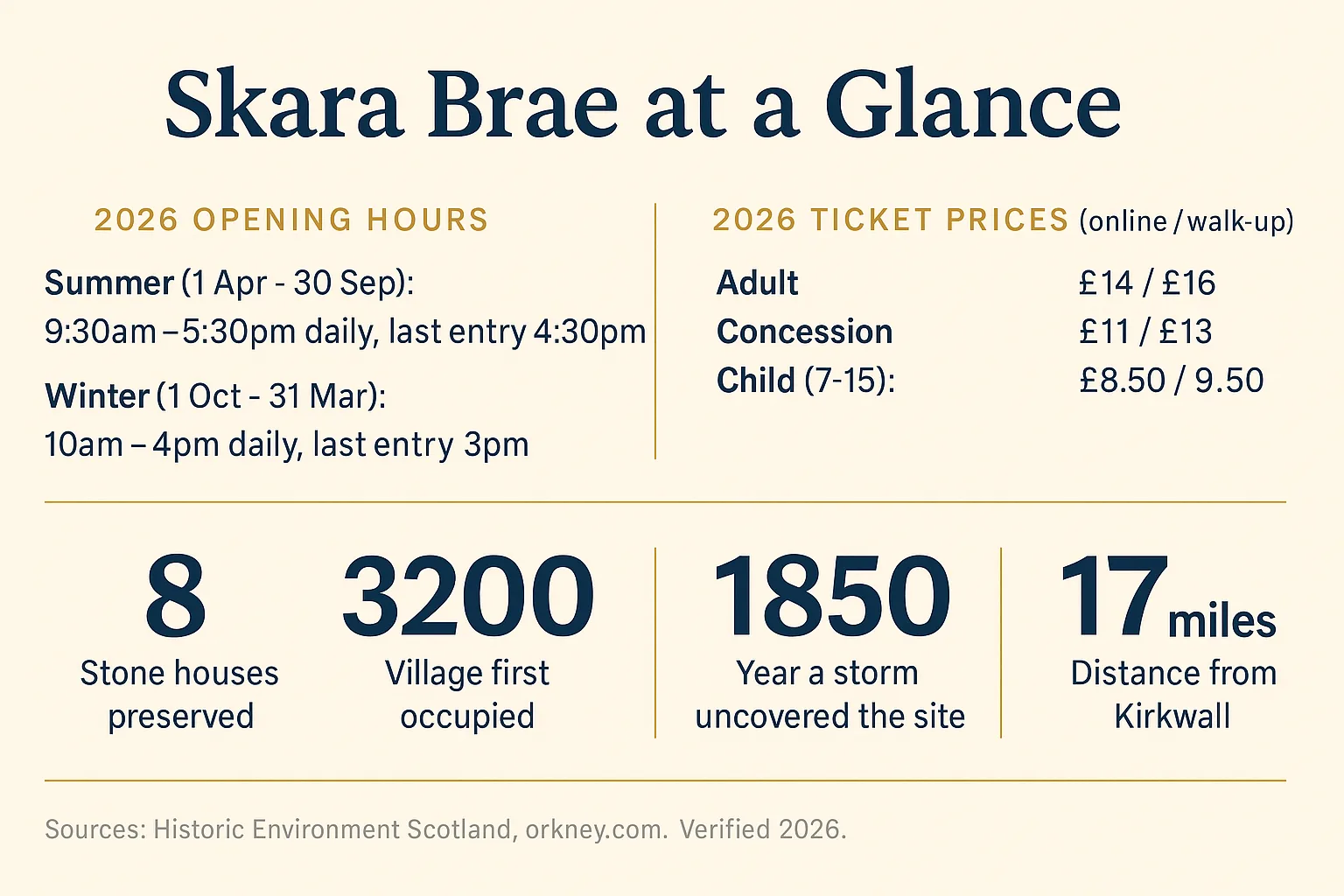
Skara Brae is the best-preserved Neolithic village in northern Europe — eight stone houses on the Bay of Skaill, on Orkney's west Mainland, occupied roughly 3200–2500 BC and hidden under sand dunes for four and a half thousand years until a winter storm tore the turf away in 1850. Stone beds, stone dressers, stone hearths and a network of covered stone drains survive almost exactly as they were left. This guide covers what you need to actually plan a visit: opening hours, 2026 ticket prices, how to get there from Kirkwall, and what you'll see once you're on site.
What is Skara Brae?
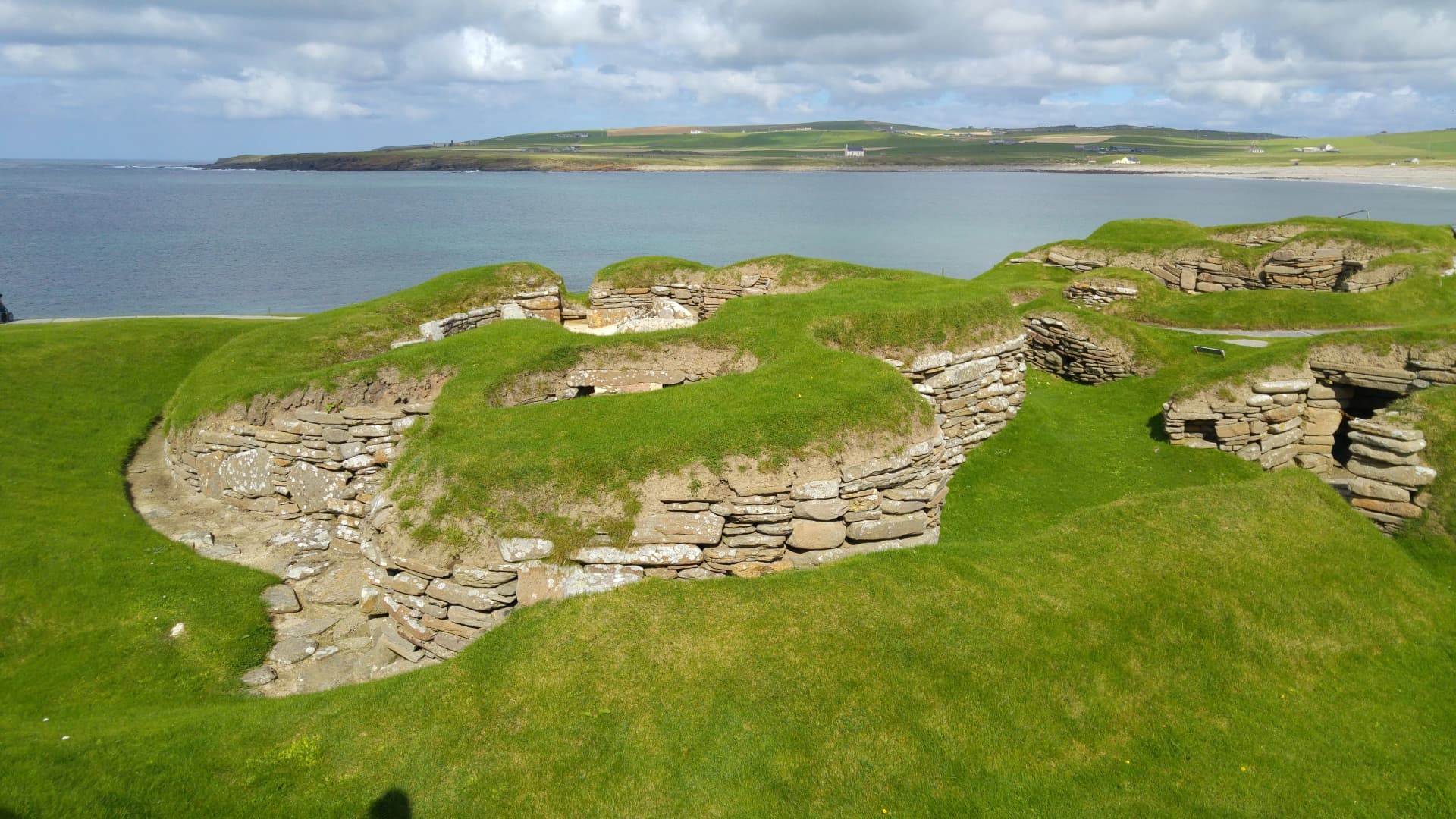
Skara Brae is a cluster of eight interconnected stone houses, joined by low covered passages and sunk partway into an earlier midden mound for insulation against the Atlantic wind. Each house follows the same plan: a square room with a central stone hearth, a pair of stone box-beds against the side walls, and a stone dresser facing the door — the first thing anyone stepping inside would have seen. Because Orkney has almost no native timber, everything that would elsewhere have been built in wood was built in stone instead, which is exactly why so much of it has survived.
Radiocarbon dating places the village's occupation at roughly 3200 to 2500 BC, making it older than the Great Pyramid of Giza and older than Stonehenge's famous stone circle by several centuries. Archaeologists estimate that 50 to 100 people lived there at any one time, though probably not all eight houses were occupied simultaneously.
How a Victorian storm uncovered the site
The story usually told is that a single great storm in the winter of 1850 stripped the turf from a sandy mound at the Bay of Skaill and exposed the stone walls beneath, and that the local laird, William Watt, then began digging into what he'd found. Orcadian antiquarian George Petrie took over recording the site through the 1860s. The full excavation didn't happen until 1928–1930, when archaeologist V. Gordon Childe uncovered the rest of the houses — and, at the time, misdated the whole site to the Iron Age on the strength of some carved stone balls that resembled much later Pictish artefacts. It took radiocarbon dating in the early 1970s to correct the record and confirm Skara Brae as genuinely Neolithic, thousands of years older than Childe had first thought.
Childe also popularised the dramatic idea that the village was buried and abandoned overnight in a single catastrophic sandstorm — a tidy, Pompeii-style ending that's still widely repeated. Most archaeologists today think that's an exaggeration: the evidence points to a slower decline over one or more generations, as the coastline and dune system around the bay gradually shifted, rather than a single dramatic night.
Planning your trip
Staying overnight? Compare live prices and availability across Orkney on Booking.com.
Compare Orkney staysWe earn a small commission if you book through this link, at no extra cost to you.
Where Skara Brae is, and how to get there
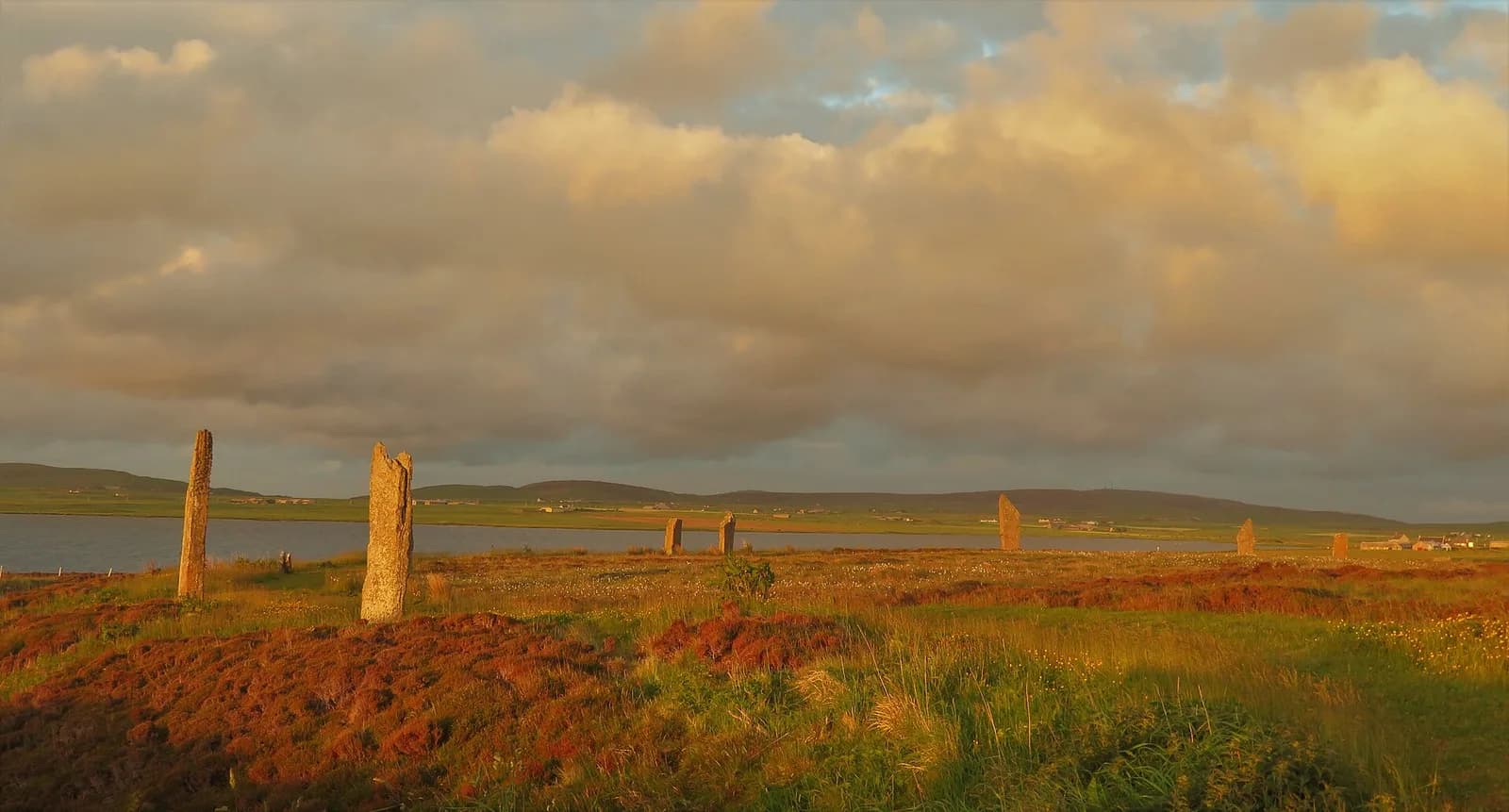
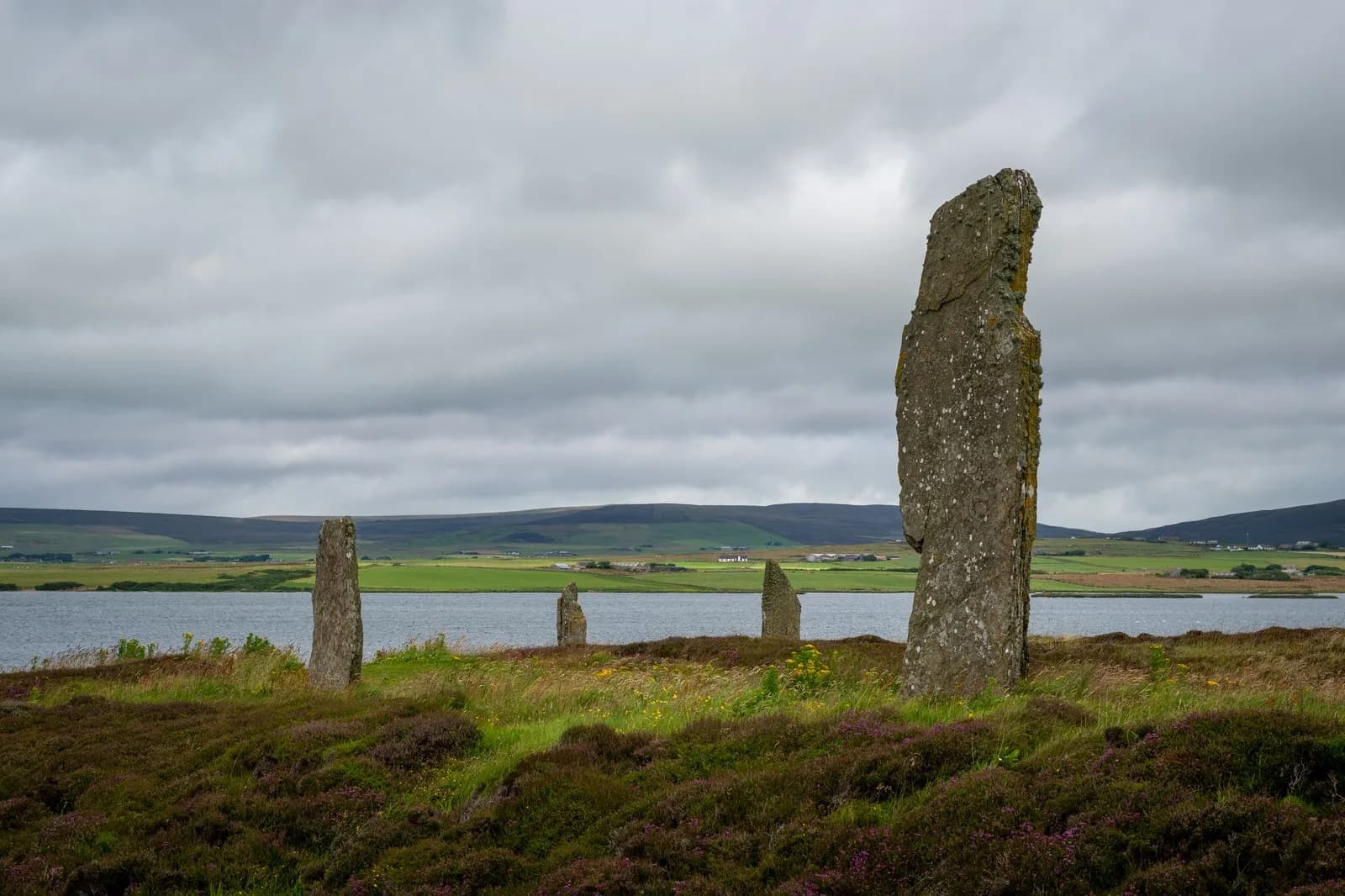
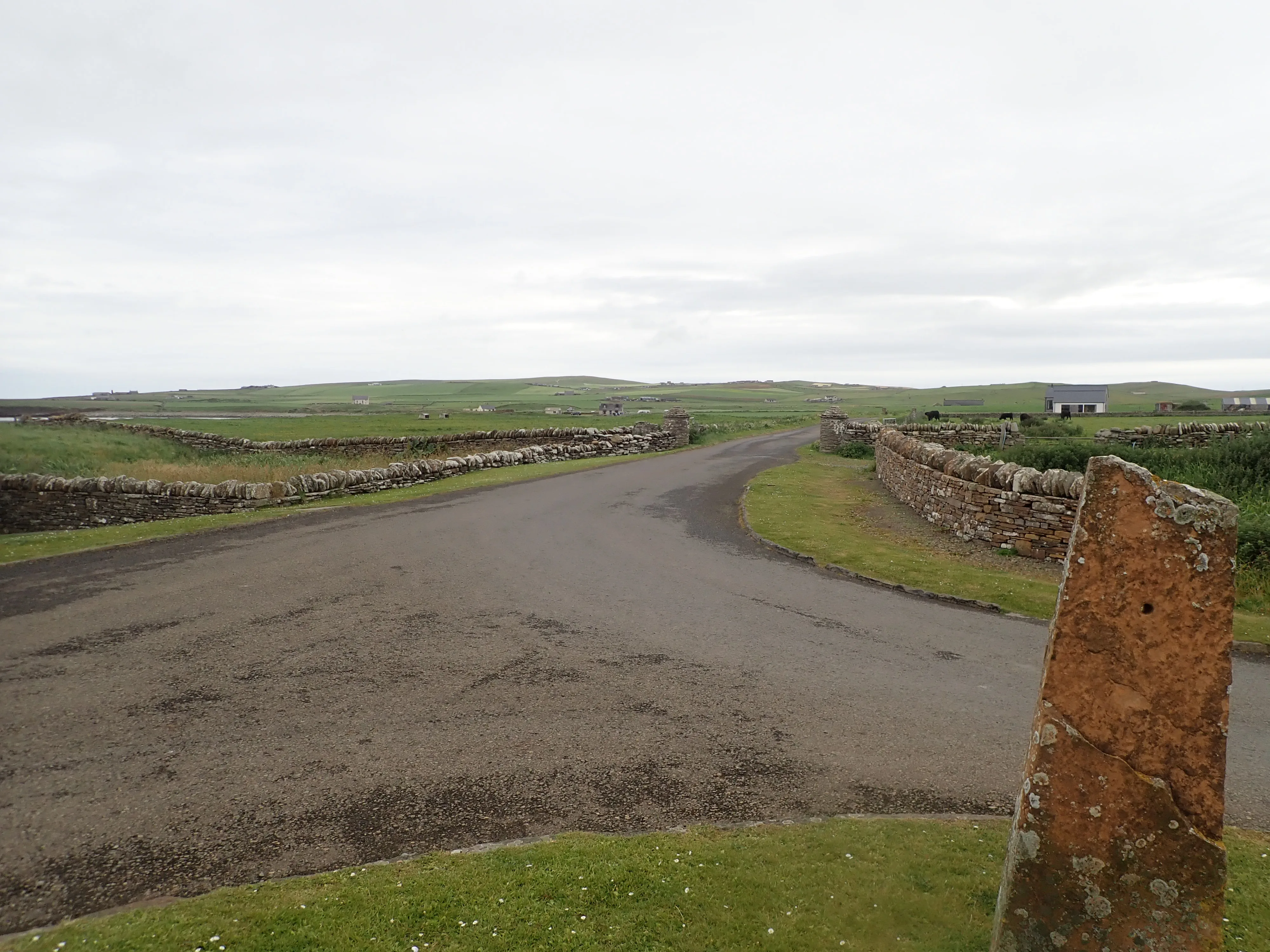
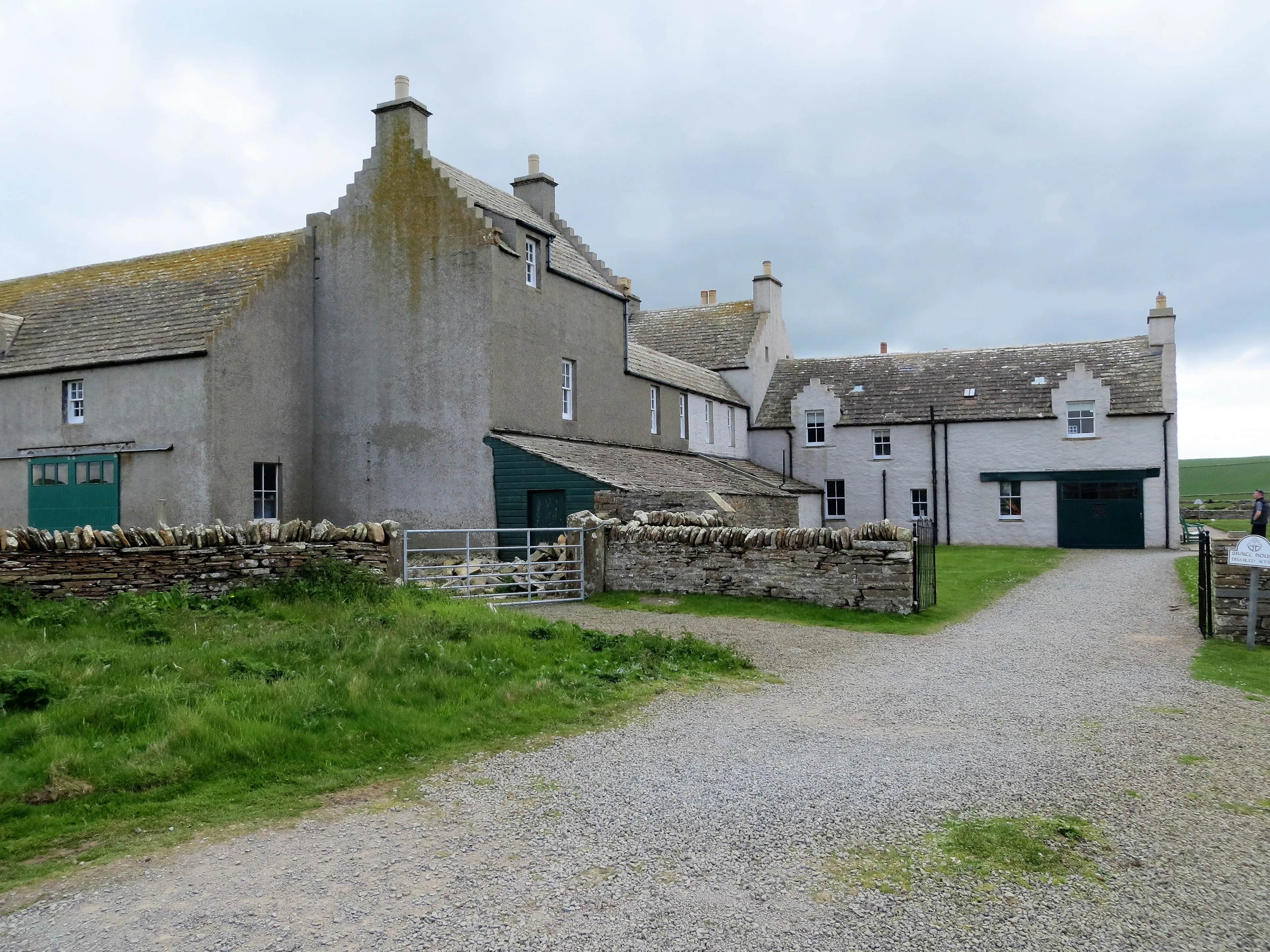
Skara Brae sits on the Bay of Skaill on the west coast of Orkney's Mainland, around 17 miles (about a 30-minute drive) from Kirkwall along the A965 and B9056. There's a car park at the visitor centre with disabled bays close to the entrance. It's a common stop on West Mainland tour itineraries alongside the Ring of Brodgar, the Stones of Stenness and Maeshowe, all within a few miles of each other, so most visitors either self-drive a loop of the four sites in a day or join a guided minibus tour that includes Skara Brae as one stop. It is the best known of them, but only one entry on a much longer list of things worth doing across Orkney.
Skara Brae opening hours and ticket prices
Skara Brae is run by Historic Environment Scotland (HES) and is ticketed year-round. Booking online in advance is recommended — it's cheaper than paying at the door, and pre-booking is worth doing in the summer months when coach tours can fill the car park.
What you'll actually see — and the one house you can walk into
The real houses at Skara Brae are 5,000 years old and structurally fragile, so visitors view them from a raised path above the site rather than walking through them directly — you look down into each roofless room at the stone dressers, box-beds, hearths and the covered stone drains that once carried waste out to the shore. It's an unusually intimate view for a site this old: because it's stone rather than the wood and thatch that rotted away at most other Neolithic sites, the internal layout of daily life is still legible in a way it almost never is elsewhere.
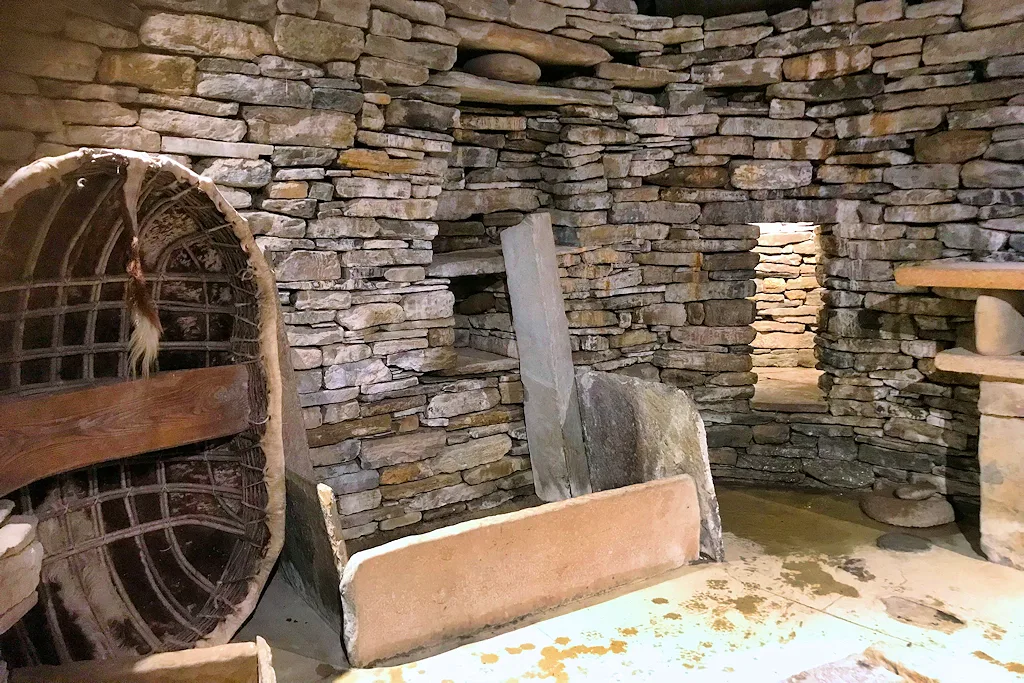
To answer the question visitors ask most: yes, there is one house you can actually walk into. HES built a full-scale replica of House 7 near the visitor centre, furnished with reconstructed box-beds, a dresser and animal skins, so you can step inside and get a genuine sense of scale and light that the roofless originals can't give you. It's clearly presented as a modern reconstruction rather than an original structure — the real houses stay roped off and viewed from the path.
Visitor tips for Skara Brae
Allow around an hour to an hour and a half for the visitor centre exhibition, the replica house and the site path together. The 500-metre route out to the village is mainly firm, crushed-stone path with a couple of narrow sections and a few steps with handrails, and there are benches along the way if you need to stop — check ahead with HES if you have specific access needs, since the original houses themselves aren't step-free. Whatever the forecast says for Kirkwall, the Bay of Skaill catches the full force of the Atlantic, so bring a windproof layer even on a still-looking day.
Skara Brae pairs naturally with the rest of the west Mainland's Neolithic sites — the Ring of Brodgar, the Stones of Stenness and Maeshowe are all a short drive away, and our guide to the Heart of Neolithic Orkney covers all four in one trip. The bay itself is also one of Orkney's best beaches in its own right, a wide sweep of white sand worth a walk before or after your visit — it features in our roundup of Orkney's best beaches. If you're building a west Mainland day around it, basing yourself somewhere central makes the whole loop easier — browse places to stay in Orkney before you book.
Frequently Asked Questions
How much does it cost to visit Skara Brae?
An adult ticket is £14 booked online or £16 walk-up. Concession is £11 online / £13 walk-up, and a child ticket (7–15) is £8.50 online / £9.50 walk-up. From April to October, the same ticket also covers Skaill House next door.
How do you get to Skara Brae?
By car, it's about 17 miles from Kirkwall, roughly a 30-minute drive along the A965 and B9056, with parking at the visitor centre. It's also a standard stop on most West Mainland guided tours, usually combined with the Ring of Brodgar and Stones of Stenness.
Can you walk around inside Skara Brae?
Not inside the original houses — they're 5,000 years old and viewed from a raised path above the site. You can, however, walk into a full-scale replica of House 7 near the visitor centre, furnished to show how the interior would have looked.
Is Skara Brae worth visiting?
For most visitors to Orkney, yes — it's widely regarded as the best-preserved Neolithic village in northern Europe, and the level of surviving domestic detail (stone furniture still in place) is genuinely rare. It combines easily with the Ring of Brodgar and Stones of Stenness for a full day of Neolithic sites on the west Mainland.
Which is older, Skara Brae or Stonehenge?
Skara Brae is older. Its houses were occupied from around 3200 BC, while Stonehenge's stone circle phase is generally dated several centuries later, to around 2500 BC.
Why was Skara Brae abandoned?
Nobody knows for certain. The popular story, that a single catastrophic sandstorm buried the village overnight, was popularised by the archaeologist who excavated it in the 1920s — most archaeologists today think the truth was more gradual, a slow decline over one or more generations as the surrounding dunes and coastline shifted, rather than a single dramatic event.
Skara Brae rewards planning ahead more than most Orkney attractions — book your ticket online, dress for wind off the Atlantic, and give yourself time at the rail above the village, looking down on floor plans that have barely changed in five thousand years.