Quick Navigation
- Layers Beat Forecasts Every Time
- Why Orkney Packing Is Really About the Wind
- The Year-Round Core Kit
- What to Add for Each Season
- Spring (March - May)
- Summer (June - August)
- Autumn (September - November)
- Winter (December - February)
- Orkney's Weather, In Four Figures
- Frequently Asked Questions
- What one item should I definitely pack for Orkney?
- Do I need midge repellent in Orkney?
- Do I need formal wear for Orkney?
- Should I pack wellington boots?
- Can I buy forgotten items once I'm there?
- What size bag works best?
- Pack Smart, Explore More
- Sources & further reading
There is an old Orcadian line that you can have four seasons in a single afternoon, and after a week on the islands you stop treating it as a joke. The trick to packing for Orkney is not guessing which weather you'll get — you'll get all of it — but building a small, layered kit that shrugs off a squall at lunchtime and lets you peel down to a T-shirt by tea. Here is exactly what to pack, season by season, with the real climate figures behind every choice.
Layers Beat Forecasts Every Time
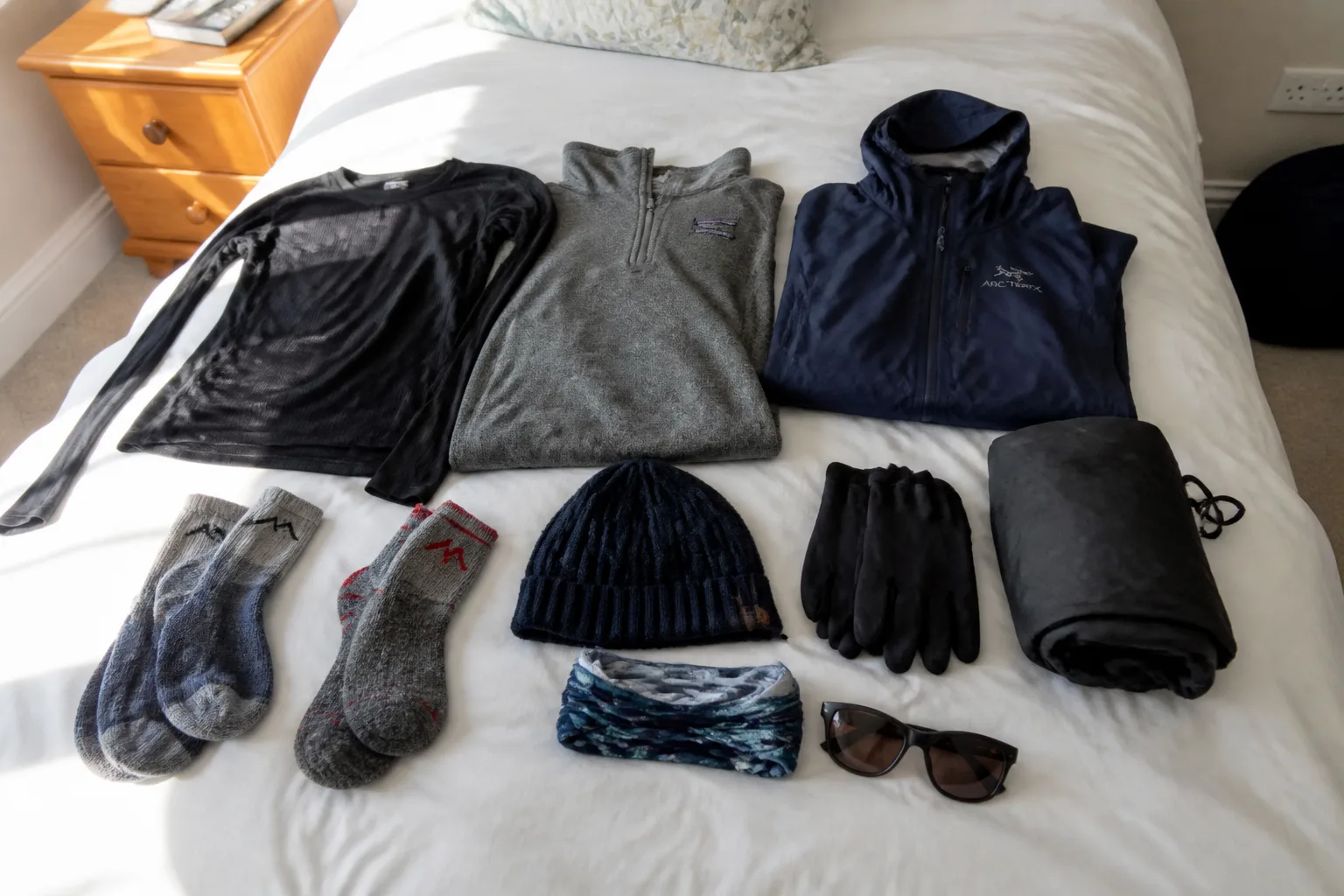
Forget trying to read the forecast a fortnight out — Orkney's weather changes faster than any app can keep up with. The dependable strategy is layering, so you can add and shed insulation as the day swings between bright sun, hard wind and a passing shower. Three layers do almost all the work:
- Base layer. Moisture-wicking merino wool or synthetic — never cotton, which holds damp and chills you. Wool or synthetic pulls sweat off your skin on a climb and dries fast afterwards.
- Mid layer. A fleece or wool jumper for warmth. Bring a lighter and a heavier one and you've covered most of the year between them.
- Outer layer. A genuinely waterproof and windproof shell jacket is non-negotiable in every month. A breathable membrane, the kind that survives a real downpour rather than a shower-resistant softshell, is worth the money. Pack waterproof over-trousers too. On an exposed clifftop path they are the difference between a good day and a soaked, miserable one.
Why Orkney Packing Is Really About the Wind
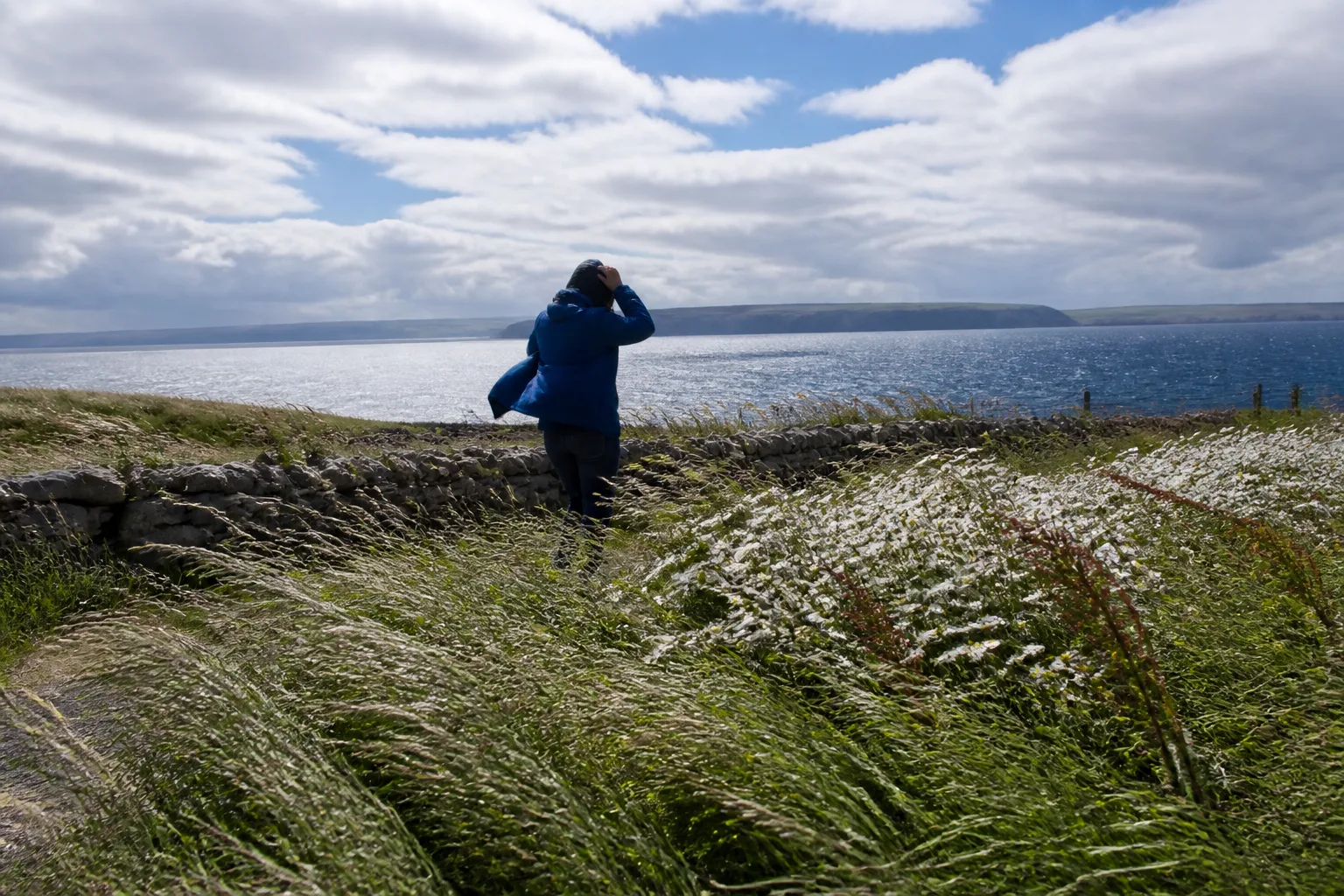
Most visitors over-pack for cold and under-pack for wind. Orkney is one of the windiest inhabited places in Britain — January averages around 22 mph and even calm July still sits near 13 mph. That constant breeze is why a windproof shell matters more than a thick coat, why a hat that actually stays on beats a fashionable one, and why you'll feel colder than the thermometer suggests. The upside many travellers don't expect: that same wind keeps Orkney almost entirely midge-free, even at the height of summer when the west-coast Highlands are swarming. You can leave the heavy repellent at home and pack a small bottle just in case of a rare still, sheltered evening.
Planning your trip
Staying overnight? Compare live prices and availability across Orkney on Booking.com.
Compare Orkney staysWe earn a small commission if you book through this link, at no extra cost to you.
The Year-Round Core Kit
Whatever month you visit, these go in the bag first. Get this list right and the seasonal additions further down are just small tweaks.
- Waterproof shell jacket: breathable, hooded, properly seam-sealed.
- Waterproof over-trousers: light, packable, essential for any walking.
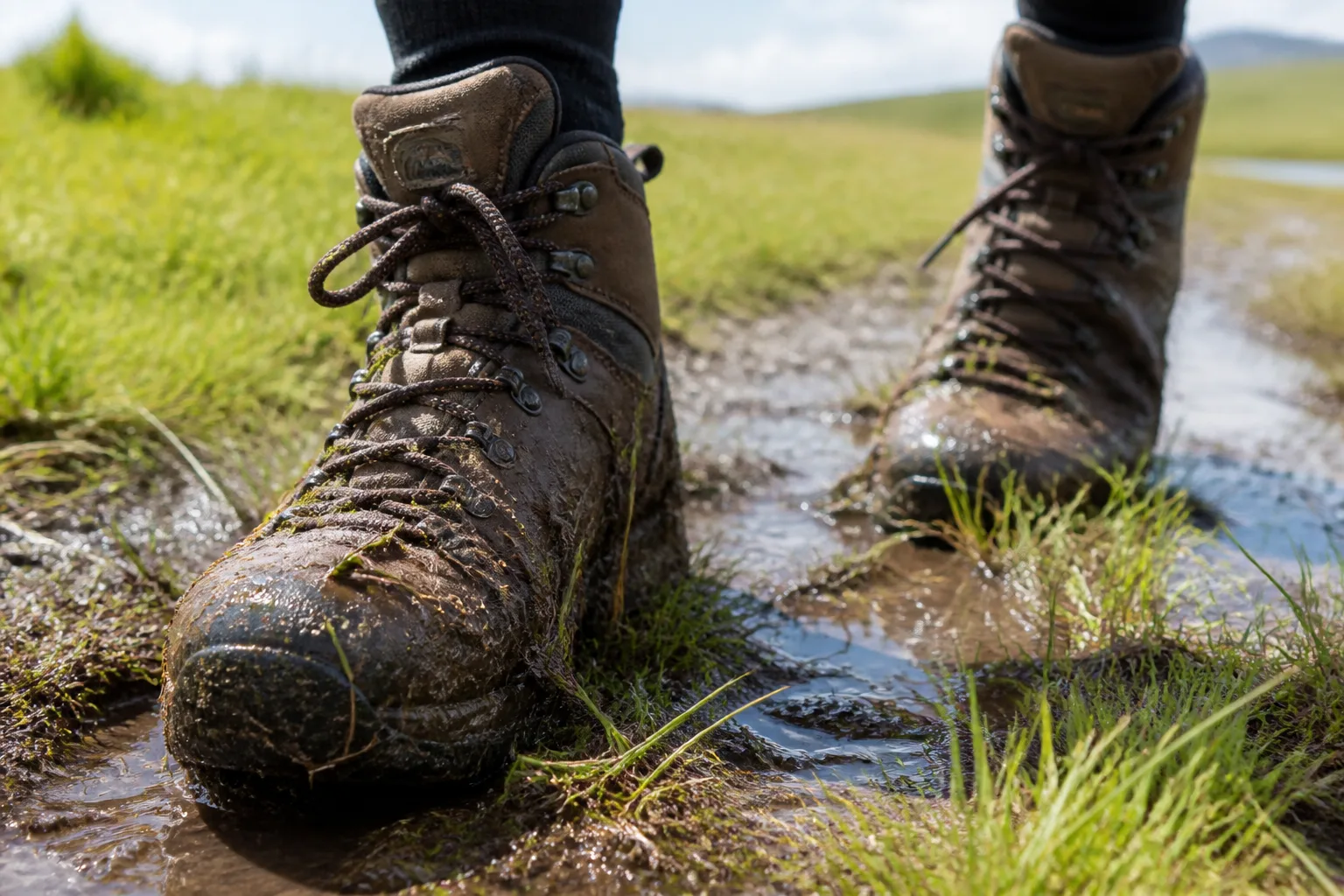
- Sturdy waterproof boots with good grip for sites and coastal paths, plus comfortable shoes for evenings in town.
- Warm hat, gloves and a buff or scarf. The buff is the single most useful item against wind chill.
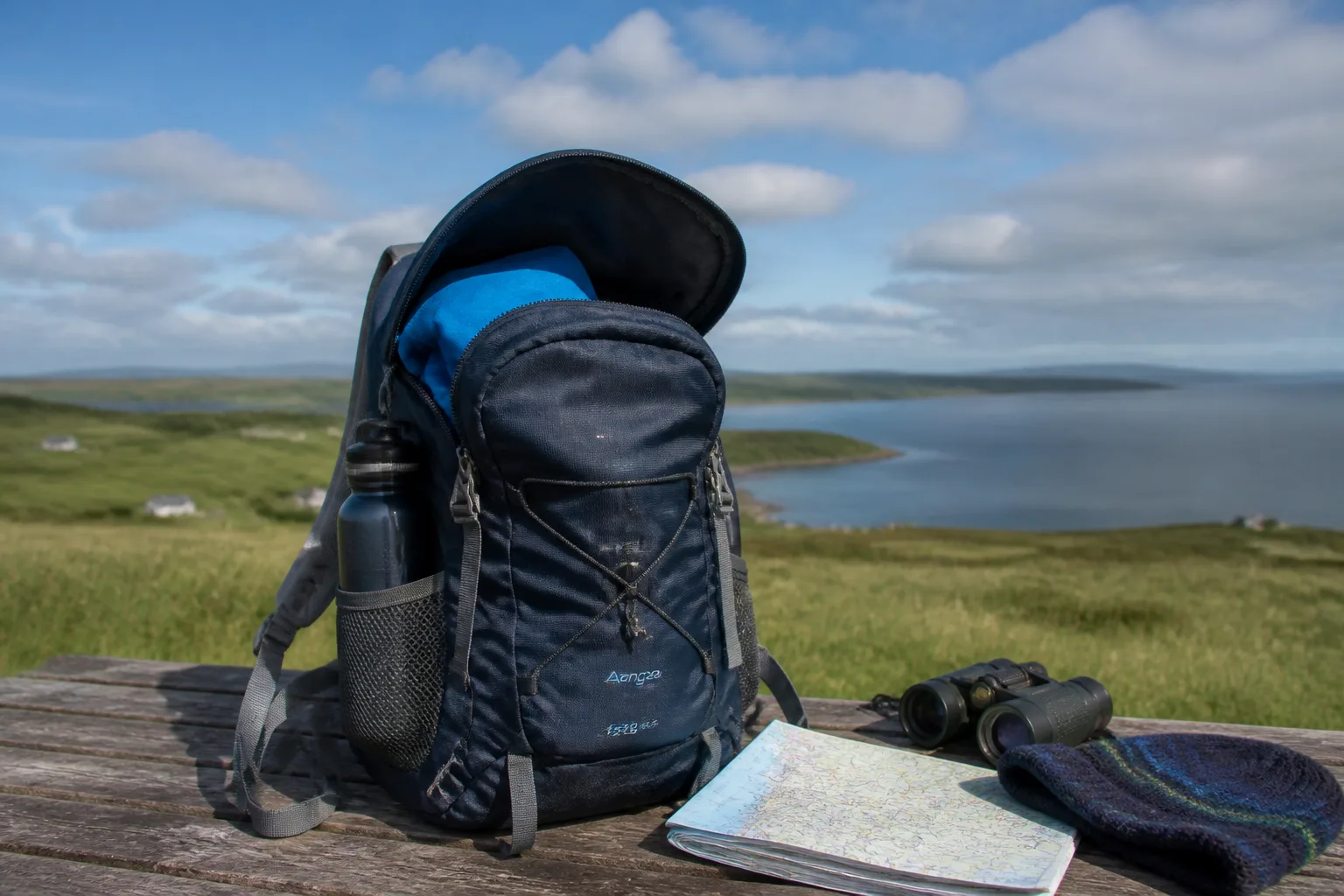
- A 25-30 litre day backpack for layers, water, snacks and a camera.
- Reusable water bottle. Orkney tap water is excellent.
- Sun cream and sunglasses. The wind hides the UV, and glare off the sea is fierce even under cloud.
- Small first-aid kit, a power bank, and binoculars for the seals, seabirds and the occasional orca offshore.
What to Add for Each Season
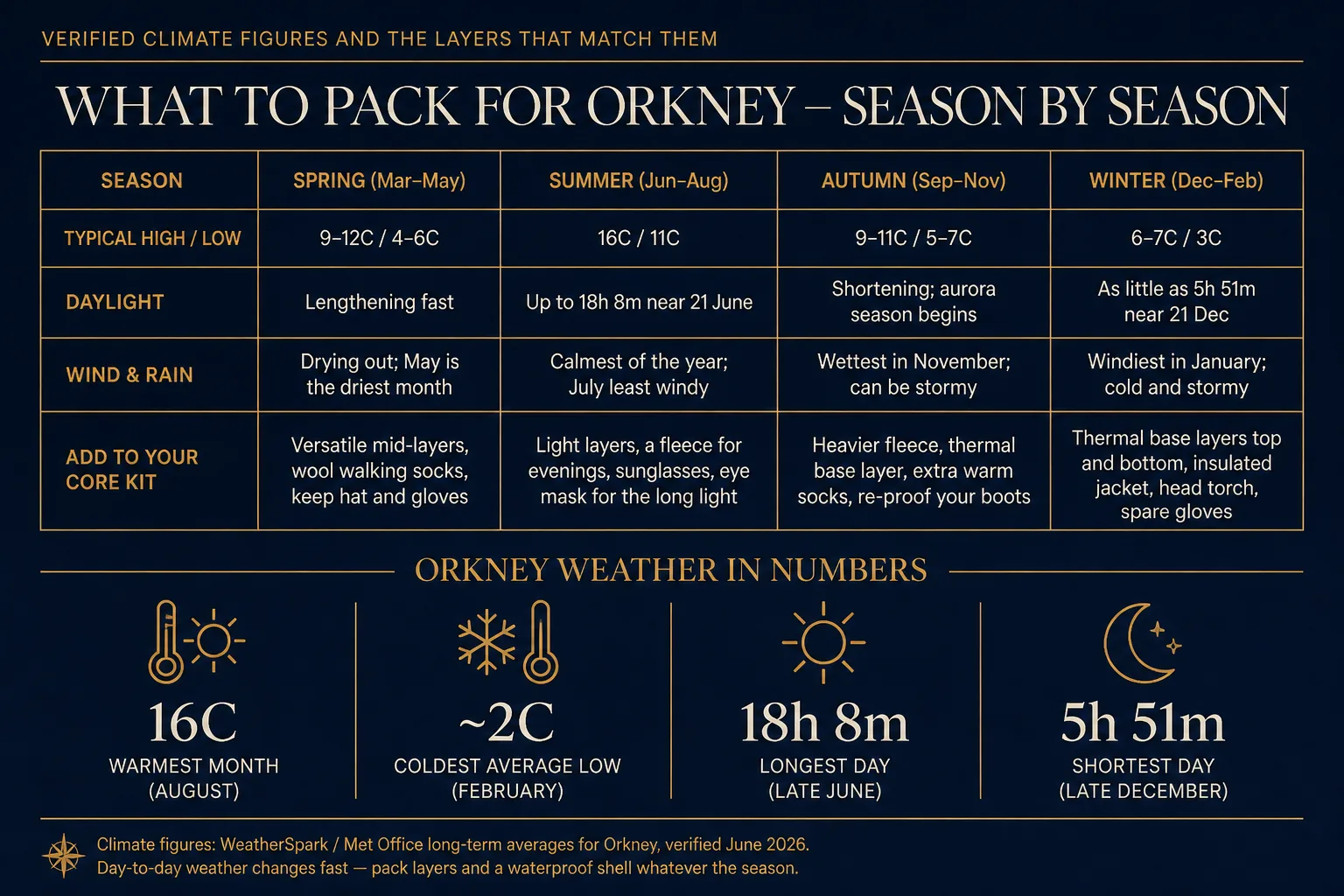
The core kit covers the basics; the season decides how much insulation and which extras you bolt on. The chart below pairs Orkney's real long-term climate figures with the kit each season calls for — screenshot it before you start packing.
Spring (March - May)
- Versatile mid-layers — pack one lighter fleece and one warmer one, since spring swings between the two within a day.
- Wool-blend walking socks, and don't ditch the hat and gloves yet, because spring winds still bite.
- May is statistically the driest month of the year, so it's a strong, often-overlooked window for walking. For wildlife and bloom timing, see our spring guide to Orkney.
Summer (June - August)
- Lighter layers — T-shirts and a light long-sleeve, but always a fleece for breezy evenings.
- The waterproof shell still goes everywhere; summer showers blow through fast.
- An eye mask earns its place: near the solstice you get up to 18 hours 30 minutes of daylight, the famous "simmer dim", and many self-catering rooms don't have blackout blinds.
- Sunglasses and sun cream genuinely matter now, because clear days are long and bright.
Autumn (September - November)
- Heavier fleeces and wool jumpers; nights draw in quickly as gales return.
- Re-proof your boots before you travel — November is the wettest month of the year.
- Pack a thermal base layer and extra warm socks, and a head torch as daylight shortens.
- This is the start of aurora season, and a tripod is worth carrying if you hope to photograph the Northern Lights.
Winter (December - February)
- Warmest layers: thermal base layers top and bottom, a thick fleece, and an insulated or down jacket worn under the waterproof shell.
- Make sure jacket, trousers, gloves and boots are all fully waterproof and warm — January is the windiest month and storms are frequent.
- Head torch is essential: daylight can drop to about 6 hours 11 minutes near the solstice.
- Carry ice grips for your shoes in case of a frosty snap, which is rare but handy. Planning around the ferries and short days is half the battle, so it's worth reading up on getting around Orkney before you go.
Orkney's Weather, In Four Figures
If you remember nothing else, remember these — they explain every item on the list above.
Frequently Asked Questions
What one item should I definitely pack for Orkney?
A reliable, fully waterproof and windproof shell jacket. With the islands averaging 22 mph winds in January and 13 mph even in calm July, it does more for your comfort than any other single item, in every season.
Do I need midge repellent in Orkney?
Far less than the Scottish mainland: Orkney is windy enough to be essentially midge-free even in peak summer, because midges can't fly in winds above about 6 mph. Pack a small bottle for the occasional still, sheltered evening, but you won't need the heavy artillery the west Highlands demand.
Do I need formal wear for Orkney?
No. Orkney is very casual, and smart-casual is fine for any restaurant or pub. Focus your luggage on practical, comfortable, weatherproof clothing instead.
Should I pack wellington boots?
Only if you plan boggy walks or farm visits. For most coastal paths and archaeological sites, good waterproof hiking boots are more comfortable and more versatile.
Can I buy forgotten items once I'm there?
Yes. Orkney's capital and Stromness have outdoor shops, chemists and general stores stocking waterproofs, hats, gloves and toiletries — though choice can be narrower and pricier than at home, so pack the essentials before you travel.
What size bag works best?
A 25-30 litre day backpack is ideal for daily outings carrying layers, food, water and a camera. A normal suitcase or holdall is fine for your main luggage.
Pack Smart, Explore More
Get the layers and the waterproofs right and Orkney's changeable weather stops being a problem and starts being part of the adventure. Build around the year-round core, add the seasonal extras above, and check the forecast in the days before you travel for any tweaks. For the deeper detail on conditions month by month, our Orkney weather guide goes further. Then all that's left is to find the right place to come home to after a day in the wind and the light.
Sources & further reading
The facts in this guide were checked against the following authoritative sources.
- WeatherSpark — Orkney year-round climate — temperature and wind averages
- Weather and Climate — Orkney monthly rainfall — November wettest month data
- Met Office — Kirkwall weather — official UK weather authority
- VisitOrkney — practical planning guide — official tourism authority