Quick Navigation
- The three routes, compared
- Flying to Orkney with Loganair
- Direct routes into Kirkwall
- Aircraft, luggage and weather
- Taking the ferry: NorthLink and Pentland Ferries
- NorthLink — Scrabster to Stromness (MV Hamnavoe)
- NorthLink — Aberdeen to Kirkwall (overnight)
- Pentland Ferries — Gills Bay to St Margaret's Hope
- Driving to Orkney: the A9 and the ferry slot
- Driving distances and times to the ferry
- How to get to Orkney from London (the three real options)
- Can you visit Orkney without a car?
- What's the cheapest way to get to Orkney?
- How far in advance should you book?
- Frequently asked questions
- What is the cheapest way to get to Orkney?
- Can you fly directly to Orkney from London?
- How long is the ferry to Orkney?
- Which Orkney ferry should I take — Scrabster or Gills Bay?
- How much is the ferry to Orkney from Scotland in 2026?
- Do I need to book Orkney ferries in advance?
- How long does it take to drive from London to Orkney?
- What's the fastest way to get to Orkney?
- Choosing your Orkney arrival
- Sources & further reading
Getting to Orkney is genuinely simpler than its reputation suggests. There are three honest options — a one-hour flight, a ninety-minute ferry, or a long drive that ends in a short sea crossing — and the right one depends on where you start, whether you want a car, and how much of the journey you actually want to enjoy.
This guide compares the three routes side by side using verified 2026 fares from NorthLink Ferries, Pentland Ferries and Loganair, and walks through the practical decisions — when to book, whether to bring a car, where to stay the night before — that turn a vague plan into a confirmed itinerary.
The three routes, compared
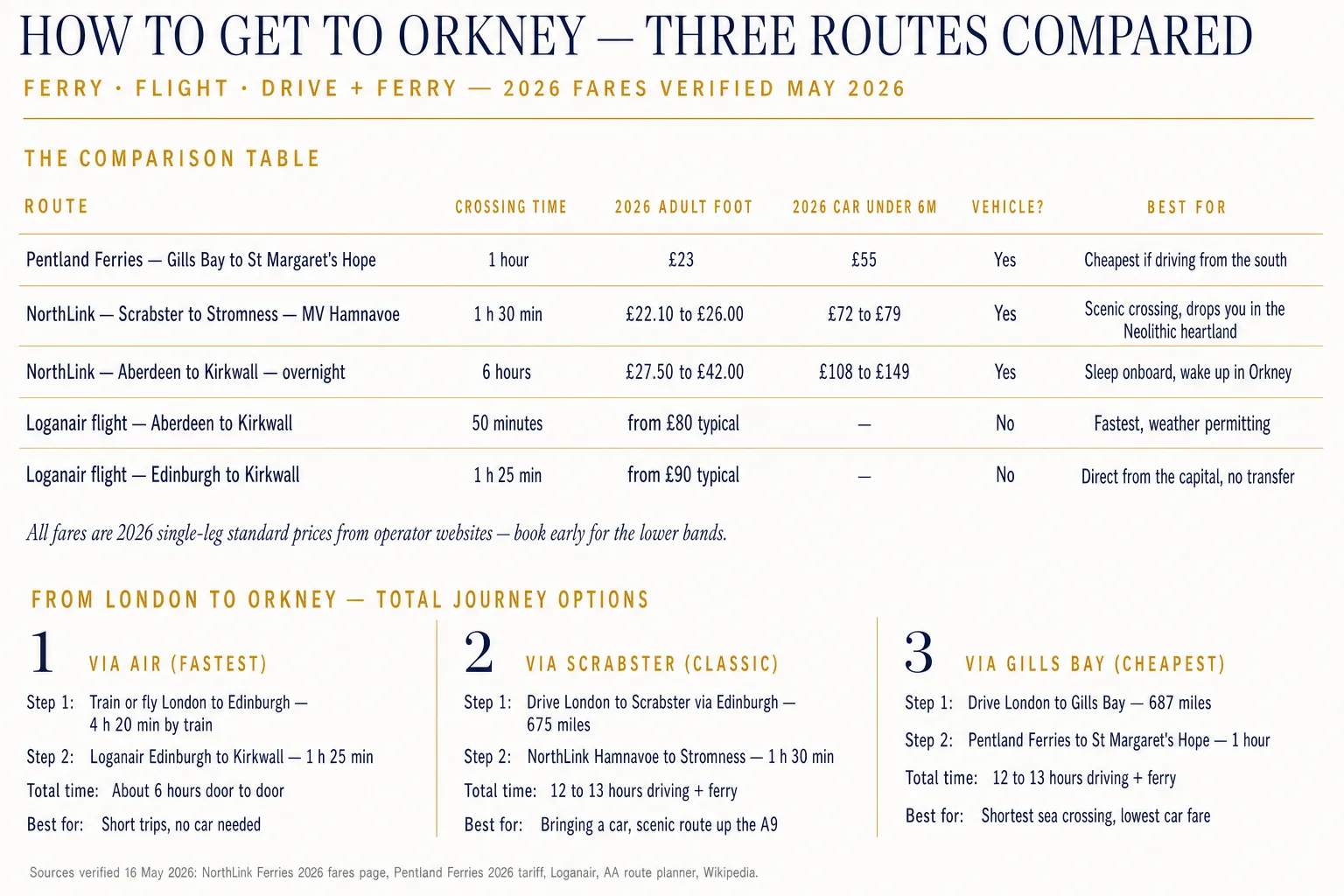
The fastest way is a Loganair flight; the cheapest is the Pentland Ferries crossing from Gills Bay; the most flexible is bringing your own car on the NorthLink ferry from Scrabster. Each route serves a slightly different traveller — pick the one that matches your starting point and the kind of trip you want to have.
Flying to Orkney with Loganair
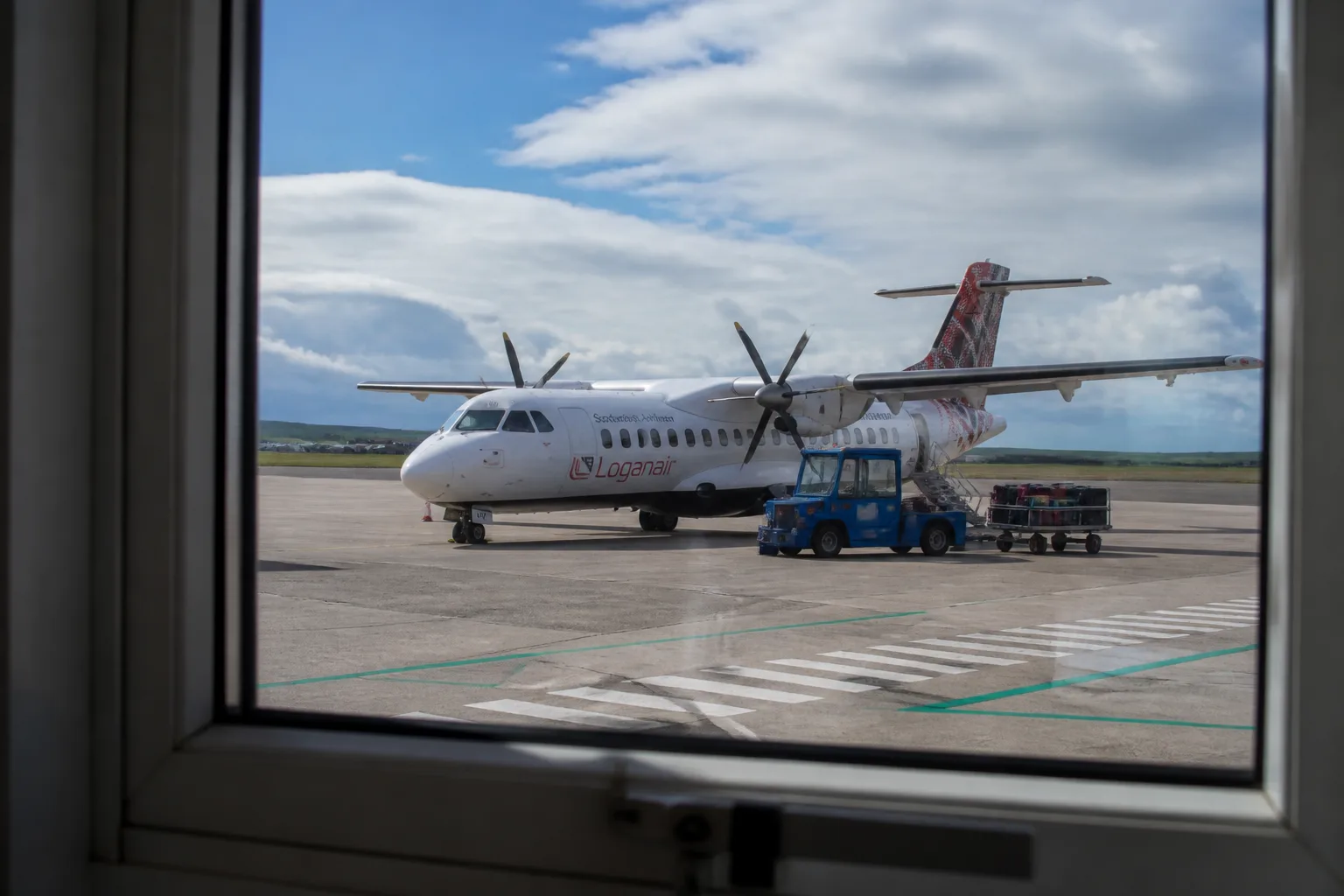
Loganair is the only airline operating scheduled flights into Kirkwall Airport (KOI), and the routes it flies are the backbone of Orkney's mainland connectivity. There are no direct flights from London, Birmingham or Manchester — every visitor flying in from south of the border has to connect via Edinburgh, Glasgow or Aberdeen.
Direct routes into Kirkwall
- Aberdeen (ABZ) — about 50 minutes. The shortest and most frequent route, multiple daily sailings, the workhorse for business and oil-industry traffic.
- Edinburgh (EDI) — about 1 hour 10 minutes. The most useful direct from a major UK transport hub. Twice-daily in summer.
- Glasgow (GLA) — about 1 hour 15 minutes. Daily, similar profile to Edinburgh.
- Inverness (INV) — about 40 minutes. Handy if you've combined Orkney with a Highland trip.
- Sumburgh (LSI) — Shetland connection. The northern hop, useful for island-hopping itineraries.
Aircraft, luggage and weather
Loganair's Highland and Island routes are flown on ATR 42 and ATR 72 turboprops — the trusty Saab 340s were retired in January 2024 and replaced with more modern French-built aircraft. They're comfortable enough for the short hop but they're propeller-driven and they do bounce around in weather. Check-in allowances are smaller than mainline carriers: typically 15 kg hold and 6 kg cabin, so heavy archaeology-trip kit may cost extra.
Weather cancellations happen — the Pentland Firth is famous for fog rolling in fast, and a diverted flight can mean a long detour. Always carry an emergency-cover credit card and read your travel insurance carefully before flying in November to February. For ground-side tips on what to do once you've collected your bag, our first-timer's guide to Orkney covers booking, packing and the first 48 hours.
Planning your trip
Staying overnight? Compare live prices and availability across Orkney on Booking.com.
Compare Orkney staysWe earn a small commission if you book through this link, at no extra cost to you.
Taking the ferry: NorthLink and Pentland Ferries
Two operators run vehicle-and-passenger ferries to Orkney. They go from different mainland ports, dock at different Orkney towns, and serve quite different travellers. Choosing between them is mostly a question of where you're driving from and which side of Orkney you want to land on.
NorthLink — Scrabster to Stromness (MV Hamnavoe)
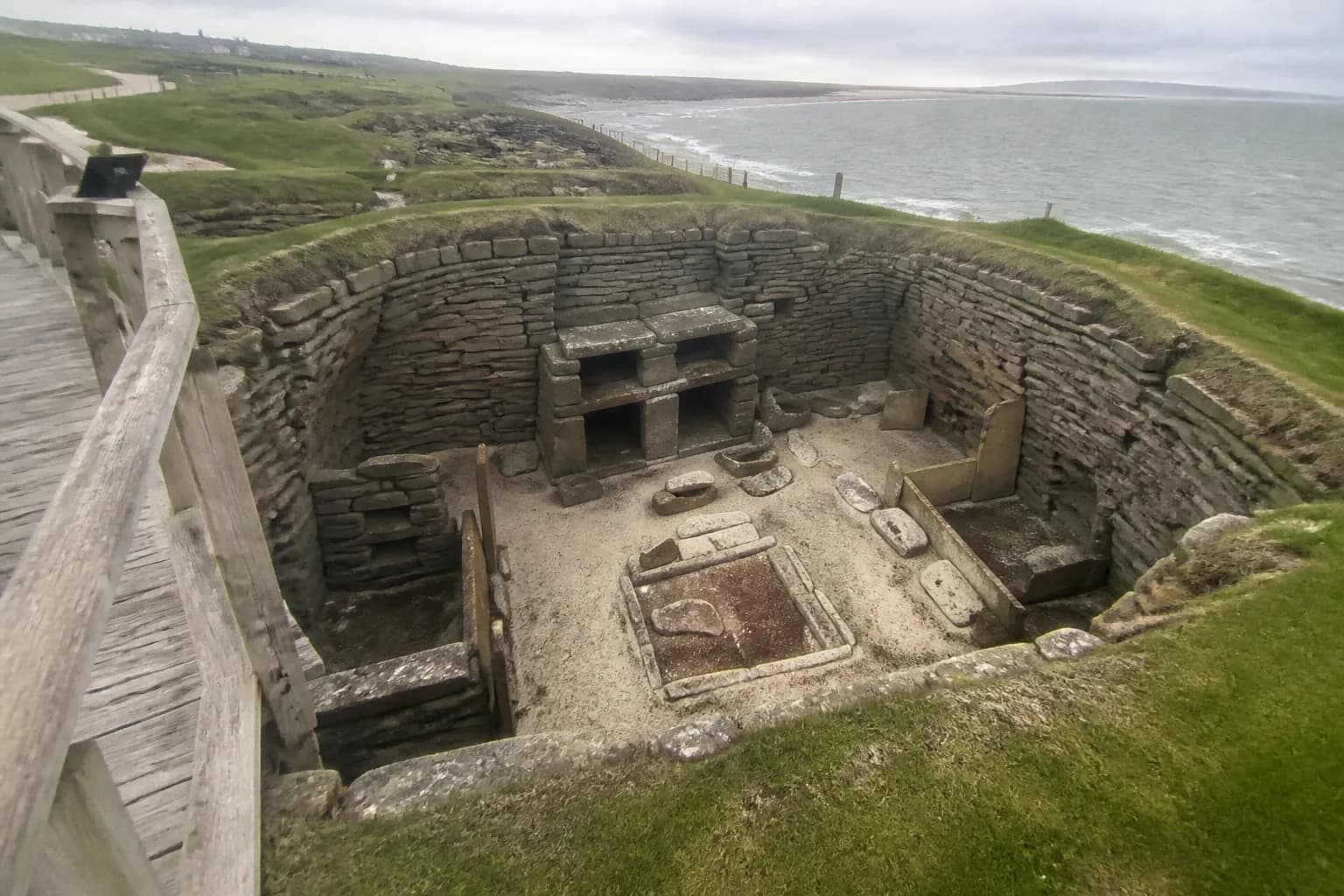
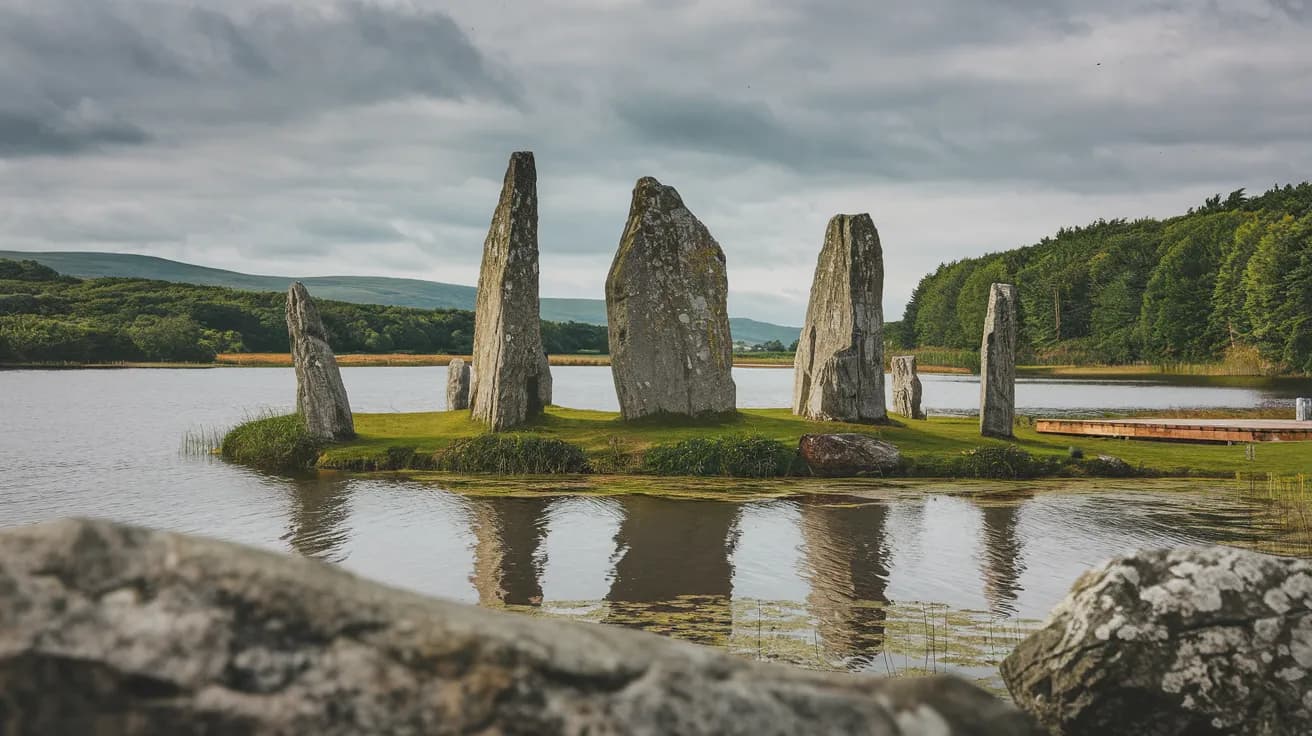
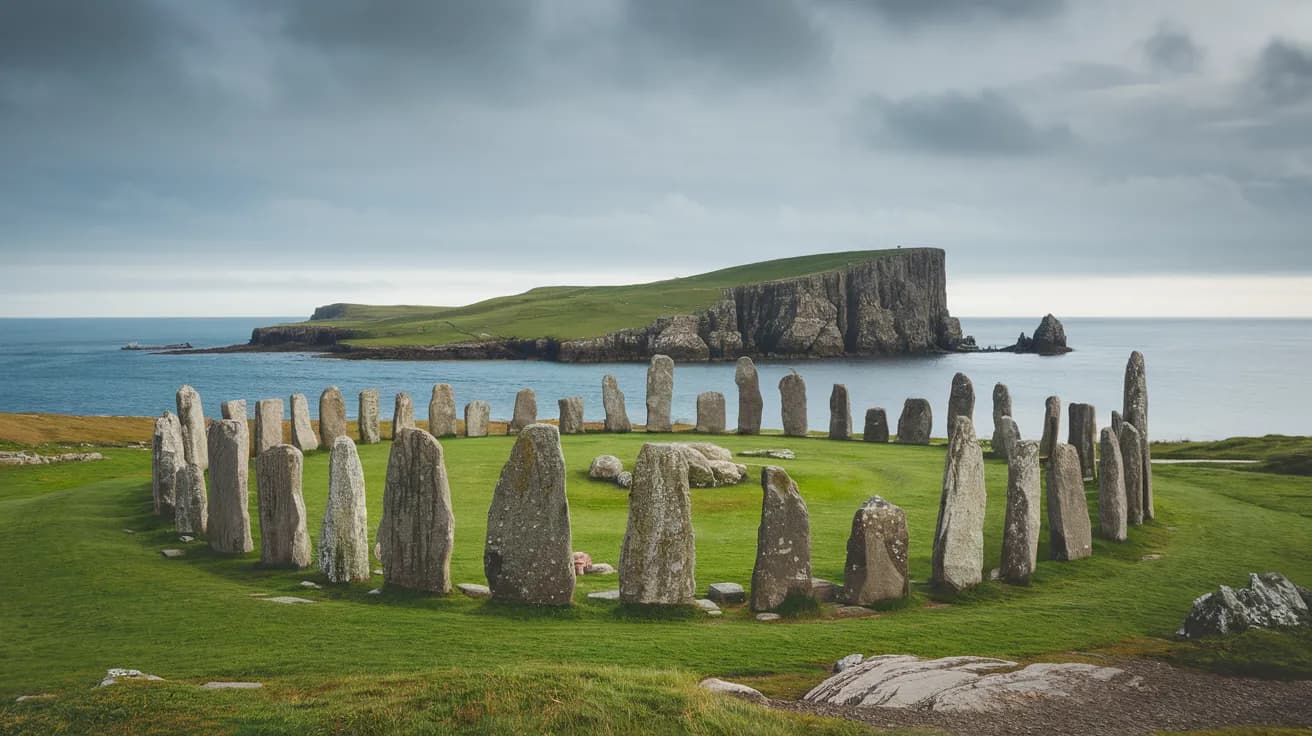
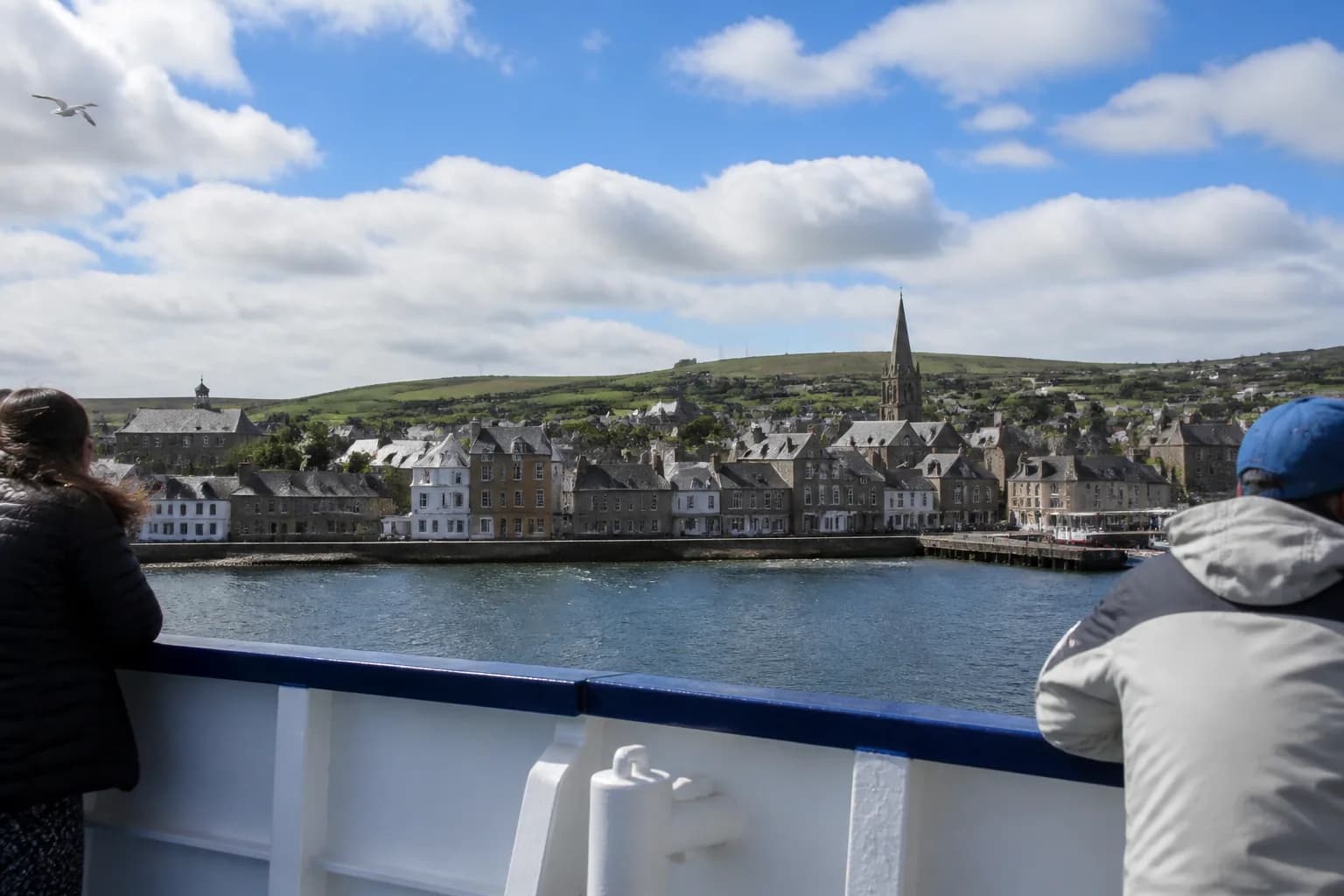
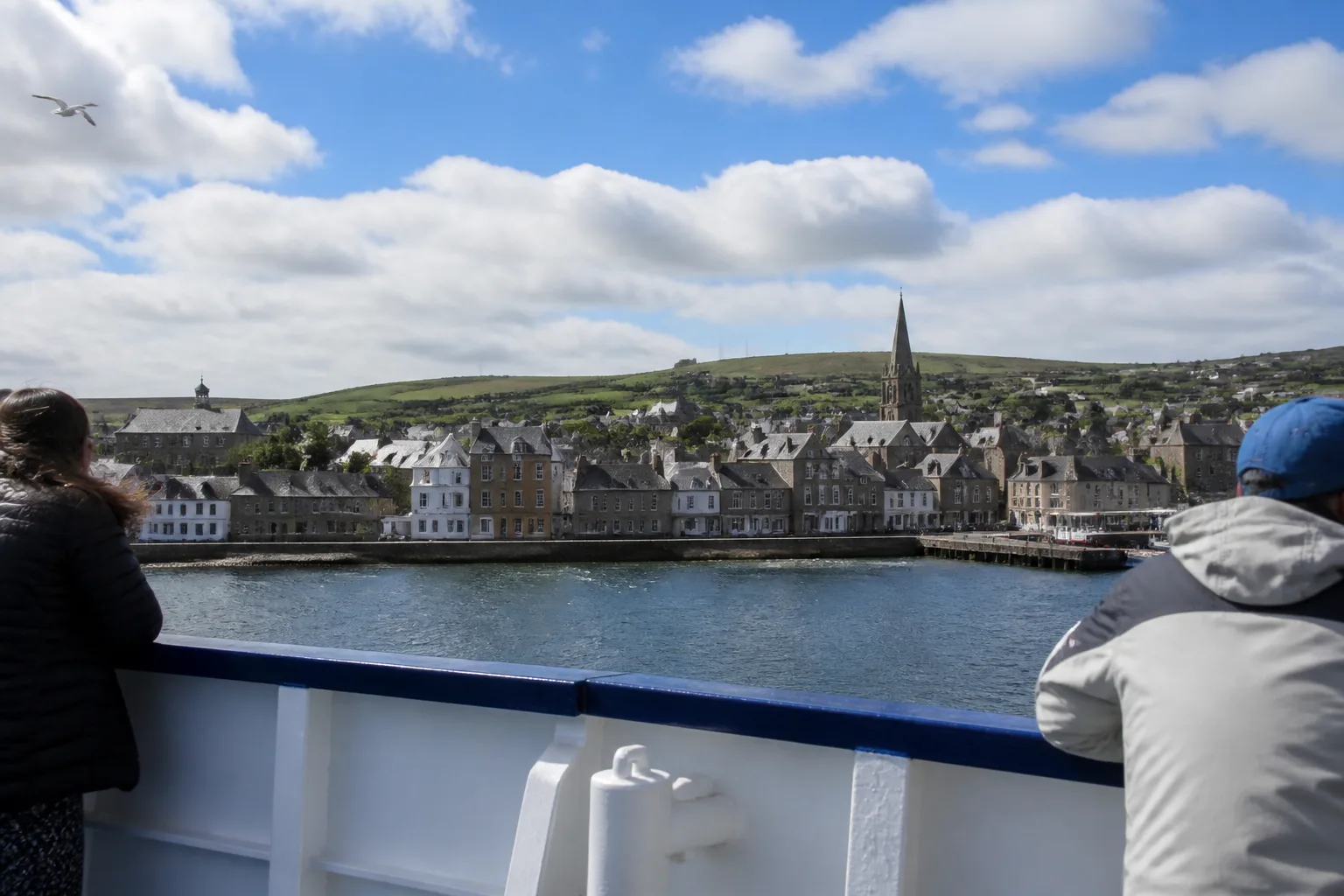
The 90-minute crossing from Scrabster (Caithness, 1.5 miles outside Thurso) drops you straight into Stromness, the painted-stone harbour town at the gateway to the West Mainland's UNESCO World Heritage cluster — Skara Brae, Ring of Brodgar, Stones of Stenness, Maeshowe. The vessel, MV Hamnavoe, is the largest ferry serving Orkney and has proper passenger lounges, cafés and an outside deck.
2026 single fares from NorthLink: adult foot passenger £22.10 to £26.00 depending on season; car under 6 metres £72 to £79. Sailings run three times a day each way in summer, dropping to two a day in winter — book the vehicle slot well in advance for July and August.
NorthLink — Aberdeen to Kirkwall (overnight)
The Aberdeen sailing is a different beast: six hours overnight on a much larger vessel with proper cabins, restaurant service, a bar and a cinema. The summer departure leaves Aberdeen at 17:00 and arrives at Hatston (Kirkwall) around 23:00; some sailings continue to Shetland. 2026 adult foot passenger fares are £27.50 to £42.00; cars £108 to £149. Onboard sleeping runs from a reclining seat or a sleeping pod at the cheap end up to two-berth and premium outer cabins, and every tier is priced by season — check current fares before budgeting.
This is the right route if you're coming from north-east England, want to sleep through the journey, or are combining Orkney with Shetland. It's the wrong route if you're trying to save money and your starting point is anywhere west of Aberdeen — Scrabster is shorter, cheaper and just as scenic.
Pentland Ferries — Gills Bay to St Margaret's Hope
The shortest sea crossing — 1 hour 10 minutes — runs from Gills Bay (about 3 miles west of John o' Groats) to St Margaret's Hope on South Ronaldsay. Pentland Ferries works the route with a purpose-built car and passenger catamaran. 2026 single fares are a flat £23 adult foot passenger and £55 car — the cheapest car-and-driver combination of any Orkney crossing.
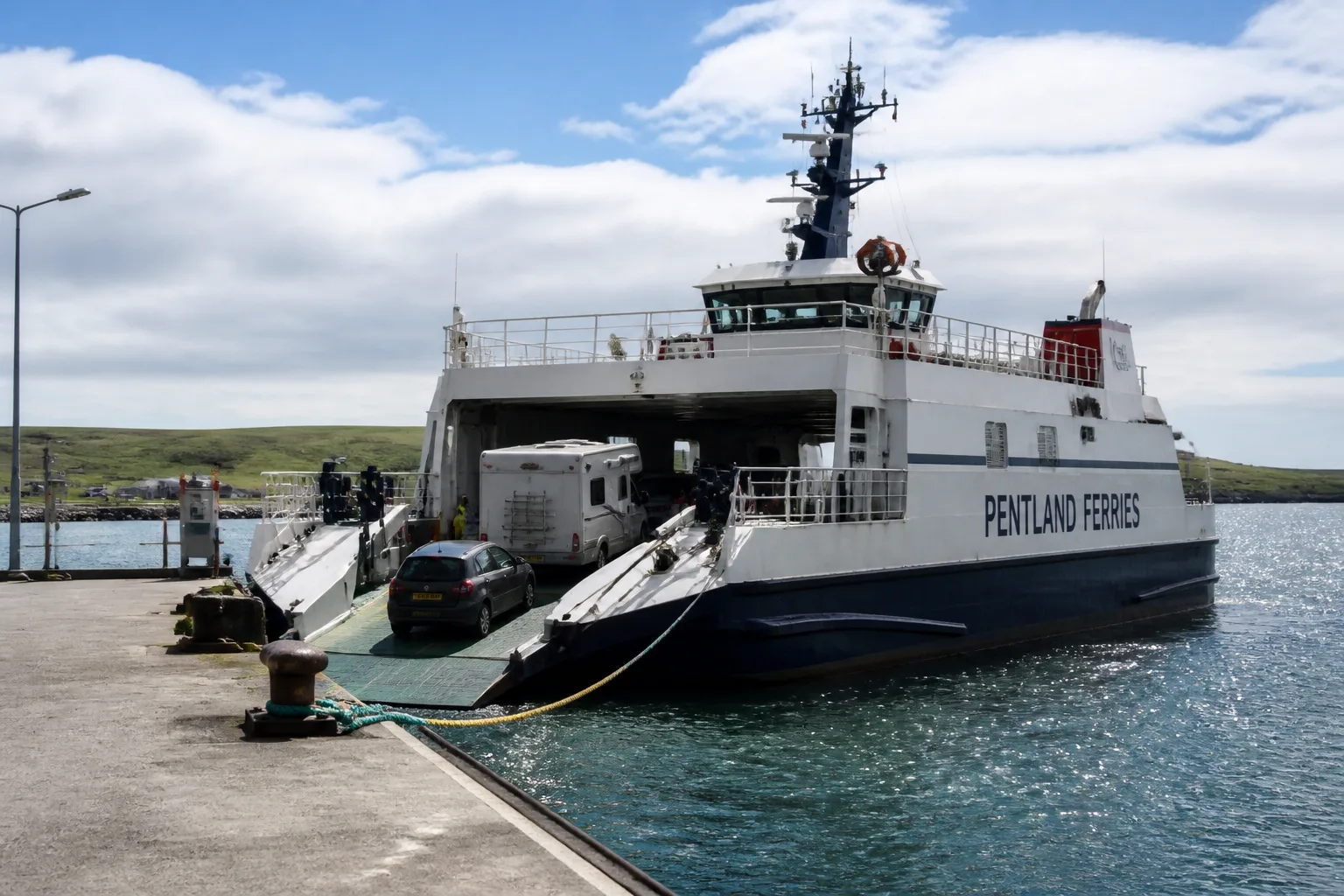
South Ronaldsay is connected to the Mainland by the Churchill Barriers — four causeways built in WWII to seal Scapa Flow against U-boats — so once you've landed it's a straightforward drive (about 35 minutes) to Kirkwall, passing the Italian Chapel on Lamb Holm en route.
Driving to Orkney: the A9 and the ferry slot
"Driving to Orkney" really means driving to one of the two ferry terminals on the north Scottish coast and putting your car on a boat. Both Scrabster (for NorthLink) and Gills Bay (for Pentland) sit on the A99/A836 about three miles apart at the very top of the A9, so the practical decision is which ferry slot you can book — not which mainland port suits you better.
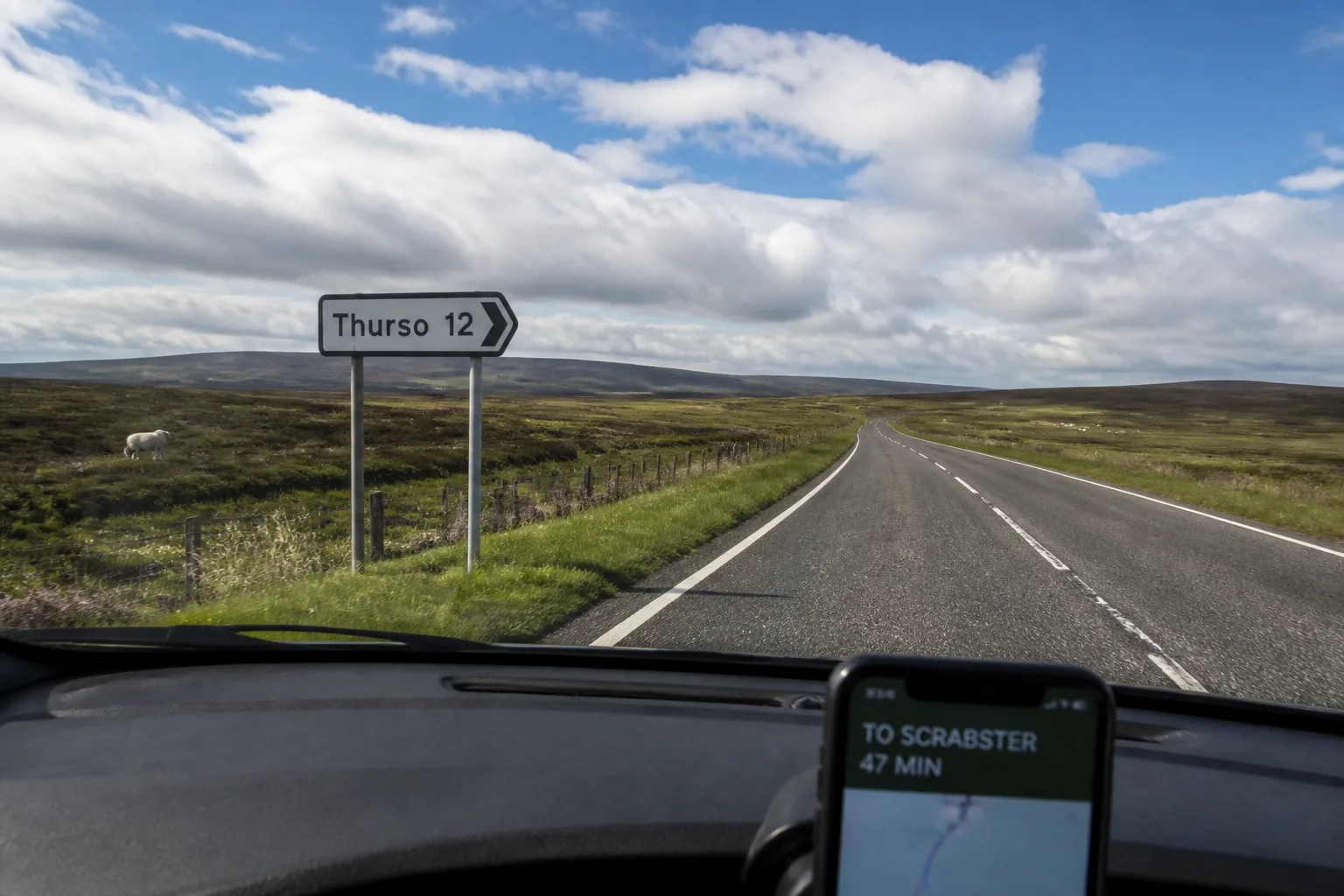
Driving distances and times to the ferry
| From | To Scrabster (NorthLink) | To Gills Bay (Pentland) |
|---|---|---|
| Inverness | 112 miles · 2h 30min | 117 miles · 2h 35min |
| Edinburgh | 265 miles · 5h 15min | 270 miles · 5h 20min |
| Glasgow | 284 miles · 5h 30min | 289 miles · 5h 35min |
| Manchester | 510 miles · 9h | 515 miles · 9h 05min |
| London | 675 miles · 11h 30min | 687 miles · 11h 40min |
Distances are all-driving via the A1/M6/M74/A9 corridor. None of this is motorway after Perth — the A9 north of Inverness is a mostly single-carriageway road, beautifully scenic, occasionally frustrating behind a slow caravan. Add an hour for a proper lunch break and a comfort stop.
If you're driving up from England, the realistic plan is two days: an overnight stop somewhere around Perth, Aviemore or Inverness, then the final stretch to the ferry the next morning. Don't try to drive London-to-Scrabster in one push and catch a same-day ferry — you'll arrive shattered and the ferry slot becomes a real risk.
How to get to Orkney from London (the three real options)
There is no direct flight, train or coach from London to Orkney. Every option starts with getting yourself to a Scottish gateway — Edinburgh, Glasgow or Aberdeen — and then catching the regional connection. Here are the three workable routes, with realistic total times:
A fourth option — fly London to Edinburgh, then connect to Loganair — is rarely faster than the train because of the mandatory bag-recheck and the time wasted between two airports. The LNER takes longer in raw hours but is comfortable, productive and arrives in the middle of town.
Can you visit Orkney without a car?
Yes — but with caveats. Kirkwall, Stromness and St Margaret's Hope are walkable; the main villages have grocery shops, restaurants and accommodation; and there's a respectable bus network covering the major sites. If your trip is centred on Kirkwall and the West Mainland's Neolithic sites, you can do it car-free with some planning.
What you'll miss is the freedom to chase a tide-pool at sunset, drive to Birsay for a quiet beach lunch, or detour to a cliff walk on a whim. Our companion guide to getting around Orkney without a car covers the buses, taxis, e-bike hire and small-group tours that fill the gap.
If you do bring a car, read up first: single-track roads, passing-place etiquette and 20mph village limits all catch out drivers used to motorway thinking. Our practical primer on driving in Orkney — road rules, etiquette and parking is the short version.
What's the cheapest way to get to Orkney?
If you're driving from England or central Scotland and your headcount is two or more, the cheapest combination is the Pentland Ferries crossing from Gills Bay at £55 for the car plus £23 per adult foot passenger. Two adults and a car costs £101 single — far less than any flight-plus-hire-car combination.
If you're a solo traveller without a car, the cheapest option is a Loganair advance ticket out of Edinburgh, Glasgow or Inverness — fares from around £80 single if you book six to eight weeks ahead. The flight is also the fastest, so this is the rare case where cheaper happens to be quicker too.
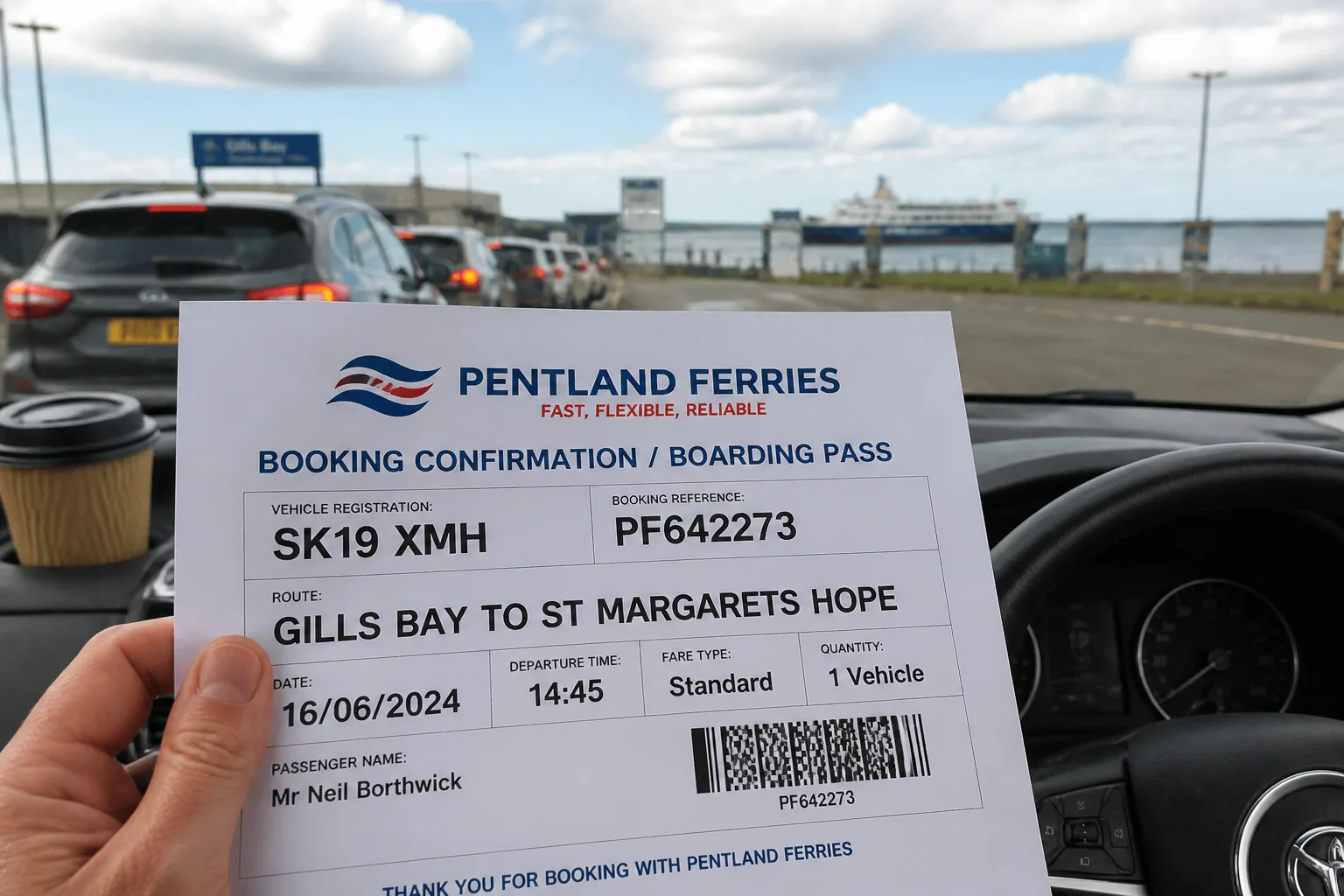
The single biggest variable in your trip cost is the car ferry — book early, travel mid-week, avoid school holidays, and consider whether you really need a car for the days you'll be on the islands. Our deeper Orkney on a budget guide walks through every cost from accommodation to dining to the Inner Isles fast ferries.
How far in advance should you book?
Vehicle slots on every Orkney ferry sell out in peak summer — particularly the Saturday Pentland sailings, the Friday-evening NorthLink Aberdeen overnight, and any sailing during St Magnus Festival in late June. The general rule:
- July and August trips: book ferries 8 to 12 weeks ahead. Foot passengers can usually walk on; cars cannot.
- May, June and September: 4 to 6 weeks is usually enough except around festivals.
- Loganair flights: the cheap fare bands sell first. Book 6 to 10 weeks ahead for the lowest prices, particularly Friday and Sunday seats.
- Accommodation: book before the ferry. The car-ferry slot is the bottleneck for cars; the accommodation is the bottleneck for everything else.
Frequently asked questions
What is the cheapest way to get to Orkney?
For travellers with a car, the Pentland Ferries crossing from Gills Bay to St Margaret's Hope is the cheapest at £55 per car and £23 per adult foot passenger (2026 single fares). For solo travellers without a car, an advance Loganair ticket from Edinburgh, Glasgow or Inverness can come in from around £80 single — and it's also the fastest option.
Can you fly directly to Orkney from London?
No. There are no direct flights from London to Kirkwall. The Loganair Heathrow connection via Dundee ends on 18 September 2026. You'll need to connect via Edinburgh, Glasgow or Aberdeen, or take the train to Edinburgh and fly Loganair from there. Total journey time via the train-plus-Loganair option is around 6 hours.
How long is the ferry to Orkney?
It depends on the route. Pentland Ferries from Gills Bay to St Margaret's Hope takes 1 hour 10 minutes. NorthLink's MV Hamnavoe from Scrabster to Stromness takes 1 hour 30 minutes. NorthLink's Aberdeen to Kirkwall overnight sailing takes around 6 hours.
Which Orkney ferry should I take — Scrabster or Gills Bay?
Take Scrabster (NorthLink to Stromness) if you want the West Mainland — Skara Brae, Brodgar, Stenness, Maeshowe — at your doorstep, or if you want the more comfortable larger ferry. Take Gills Bay (Pentland to St Margaret's Hope) if you want the cheapest car fare, the shortest sea crossing, or if you're starting in South Ronaldsay and exploring north from there. Driving distance from the south is essentially identical.
How much is the ferry to Orkney from Scotland in 2026?
Pentland Ferries: £23 adult foot passenger, £55 car (single, all year). NorthLink Scrabster to Stromness: £22.10-£26.00 adult, £72-£79 car (varies by season). NorthLink Aberdeen to Kirkwall: £27.50-£42.00 adult, £108-£149 car (varies by season). Cabins on the Aberdeen sailing are extra and book up first.
Do I need to book Orkney ferries in advance?
For vehicles, yes — particularly between May and September. Foot passengers can usually walk on without a booking outside peak weekends. The general advice: book the vehicle slot first, then build the rest of the trip around it.
How long does it take to drive from London to Orkney?
About 11-12 hours of driving (around 675 miles via the A1, M6, M74 and A9) to reach Scrabster or Gills Bay, plus a 1h 10min to 1h 30min ferry crossing. Most travellers split the drive over two days, stopping in Perth, Aviemore or Inverness for the night.
What's the fastest way to get to Orkney?
Loganair from Aberdeen to Kirkwall takes just 50 minutes — the fastest single segment. From Edinburgh the direct flight is about 1 hour 10 minutes; from Glasgow about 1 hour 15 minutes; from Inverness about 40 minutes. Total journey from London via train-plus-Loganair from Edinburgh is around 6 hours door to door.
Choosing your Orkney arrival
There's no wrong answer. Flying is fastest, ferrying is most scenic, driving is most flexible — and many returning visitors mix them up across multiple trips. The pattern that works best for a first visit: a 90-minute crossing into Stromness with a car, three to five nights on the Mainland, and a leisurely drive back south. The route earns its keep on the way in and again on the way out.
Once you've worked out the route, the next decision is where to base yourself. Browse Orkney accommodation across all four main towns and dozens of self-catering cottages, B&Bs and guest houses across the islands.
Sources & further reading
The facts in this guide were checked against the following authoritative sources.
- NorthLink Ferries — Fares — cabin prices, passenger fares
- NorthLink Ferries — Timetables — three peak sailings daily
- Loganair — Flights to Kirkwall — Edinburgh, Glasgow routes
- Pentland Ferries — Gills Bay to St Margarets Hope — journey time 1 h 10 min, 2026 tariff
- Orkney Ferries — Timetables — inter-island after arrival