Quick Navigation
- Orkney's museums at a glance
- The Orkney Museum, Kirkwall
- Scapa Flow Museum, Lyness
- Stromness Museum
- The Pier Arts Centre, Stromness
- Orkney Wireless Museum, Kirkwall
- Kirbuster Farm Museum, Birsay
- Orkney Fossil and Heritage Centre, Burray
- Westray Heritage Centre
- Planning a museum day in Orkney
- Orkney museums: common questions
- Where is the Orkney Museum?
- How do you get to the Scapa Flow Museum from Kirkwall?
- Do you have to pay to get into Orkney's museums?
- Are Orkney's museums open in winter?
- Which Orkney museum has the Westray Wife?
- Which is the best museum in Orkney?
Orkney museums are not a wet-afternoon fallback. For an archipelago of roughly 22,000 people, the islands hold an unusually good spread of collections. There is a Stone Age-to-present county museum inside a 1530s town house, a naval museum built into the fuel pumping station that once fed the Home Fleet, and a small gallery in Stromness holding one of the finest collections of twentieth-century British art outside London. Most are free. Several are seasonal. Two need a ferry.
Orkney's museums at a glance
Eight places are worth planning around. The table below is the short version: where each one is, what it is really about, and when it opens. Seasons and hours change, and two of these depend on volunteers, so treat the season column as a planning guide and check the museum's own page before you set off.
| Museum | Where | Season | Entry |
|---|---|---|---|
| The Orkney Museum | Broad Street, Kirkwall | All year, Mon–Sat | Free |
| Scapa Flow Museum | Lyness, Hoy | March–December | Free |
| Stromness Museum | Alfred Street, Stromness | All year | Adults £8 |
| The Pier Arts Centre | Victoria Street, Stromness | All year, Tue–Sat | Free |
| Orkney Wireless Museum | Junction Road, Kirkwall | Summer season | Donation |
| Kirbuster Farm Museum | Birsay, West Mainland | March–October | Free |
| Orkney Fossil & Heritage Centre | Burray, South Isles | April onwards | Adults £7.50 |
| Westray Heritage Centre | Pierowall, Westray | May–September | Adults £5 |
Four of the eight are on the Mainland road network and can be strung together in a day or two. The other four each involve a ferry, a season, or both. If you are still deciding where to base yourself, the practical answer for museum-heavy trips is Kirkwall or Stromness, and you can compare places to stay across the islands before you fix an itinerary.
The Orkney Museum, Kirkwall
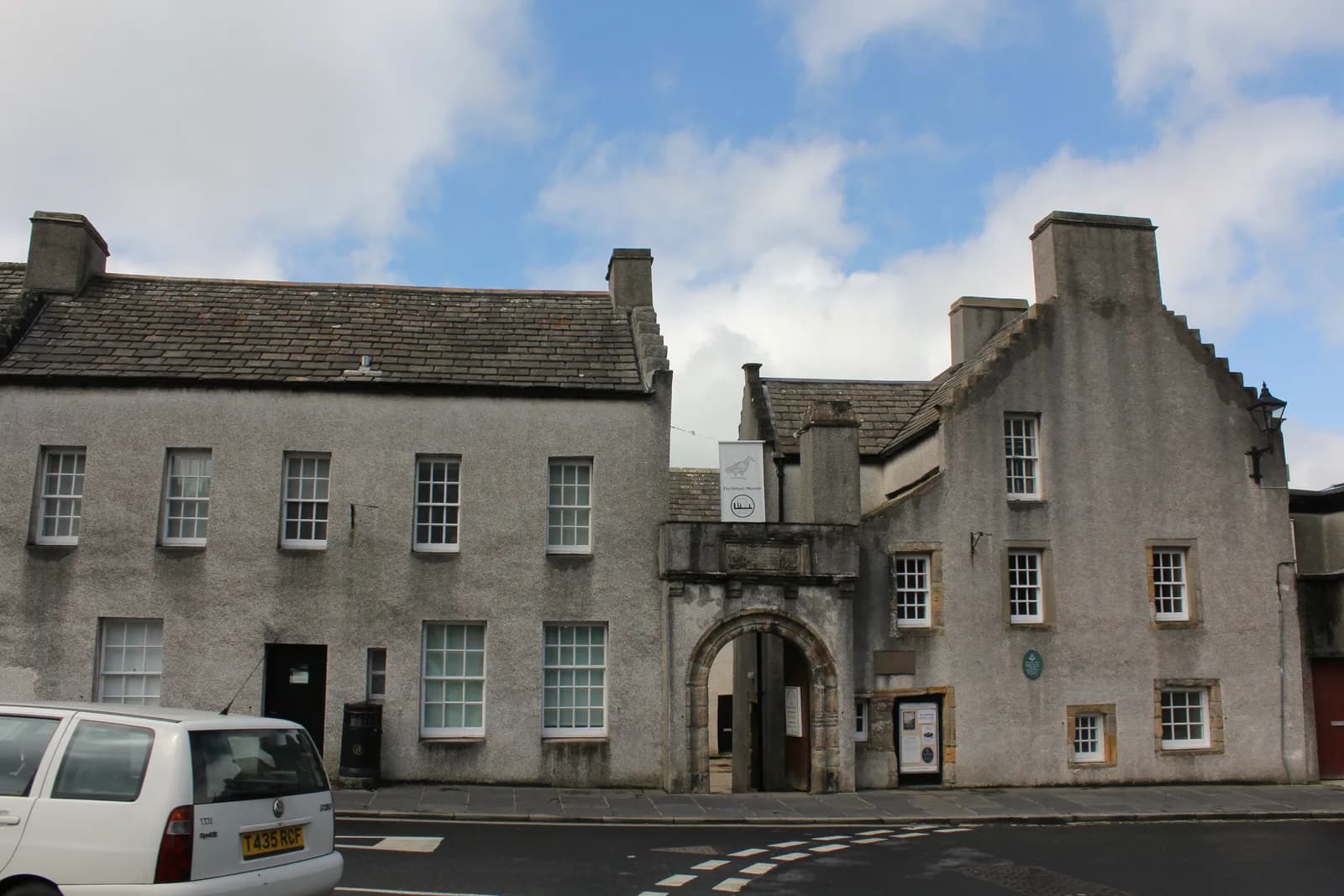
This is the county museum, and it is the one to start with. It sits in Tankerness House on Broad Street, directly across from St Magnus Cathedral, in a building whose north and south wings went up in the 1530s as cathedral manses. Archdeacon Gilbert Foulzie bought them after the Reformation and added the east wing and the archway onto Broad Street in 1574. The Baikie family took the house in 1642 and kept adding to it. The council bought it in 1951, opened it as Tankerness House Museum in 1968, and renamed it The Orkney Museum in 1999.
The collection runs from the Neolithic to living memory in a sequence of small rooms, which suits Orkney's history rather well. The objects people come for include the Viking whalebone plaque from the Scar boat burial, the Pictish symbol stone from the Knowe of Burrian, and the wooden box that held the relics of St Magnus. The Baikie library and drawing room are preserved as domestic rooms, which is a useful corrective after a morning of grave goods.
Entry is free with a suggested donation. It opens Monday to Saturday, and because it is a five-minute walk from most Kirkwall hotels and guest houses, it is the easiest museum in Orkney to fit around a ferry or a flight.
Planning your trip
Staying overnight? Compare live prices and availability across Orkney on Booking.com.
Compare Orkney staysWe earn a small commission if you book through this link, at no extra cost to you.
Scapa Flow Museum, Lyness
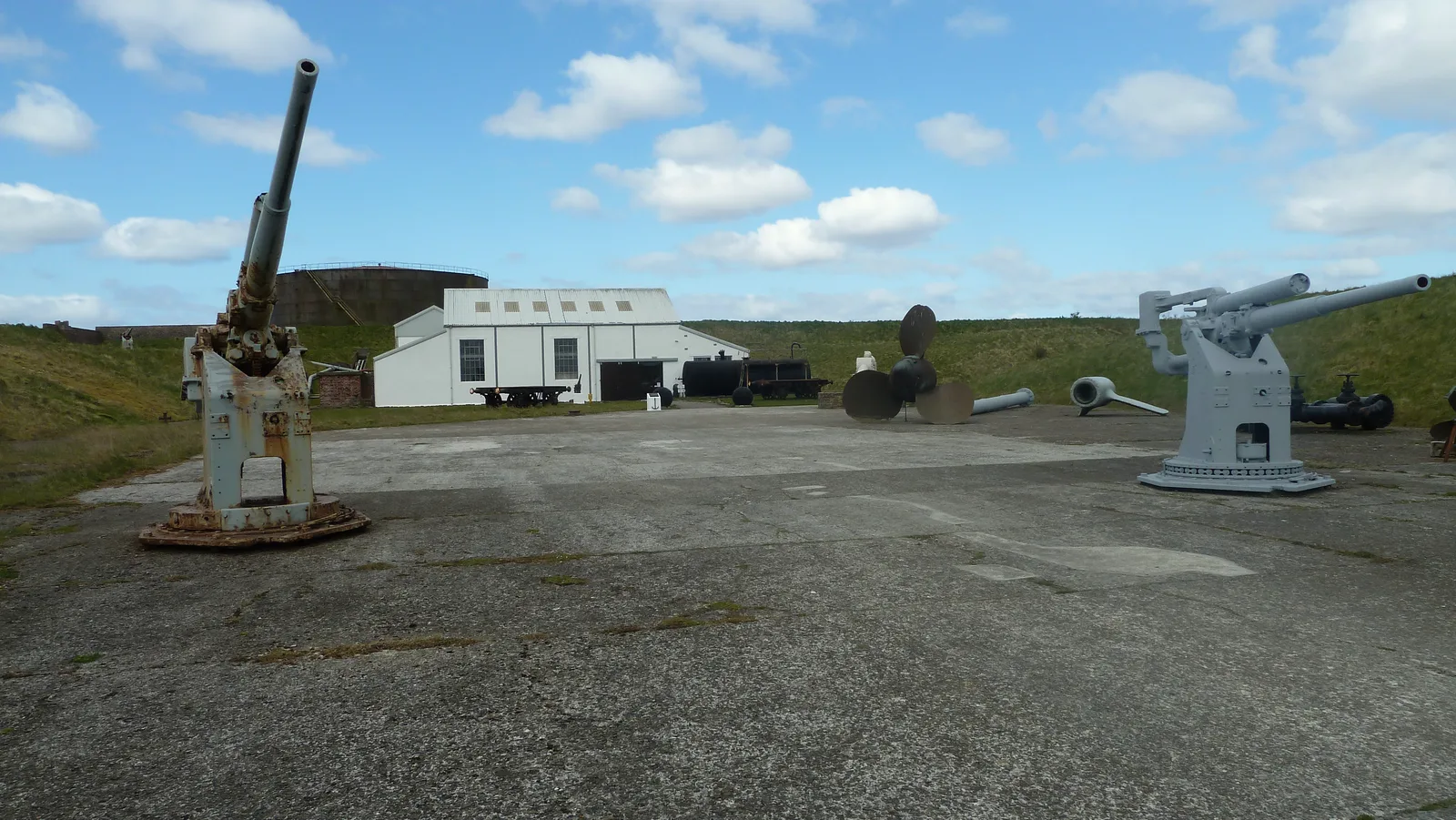
The best museum in Orkney is also the hardest to reach, and it is worth the effort. Lyness was the shore base for the fleet that used Scapa Flow as its wartime anchorage, and the museum occupies the pumping station built in 1937 to move fuel oil out to the ships. The building is part of the exhibit. Inside are the original Wilson Lancashire boilers, and the scale of the tanks does more to explain the base than any label could.
The museum closed in 2017 and reopened on 2 July 2022 after a £4.4 million redevelopment funded in part by the National Lottery Heritage Fund and Historic Environment Scotland. It now holds over 250 artefacts and interactive displays covering both world wars, the scuttling of the German High Seas Fleet, and the effect of tens of thousands of service personnel arriving in a small farming community. Entry is free with a suggested donation.
Getting there takes planning. The vehicle ferry runs from Houton in Orphir to Lyness, roughly half an hour across the Flow. The other Hoy ferry, from Stromness to Moaness, is passenger and bicycle only and lands at the north end of the island, which is the wrong end for the museum. The museum is closed in January and February, and its opening days narrow either side of summer.
Stromness Museum
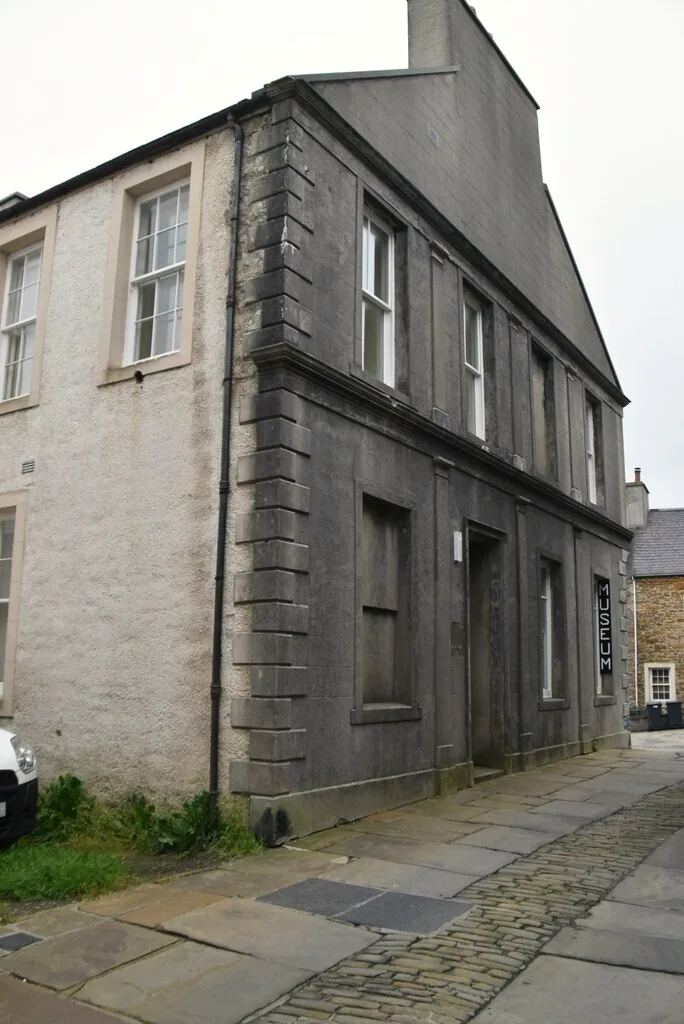
Stromness Museum has been run by the Orkney Natural History Society since 1837, which makes it older than most national museums and gives it the slightly wonderful crowdedness of a Victorian collection that never stopped. It stands at 52 Alfred Street, on the flagstone street through the old town, with a vertical MUSEUM sign that is the only concession to signage.
The holdings split across archaeology, maritime history, natural history, ethnography and social history. The maritime rooms are the heart of it. Stromness was a regular calling point for Hudson's Bay Company ships and for Arctic whaling fleets, and large numbers of Orkneymen from the town and its hinterland shipped out with both as traders, seamen and explorers. The best known of them, John Rae, has a statue on the pierhead a few minutes away. There is also a set of geological slides assembled by Ted Kellock.
It is the one museum on this list with a full adult admission charge, £8 when we checked in August 2026, with under-16s free and a concession rate. It opens all year, which in an Orkney winter matters more than the fee.
The Pier Arts Centre, Stromness
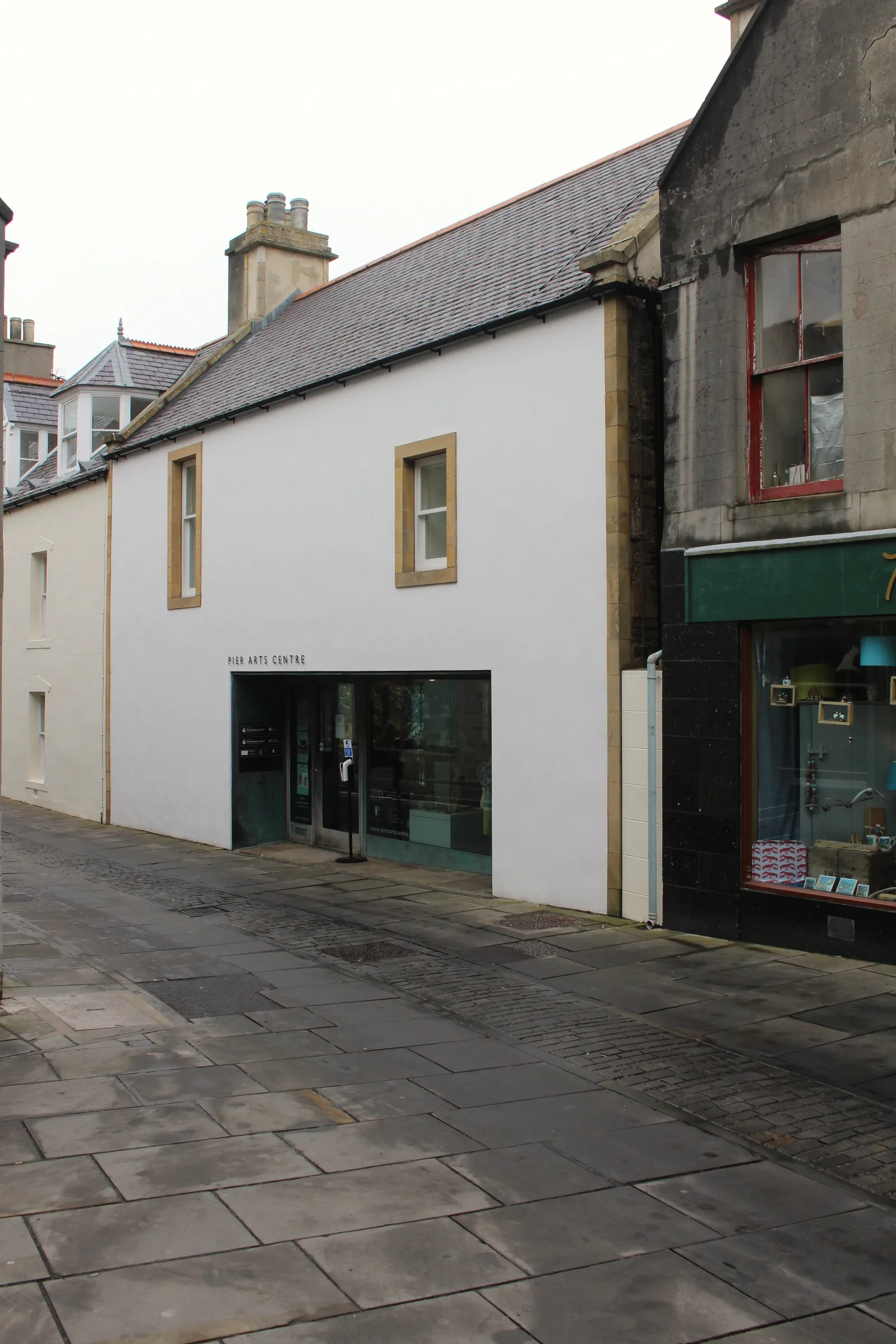
Five minutes along the same street is a gallery that has no business being in a town of 1,700 people — Stromness at the 2022 census. The Pier Arts Centre was founded in 1979 when Margaret Gardiner, an author and peace activist who had been close to Barbara Hepworth, gave her private collection to be held in trust for Orkney. The permanent collection now runs to more than 180 modernist works from 1929 onwards, including Hepworth, Ben Nicholson, Patrick Heron and Terry Frost, alongside later acquisitions and work by Orcadian artists.
The building matters too. Reiach & Hall extended the old Hudson's Bay Company premises and pier structures with a contemporary block at the water's edge, reopening in July 2007. Standing in the upper gallery with a Nicholson on the wall and the harbour filling the window is the single most Orcadian art experience going. Entry is free, Tuesday to Saturday, all year.
Orkney Wireless Museum, Kirkwall
A small, deeply specific museum on Junction Road near the Kirkwall harbour front, covering domestic radio and the wartime communications equipment that ran the defence of Scapa Flow. It is the sort of collection assembled by people who genuinely care about valves, and it is far more interesting than that description suggests, particularly the material on how the anchorage was wired for war.
It runs on a summer season and on volunteers, and the museum says plainly that opening times depend on volunteers being available. Entry is by donation. If it is on your list, treat it as an opportunistic stop rather than a fixed appointment, and check the day's hours first.
Kirbuster Farm Museum, Birsay
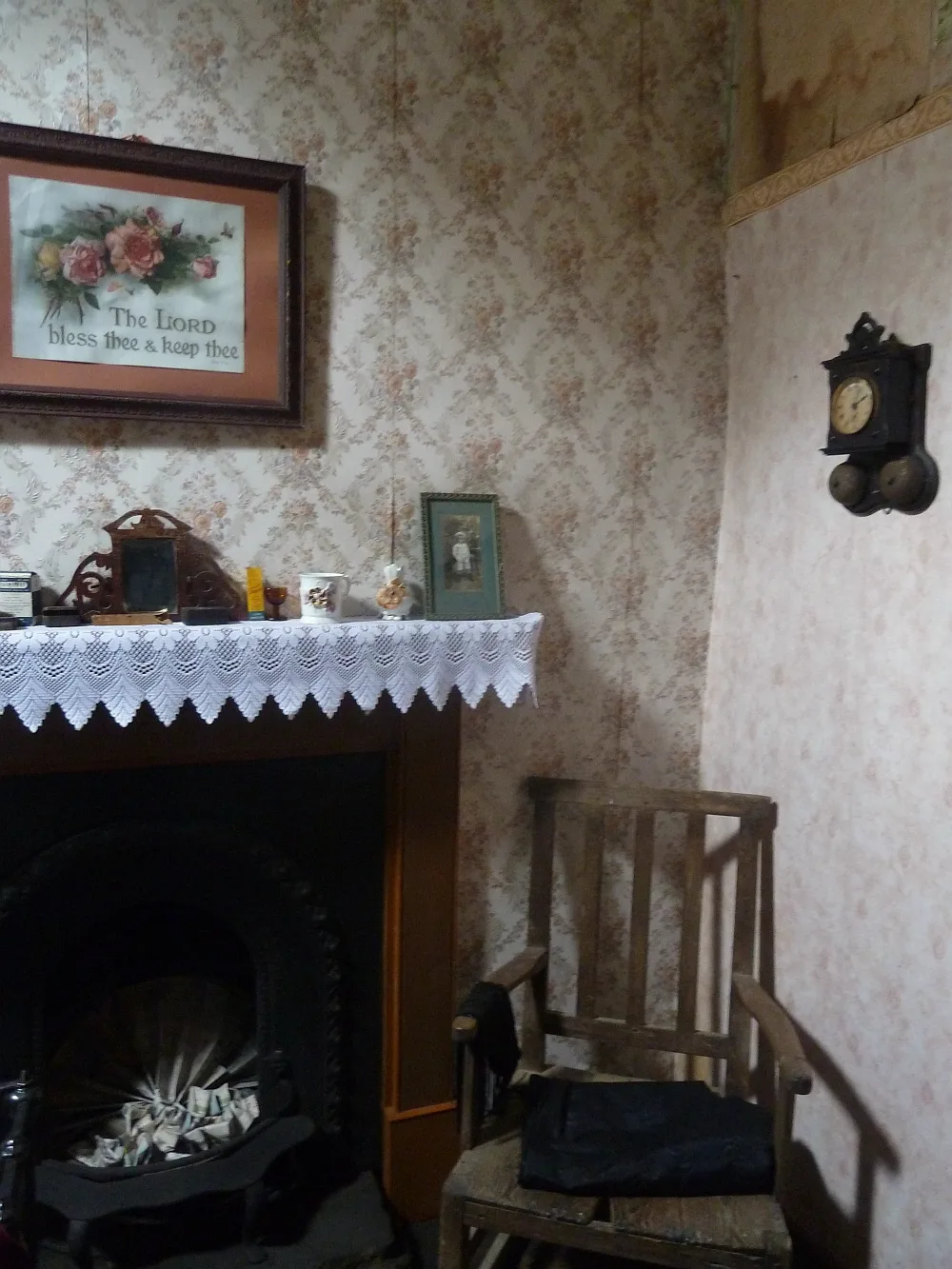
About 25 minutes' drive from Kirkwall, on Hundland Road in Birsay, Kirbuster preserves something that has vanished everywhere else. Its firehoose dates to 1595 and is the last unrestored example in northern Europe: a room with a central hearth and no chimney, where the peat smoke finds its own way out through the roof. There is a stone bed built into the wall that would not look out of place at Skara Brae, four and a half thousand years later.
The peat fire is kept lit, so the smell of the place is part of the visit. Around the firehoose are later farmhouse rooms furnished as they were used, a steading, and a garden. Entry is free with a suggested donation, and the season runs March to October.
Orkney Fossil and Heritage Centre, Burray
Reached over the Churchill Barriers on Burray, this one is run by a local charity and does two things at once. The fossil galleries hold Orkney material from a geological collection the centre dates back 350 million years, and the Glow Room shows fluorescent rocks under ultraviolet light, which is reliably the highlight for anyone under twelve. The heritage side covers wartime Orkney, Scapa Flow and the lighthouses, plus a rotating temporary exhibition. Most displays are static and cased, though some can be handled.
It opens daily in season from early April, with a café on shorter hours. Adult admission was £7.50 when we checked in August 2026, with concession and family rates and under-5s free. It pairs naturally with the Italian Chapel on Lamb Holm, a few minutes back up the barriers.
Westray Heritage Centre
In Pierowall, Westray's main village, the heritage centre is a museum, archive and genealogy resource in one. It is home to two objects that would anchor a much larger institution. The first is the Westray Wife, also called the Orkney Venus: a Neolithic sandstone figurine 4 cm tall, found at the Links of Noltland in 2009, and the earliest depiction of a human face found anywhere in the UK. It was the first Neolithic carving of a human form found in Scotland. The second is the Westray Stone, a carved slab turned up by accident in a Pierowall quarry in 1981.
The main season runs May to September, with limited Wednesday afternoon opening either side of it. The centre closes over winter, but the Trust gives conflicting months for it, so check before you travel. Adult admission is £5, with under-18s free. Getting to Westray is a ferry from Kirkwall or a short Loganair flight, so this is a day out rather than a stop.
Planning a museum day in Orkney
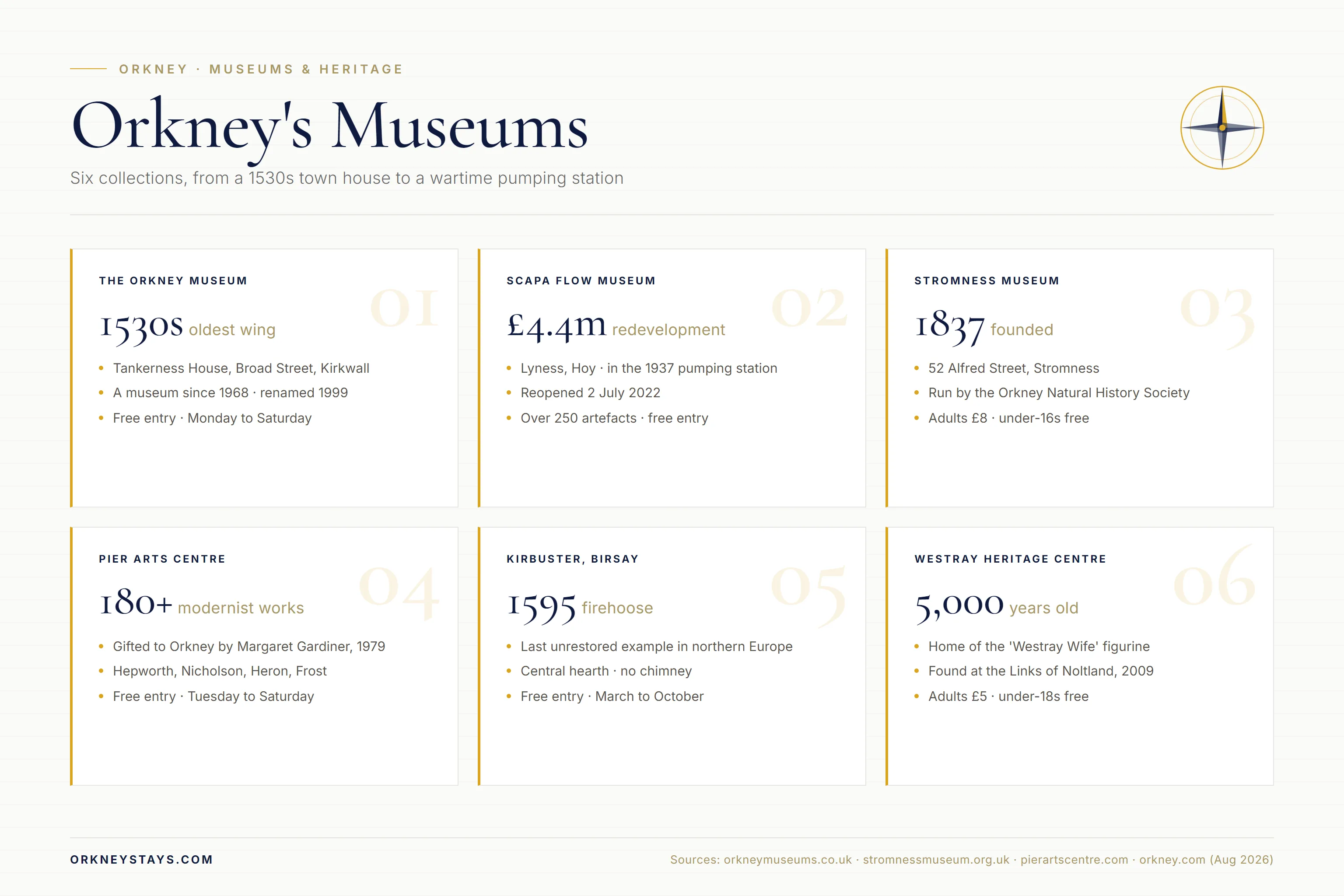
Three things save trouble. First, the seasons are real: outside roughly April to September, Kirbuster, the Fossil Centre, the Wireless Museum and Westray are shut or on reduced hours, and only Kirkwall and Stromness stay reliably open. Second, the council-run museums — the Orkney Museum, the Scapa Flow Museum and Kirbuster — ask for a suggested £5 donation, and they are worth it; the Pier Arts Centre asks for nothing at all. Third, if a museum involves a ferry, the sailing timetable is the constraint, not the opening hours.
One thing this list deliberately leaves out: the visitor centres at the Neolithic sites are not museums in the same sense, though the one at Skara Brae comes close, with its replica house and a small display of finds. That site has its own visitor guide with tickets and timings, and it is best treated as a separate half day.
Orkney museums: common questions
Where is the Orkney Museum?
The Orkney Museum is in Tankerness House on Broad Street, Kirkwall, opposite St Magnus Cathedral. Entry is free with a suggested donation and it opens Monday to Saturday, all year round.
How do you get to the Scapa Flow Museum from Kirkwall?
Drive or take a bus to Houton in Orphir, then the Orkney Ferries vehicle ferry to Lyness on Hoy, about half an hour. The Stromness passenger ferry lands at Moaness, at the wrong end of the island.
Do you have to pay to get into Orkney's museums?
Most are free with a suggested £5 donation, including the Orkney Museum, the Scapa Flow Museum, Kirbuster and the Pier Arts Centre. Stromness Museum, the Fossil Centre and Westray Heritage Centre charge admission.
Are Orkney's museums open in winter?
Only some. The Orkney Museum and the Pier Arts Centre open all year, and Stromness Museum stays open. The Scapa Flow Museum closes in January and February, and Kirbuster, the Fossil Centre and Westray are seasonal.
Which Orkney museum has the Westray Wife?
Westray Heritage Centre in Pierowall, on the island of Westray. The Neolithic figurine is 4 cm tall, was found at the Links of Noltland in 2009, and is the earliest depiction of a human face found anywhere in the UK.
Which is the best museum in Orkney?
For most visitors, the Scapa Flow Museum at Lyness, for the setting inside the 1937 pumping station as much as the collection. If you have one afternoon and no ferry, make it the Orkney Museum in Kirkwall.