Quick Navigation
- Getting to Hoy: Two Ferries, Two Different Trips
- The Old Man of Hoy — 137 metres of Red Sandstone
- How to walk to the Old Man — the standard Rackwick route
- St John's Head — the sheer cliff north of the Old Man
- Rackwick Bay: The Boulder Beach Where the Walk Starts
- The Dwarfie Stane — Britain's Only Rock-Cut Neolithic Tomb
- Why is it here, and who built it?
- Scapa Flow Museum — The Story of Britain's Wartime Anchorage
- Wildlife, Moorland and Ward Hill
- Ward Hill — the highest summit in Orkney
- Bonxies, sea eagles and the cliffs that roar
- Berriedale — the most northerly native woodland in Britain
- Hoy Accommodation: Modest, Atmospheric, Book Ahead
- A Suggested Day on Hoy
- Frequently Asked Questions
- Is it worth visiting Hoy?
- How long is the walk to the Old Man of Hoy?
- Can you drive on Hoy?
- Is there a bus on Hoy?
- What is the Dwarfie Stane?
- When does the Scapa Flow Museum open?
- What wildlife will I see on Hoy?
- How tall is the Old Man of Hoy?
- Sources & further reading
Hoy is the second-largest of the Orkney islands and the most physically dramatic — 143 square kilometres of red sandstone hills, sea cliffs and Atlantic-rolled beaches, lying just twenty-five minutes from Stromness across the Hoy Sound. The Old Man stands 137 metres clear of the sea on the west coast. Ward Hill, the highest summit in all of Orkney, lifts to 481 metres above the moors. Lyness, on the east coast, holds the wartime memory of Scapa Flow. This is a single-day or single-week guide to landing on Hoy, choosing the right ferry, and seeing the things that have made the island famous.
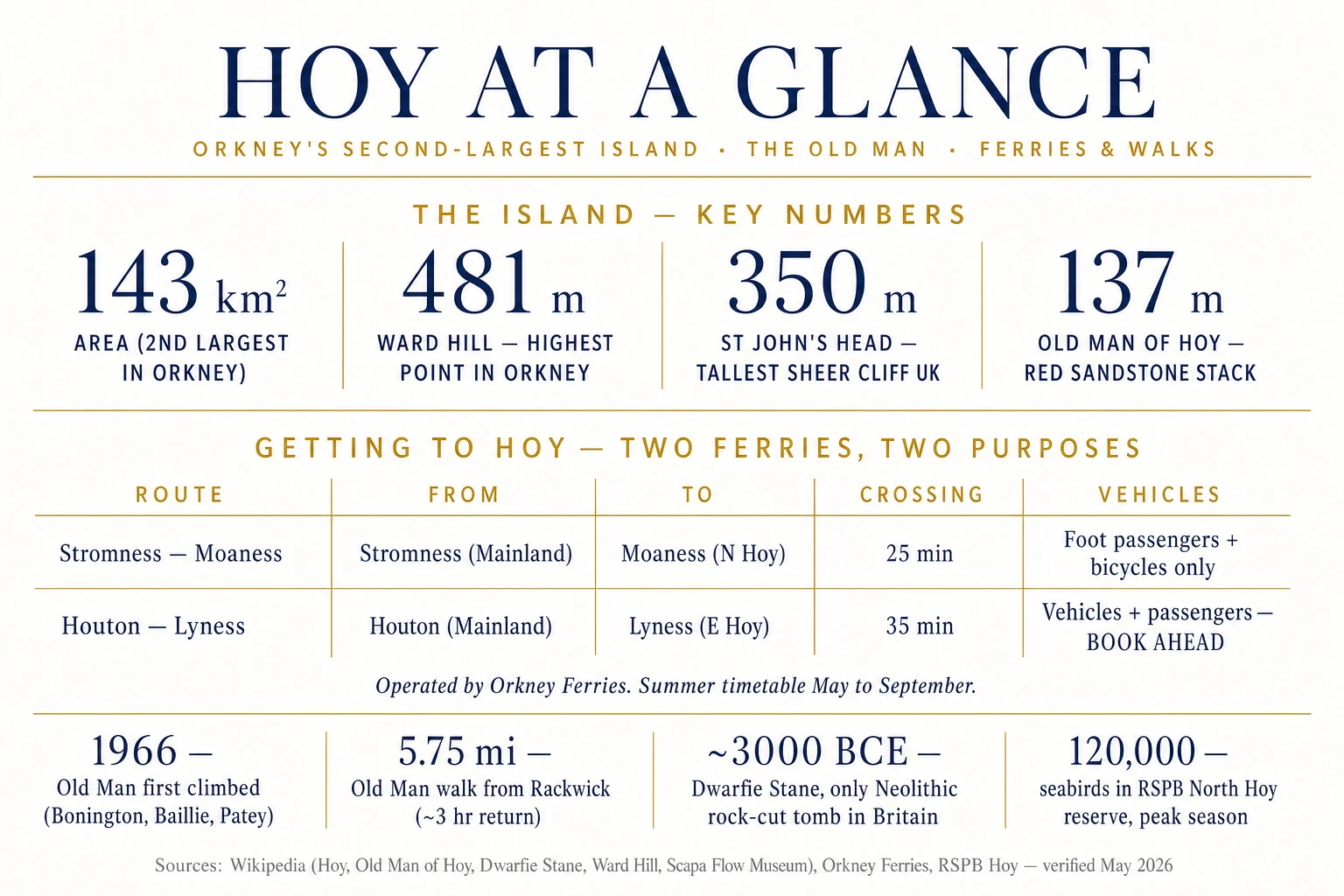
Getting to Hoy: Two Ferries, Two Different Trips
The single most important decision about a Hoy visit is which ferry you book, because Orkney Ferries runs two services that go to very different parts of the island and serve very different visitors. The foot-passenger ferry from Stromness is the day-tripper's boat. The vehicle ferry from Houton is for anyone who wants to drive the length of the island or spend the night.
If you're working out wider Orkney logistics — buses from Kirkwall, when the inter-island foot ferries run, whether you can do this without hiring a car at all — our guide to getting around Orkney without a car covers the bus and ferry network in detail. The short version: Hoy on foot is one of the few Orkney day-trips that genuinely works without a vehicle, provided you book the community shuttle from Moaness to Rackwick in advance.
The Old Man of Hoy — 137 metres of Red Sandstone
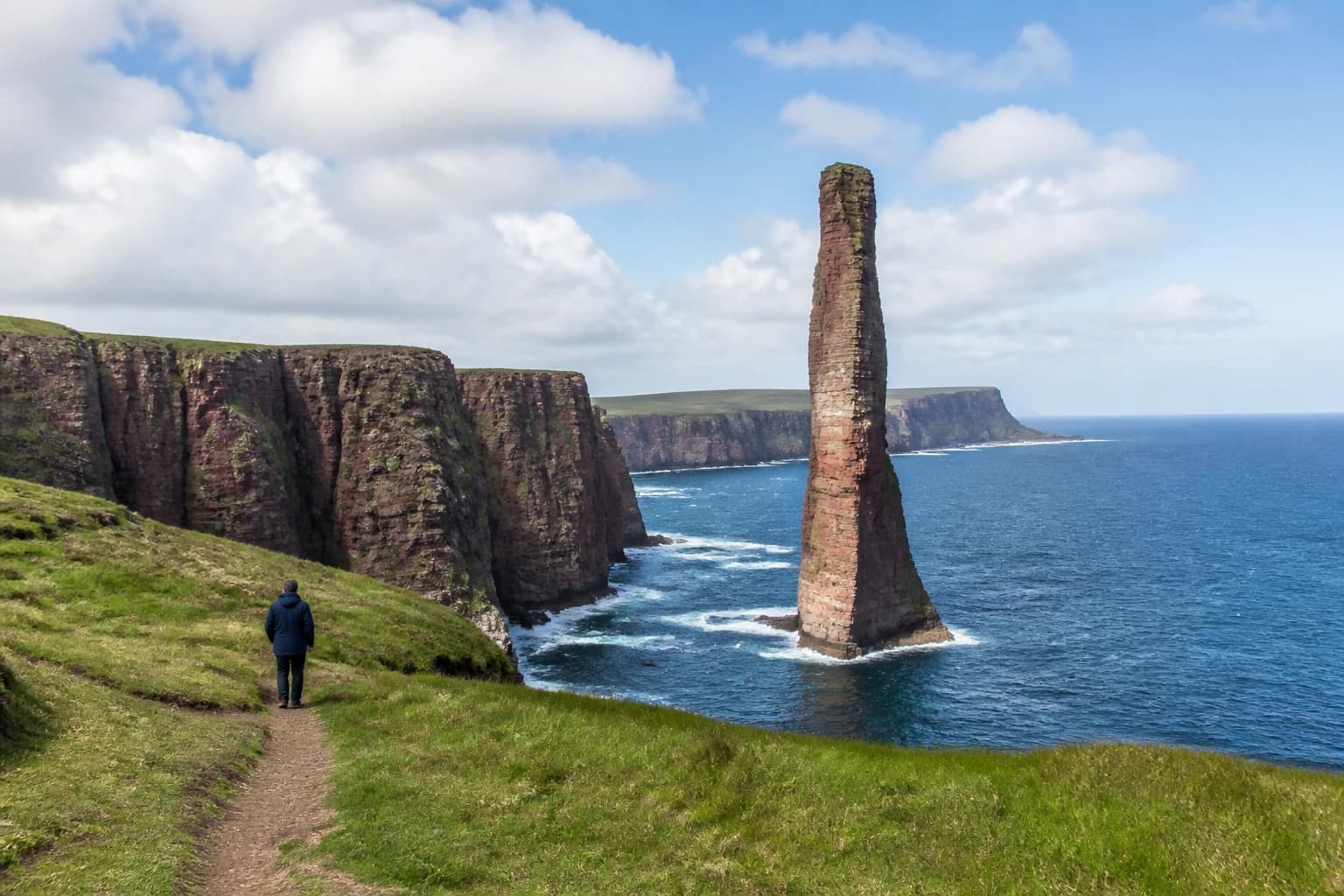
The Old Man of Hoy is the reason most visitors come. A 137-metre (449-foot) sea stack of Old Red Sandstone, perched on a plinth of basalt rock on the island's wild west coast, he is one of the most photographed natural features in Britain — and, geologically, one of the youngest. Two-century-old maps show a different shape entirely: a map from around 1750 shows only a headland, and by 1819 the Old Man stood clear of the cliff — though then as an arch on two legs, the single pillar we see today arriving only after a later storm carried one of them away. He is probably less than 300 years old. He will, eventually, fall.
The Old Man entered British public consciousness in 1966, when Chris Bonington, Rusty Baillie and Tom Patey made the first ascent that July, followed a year later by a live BBC broadcast reported to have drawn around 15 million viewers. It still draws climbers, but most visitors come to look. The standard view is from the clifftop at the end of a roughly 9-kilometre (5.75-mile) return walk from Rackwick Bay, with around 220 metres of total ascent and a stated time of two and a half to three hours return. The path is well-marked, the cliff edge is unfenced, and the reward is unobstructed.
How to walk to the Old Man — the standard Rackwick route
- Start: the Rackwick car park (small, free) at the road end on the south side of Rackwick Bay.
- Distance & time: 9.25 km / 5.75 miles return, 2.5–3 hours, around 220 m of total ascent.
- Route: follow the signposted path uphill north-west onto Moor Fea, then west along the cliff-top to the viewpoint opposite the Old Man (1.5 miles by foot from Rackwick township).
- Terrain: grassy and peaty footpath, often boggy, with some short uphill pulls but no scrambling. Sturdy waterproof boots essential.
- Return: retrace the outward path. Faster walkers can carry on north along the cliffs to St John's Head (about another hour each way) for the tallest cliff view.
For the wider sea-cliff context — how the Old Man compares in scale to St John's Head, what the Yesnaby and Marwick cliffs on the Mainland offer, and why this stretch is so geologically special — our guide to Orkney's sea cliffs and stacks reads as the geological companion piece to this one.
St John's Head — the sheer cliff north of the Old Man
Walk an hour further north along the clifftop and you reach St John's Head: 335 metres (1,128 feet) of near-vertical Old Red Sandstone dropping straight into the Atlantic Ocean, among the tallest sheer sea cliffs in the British Isles. The Head is not a tourist viewpoint with railings — it is a sheer drop, with great skuas patrolling the up-currents and almost no signs of human modification. Stay well back from the edge.
Planning your trip
Staying overnight? Compare live prices and availability across Orkney on Booking.com.
Compare Orkney staysWe earn a small commission if you book through this link, at no extra cost to you.
Rackwick Bay: The Boulder Beach Where the Walk Starts
Rackwick sits in a tight glacial valley between the hills of Moor Fea and Mel Fea on Hoy's west coast — the prettiest natural amphitheatre in Orkney, and where the road runs out. By 2016 only three dwellings were occupied year-round; today the township is a handful of whitewashed crofts, the Rackwick Outdoor Centre hostel in the old school building, and the free Burnmouth bothy run by the Hoy Trust. The beach is the show: a curving cove of golden sand strewn with rounded grey-pink boulders the size of cars, smoothed by Atlantic storms.
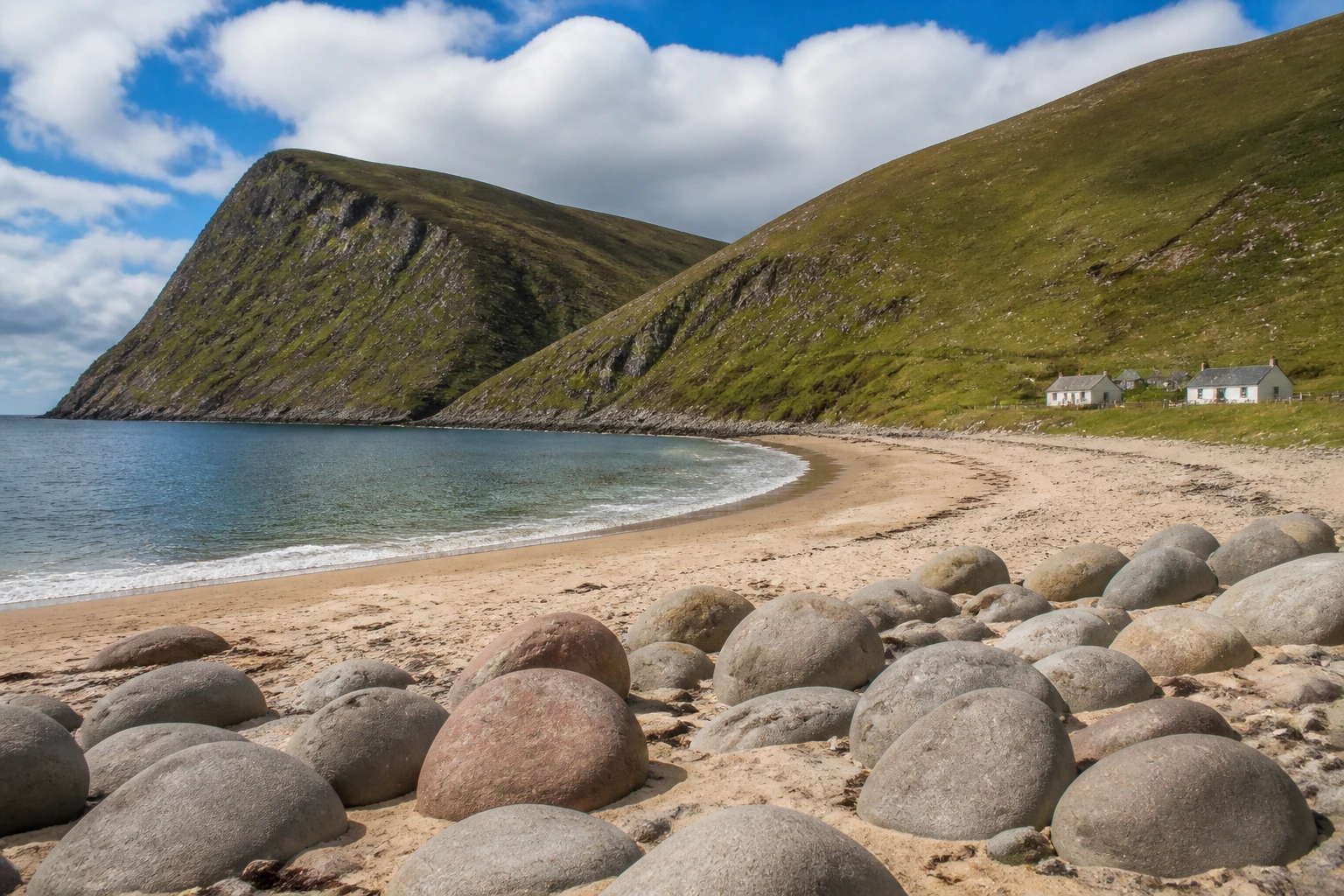
Even if you've come for the Old Man, give yourself an hour at Rackwick first. There's a tiny community museum in one of the croft buildings, a small toilet block at the car park, and a path down to the beach itself if the tide is out. The valley is also the starting point of one of the great Orkney music traditions — the composer Peter Maxwell Davies lived in a clifftop bothy just above the bay for decades.
The Dwarfie Stane — Britain's Only Rock-Cut Neolithic Tomb
A short signposted detour from the Moaness–Rackwick road, in a glacial valley between Quoys and Rackwick, sits the most singular Neolithic monument in Britain. The Dwarfie Stane is a single enormous block of Old Red Sandstone — around 8.5 metres long, about 4 metres wide, and roughly 2 metres tall at its southern end — that has had two side chambers and a connecting passage hollowed out of its interior with stone and bone tools. Historic Environment Scotland dates the carving to between 3500 and 2500 BC and calls it the only wholly rock-cut prehistoric tomb in the British Isles.
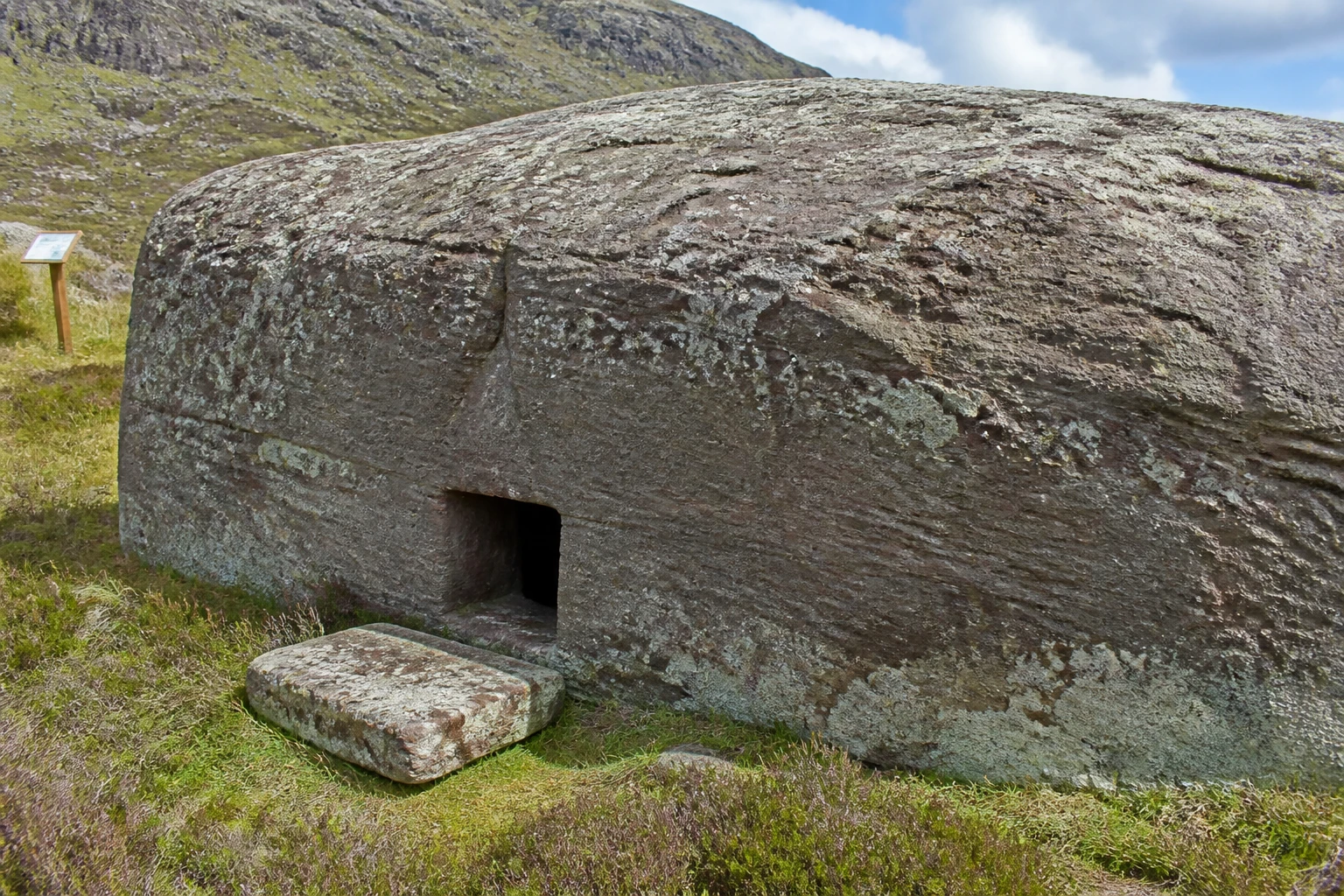
You crawl in. The interior is cool and surprisingly snug, with side cells just large enough to lie in. The "plug stone" — a worked block of sandstone that once sealed the entrance — has been knocked into the heather just outside; you can see it as you approach. Historic Environment Scotland keeps the site open to walkers free of charge, with a small information board and a wooden boardwalk over the wettest part of the moor.
Why is it here, and who built it?
No one knows for certain. The Dwarfie Stane is contemporary with the great chambered cairns of the Mainland — Maeshowe is roughly the same era — but instead of building walls, the Neolithic engineers chose to carve into a single fallen block. Local Norse legend attributed it to a dwarf and his wife, hence the modern name. The 19th-century carved Latin and Persian graffiti on the outer surface — left by the British spy William Mounsey, who spent two nights here in 1850 — is one of the more eccentric chapters in the stone's afterlife.
Scapa Flow Museum — The Story of Britain's Wartime Anchorage
The Royal Navy's principal North Atlantic anchorage in both World Wars sat in the lee of Hoy, in the sheltered waters of Scapa Flow. The Grand Fleet lay here in 1916 before sailing to Jutland; HMS Royal Oak was torpedoed at her moorings here in October 1939; the interned German High Seas Fleet scuttled itself here in June 1919. Lyness, on Hoy's east coast, was the Navy's beating heart through all of it — a town of barracks, fuel tanks, gun emplacements and a brick-paved seaplane slipway.
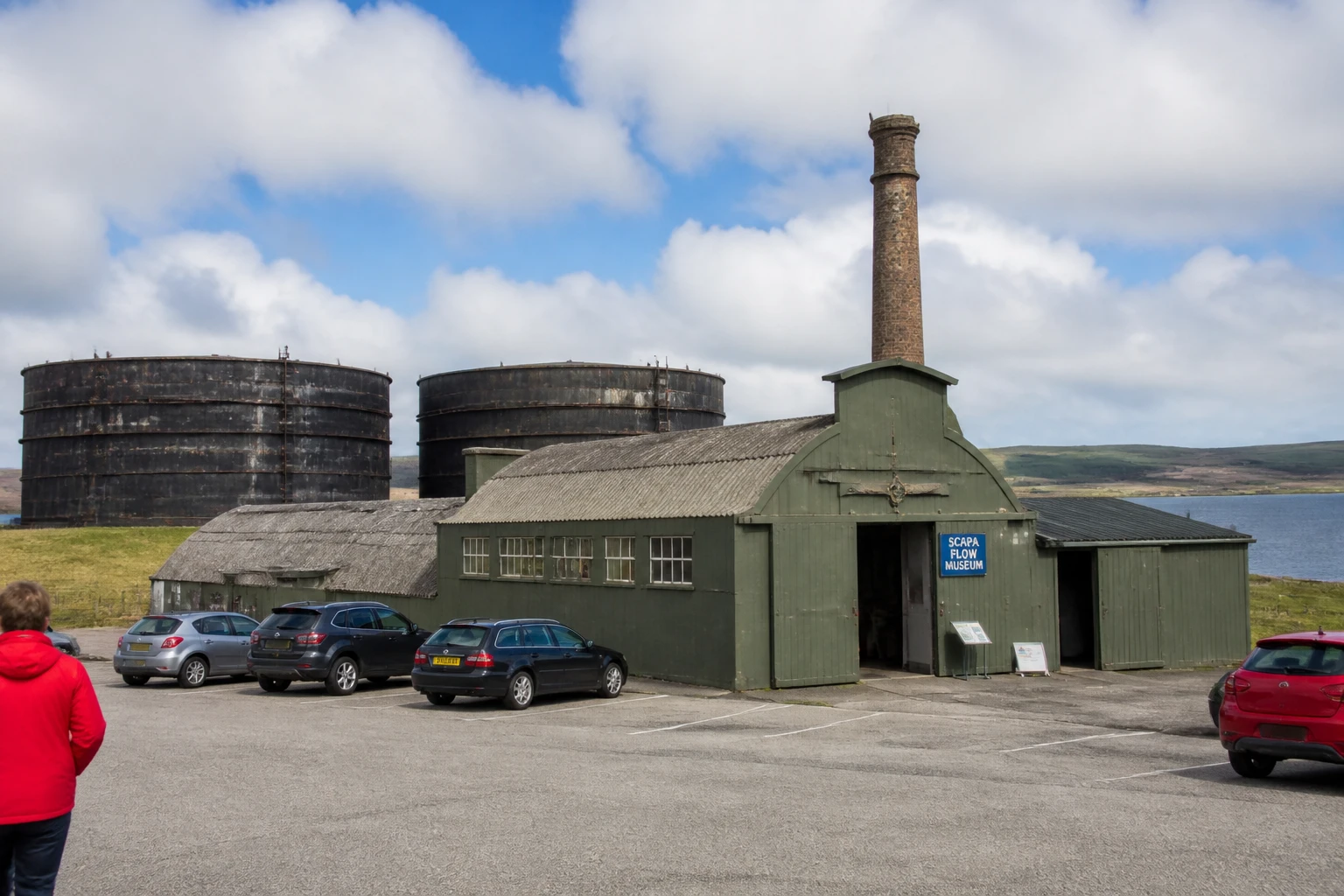
The Scapa Flow Museum, run by Orkney Islands Council's Museums Service, occupies the restored pump-house and Romney hut of the former HMS Proserpine naval base. It closed in 2017 for a £4.4 million refurbishment and reopened in July 2022; the next year it was shortlisted for the Art Fund Museum of the Year. The collection includes around 250 artefacts covering the Battle of Jutland, the loss of HMS Hampshire in 1916 (taking Lord Kitchener with her), the scuttling, and the sinking of HMS Royal Oak. The original oil pumps, restored to working order, are quietly extraordinary.
Allow ninety minutes inside the museum and a further half-hour outside, where the original fuel tanks, blast walls and brick-paved jetties survive in remarkably intact condition. For the broader Orkney WWII story — the Italian Chapel built by Italian prisoners on Lamb Holm, the Churchill Barriers across the eastern sounds — see our complete Orkney wartime history guide; this piece keeps the focus on Hoy.
Wildlife, Moorland and Ward Hill
The northern half of Hoy is an RSPB reserve, designated a Special Protection Area for the sheer scale of its breeding seabird and moorland-bird populations — around 120,000 individual seabirds in the cliff colonies at peak season, plus hen harriers, merlins, red-throated divers and the bonxie (great skua) on the moors above.
Ward Hill — the highest summit in Orkney
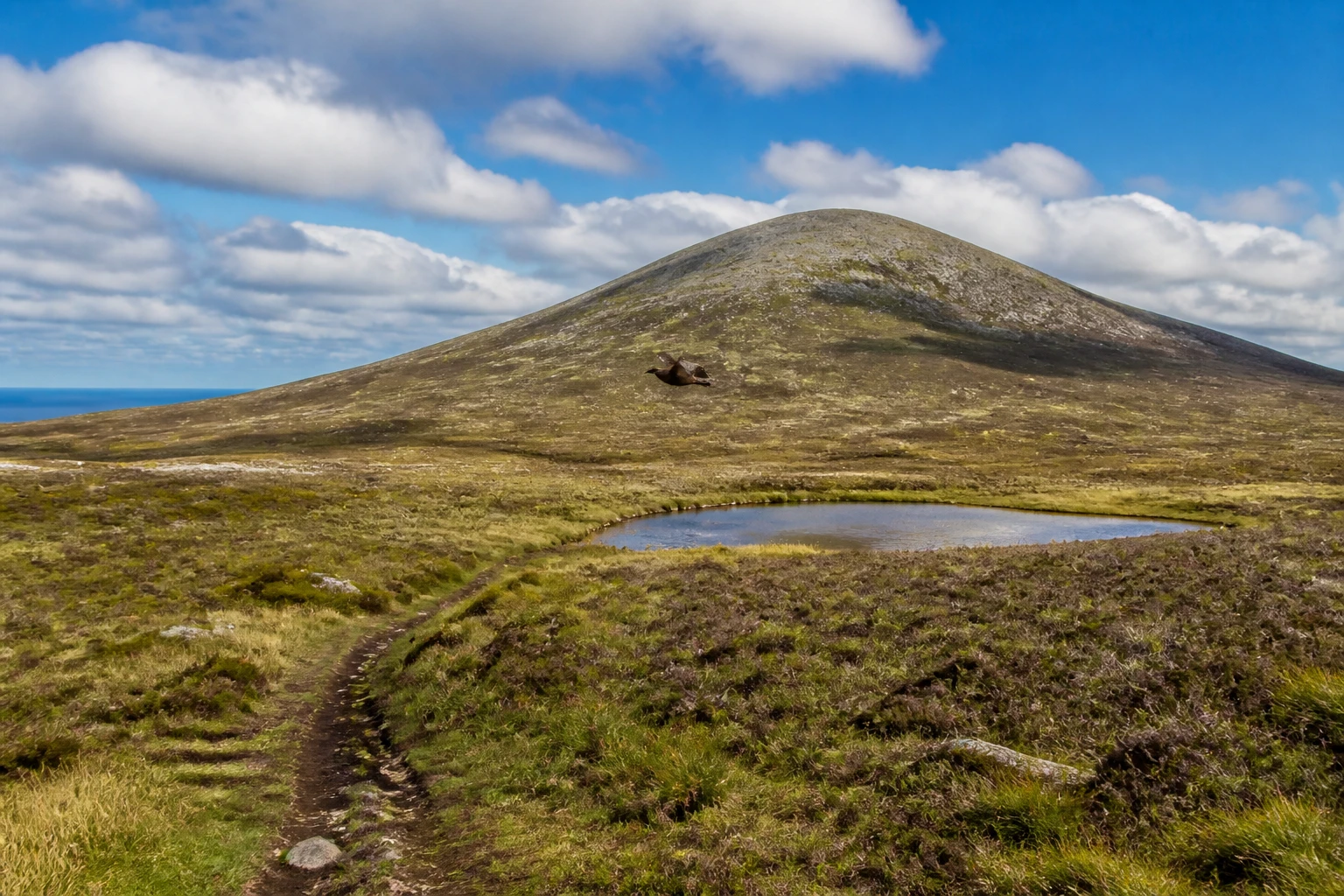
Ward Hill rises to 481 metres (1,578 feet) above the moors between Moaness and Rackwick, making it the highest point in both Orkney and the Scottish Northern Isles. It is a tussocky, mostly trackless ascent — the summit ridge is shaped like a curved "J", marked by a trig point, and the view on a clear day takes in the entire Orkney archipelago, the Pentland Firth, and the north coast of Scotland. Allow 4–5 hours return from Moaness; the route is for confident hill-walkers only, with little path, no shelter and notoriously fast-changing weather.
Bonxies, sea eagles and the cliffs that roar
Hoy is the Orkney stronghold for the great skua — the bonxie, a thick-set chocolate-brown gull-like seabird with white wing-flashes that will dive-bomb walkers who stray too close to a nest in June and July. Hold a stick or pole upright above your head if attacked. Sea eagles, reintroduced to Scotland decades ago, are now regularly seen quartering the cliffs north of the Old Man. For a deeper read on what's flying where and which months are which, our Orkney birdwatching seasonal calendar covers the cliff colonies and moorland species in detail.
Berriedale — the most northerly native woodland in Britain
Tucked into a sheltered glen on the north-east side of the Hoy hills, Berriedale is the most northerly native woodland in the UK — a fragment of stunted aspen, downy birch, rowan and hazel, miraculously surviving the Atlantic gales where everything around it is treeless moor. A signposted off-trail walk from the Cuilags-Old Man route detours through it; it adds about 90 minutes to the round trip and feels like a separate world.
Hoy Accommodation: Modest, Atmospheric, Book Ahead
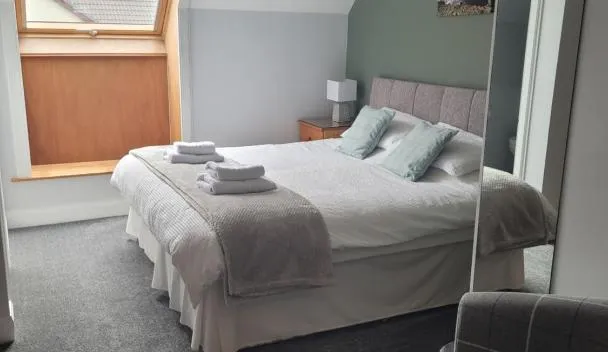
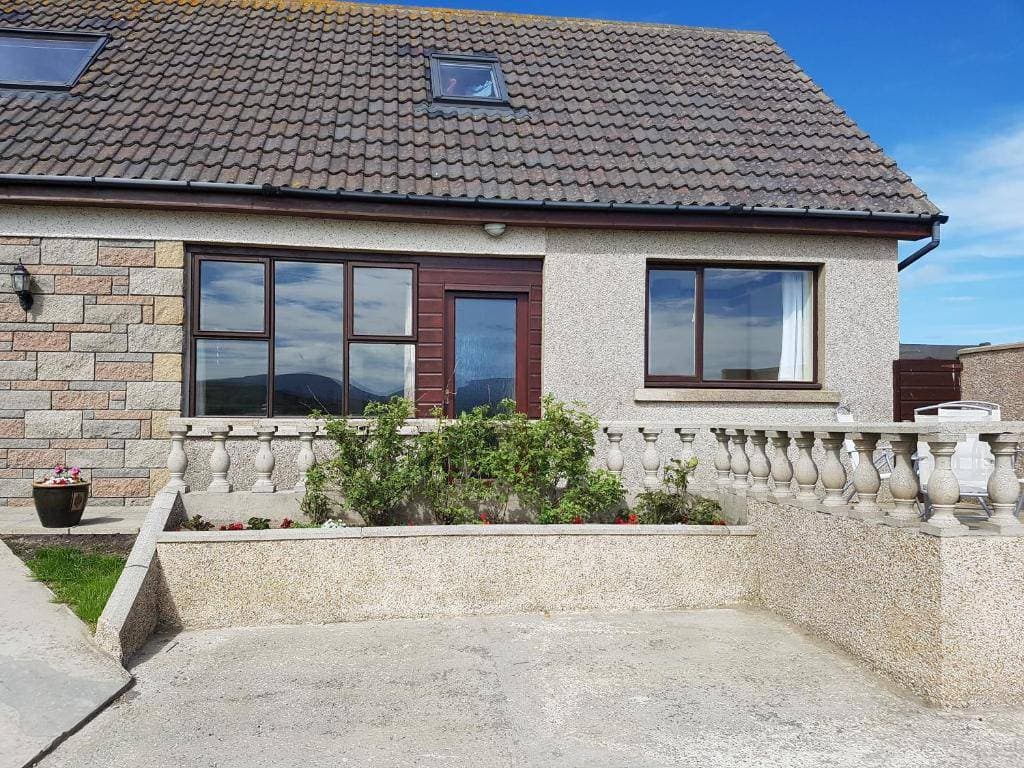
There are no hotels on Hoy. The island has a small but characterful spread of self-catering cottages, two hostels, a handful of B&Bs, and several bothies — and almost all of it books out months in advance for summer. If you can possibly arrange it, stay at least one night: the island is at its best in the slow late-evening hours after the Stromness day-trippers have gone home.
- Rackwick Outdoor Centre hostel — a converted single-room school in Rackwick itself, run by Hoy Trust. Bunk rooms, cooking facilities, no frills, walking distance from the start of the Old Man path.
- Burnmouth bothy, Rackwick — a free, open, traditional crofters' bothy on the headland just above Rackwick Bay. Wood-burning stove, no electricity, mountain-bothy etiquette applies.
- Self-catering cottages around Lyness and Longhope — converted crofts and modern lodges on the south and east of the island, suitable for a car-based week-long base.
- The Hoy Inn and a handful of small B&Bs — near Moaness and along the east-coast road; serve evening meals to non-residents by arrangement.
- Stay on the Mainland and day-trip — for many visitors this is the simplest option. Base yourself in one of the holiday homes, flats and hotels we list in Stromness, take the early Moaness ferry, return on the late-afternoon sailing.
A Suggested Day on Hoy
If you have a single day and you're coming as a foot-passenger, this is the itinerary most Stromness-based visitors land on, in order:
- 09:30 Stromness ferry to Moaness — 25 minutes across the Hoy Sound, look out for porpoises and seals on the crossing.
- 10:00 Community shuttle Moaness to Rackwick — pre-book; the alternative is a 6 km road walk over the moors. Allow 15 minutes by minibus.
- 10:30 Walk to the Old Man of Hoy viewpoint — 3 hours return, 9.25 km, 220 m ascent. Add an hour each way if you continue to St John's Head.
- 13:30 Lunch and an hour on Rackwick Beach — bring a packed lunch, there is no shop or café in Rackwick itself.
- 15:00 Shuttle back to Moaness — or, if you have the energy, walk it via the Dwarfie Stane (signposted detour, adds 30 minutes).
- 16:30 Moaness ferry to Stromness — back on the Mainland in time for dinner.
If you have a car and have booked the Houton-Lyness ferry, swap this itinerary for: Houton-Lyness in the morning, Scapa Flow Museum (90 minutes), drive north up the island's single main road to the Dwarfie Stane and Rackwick, walk to the Old Man, drive back to Lyness for the evening ferry. Long day, but it gets you everything.
Frequently Asked Questions
Is it worth visiting Hoy?
Yes — especially if you're already in Orkney for two or more nights. Hoy is the most physically dramatic island in the archipelago: the only one with hills above 400 metres, the only place to see the Old Man and St John's Head close-up, and home to the unique Dwarfie Stane and the Scapa Flow Museum. Even a single foot-passenger day-trip from Stromness is enough for the headline experience.
How long is the walk to the Old Man of Hoy?
The standard route from Rackwick Bay is 9.25 km (5.75 miles) return, with around 220 metres of total ascent, and takes 2.5 to 3 hours at walking pace. The path is well-marked but rough and often boggy; sturdy waterproof boots are essential. If you continue north along the cliffs to St John's Head and back, add another two hours.
Can you drive on Hoy?
Yes. Take the Orkney Ferries vehicle service from Houton on the Mainland to Lyness on Hoy (about 35 minutes). Vehicle space is limited and must be booked in advance, particularly in summer. The Stromness-Moaness foot-passenger ferry does NOT take cars — only foot passengers and bicycles. A single main road runs the length of Hoy from north to south.
Is there a bus on Hoy?
Not in the conventional sense. A pre-bookable community minibus shuttle runs between Moaness, Hoy village, Rackwick and Lyness on demand — it is the standard way for foot-passenger visitors to reach the start of the Old Man walk. Book in advance via Orkney Tourist Information.
What is the Dwarfie Stane?
The Dwarfie Stane is a single enormous block of Old Red Sandstone, around 8.5 metres long and about 4 metres wide, which has had two side chambers and a connecting passage carved out of its interior between 3500 and 2500 BC. Historic Environment Scotland calls it the only wholly rock-cut prehistoric tomb in the British Isles. The site is freely accessible from a signposted layby on the Moaness-Rackwick road; allow 30 minutes for the short walk in and a look inside.
When does the Scapa Flow Museum open?
The Scapa Flow Museum at Lyness reopened in July 2022 after a £4.4 million refurbishment and is open daily through the main summer season, with reduced winter hours. It was shortlisted for the Art Fund Museum of the Year in 2023. Admission is free; donations welcome. Check the Orkney Islands Council museums website for current opening times.
What wildlife will I see on Hoy?
The north of the island is an RSPB reserve supporting around 120,000 breeding seabirds — guillemots, kittiwakes, razorbills, fulmars and puffins on the west cliffs, plus great skuas (bonxies), hen harriers, merlins and red-throated divers on the moors. Seals and porpoises are regularly seen from the Stromness-Moaness ferry crossing, and sea eagles are now occasionally spotted along the cliffs north of the Old Man.
How tall is the Old Man of Hoy?
The Old Man of Hoy is 137 metres (449 feet) tall, a sea stack of Old Red Sandstone perched on a plinth of basalt rock on the island's west coast. It is one of the most photographed natural features in Britain and was first climbed in July 1966 by Chris Bonington, Rusty Baillie and Tom Patey.
Hoy rewards the time you give it. A day-trip will deliver the Old Man, Rackwick beach and a glimpse of the cliffs; two nights will let you walk Ward Hill, sit out a Rackwick sunset, and spend an unrushed afternoon at the Scapa Flow Museum. Stay on the Mainland for the short-version trip, or book a Hoy cottage for the long-version one — either way, plan around the ferries first.
Sources & further reading
The facts in this guide were checked against the following authoritative sources.
- Hoy Orkney — St John's Head cliff — height 335 m confirmed
- RSPB — Berriedale native woodland — confirmed tree species list
- BBC News — the 1967 televised climb — year, month and channel of the live broadcast
- Gilchrist, Sport in History (2007) — climbing the Old Man of Hoy — the reported fifteen-million audience
- Historic Environment Scotland — Dwarfie Stane — Mouncey's 1850 Latin and Persian carving; rock-cut tomb status and dating
- The Ness of Brodgar Project — the Dwarfie Stane — measured dimensions