Quick Navigation
- Where is North Ronaldsay?
- The Seaweed-Eating Sheep
- The Sheep Dyke — A Wall Around an Island
- The Tallest Land-Based Lighthouse in Britain
- A World-Class Bird-Migration Island
- Beaches, Walking and the Slow Pace
- Getting to North Ronaldsay
- Where to Stay on North Ronaldsay
- Frequently Asked Questions
- Why do North Ronaldsay sheep eat seaweed?
- How tall is the North Ronaldsay lighthouse?
- How do you get to North Ronaldsay?
- When is the best time to visit North Ronaldsay?
- Is there anywhere to stay on North Ronaldsay?
- What is the North Ronaldsay Sheep Festival?
- Sources & further reading
North Ronaldsay is the last full stop in Orkney — the northernmost inhabited island in the archipelago, a low green sliver of farmland and shore where the North Sea meets the Atlantic. Fewer than sixty people live here, ringed by a twelve-mile drystone wall that does something found almost nowhere else on Earth: it keeps a whole breed of sheep down on the beach, eating seaweed. Add Britain's tallest land-based lighthouse and one of the country's premier bird-migration watchpoints, and you have an island that rewards the long journey out many times over. This is the full 2026 guide to getting there, what to see, and where to stay.
Where is North Ronaldsay?
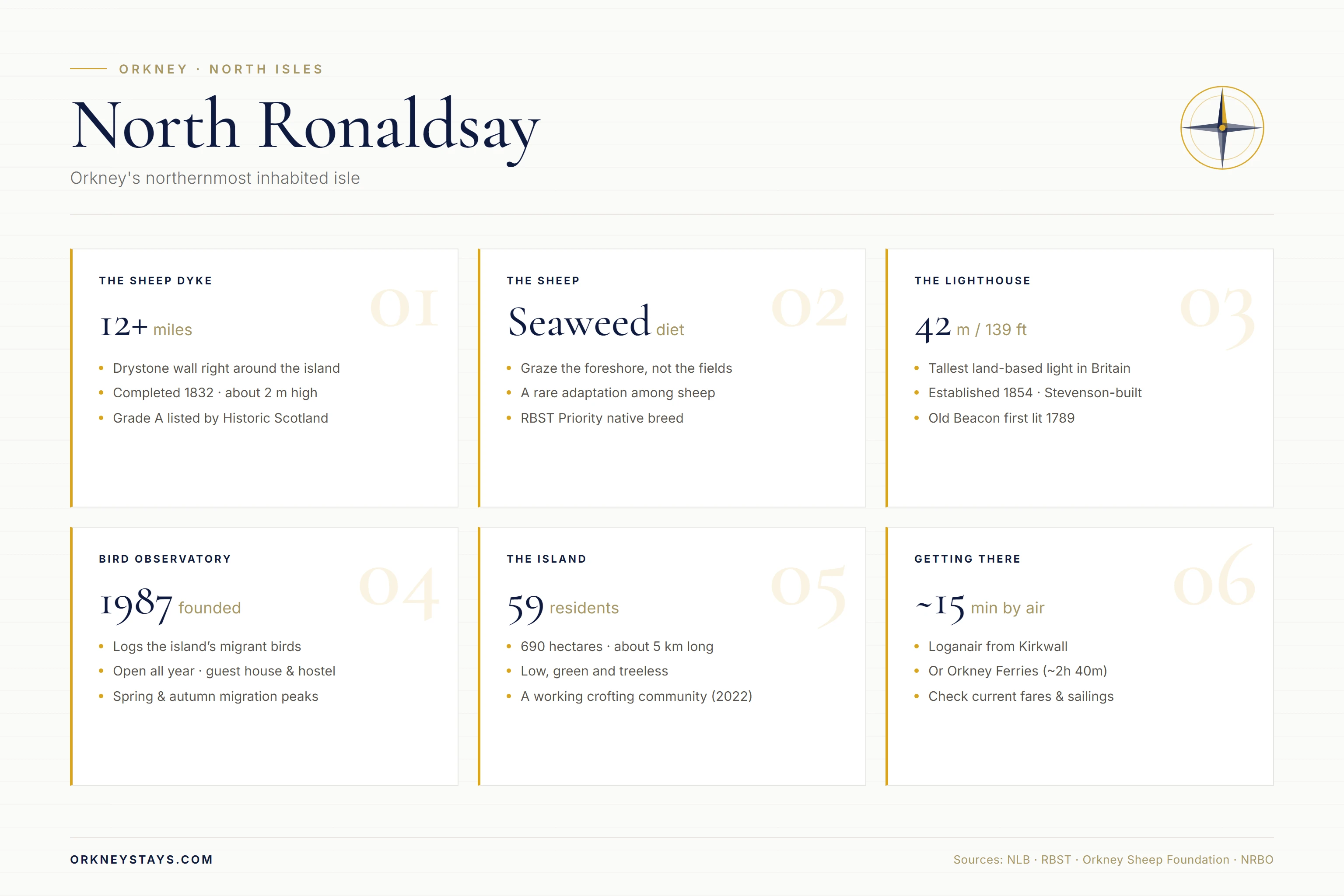
North Ronaldsay sits at the very top of Orkney's North Isles, a couple of miles of open water beyond Sanday and roughly thirty miles north-east of Kirkwall. It is small and low — about five kilometres long, covering some 690 hectares of grazing, dune and shore, with no hill to speak of and nowhere more than a short walk from the sea. The 2022 census recorded 59 residents, a working community of crofters, knitters and the team who run the island's airfield, shop and Bird Observatory. The name is Norse in origin and, confusingly, has nothing to do with a "Ronald" — it shares a root with Rinansey, the old island name, worn smooth by a thousand years of use.
The Seaweed-Eating Sheep
Nothing else defines North Ronaldsay like its sheep. These are small, hardy, primitive animals — a native breed listed as a "Priority" by the Rare Breeds Survival Trust, part of the same ancient Northern Short-tailed group as the Soay and Shetland. What makes them extraordinary is their diet. For most of the year they live not on grass but on the foreshore, grazing the seaweed exposed at low tide. They have adapted to digest it, time their feeding to the tides rather than the sun, and have become, in the words of the Rare Breeds Survival Trust, "famous for their ability to thrive on a diet mainly of seaweed, a rare adaptation among domestic sheep."
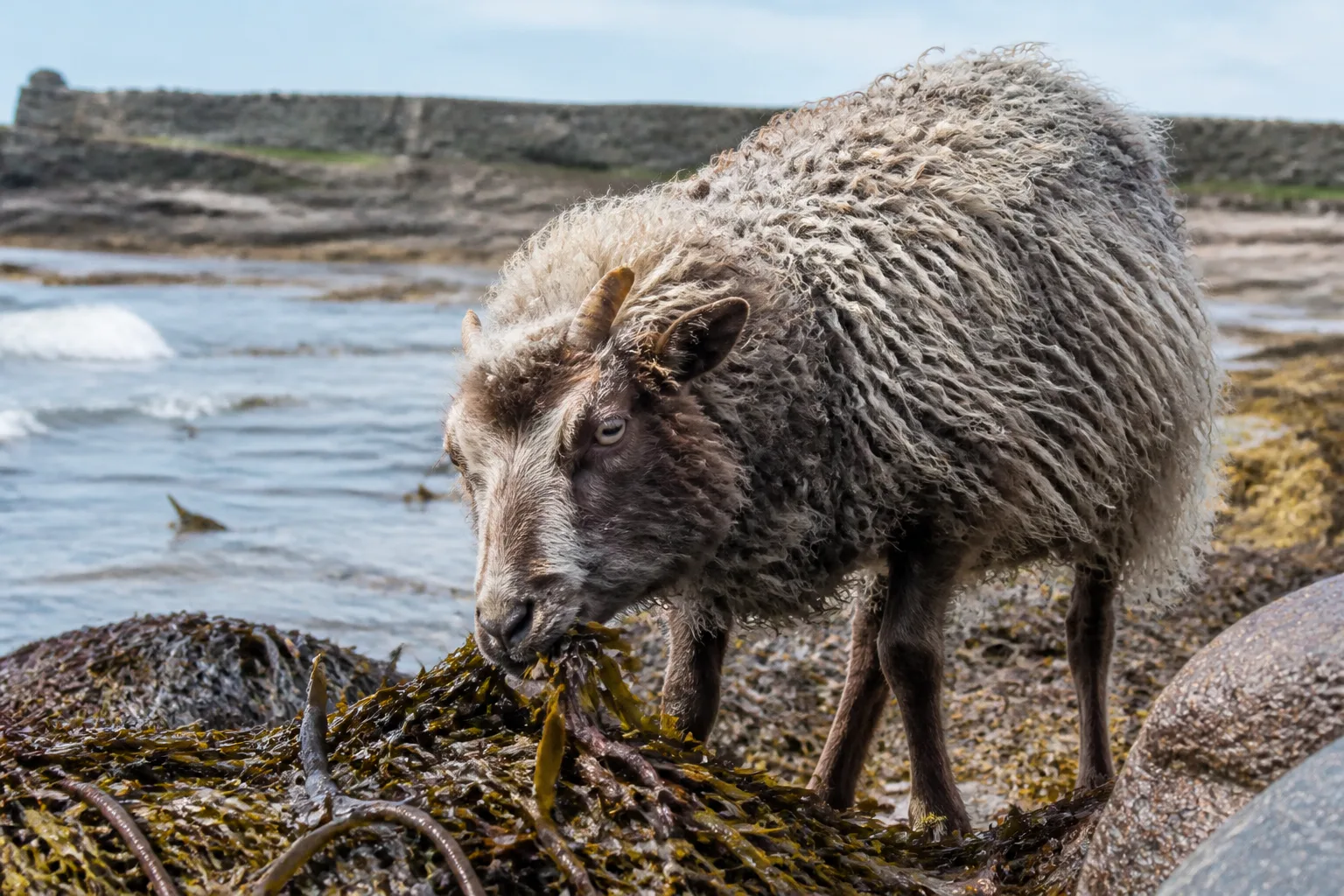
The wool reflects the life: a mix of fleeces in greys, browns and fawns that the island spins into distinctive yarn at the woollen mill beside the lighthouse. If you want a single souvenir that could only have come from here, it's a skein of North Ronaldsay wool or a finished garment — the genuine article, from sheep you can watch on the rocks an hour earlier.
The Sheep Dyke — A Wall Around an Island
The sheep stay on the beach because a wall keeps them there. The North Ronaldsay Sheep Dyke is a drystone wall that runs the entire coastline of the island — over twelve miles in length, standing roughly two metres high, "enough to deter a 'louper'," as the Orkney Sheep Foundation puts it. It was completed in 1832 to reserve the island's limited inland grazing for cattle, pushing the sheep permanently onto the shore. The result is, in the Foundation's words, "probably the largest drystone construction conceived of as a single entity in the world" — and it is listed Grade A by Historic Scotland, the same protection given to the finest castles and cathedrals.
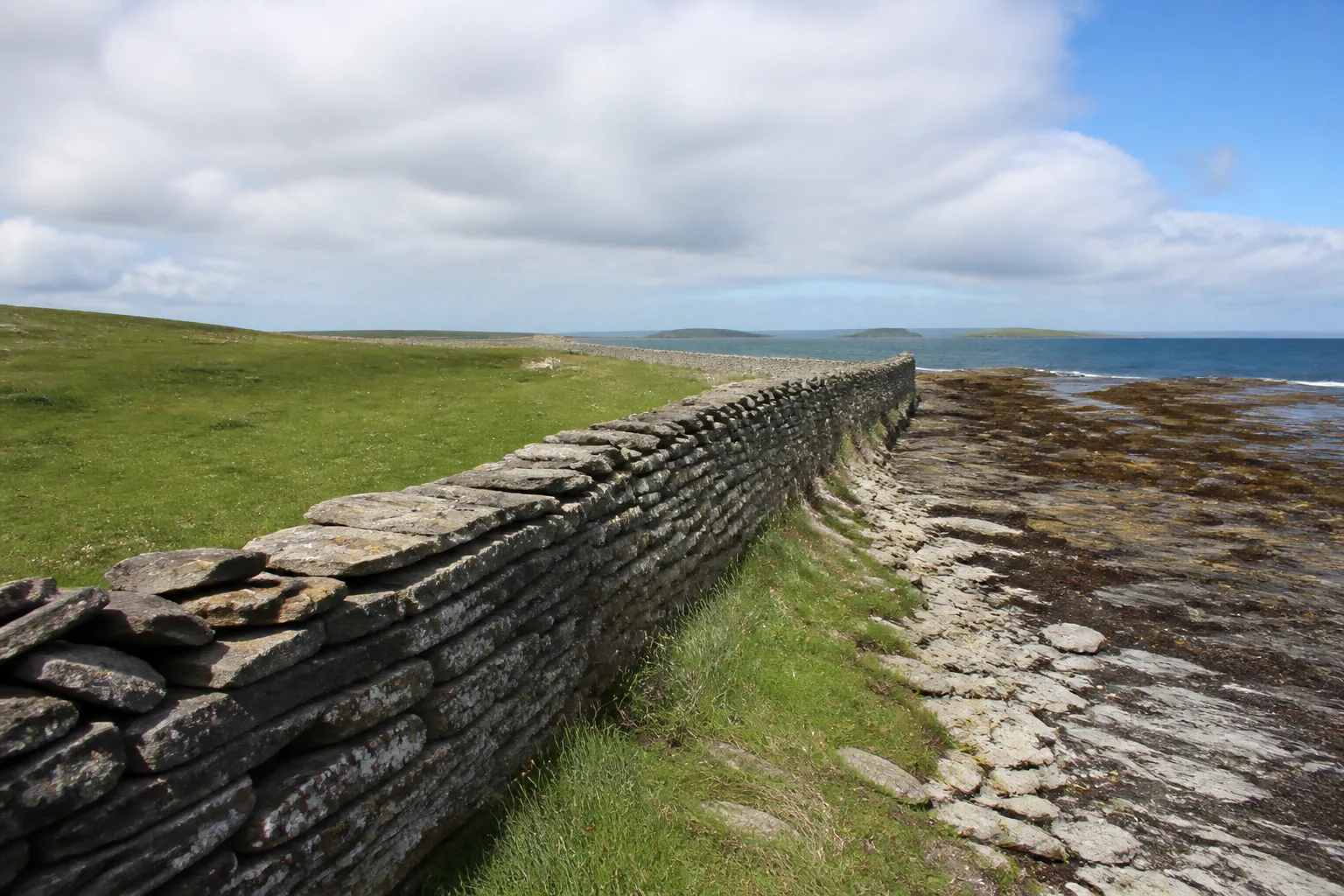
Keeping twelve-plus miles of unmortared wall standing against Atlantic storms is a permanent task, and it has become a celebration in its own right. Each summer the island hosts the North Ronaldsay Sheep Festival — a week where visiting volunteers learn traditional drystone technique and help rebuild storm-damaged sections under expert supervision, alongside food, music and the island's famous "punds" (sheep gatherings). In 2026 the building runs from Wednesday 22 to Monday 27 July. It books out far in advance and is one of the most rewarding ways to actually meet the community rather than just visit it.
The Tallest Land-Based Lighthouse in Britain
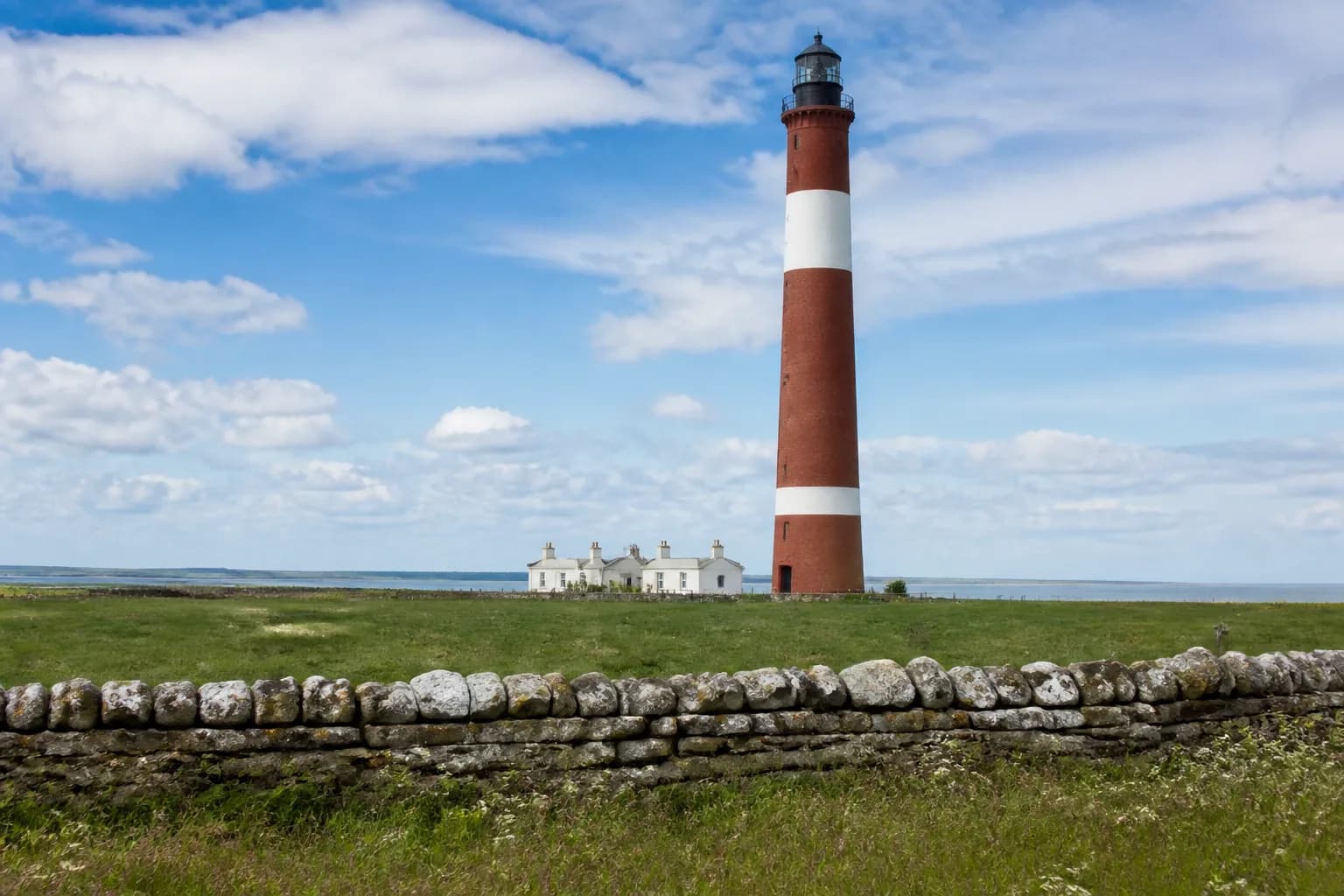
North Ronaldsay's lighthouse is a genuine record-holder. The New Lighthouse, established in 1854 and engineered by the Stevenson dynasty, is a gleaming red-brick tower 42 metres (139 feet) high — "what is still the highest land based lighthouse in the British Isles," according to the Northern Lighthouse Board. Its two white bands are visible for miles, and the climb up the internal stair is rewarded with a view across the whole island and out to Fair Isle and Shetland on a clear day.
It is not the island's first light. The squat stone Old Beacon nearby was first lit on 10 October 1789 and served until it was extinguished in 1809 — one of the oldest surviving lighthouse structures in Scotland, now a striking ruin topped with a stone ball. Around the working lighthouse you'll find a visitor centre, café and the woollen mill, with seasonal guided tower climbs (typically spring to early autumn — check ahead before you travel). The pair make a natural pilgrimage for anyone interested in Orkney's wider lighthouse heritage and the Stevenson engineering that lit the whole coast.
A World-Class Bird-Migration Island
For birdwatchers, North Ronaldsay is hallowed ground. Its position — the first and last scrap of land for exhausted migrants crossing the North Sea — makes it a magnet for rare and wind-blown vagrants, and the island has a long roll-call of "firsts for Britain." The North Ronaldsay Bird Observatory, established in 1987, exists "to study and record the migrant birds that pass through Orkney's most northerly island each year," running daily census, ringing and monitoring through the seasons.
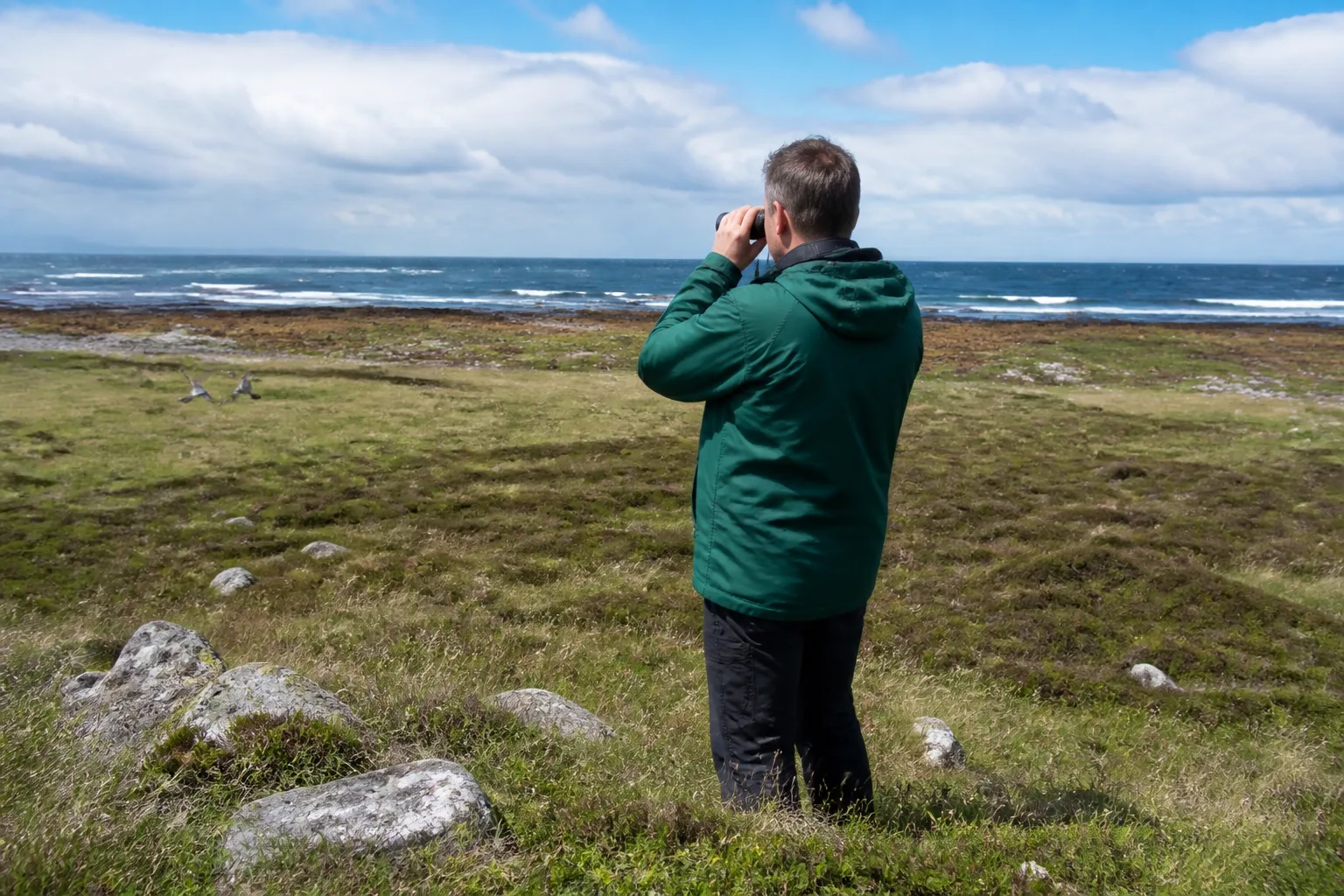
The peak windows are spring (late April–May) and especially autumn (September–October), when easterly winds can drop scarce warblers, thrushes and the occasional genuine rarity onto the island overnight. Outside migration, the coast holds breeding waders, seals hauled out on the skerries, and dark, unpolluted night skies. If you're planning a birding trip, it pairs well with the wider picture of where to watch birds across Orkney — North Ronaldsay is the connoisseur's stop, but the Mainland reserves fill out a week beautifully.
Beaches, Walking and the Slow Pace
Beyond the headline sights, North Ronaldsay is simply a wonderful place to walk and do very little. The island is laced with quiet shell-sand beaches — pale, empty curves of sand where the only footprints are likely to be seals' and your own — and the flat terrain makes the whole coastline accessible on foot.
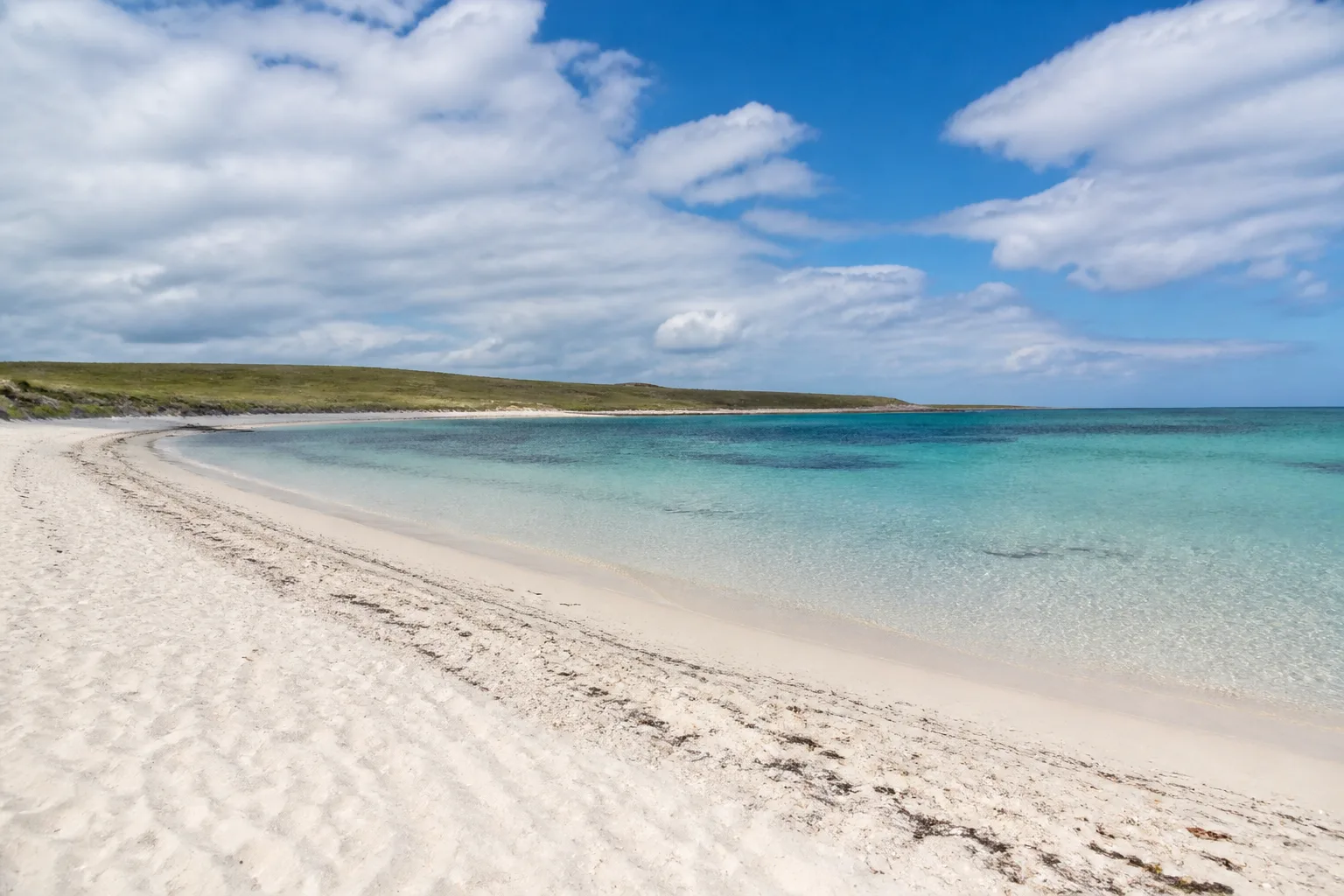
- The coastal circuit: following the line of the Sheep Dyke around the island is the classic walk — flat, exposed and beautiful, with the sheep, the beaches and the lighthouse strung along the way. Allow most of a day.
- The lighthouses: the New Lighthouse, the Old Beacon and the woollen mill cluster at the north end make a natural half-day on their own.
- Heritage: the small island heritage centre and the remains of crofting life tell the story of a community that has farmed this exposed shore for centuries.
- Dark skies & wildlife: seals, waders and — on clear autumn and winter nights — a real chance of the Northern Lights, with almost no light pollution to spoil it.
Getting to North Ronaldsay
This is the most northerly inhabited island in Orkney, and getting there is part of the adventure. There are two ways in, and the flight is the one most visitors choose.
- By air (Loganair): the quickest option by far — roughly 15–20 minutes from Kirkwall Airport on the inter-isles service that Loganair operates under an Orkney Islands Council Public Service Obligation contract. Flights use the small Britten-Norman Islander aircraft and book up quickly in summer.
- By sea (Orkney Ferries): the council ferry sails Kirkwall–North Ronaldsay on a limited weekly timetable, a crossing of roughly two hours forty minutes (sailings vary week to week and some are weather-dependent — always confirm the live timetable before you plan around it).
- Fares: both services are subsidised and inexpensive by mainland standards, but timetables and prices change — check current fares and sailings directly with Loganair and Orkney Ferries when you book.
- On the island: there is no public transport — walk, cycle, or arrange a lift through your accommodation. The whole island is flat and walkable, so most visitors simply go on foot.
Because the timetable is sparse, North Ronaldsay rewards an overnight stay rather than a rushed day trip, with a Kirkwall guest house or apartment to come back to at each end — and it slots naturally into a wider week of island-hopping around the North Isles, where the boat and plane connections between the outer isles open up several islands in one trip.
Where to Stay on North Ronaldsay
Accommodation is limited and personal — this is a tiny island with no hotels. Book early, especially around the Sheep Festival and the autumn migration.
- North Ronaldsay Bird Observatory: the main place to stay, with a guest house, hostel beds and camping, open all year round. You don't need to be a birder — the Obs is the island's de facto social hub, with meals and a warm welcome.
- Self-catering cottages: a small number of crofts and converted houses (including accommodation linked to the lighthouse) let by island owners — perfect for a quiet, self-sufficient few days.
- The shop & meals: the community shop stocks essentials; the Bird Observatory serves meals to guests. There is no full-time restaurant, so plan to self-cater for at least some of your stay and bring anything specific you'll need.
Frequently Asked Questions
Why do North Ronaldsay sheep eat seaweed?
In 1832 the islanders completed a drystone wall — the Sheep Dyke — right around the coast to reserve the inland grazing for cattle. That confined the sheep to the foreshore, and over generations they adapted to live almost entirely on seaweed, timing their feeding to the tides. They are now one of the very few breeds of sheep in the world able to thrive on a mainly seaweed diet, and are a Rare Breeds Survival Trust priority native breed.
How tall is the North Ronaldsay lighthouse?
The working New Lighthouse, established in 1854, is a red-brick tower 42 metres (139 feet) high — the tallest land-based lighthouse in the British Isles, according to the Northern Lighthouse Board. The nearby Old Beacon, first lit in 1789, is a much older and shorter stone structure, now a ruin topped with a stone ball.
How do you get to North Ronaldsay?
Two ways: a Loganair flight from Kirkwall Airport (about 15–20 minutes, operated under an Orkney Islands Council contract), or the Orkney Ferries sailing from Kirkwall (around two hours forty minutes, on a limited weekly timetable). The flight is quicker and more popular; both are subsidised and inexpensive, but you should confirm current fares and sailing times directly before planning your trip.
When is the best time to visit North Ronaldsay?
For wildlife and birds, spring (late April–May) and autumn (September–October) are the migration peaks, when rarities can appear overnight. For the warmest weather, longest days and fullest transport timetable, June to August is best — and late July brings the North Ronaldsay Sheep Festival (22–27 July in 2026). Winter is quiet, dark and atmospheric, with a real chance of the Northern Lights.
Is there anywhere to stay on North Ronaldsay?
Yes, though options are few. The North Ronaldsay Bird Observatory offers a guest house, hostel and camping and is open all year; there are also a small number of self-catering cottages let by island owners. There are no hotels and no full-time restaurant, so book well ahead and plan to self-cater for some meals.
What is the North Ronaldsay Sheep Festival?
It's a week each summer when visiting volunteers help rebuild storm-damaged sections of the historic Sheep Dyke using traditional drystone technique, learning from islanders and experts, alongside food, music and community events. In 2026 the building runs from 22 to 27 July. It's a hands-on way to support the island and meet the community, and places book up far in advance.
North Ronaldsay asks more of a visitor than most of Orkney — a flight or a long ferry, a sparse timetable, a night or two rather than an afternoon. It gives back an island that exists nowhere else: sheep grazing the tideline behind a twelve-mile wall, the tallest light in Britain throwing its beam over an empty shore, and the constant possibility, in autumn, of a bird that shouldn't be there at all. For travellers who want the very edge of Scotland, this is it. For a gentler companion isle on the way out, the neighbouring island of Papa Westray makes a natural pairing.
Sources & further reading
The facts in this guide were checked against the following authoritative sources.
- Orkney Sheep Foundation — the Sheep Dyke — dyke length over 12 miles
- Northern Lighthouse Board — lighthouse records — tallest land-based lighthouse
- RSPB — North Ronaldsay Bird Observatory — observatory and species records
- RBST — North Ronaldsay breed watchlist — Priority status confirmed
Hero photo — Colin Park / Geograph (CC BY-SA 2.0). All location photography on this page is genuine, licensed under Creative Commons; the summary graphic is our own.