Quick Navigation
- Everything Starts at the Harbour
- St Magnus Cathedral
- The Bishop’s and Earl’s Palaces
- The Orkney Museum
- The Library and Archive
- Albert Street and the Shops
- The Peedie Sea and the Waterfront
- Three Longer Walks Out of Town
- How Long Do You Need?
- Common Questions About Kirkwall
- Is Kirkwall walkable?
- How long do you need in Kirkwall?
- Can you walk into Kirkwall from the cruise pier?
- What is Kirkwall known for?
- What is there to do in Kirkwall on a Sunday?
- Is Kirkwall worth visiting with children?
- Sources and Further Reading
Most of the things to do in Kirkwall sit inside a two-kilometre loop from the pier, which is the single most useful fact about Orkney’s capital. A cathedral begun in 1137, two ruined palaces, the county museum, the library and archive, and a flagstone shopping street all fall within a ten-minute walk of the water. You can see the lot in an afternoon without once getting into a car — and the walking times below were measured along the actual streets, not guessed.
Everything Starts at the Harbour
Kirkwall is small, dense and old. Historic Environment Scotland describes it as a town that “retains its distinctive medieval street plan”, and you feel that the moment you leave the pier: the streets narrow, kink and run into one another rather than gridding out. The practical upshot is that the walk from the harbour to the cathedral door is 579 metres. Not a figure of speech — that is the pedestrian route measured along Bridge Street and Albert Street on the OpenStreetMap foot network.
A single circuit — pier, waterfront, the library, the museum, the cathedral, both palaces, back to the pier — comes to 1.94 kilometres, or 1.2 miles. That is around 26 minutes of actual walking spread across however long you want to spend inside things. If you are arriving on a ship, one caveat matters: the larger vessels berth at Hatston, 3.2 kilometres (2.0 miles) north-west of the cathedral, and that is the one arrival point you do not walk from. Our Kirkwall stopover guide covers which pier goes with which ship and how the transfers work.

St Magnus Cathedral
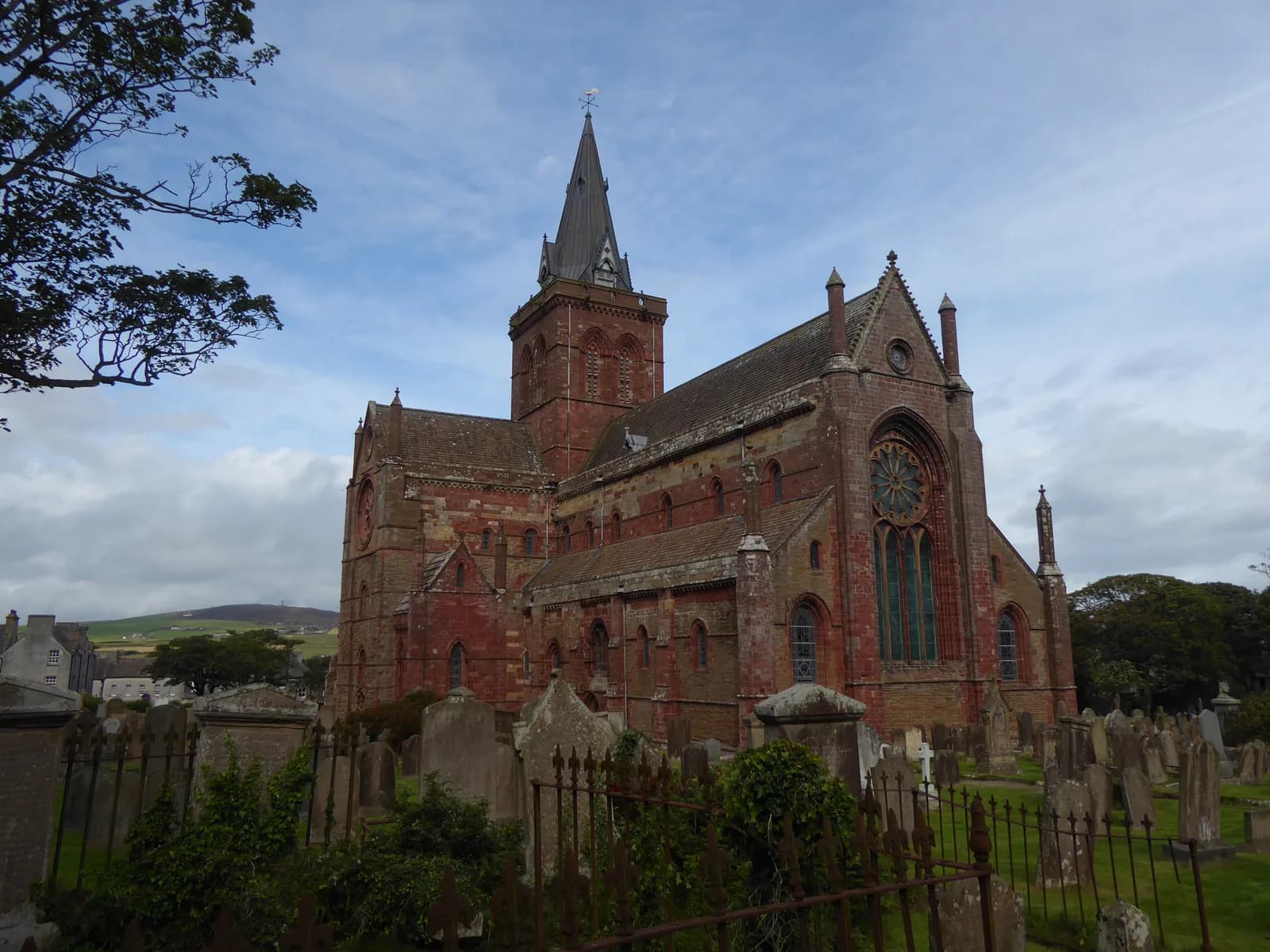
This is the reason to come, and it is a genuinely strange and beautiful building. Work started in 1137 under Earl Rognvald, who founded it as a final resting place for the relics of his uncle, St Magnus. It is built in warm red sandstone — the cathedral’s own history notes that the stone was only revealed in the nineteenth century, when plaster and whitewash were stripped away — and it is far larger than a town of Kirkwall’s size would lead you to expect.
The detail most visitors miss is who owns it. The cathedral does not belong to a national church — the Royal Burgh of Kirkwall re-established ownership of the building in 1851, and it has been the town’s ever since. That civic ownership is why the interior feels less like a cathedral and more like a very grand parish record: walls lined with memorial stones, ships’ ensigns, and the accumulated business of an island community that has been burying and remembering its people here for nearly nine centuries.
Give it longer than you think. The nave repays a slow walk, and the memorials on the side walls are the most direct history lesson in Orkney. Opening arrangements and any access to the upper levels change through the year, so check the cathedral’s own site before you plan around it.
Planning your trip
Staying overnight? Compare live prices and availability across Orkney on Booking.com.
Compare Orkney staysWe earn a small commission if you book through this link, at no extra cost to you.
The Bishop’s and Earl’s Palaces
Directly across the road from the cathedral, and 89 metres from its door, stand two ruins that between them tell the story of how Orkney stopped being Norwegian. Historic Environment Scotland looks after both, and one ticket covers the pair.
The Bishop’s Palace is the older and the more historically loaded of the two. HES calls it “the only episcopal palace ever built in Norse Scotland” and the oldest surviving domestic building in the town. Haakon IV of Norway died here in 1263, on his way home from the Battle of Largs — an event that effectively ended Norwegian ambitions in the Hebrides.
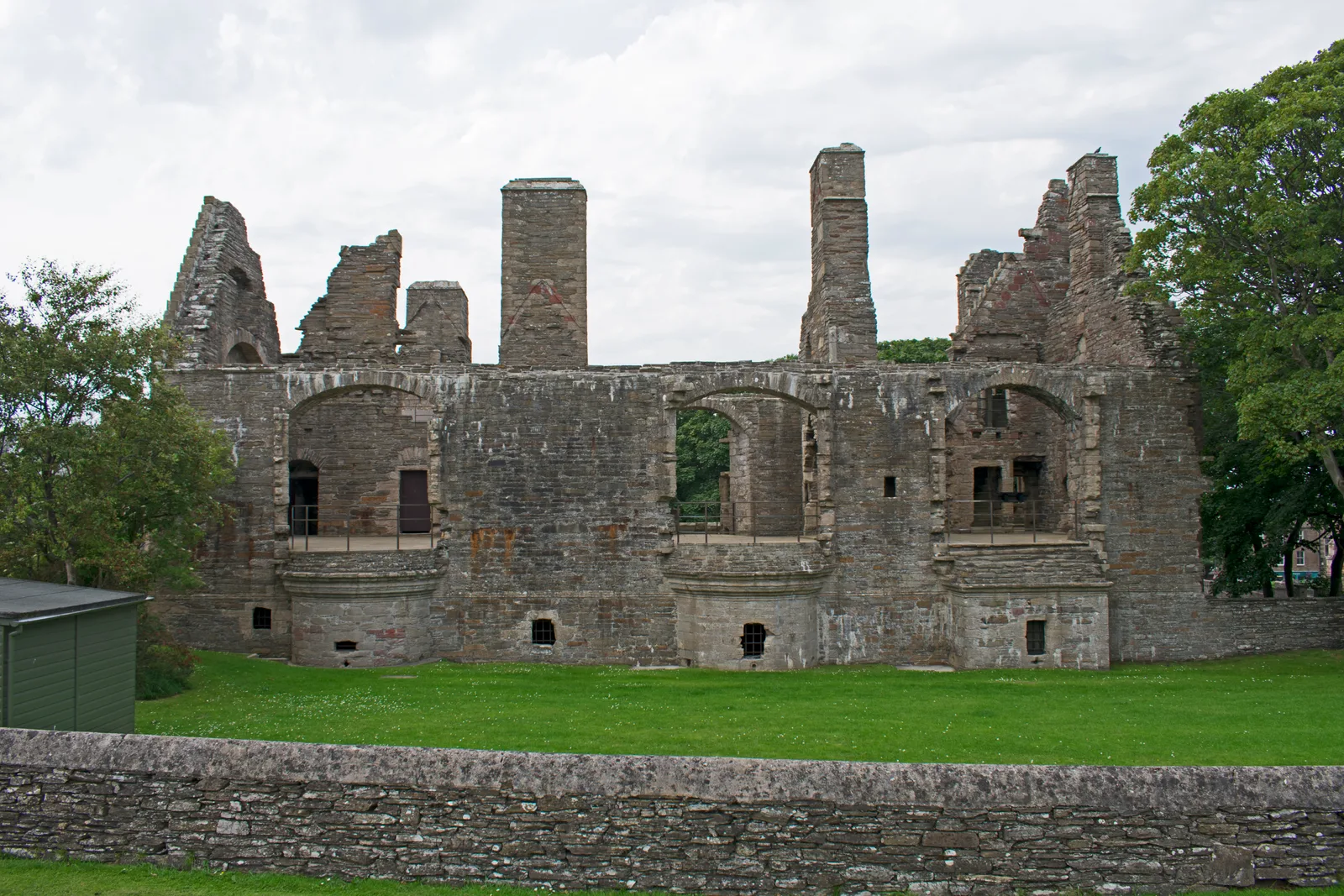
The Earl’s Palace next door is a couple of centuries younger and a great deal showier. It went up in the early 1600s for Patrick Stewart, Earl of Orkney, well after James III of Scotland had annexed the islands in 1472. Stewart’s plan was not a single building but a complex: Historic Environment Scotland records his intention to fold the Bishop’s Palace into a grand scheme he called “The Palace of the Yards”. Even roofless, the façade still carries the oriel windows, corbelled turrets and elaborate entrance HES singles out, and there is a statue of St Rognvald on the outside worth looking for. The ambition of the man is written all over it.
Both are open-air ruins with restricted seasons. Confirm the current opening on the Historic Environment Scotland listing before you make the walk, because outside the main season the gates may be shut even when the town is busy.
The Orkney Museum
Set in Tankerness House on Broad Street, immediately opposite the cathedral, the Orkney Museum is part of the council’s museums service and is the place to go if you want the Neolithic material and the Norse material in one building and in the right order. It is 131 metres from the cathedral door — you cross the street and you are there. Entry was free when we checked in August 2026, which makes it the best-value hour in town, but confirm on the museums service’s own site before you rely on it.
The building itself is worth the visit even before you look at a case. Tankerness House was a home for three centuries — the seat of the Baikie family of Tankerness, whose estate gave it its name — and its north and south wings began life as manses for the cathedral clergy across the road. There is a garden behind it that is one of the quietest corners in the centre of town. If the weather has turned, this is the single best indoor hour in Kirkwall.
The Library and Archive
Recommending a public library to visitors sounds like padding, and in most towns it would be. Orkney Library & Archive, on Junction Road and 418 metres from the pier, is the exception. It is a working library for the islands and it is also the home of the Orkney Archive, which holds the documentary record of the county — estate papers, kirk session records, photographs, the paper trail of island life.
Two reasons to walk in. The first is that it is warm, free to enter and has a serious Orkney section, which makes it the best place in town to fill a rainy hour reading about where you are. The second is that the staff are unusually good at pointing people at the right thing, and if you have any family connection to Orkney at all, the archive is where that thread starts. Do check the current opening times on their own site — a library’s hours are not a thing to take on trust from a blog.
Albert Street and the Shops
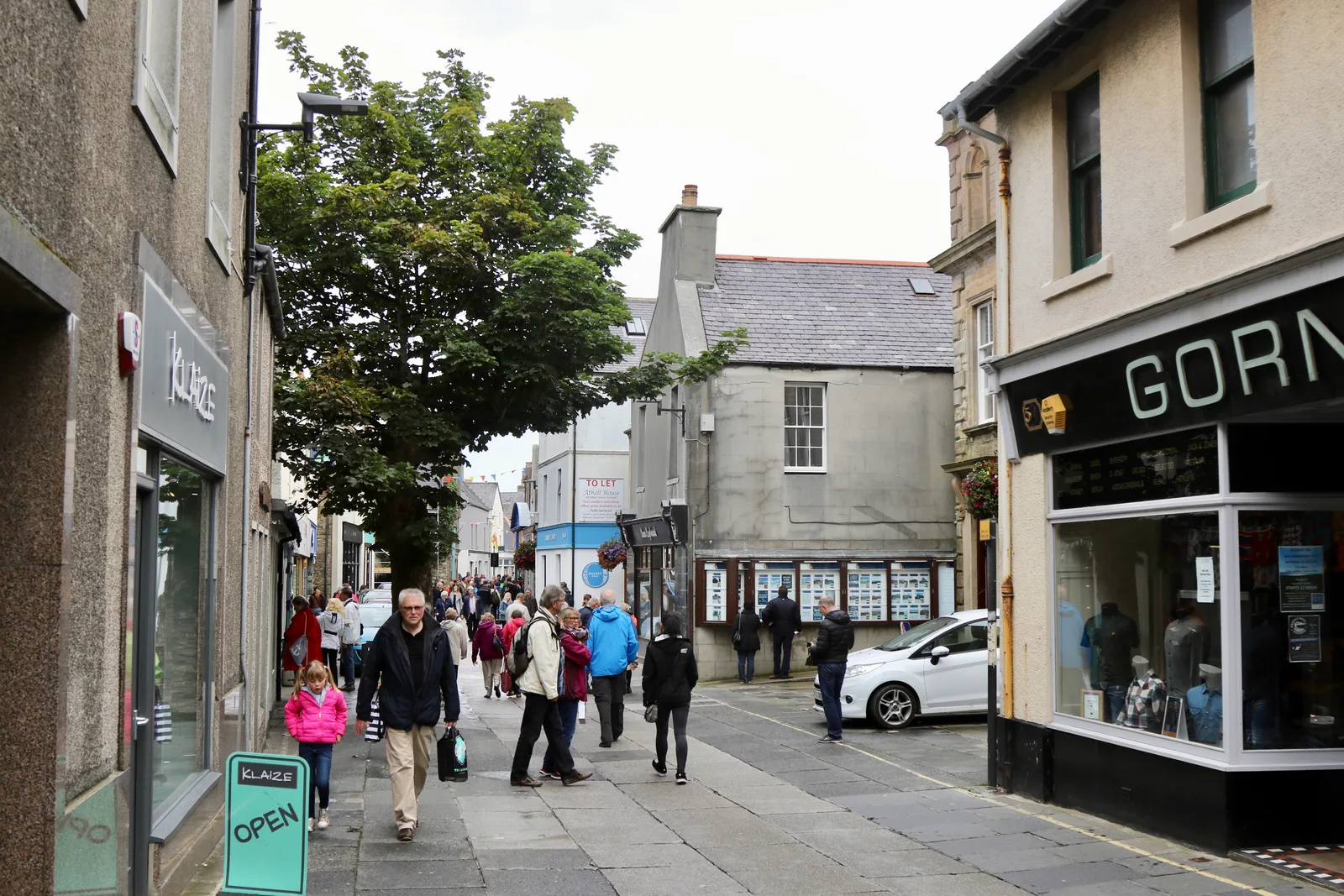
Kirkwall’s main shopping run — Bridge Street into Albert Street into Broad Street — is a single narrow flagstoned thoroughfare that curls uphill from the harbour to the cathedral. It is barely wide enough for a car in places, which is exactly why it works: the shopfronts are close enough to read as you pass. End to end, harbour to cathedral, the run is 482 metres and about six minutes if nothing catches your eye. Something will.
What makes it worth walking rather than just passing through is how little of it is chain retail. Orkney jewellery is the strongest thread — designs drawn from Norse carving, island archaeology and the local landscape — and Sheila Fleet, whose workshop is out at Tankerness, keeps a gallery in the town. On Broad Street, more or less facing the cathedral, Judith Glue pairs knitwear and Orkney-made goods with a café, which makes it a convenient place to stop when the loop above has caught up with you.
Beyond those, the street holds a bakery or two, a butcher, a deli, a bookshop, a record shop and a scatter of craft and gift shops, most of them independent and several of them family businesses of long standing. Trading patterns change, so treat any specific shop as something to confirm on the day rather than to plan a journey around.
The Peedie Sea and the Waterfront
If you want air rather than exhibits, the Peedie Sea is the answer. “Peedie” is the Orcadian word for small, and the Peedie Sea is the shallow stretch of water on the north-west edge of the town centre, a short walk from the library. It is a bird-watching spot rather than a beauty spot, and the appeal is that it is open, flat and about two minutes off the main street — useful when you have had enough of stone interiors and want twenty minutes of weather.
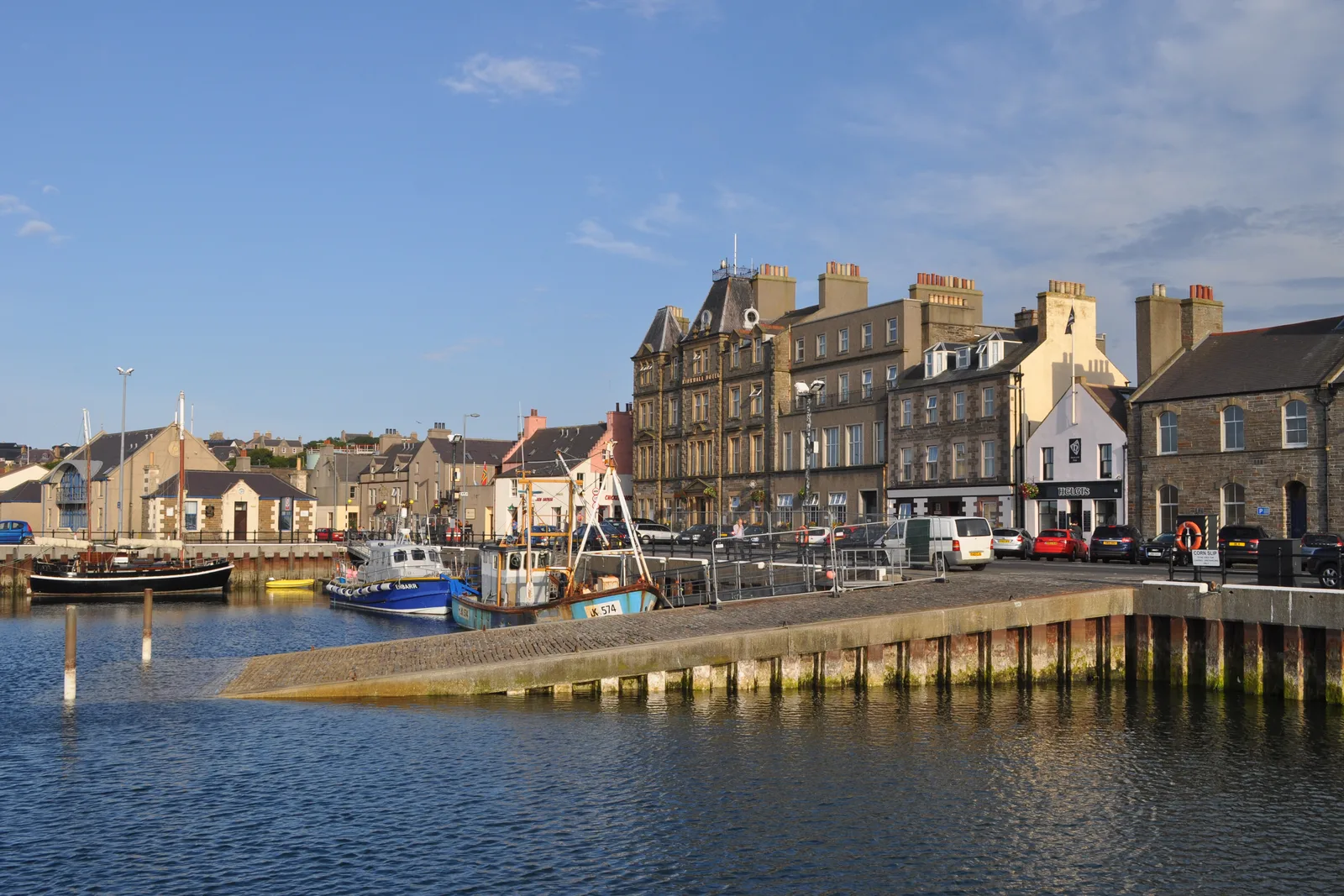
The working harbour itself is the other free attraction. Kirkwall Marina, 709 metres round from the pier, is where the small boats live, and the wider harbour is busy with inter-island ferries, fishing boats and, in season, cruise tenders. It is an unglamorous, entirely genuine bit of Orkney and costs nothing to stand and watch.
The waterfront also has the shortest walk in this guide attached to it: The Orkney Distillery sits 183 metres from the pier, which is about two minutes, and makes gin within sight of the water. It is one of several island producers covered in our guide to Orkney gin.
One more, 225 metres from the pier at Kiln Corner on Junction Road: the Orkney Wireless Museum, a small volunteer-run collection of radio and wartime communications equipment with a strong Scapa Flow connection. It is a registered Scottish charity, active since 2005, and its charity record describes a museum that opens for six months of the year with entry by donation. That seasonality is the thing to plan around — confirm it is open before you make the walk.
Three Longer Walks Out of Town
When the central circuit is done, three more places are reachable on foot if you are willing to put in the distance.
Grain Earth House — 1,123 metres from the pier, about fifteen minutes. An Iron Age souterrain, which is to say an underground stone passage and chamber, sitting incongruously in the middle of the Hatston industrial estate. It is in the care of Historic Environment Scotland and access arrangements are unusual, so check their listing before you set off rather than turning up hopefully.
Highland Park Distillery — 2,446 metres from the pier on Holm Road, roughly half an hour uphill. A working whisky distillery within the town boundary, and the obvious detour for anyone following the Orkney whisky trail. Visits need booking ahead and the arrangements change, so go to their own site for the current position rather than relying on this page.
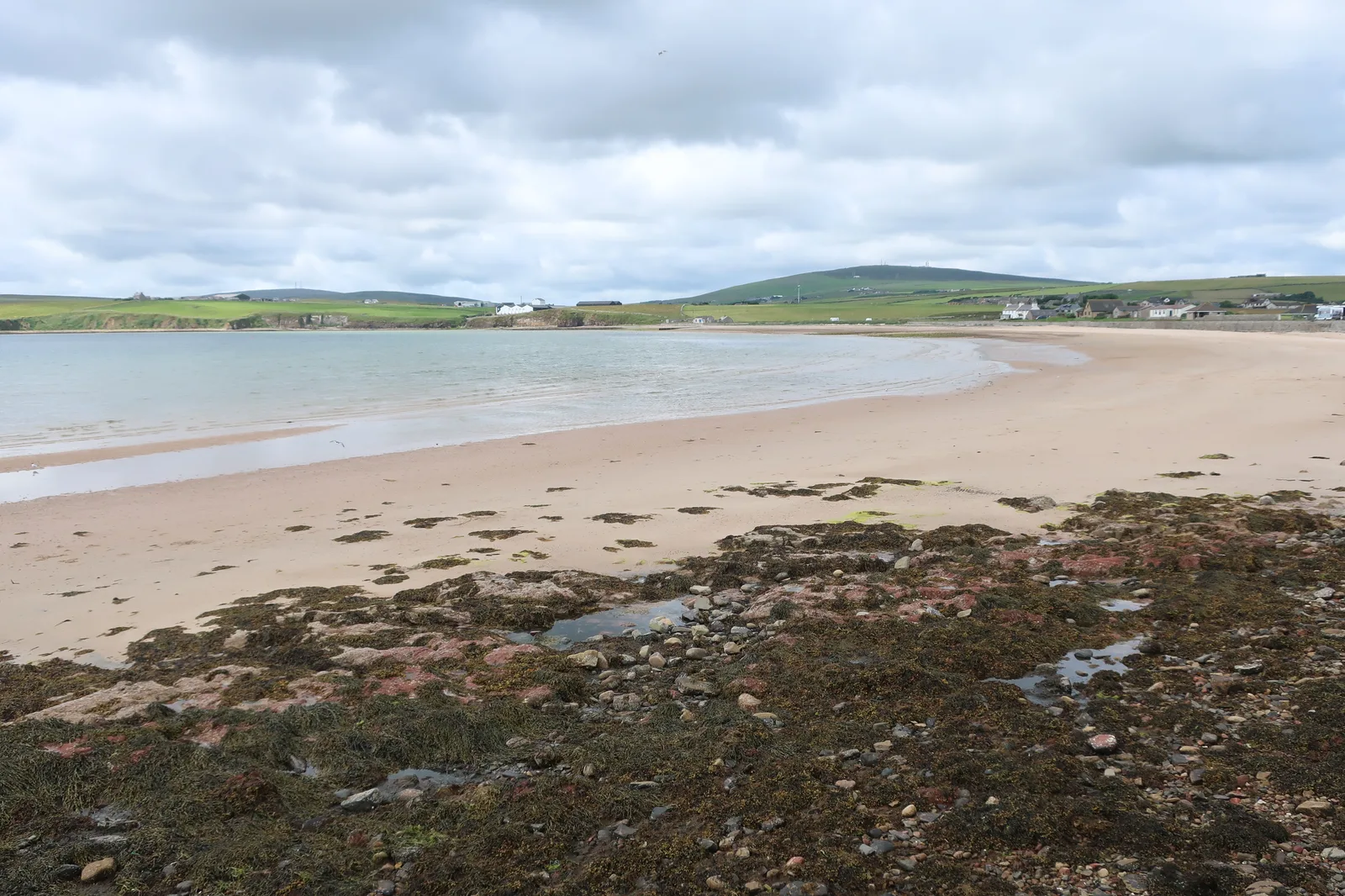
Scapa Beach — 3,276 metres, or a little over two miles, and the longest walk here at about three quarters of an hour. It is a proper sandy bay on Scapa Flow, and the reward is standing on the shore of one of the most consequential stretches of water in British naval history. It is also the most accessible good beach on the Mainland; the rest are in our round-up of Orkney’s beaches.
Everything genuinely famous in Orkney — Skara Brae, the Ring of Brodgar, Maeshowe, the Italian Chapel — is out of town and needs transport. If you have not hired a car, that is a solved problem: see reaching the Neolithic sites by bus.
How Long Do You Need?
Kirkwall rewards more time than most people give it, but it is honest to say the core can be done quickly.
| Time you have | What fits | Walking |
|---|---|---|
| Two hours | Cathedral, both palaces, a walk up Albert Street | Around 1.5 km |
| Half a day | The full harbour loop: cathedral, palaces, Orkney Museum, library, the shops | 1.94 km |
| A full day | The loop plus one longer walk — Scapa Beach or the distillery — and time to sit down | 7–9 km |
| Two days or more | All of the above, plus the Neolithic sites and the outer islands by bus or ferry | Transport needed |
One date to know about: on Christmas Day and New Year’s Day the town centre is given over to the Ba’, a mass street football game between the Uppies and the Doonies. Shops board their windows and ordinary sightseeing stops. It is extraordinary to witness and impossible to plan a normal day around.
Kirkwall makes the obvious base for all of this — it is the largest town, the transport hub, and everything above is on foot from the middle of it. If you are working out where to put yourself, start with where to stay in Kirkwall.
Common Questions About Kirkwall
Is Kirkwall walkable?
Yes, and unusually so. The cathedral, both palaces, the Orkney Museum, the library and the whole shopping street sit within 710 metres of the town pier. A loop taking in all of them is 1.94 kilometres, about 26 minutes of walking. No car is needed inside the town.
How long do you need in Kirkwall?
Two hours covers the cathedral, the two palaces and the main street. Half a day does the full town loop including the Orkney Museum properly. A full day lets you add Scapa Beach or Highland Park on foot without rushing anything.
Can you walk into Kirkwall from the cruise pier?
It depends which pier. Ships at the town pier are 579 metres from the cathedral, an easy eight-minute walk. Larger ships berth at Hatston, 3.2 kilometres out, where a transfer into town is the sensible option rather than walking.
What is Kirkwall known for?
St Magnus Cathedral above all — begun in 1137 and owned by the town rather than a church. Kirkwall is also Orkney’s capital and main port, home to Highland Park distillery, and the setting for the Ba’, a mass street football game played each Christmas Day and New Year’s Day.
What is there to do in Kirkwall on a Sunday?
The outdoor things are unaffected: the harbour, the Peedie Sea, Albert Street, and the longer walks to Scapa Beach or Grain Earth House. Indoor venues and independent shops keep their own Sunday hours, several of them reduced, so check each one directly before building a day around it.
Is Kirkwall worth visiting with children?
The short distances are the point — nothing is far enough away to cause a mutiny. The Orkney Museum, the ruined palaces to clamber around outside, the boats in the harbour and the birds on the Peedie Sea all work well, and Scapa Beach is a proper sandy beach within reach.
Sources and Further Reading
- St Magnus Cathedral — history of the cathedral (founding date, founder, 1851 ownership)
- Historic Environment Scotland — Bishop’s and Earl’s Palaces, Kirkwall (build dates, Haakon IV, medieval street plan)
- Walking distances measured on the OpenStreetMap pedestrian routing network, August 2026.
- Photographs are Creative Commons and credited in each caption: Syrio (CC BY-SA 4.0), Ymblanter (CC BY-SA 4.0), Stevekeiretsu (CC BY-SA 4.0), Andrew Abbott (CC BY-SA 2.0) and Hugh Venables (CC BY-SA 2.0), via Wikimedia Commons and Geograph.