Quick Navigation
- Two stone circles, one mile apart
- The Ring of Brodgar
- The Standing Stones of Stenness
- Ring of Brodgar vs Stones of Stenness
- The walk between the circles, and the Ness of Brodgar
- Visiting: parking, paths and timing
- Ring of Brodgar and Stones of Stenness: common questions
- Do you need tickets for the Ring of Brodgar?
- What is the difference between the Ring of Brodgar and the Standing Stones of Stenness?
- Is the Ring of Brodgar older than Stonehenge?
- Are the Stones of Stenness older than Stonehenge?
- What were standing stones for?
- Sources and further reading
The Ring of Brodgar and the Standing Stones of Stenness are Orkney's two great stone circles, and they stand barely a mile apart on the West Mainland, at either end of a thin strip of land between two lochs. Both are free, both are open all year, and neither has a ticket desk. This guide covers what you will actually see at each one, how old they really are, the walk that links them, and the practical details worth knowing before you go.
Two stone circles, one mile apart
Both monuments sit about five miles north-east of Stromness on the B9055, which runs along the narrow neck of land between the Loch of Stenness and the Loch of Harray. Together with Maeshowe and Skara Brae they make up the Heart of Neolithic Orkney, the group of monuments UNESCO inscribed as a World Heritage Site in 1999. UNESCO's own description calls the four "unquestionably among the most important Neolithic sites in Western Europe".
They are often visited as a pair, and for good reason, but they are very different places. Brodgar is huge, open and almost perfectly round. Stenness is small and compact, with a handful of towering slabs, three of them taller than any stone at Brodgar.
The Ring of Brodgar
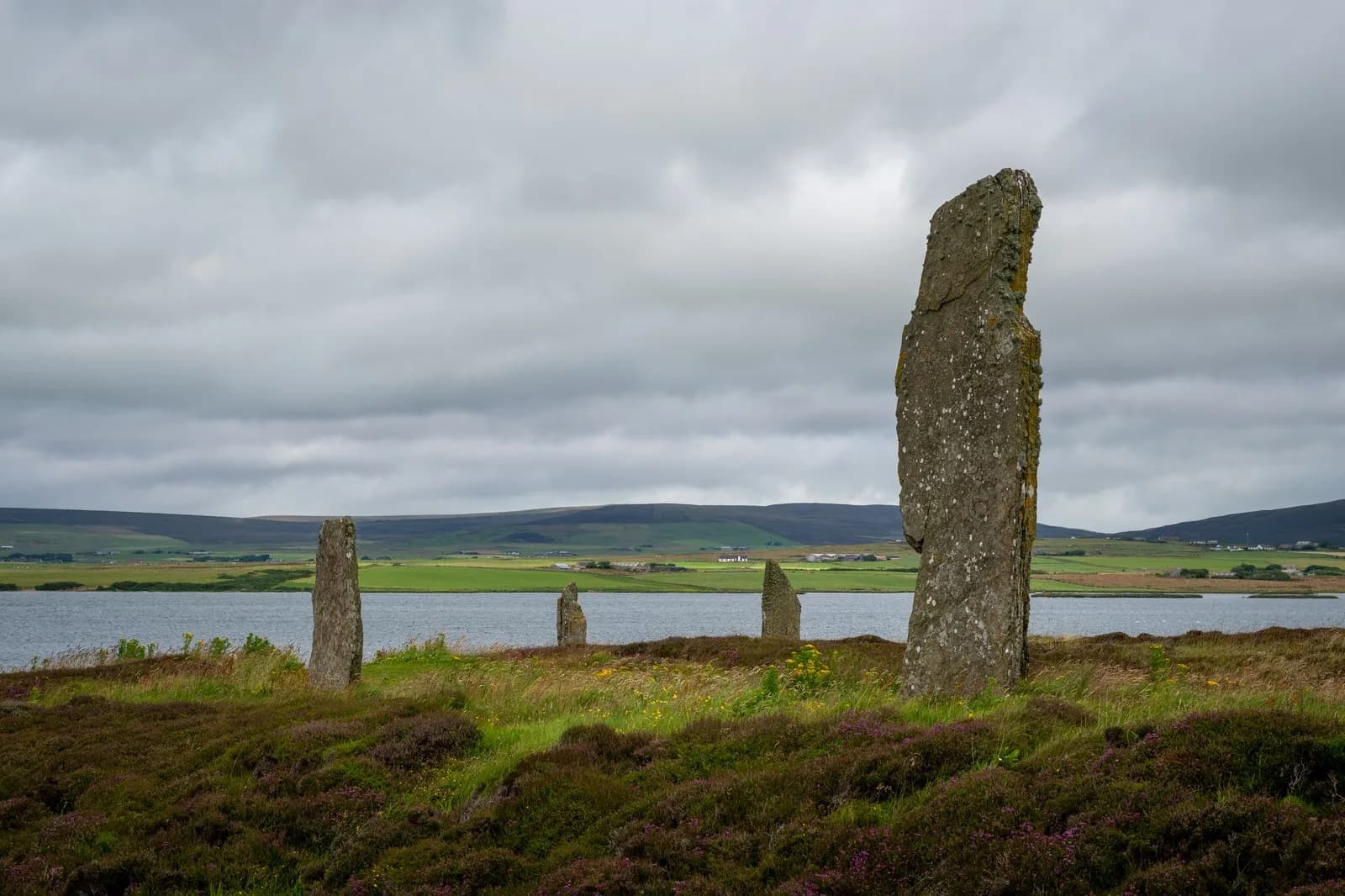
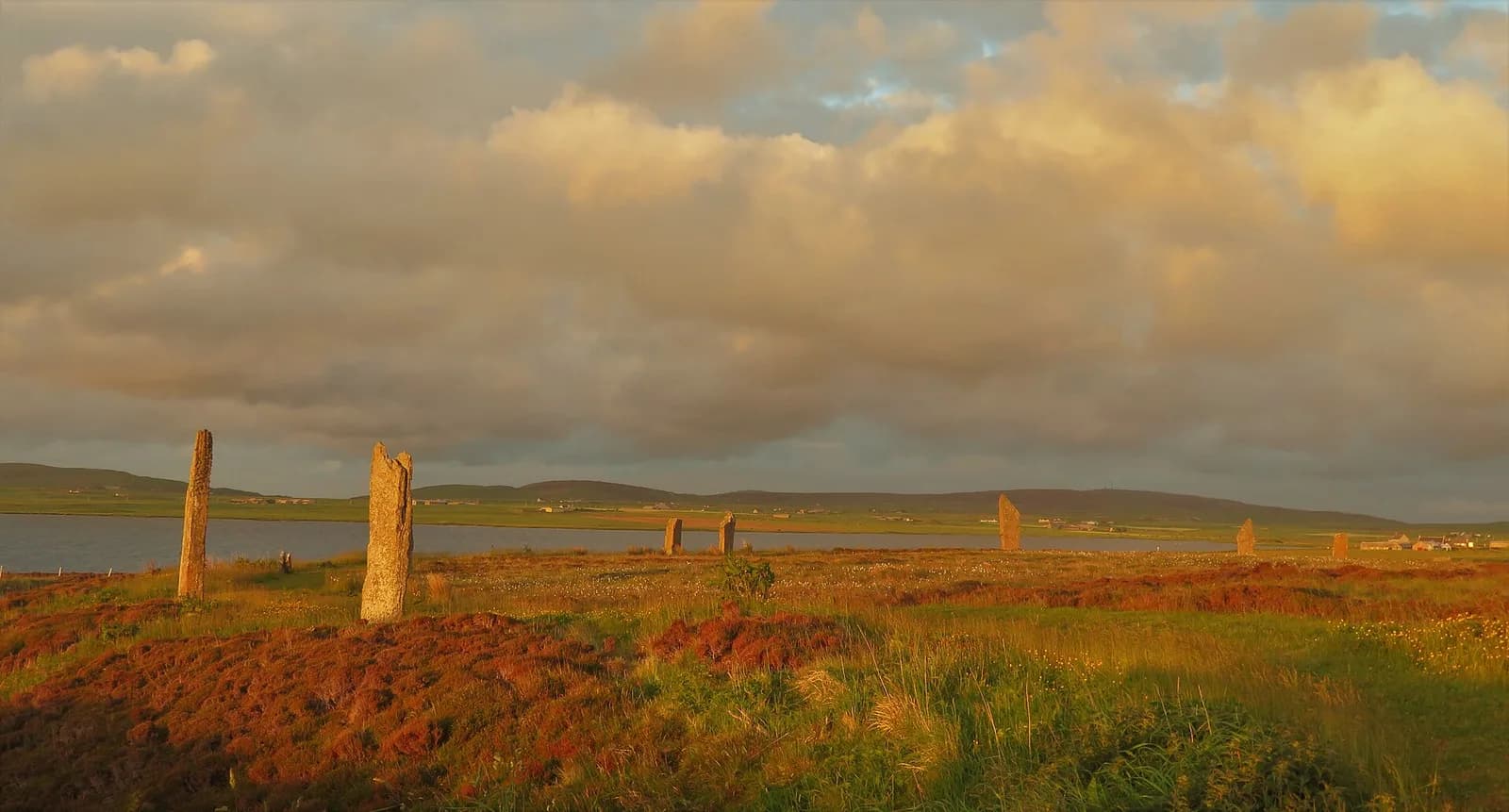
The Ring of Brodgar is the largest stone circle in Scotland, according to Historic Environment Scotland, and one of the largest in the British Isles. The ring measures 104 metres across and is unusually close to a true circle. Around it runs a great rock-cut ditch, the henge, which was hacked out of solid bedrock.
The usual figure is that the circle once held 60 stones, of which 36 survive, ranging from 2.1 to 4.7 metres tall. Treat the 60 as an estimate rather than a count. The Ness of Brodgar project notes that a 2008 geophysical survey found more possible stone sockets than expected, enough to suggest the ring may have involved more than 70 stones, though not necessarily all standing at the same time. The two counts measure different things: the same project notes that 27 stones still stand today, while the higher official figure includes broken stumps.
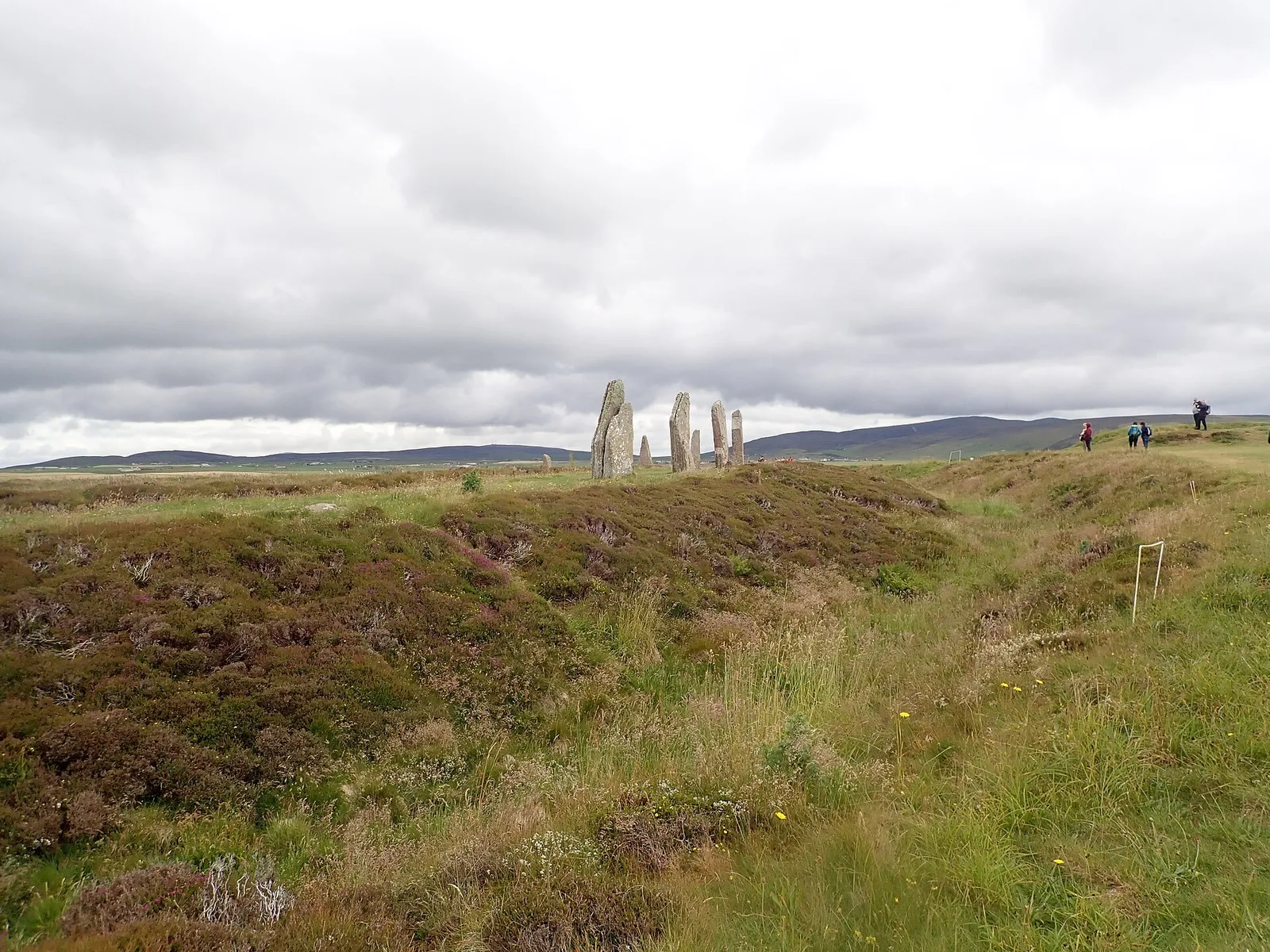
Nobody knows its age for certain. Historic Environment Scotland is candid that there has been limited excavation, and in the absence of scientific dates its best guess is that the main ring went up sometime between 2600 and 2400 BC. The Ness of Brodgar project points out that those dates come from the ditch, and that the stones are generally thought to date from somewhere between 3000 and 2500 BC. UNESCO lists thirteen Neolithic and Bronze Age mounds around the ring, plus a separate stone setting known as the Comet Stone, and Historic Environment Scotland dates the mounds and that setting to roughly 2500 to 1500 BC.
What it was for is still argued over. Historic Environment Scotland suggests ceremonies celebrating the relationship between the living and earlier generations, and notes the idea that sites in this area were used to observe the moon. Geological work cited by the Ness of Brodgar project found the stones came from at least seven different quarries across Orkney, which has led some archaeologists to picture different communities each raising their own section. A local folk tale offers a simpler explanation: a group of giants were dancing in a ring when the sun rose and turned them to stone.
The Ring of Brodgar was scheduled as a protected monument in 1882, one of the first sites in the British Isles to be given that status.
It has had a rough few millennia. Several stones have fallen or been lost, and Historic Environment Scotland notes that at least one has been struck by lightning. Some stones were re-erected in the 19th and early 20th centuries, which UNESCO records in its notes on the site.
Planning your trip
Staying overnight? Compare live prices and availability across Orkney on Booking.com.
Compare Orkney staysWe earn a small commission if you book through this link, at no extra cost to you.
The Standing Stones of Stenness
The Standing Stones of Stenness may be the earliest henge monument in the British Isles. Historic Environment Scotland dates the site to around 3100 to 2900 BC, based on radiocarbon dates from bones found in its ditch, which makes it around 5,000 years old. The Ness of Brodgar project adds a useful caution: a reanalysis of Orkney's radiocarbon dates points nearer to 2900 BC, and because those dates come from the ditch, the stones themselves could be earlier or later than the ditch around them.
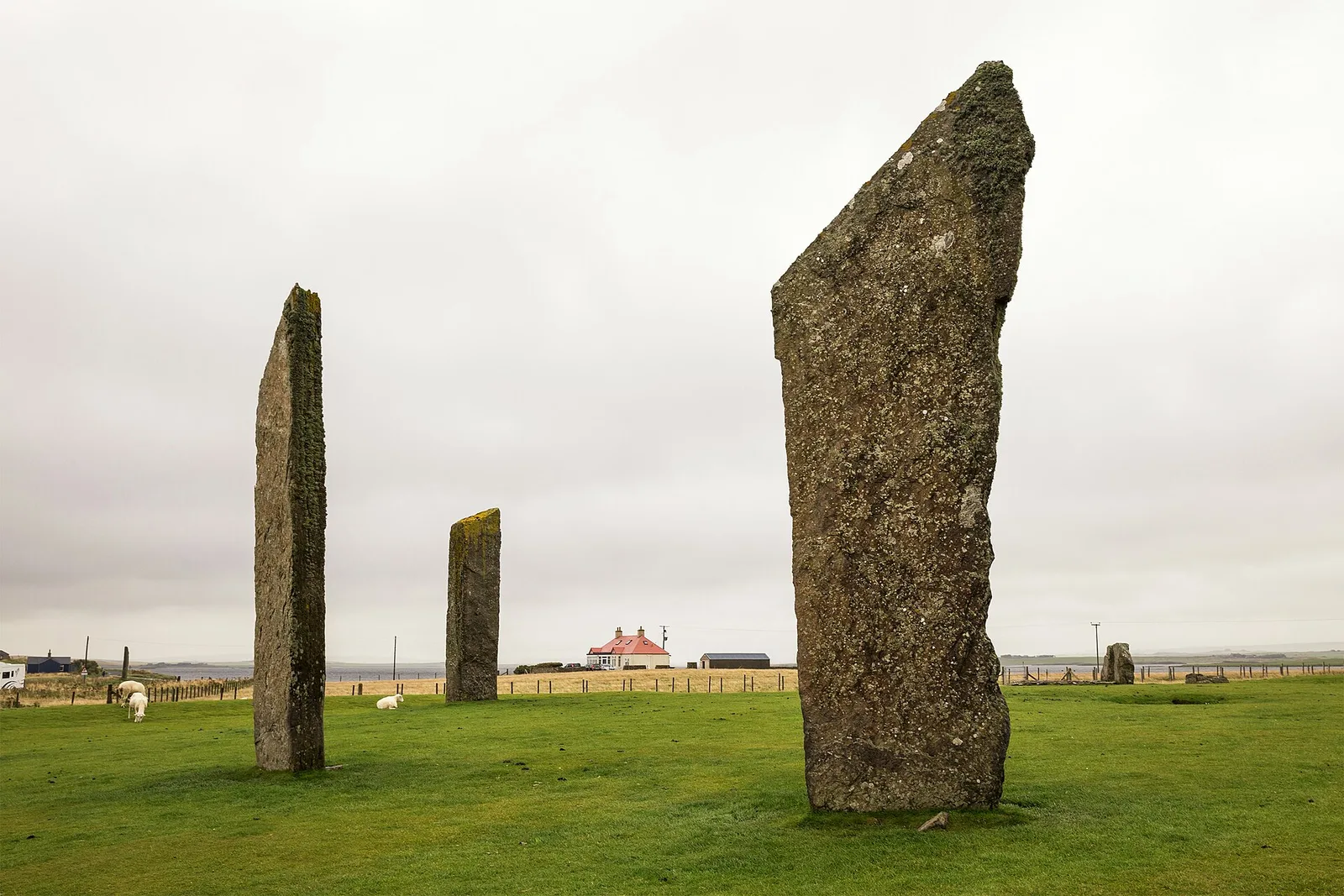
Today four upright stones remain, the tallest around six metres. Unlike Brodgar, the setting was never a true circle: Historic Environment Scotland describes the stones as arranged in an oval, and UNESCO calls it elliptical. The number of stones is where the sources differ. Historic Environment Scotland says the circle originally held 12, but the Ness of Brodgar project reports that excavation found no stone ever stood in at least one of the twelve positions, and concludes that ten, or eleven at most, were ever raised.
Inside, the focus was a large stone hearth, still visible in the middle of the grass. Pottery and animal bones excavated here show that people cooked and ate at the site. The low slabs beside the hearth are what is left of a so-called "dolmen" that was put together long after the Neolithic: Historic Environment Scotland calls it a probably fanciful reconstruction, and UNESCO notes it has since been reconfigured.
Stenness also has the sadder history. In December 1814 a tenant farmer, apparently tired of the stones getting in the way of his work, destroyed the nearby Odin Stone and then toppled one of the circle's stones and destroyed another before he was stopped. Two other stones survive outside the circle, the Watch Stone and the Barnhouse Stone, and Historic Environment Scotland considers both likely to be connected with the henge.
Ring of Brodgar vs Stones of Stenness
The quickest way to understand the pair is to put them next to each other. Brodgar is the bigger, later and rounder of the two; Stenness is the smaller, older one with the tallest stones.
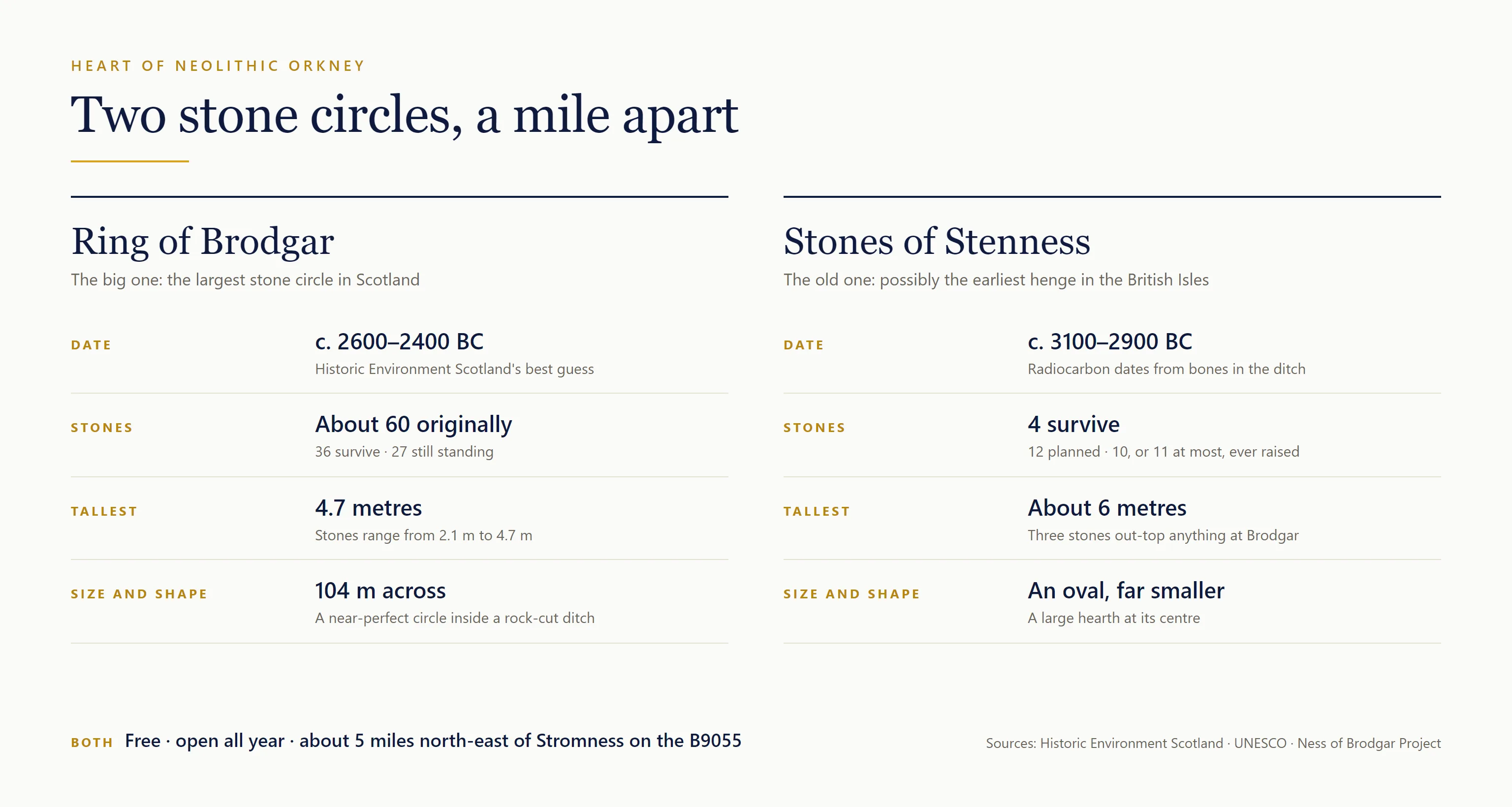
| Ring of Brodgar | Stones of Stenness | |
|---|---|---|
| Best estimate of date | Best guess around 2600 to 2400 BC | Around 3100 to 2900 BC |
| Stones originally | About 60, possibly more over time | 12 planned; 10, or 11 at most, raised |
| Stones today | 36 survive, 27 still standing | 4 uprights |
| Tallest stone | 4.7 metres | About 6 metres |
| Layout | Near-perfect circle, 104m across | Ellipse, far smaller |
| Visiting | Free, open all year, car park | Free, open all year, car park |
The walk between the circles, and the Ness of Brodgar
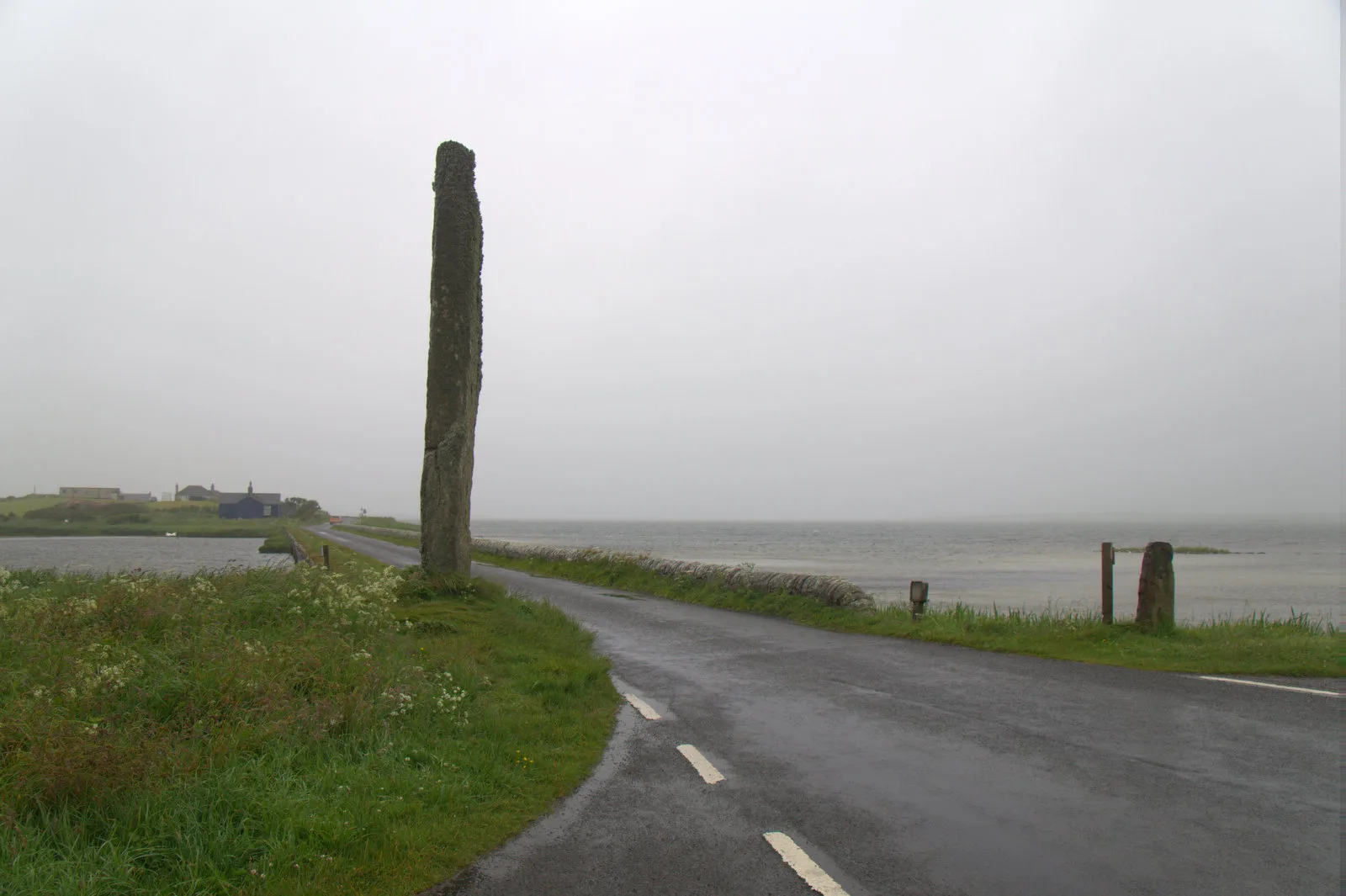
The mile between the two circles is well worth walking rather than driving. The road crosses the narrow isthmus with the Loch of Harray on one side and the Loch of Stenness on the other, and the Watch Stone stands right beside it at the Brig o' Brodgar, the bridge at the Stenness end.
Between the two circles lies the Ness of Brodgar, the huge complex of Neolithic buildings excavated over twenty years. Do not expect to see a dig. The project's own site is clear that fieldwork ended in August 2024, the trenches were backfilled, and the excavation site is now closed to the public. Private tours can be arranged with the project for a donation, but otherwise please respect the no-entry signs. Our guide to Neolithic Orkney covers what the Ness revealed and how it fits with the other World Heritage sites.
This is a working road rather than a footpath, so keep to the verge, walk in single file and watch for traffic, particularly when coaches are running in summer.
Visiting: parking, paths and timing
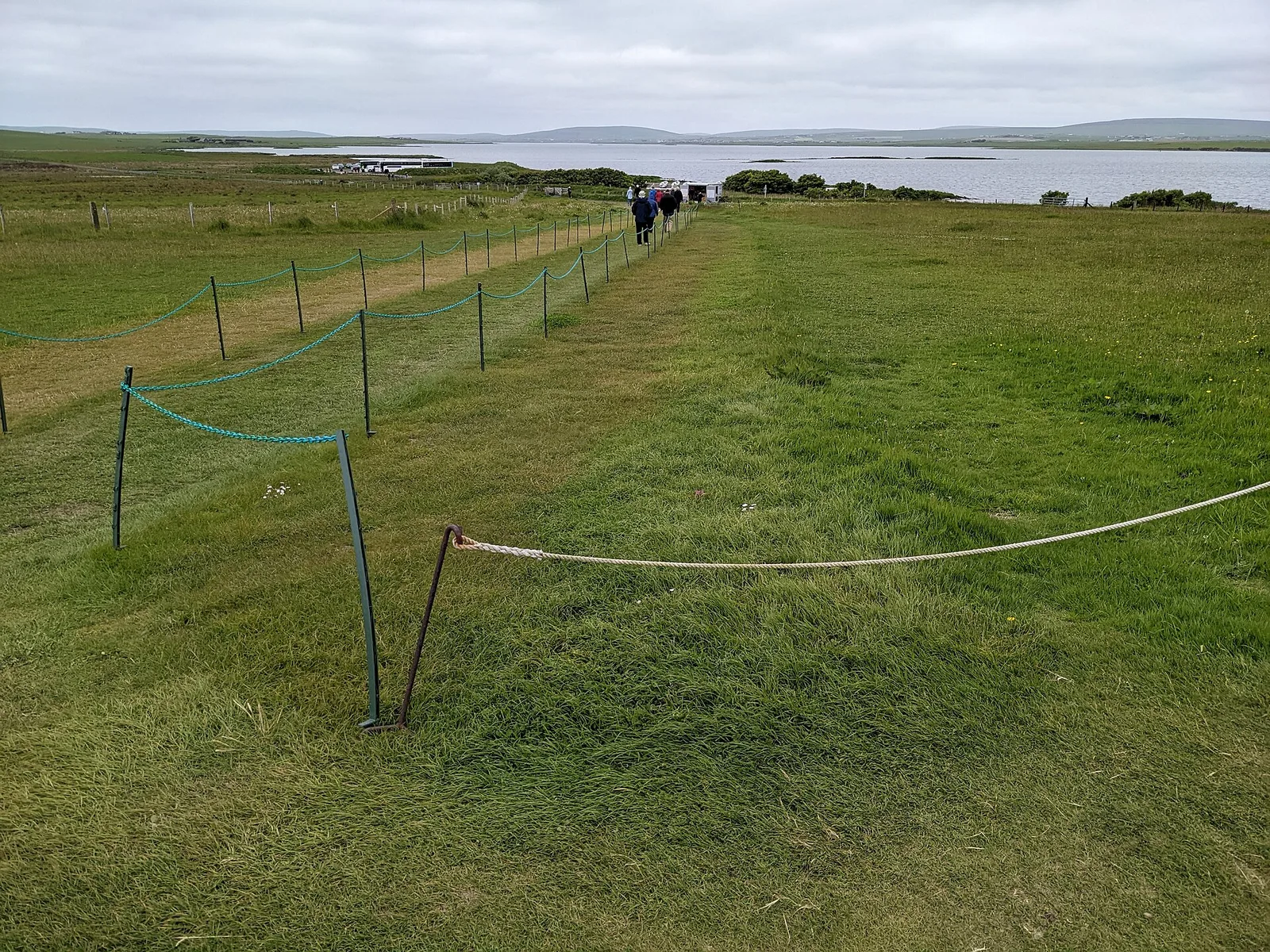
Both sites have car parking and coach parking. At Brodgar, Historic Environment Scotland asks visitors to wear strong footwear and follow the one-way path around the ring, and warns that sections of the inner path are closed from time to time to let the grass recover. Dogs are welcome in outdoor areas at Brodgar.
- Timing. Because both sites are open ground with no opening hours, you are free to come early or late, and long summer evenings bring the warm, low light that shows the stones at their best.
- Rangers. The Historic Scotland Ranger Service looks after the World Heritage Site and leads guided walks at Brodgar covering history, wildlife and folklore. Check Historic Environment Scotland's events listings for dates.
- Maeshowe. If you plan to add the chambered tomb nearby, note that access is by guided tour only and Historic Environment Scotland strongly recommends booking online.
- Without a car. You can reach the stones by bus. Our guide to getting from Kirkwall to Brodgar, Stenness and Skara Brae by bus has the routes and the walking combination that works.
Most people combine the stones with the rest of the West Mainland's Neolithic sites in a single day. Skara Brae is about six miles away, and our Skara Brae visitor guide covers tickets and timings for the one site on this loop you do pay for. If you would rather have the stones on your doorstep for a sunset visit, Stromness, about five miles away, makes an easy base, and you can browse places to stay in Stromness for options within a short drive.
Ring of Brodgar and Stones of Stenness: common questions
Do you need tickets for the Ring of Brodgar?
No. The Ring of Brodgar is free to visit and open all year round, with no tickets or booking. The same applies to the Standing Stones of Stenness. Of the four World Heritage monuments, only Maeshowe and Skara Brae charge for entry.
What is the difference between the Ring of Brodgar and the Standing Stones of Stenness?
Brodgar is the larger, later circle: 104 metres across, with 36 surviving stones up to 4.7 metres. Stenness is smaller and older, probably the earlier henge, with four surviving stones up to about six metres tall.
Is the Ring of Brodgar older than Stonehenge?
Probably not, though nobody can be sure. Historic Environment Scotland's best guess for Brodgar is 2600 to 2400 BC, close to when Stonehenge's stones went up around 2500 BC. Stonehenge's first earthwork henge, from about 3000 BC, is very likely older.
Are the Stones of Stenness older than Stonehenge?
Older than Stonehenge's stone circle, yes. Stenness dates to around 3100 to 2900 BC, several centuries before Stonehenge's stones were raised around 2500 BC, and roughly contemporary with Stonehenge's first henge of about 3000 BC.
What were standing stones for?
Nobody knows for certain. Historic Environment Scotland's best guess is that both Orkney circles hosted ceremonies marking the relationship between the living and their ancestors. Feasting at Stenness and possible moon observation in the area have also been suggested.
Sources and further reading
- Ring of Brodgar: history and stories and plan your visit — Historic Environment Scotland. Dates, dimensions, stone counts, scheduling in 1882, access, toilets and dogs.
- Stones of Stenness: history and stories — Historic Environment Scotland. Radiocarbon dating, the hearth, the "dolmen", the Watch Stone and Barnhouse Stone.
- Stones of Stenness overview — Historic Environment Scotland. The four surviving uprights and their height.
- Maeshowe: plan your visit — Historic Environment Scotland. Guided tours only, and booking online.
- Heart of Neolithic Orkney — UNESCO World Heritage Centre. Inscription in 1999, the mounds, the Comet Stone and re-erection of fallen stones.
- The Ring of Brodgar and The Stones of Stenness — The Ness of Brodgar Project. The 2008 survey, quarries, the ellipse, and the events of 1814.
- Visiting the Ness of Brodgar — The Ness of Brodgar Project. End of fieldwork, backfilling and site closure.
- History of Stonehenge — English Heritage. Dates for Stonehenge's henge and stone circle.
Facts in this guide were checked against these sources on 4 October 2026. Access arrangements can change, so check Historic Environment Scotland before you travel.
Header photo: the Ring of Brodgar on a June evening, by Gordon Hatton / Geograph, CC BY-SA 2.0.