Quick Navigation
- The three verdicts on every entry
- All 20, ranked and summarised
- The sites that justify the journey
- Five sites the coaches skip
- Scapa Flow and the wartime islands
- Where Orkney stops being gentle
- Two islands worth the extra hop
- What is genuinely reachable by bus
- Two things older guides get wrong
- How many of these you can realistically do
- Frequently asked questions
- What is Orkney most famous for?
- How many days do I need in Orkney?
- What not to miss on Orkney?
- Is there a hop-on hop-off bus in Orkney?
- What are some hidden gems in Orkney?
- Is Orkney worth visiting for a day?
Most lists of things to do in Orkney are alphabetical, which is useless when you have four days and a ferry to catch. This one is ranked, and every entry carries the three things that actually decide your itinerary: roughly how much of your day it eats, whether you have to book before you arrive, and whether it is reachable without a car. Orkney is compact enough that you can see a startling amount in a week — but only if you know which sites run on a timetable and which you can simply walk up to.
The three verdicts on every entry
Orkney splits neatly into two kinds of attraction, and confusing them is how people lose a morning. Some sites are staffed, ticketed and run to a schedule — miss the slot and you miss the site. Others are open ground with no gate, no desk and no closing time, where the only constraint is daylight and the last bus home.
So each of the twenty entries below carries a short verdict block. Time is the realistic on-site figure including the walk in from the car park, not the optimistic one. Booking flags the handful of places where turning up hopefully is a wasted journey. Without a car tells you whether a bus, a ferry or your own legs will get you there.
All 20, ranked and summarised
If you read nothing else, read the table. It is the whole article compressed into the three decisions that matter.
| # | Attraction | Time to allow | Pre-book? | Without a car? |
|---|---|---|---|---|
| 1 | Skara Brae, Sandwick | Half a day | Advised | Yes — bus to the door in summer |
| 2 | Maeshowe, Stenness | Around 2 hours | Essential | Yes — bus plus site shuttle |
| 3 | Ring of Brodgar | 45–90 minutes | No | Yes — stop at the site |
| 4 | Standing Stones of Stenness | 30 minutes | No | Yes — short walk from the bus |
| 5 | Italian Chapel, Lamb Holm | 30–45 minutes | No | Yes — hail-and-ride on the southbound bus |
| 6 | Broch of Gurness, Evie | 1–2 hours | No | Difficult — limited service |
| 7 | Brough of Birsay | 2–3 hours | No, but tides rule | Difficult |
| 8 | The free chambered cairns | 30 minutes each | No | Varies by cairn |
| 9 | Midhowe, Rousay | Full day with ferry | Ferry advised | Yes — passenger ferry |
| 10 | Tomb of the Eagles, South Ronaldsay | Half a day | Check days open | Difficult |
| 11 | Scapa Flow Museum, Lyness | Half a day with ferry | Ferry advised | Yes — ferry to Lyness |
| 12 | Churchill Barriers & blockships | 1 hour driving past | No | Yes — the southbound bus crosses them |
| 13 | Wreck diving in Scapa Flow | Multi-day | Essential | Yes — operators are boat-based |
| 14 | St Magnus Cathedral | 45 minutes | No | Yes — town centre |
| 15 | Stromness: Pier Arts Centre & museum | Half a day | No | Yes — main bus route |
| 16 | Old Man of Hoy | Full day | Ferry advised | Yes — passenger ferry then walk |
| 17 | Yesnaby | 1–2 hours | No | No — no service |
| 18 | Marwick Head & Kitchener Memorial | 2 hours | No | Difficult |
| 19 | Castle o’ Burrian & Noup Head, Westray | Full day or overnight | Ferry advised | Yes — ferry, then transport needed |
| 20 | North Ronaldsay sheep dyke | Full day or overnight | Ferry or flight | Yes — ferry or plane |
Planning your trip
Staying overnight? Compare live prices and availability across Orkney on Booking.com.
Compare Orkney staysWe earn a small commission if you book through this link, at no extra cost to you.
The sites that justify the journey
These five carry the archipelago’s reputation. Four of them sit within a few miles of each other in the West Mainland, which is the single most useful geographical fact for anyone planning a short trip. If you have one full day, this section is your day.
1.Skara Brae — Sandwick, West Mainland
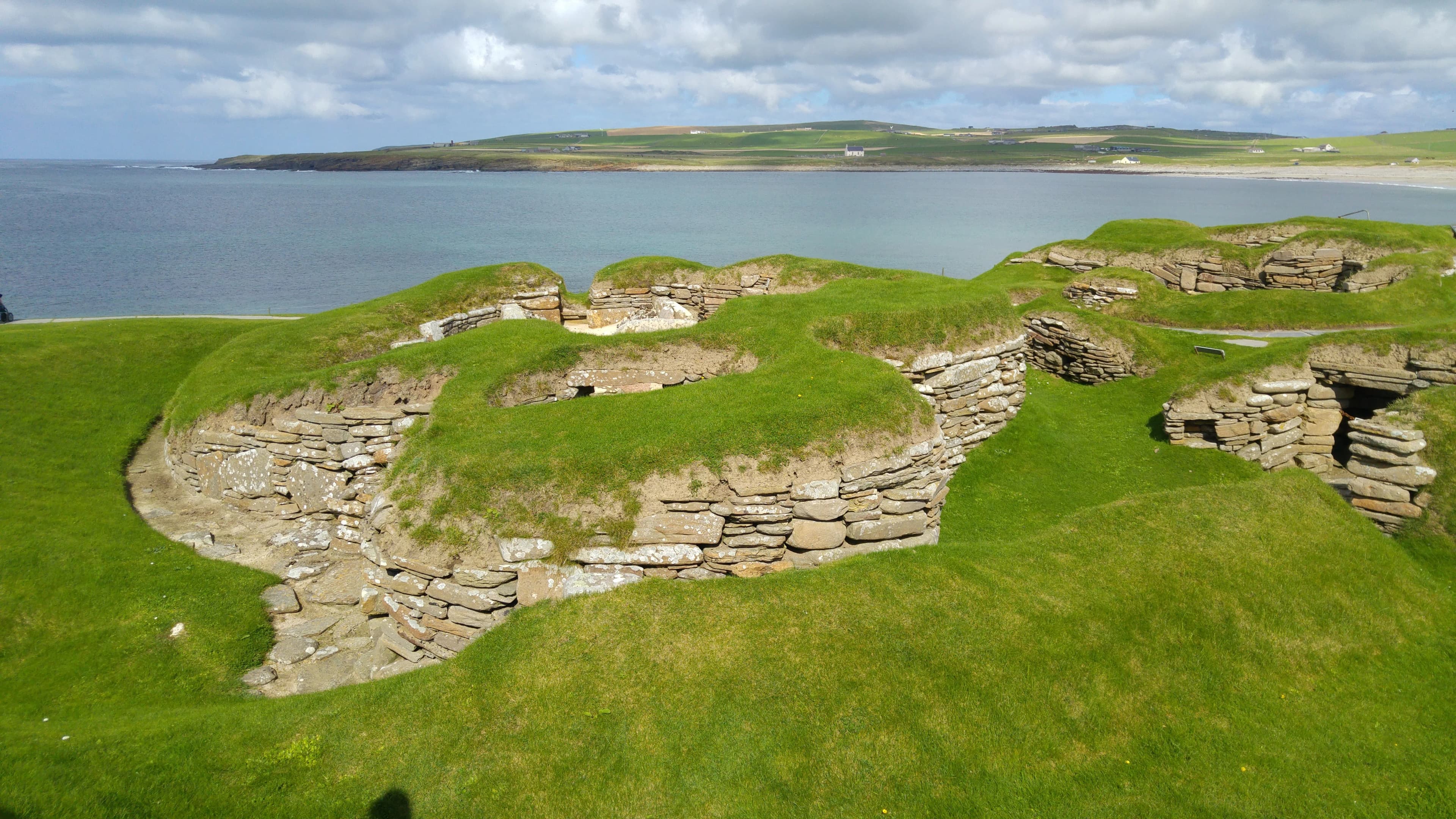
A Neolithic village of stone-built houses that lay under a sand dune until a storm stripped the covering away. What survives is not a footprint but rooms — dressers, beds and hearths still in place, laid out in a way that is immediately legible as domestic space. It is the single most affecting archaeological site in Orkney precisely because it is furniture rather than foundations, and it forms part of the UNESCO-inscribed Heart of Neolithic Orkney group. The village was occupied from roughly 3180 BC to 2500 BC, making it older than Stonehenge and the pyramids, and the wider group was inscribed by UNESCO in December 1999. The visitor centre and replica house set the scene before you reach the village itself, and between April and October the ticket also takes in neighbouring Skaill House, which closes over winter. It is ticketed, and Historic Environment Scotland advises booking ahead to guarantee entry. For a house-by-house walkthrough of what you are looking at, our Skara Brae visitor guide goes considerably deeper than this entry can.
2.Maeshowe — Stenness, West Mainland
A chambered cairn entered along a low passage, and the one site on this list you genuinely cannot improvise. Access is by guided tour only, every tour begins at the visitor centre at Stenness, and a shuttle covers the last stretch to the mound — there is no walk-up entrance from the road. The reason to go is the graffiti: twelfth-century Norsemen broke into the chamber thousands of years after it was built and left around thirty runic inscriptions, one of the largest such collections anywhere outside Scandinavia, carved by people who were themselves tourists in an already-ancient monument. The tour runs about an hour, capacity is small, and slots sell out well in advance in summer.
3.Ring of Brodgar — Stenness, West Mainland
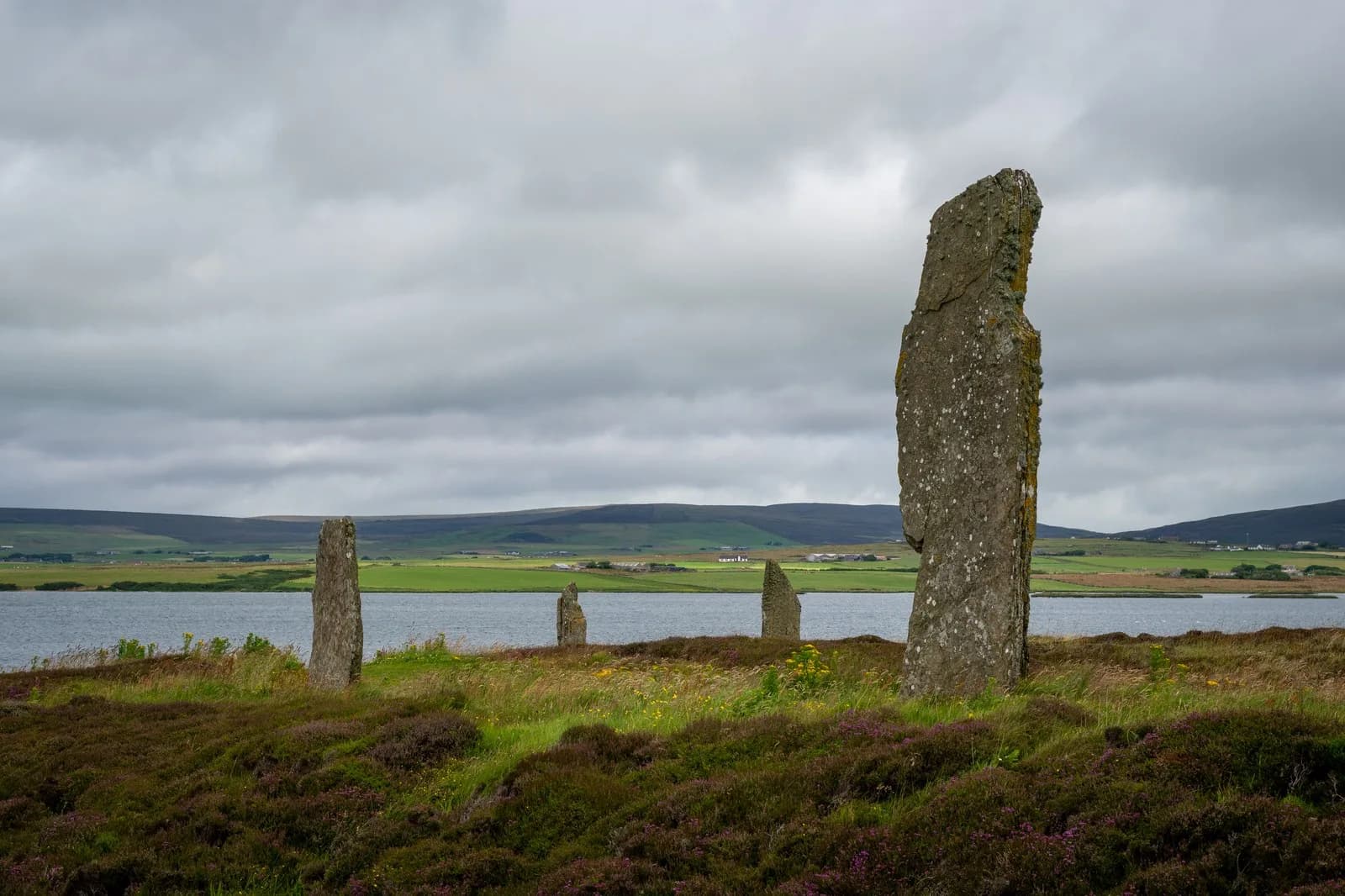
A stone circle 104 metres across on a narrow neck of land between two lochs, with 36 of an estimated original 60 stones still standing. It is open ground with no gate and no closing time, and that matters more than it sounds: because there is nothing to be inside of, the only schedule you are working to is the bus timetable or your own patience, which makes it the best site in Orkney for early morning or late evening light. Walk the full circumference rather than photographing it from the path — the stones change character completely depending on which way the water is behind them.
4.Standing Stones of Stenness — Stenness, West Mainland
A separate monument from Brodgar and a short walk south-east along the isthmus, where four extremely tall, thin slabs survive from an original circle of about twelve. Dated to roughly 3100 to 2900 BC, it is described by Historic Environment Scotland as among the oldest stone circles in Britain. Fewer people stop, which is the point — you can often have it to yourself while coaches queue at Brodgar. The walk between the two is one of the better half-hours on the Mainland, water on both sides the whole way.
5.Italian Chapel — Lamb Holm
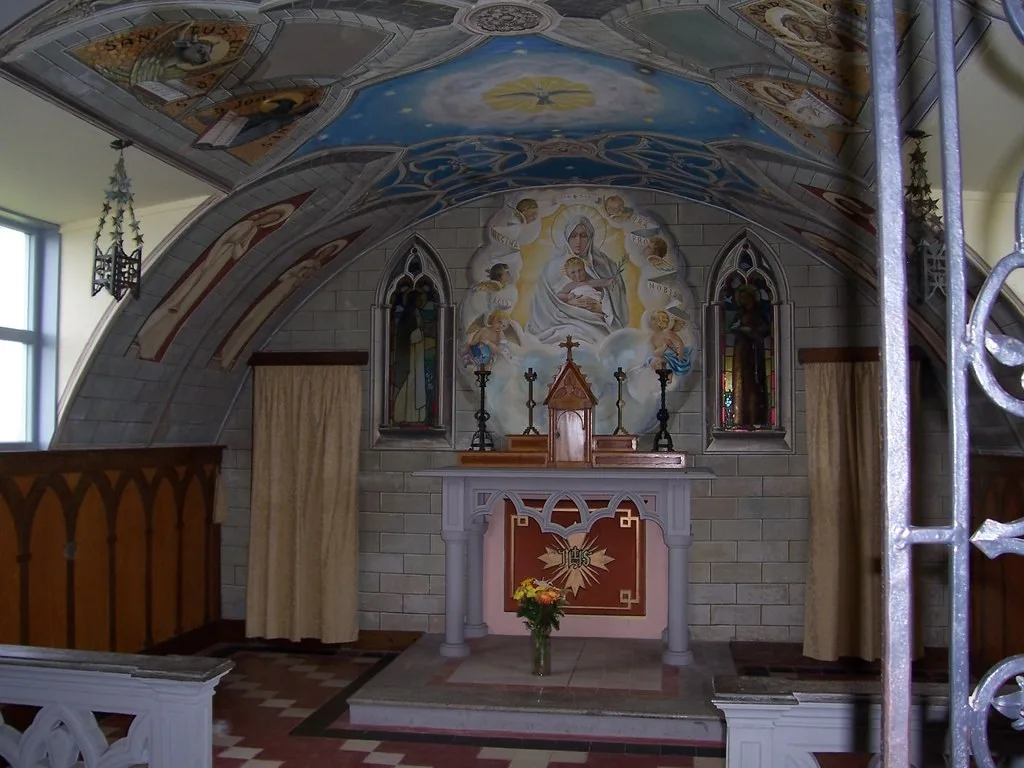
Two Nissen huts joined end to end and turned into a chapel by the Italian prisoners of war of Camp 60, held on Lamb Holm while they worked on the Churchill Barriers, using scrap metal, concrete and paint. The exterior still reads as a corrugated hut with a facade attached; the interior is painted to look like carved stone and vaulted brick, and the illusion is good enough to be disorienting. It is the most moving thing on the islands that is not five thousand years old, and it sits directly on the road south from Kirkwall. A preservation committee formed in 1958 has looked after it ever since; entry is ticketed, and only large groups need to book. It fits naturally into a wider look at Orkney’s wartime story.
Five sites the coaches skip
Orkney has an unusual problem: so much of its archaeology is world-class that genuinely remarkable sites go quiet simply because they are twenty minutes further on. These five reward the detour, and several of them are free.
6.Broch of Gurness — Evie, West Mainland
An Iron Age broch tower surrounded by a dense village of stone houses, ditches and ramparts, sitting on a low headland looking across to Rousay. What makes it worth the drive is the layout: you walk through the settlement to reach the tower, so the sense of a defended community rather than an isolated monument is unmistakable. It is ticketed and has a small visitor centre, but it opens seasonally between April and September, so it is one to check carefully before a winter visit.
7.Brough of Birsay — Birsay, north-west Mainland
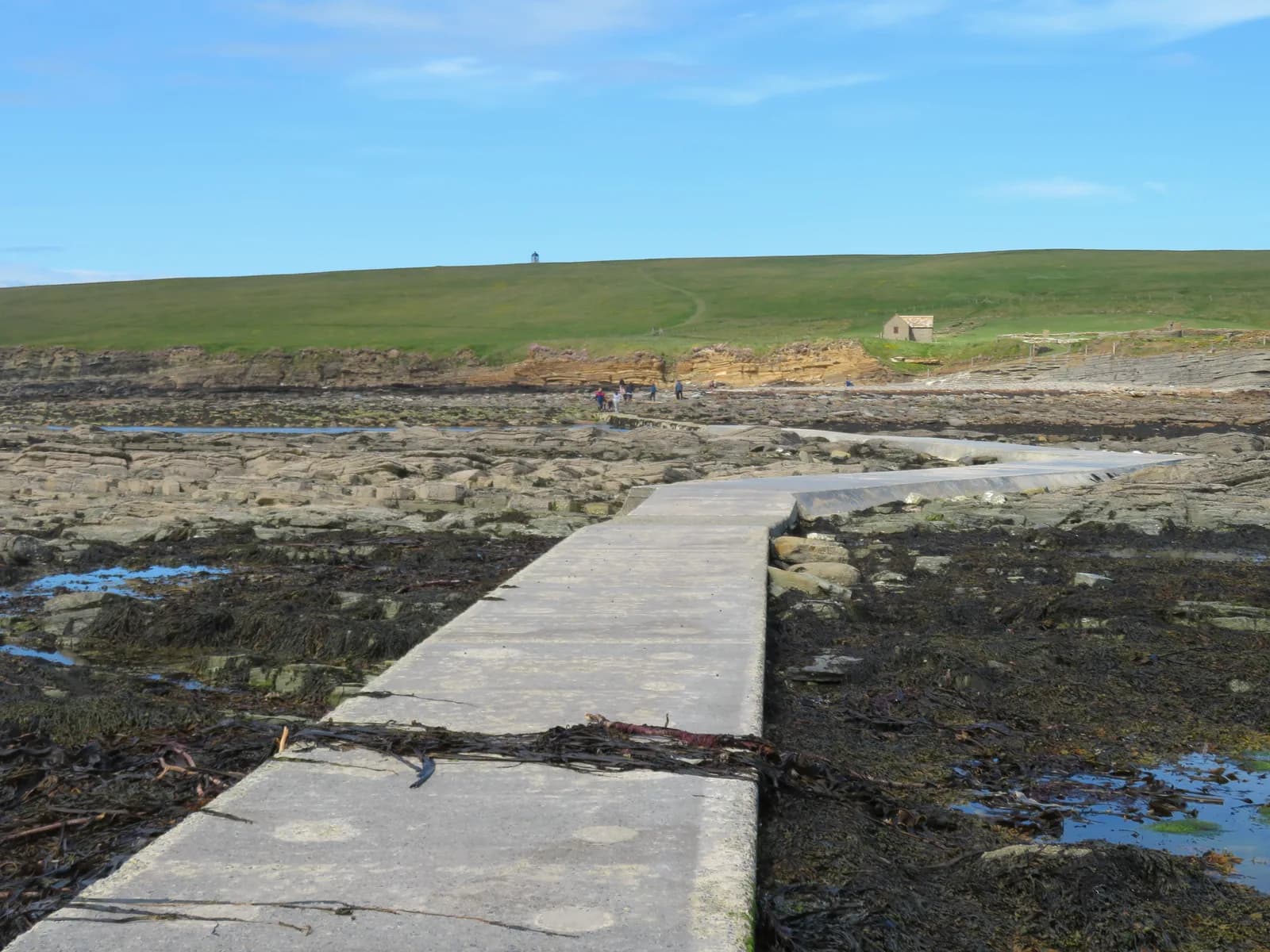
A tidal island carrying Pictish remains, a Norse settlement of houses, a barn and a sauna, the ruins of St Peter’s church and a small lighthouse at its far end, reached across a concrete causeway that is submerged for much of each day. It is free and open year-round — the tide, not a gate, is what controls access. Treat this one seriously: check the tide tables before you set out, cross with plenty of margin, and do not gamble on the return. Get the timing right and it is among the most rewarding walks in Orkney — get it wrong and you are stranded until the water drops.
8.The free chambered cairns — Unstan, Cuween and Barnhouse
Scattered across the Mainland are burial cairns and settlement remains with no ticket desk, no queue and often no other visitors. Unstan sits on a promontory in the Loch of Stenness; Cuween Hill is up a track above Finstown; Barnhouse is a Neolithic settlement beside the Stones of Stenness. All three are free, unstaffed and open year-round. Some involve crawling along a low entrance passage, so a torch and clothes you do not mind kneeling in are the difference between seeing the chamber and peering into the dark. A torch is normally left in a box at Cuween Hill, but visitors report finding it flat often enough that you should bring your own.
9.Midhowe Broch and Chambered Cairn — Rousay
Rousay carries such a density of archaeology along one stretch of coast that it has been nicknamed the Egypt of the North, and Midhowe is its centrepiece — a broch on the shoreline and, next to it, an enormous stalled chambered cairn housed under a modern protective building so you can walk above the burial compartments and look down into them. Both are cared for by Historic Environment Scotland and both are free. The island is a short ferry from the Mainland and small enough to make a satisfying day. Our guide to Rousay covers the wider circuit.
10.Tomb of the Eagles — Isbister, South Ronaldsay
A chambered tomb discovered by the farmer whose land it sits on, named for the sea eagle talons found among the human remains inside. It closed to visitors in 2020 and stayed shut for years. It reopened on 1 September 2025 under community ownership, run by the South Ronaldsay and Burray Development Trust, currently on a limited seasonal pattern of roughly Thursday to Monday. That makes it the single most important entry on this list to check before you drive south — the opening days are narrower than anything else here.
Scapa Flow and the wartime islands
Orkney spent two world wars as the Royal Navy’s northern anchorage, and the evidence is everywhere — in the water, across the causeways and in the museums. This is the strand that surprises people who came for the stones.
11.Scapa Flow Museum — Lyness, Hoy
Built into the surviving naval fuel-pumping station on the Hoy shore, this is the place the whole Scapa Flow story is told properly — the anchorage, the scuttling of the German fleet, the salvage that followed, and daily life for the thousands stationed here. The setting does half the work: you are inside the wartime infrastructure rather than looking at photographs of it. It reopened in July 2022 after a multi-million-pound refurbishment, and admission is free. Reaching it means the vehicle ferry from Houton to Lyness, which turns the visit into a half-day at minimum. It is comfortably the strongest of Orkney’s museums and heritage centres for anyone interested in the naval history.
12.The Churchill Barriers and the blockships — east of Scapa Flow
On 14 October 1939 a German U-boat found a way into the anchorage and sank HMS Royal Oak at her moorings. The response was permanent: four causeways sealing the eastern channels, running from the Mainland out over Lamb Holm, Glimps Holm and Burray to South Ronaldsay. They opened as public roads on 12 May 1945 and still carry the traffic south today. The rusting blockships sunk to obstruct those same channels before the barriers were built remain visible alongside them, most obviously at the second and third crossings. You do not stop for this so much as drive through it, but the stretch of road is one of the most atmospheric on the islands, particularly in a swell.
13.Wreck diving in Scapa Flow — boat-based, from Stromness
Seven wrecks of the scuttled German High Seas Fleet still lie on the bottom, and Scapa Flow is one of the most celebrated dive destinations in Europe as a direct result. This is not a casual add-on: it is cold, deep, and organised as multi-day liveaboard or hard-boat charters, with operators setting their own experience requirements. If diving is the reason you are coming to Orkney, build the trip around the charter dates rather than the other way round.
14.St Magnus Cathedral — Kirkwall
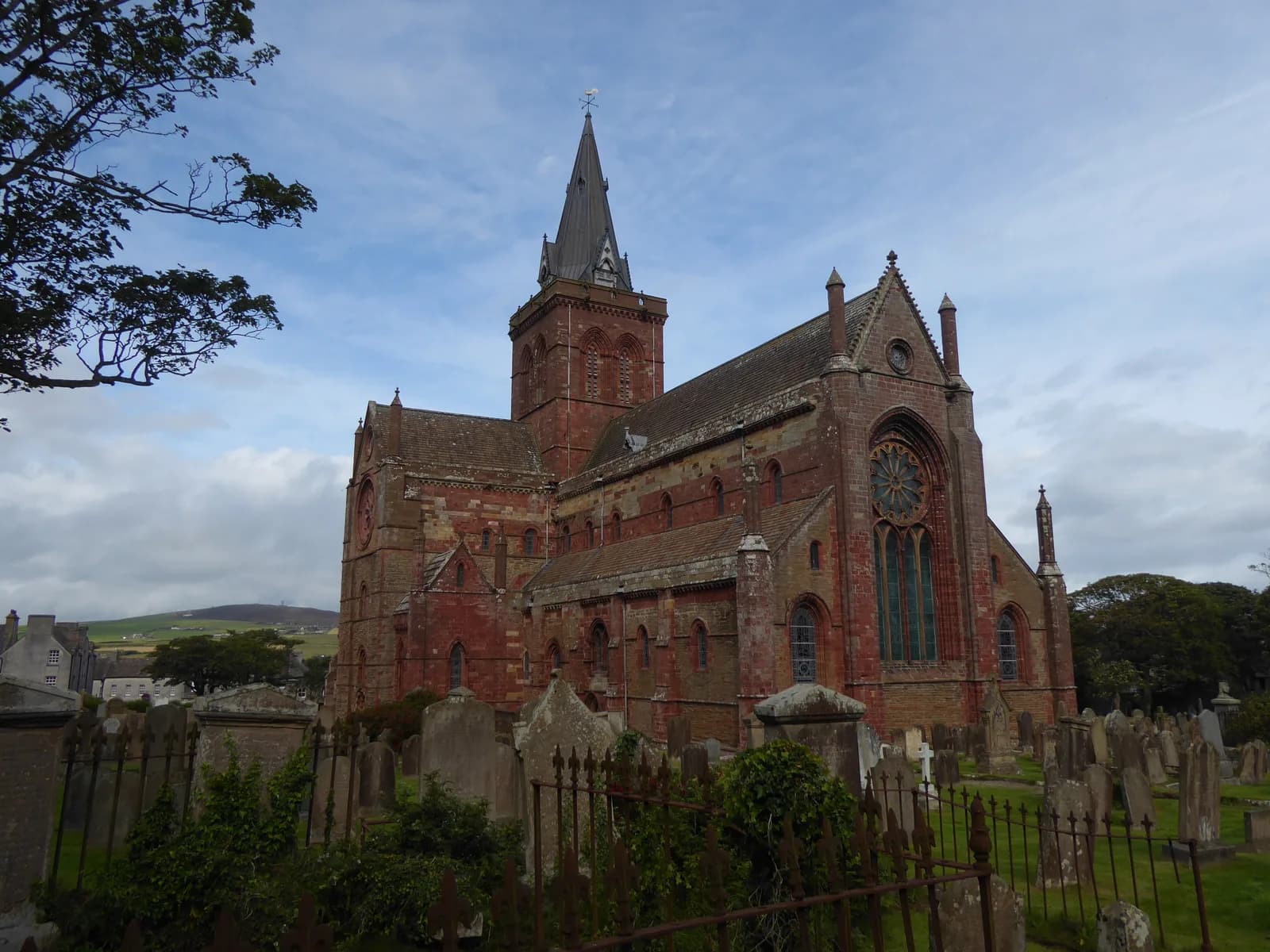
Founded in 1137 by Earl Rögnvald Kali Kolsson in memory of his uncle, St Magnus, it is red and yellow sandstone, Norse in origin, and startlingly large for the size of the town around it. Unusually for a cathedral it belongs to Orkney Islands Council rather than the church, and entry is free. It is worth going in for the interior stonework and the memorials, and worth walking round the outside for the way the two colours of stone band together. The ruined Bishop’s and Earl’s Palaces stand immediately across the road, so the three make a single compact stop rather than three separate errands — though the palaces are ticketed and open only through the summer season, while the cathedral does not close for winter.
15.Stromness: the Pier Arts Centre and Stromness Museum — Stromness
Stromness is a flagstone street threading between gable ends and private slipways, and it holds two things worth an afternoon. The Pier Arts Centre houses the Margaret Gardiner Collection — Barbara Hepworth, Ben Nicholson, Alfred Wallis and Naum Gabo alongside Orkney painters such as Sylvia Wishart and Stanley Cursiter — a body of twentieth-century British art that has no business being in a town this size, hung in a building that opens straight onto the water. Admission is free. Stromness Museum, further along and run by the independent Orkney Natural History Society, covers the town’s maritime and natural history, including the scuttled High Seas Fleet and the salvage that followed. It is ticketed. Do the street itself slowly between the two.
Where Orkney stops being gentle
The islands read as low and green from the road, which makes the western cliffs a genuine shock the first time. This is the half of Orkney that people do not expect.
16.The Old Man of Hoy — Hoy
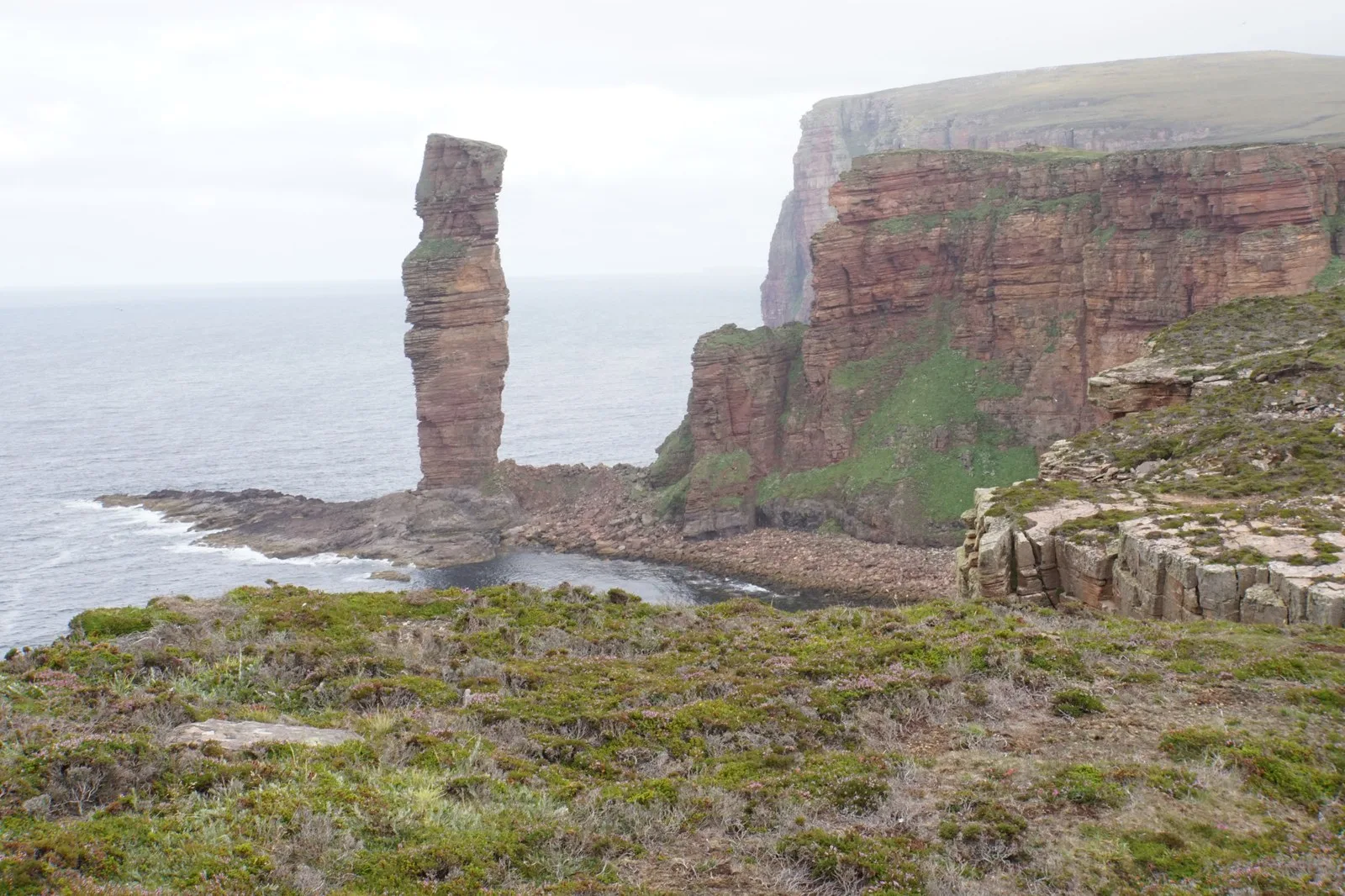
A 137-metre sea stack standing off the Hoy cliffs, and the most recognisable natural landmark in Orkney. Seeing it means the passenger ferry from Stromness to Moaness — not the Houton to Lyness vehicle route, which lands on the wrong side of the island — and then a walk from Rackwick out across moorland to the clifftop viewpoint. The walk is roughly nine kilometres there and back and takes most people two and a half to three hours, which makes the whole thing a full day. The stack is impressive; the cliff walk to reach it is arguably better, and the pay-off is the moment the ground drops away and the whole thing is suddenly below you rather than in front. Everything else on the island is covered in our guide to Hoy.
17.Yesnaby — west Mainland coast
A stretch of layered sandstone cliffs and stacks on the exposed west coast, with a rough car park and no facilities whatsoever — which is precisely the appeal. In a westerly the sea comes at the rock hard enough to feel through your feet. The cliff edges here are undercut and unfenced, so keep well back, particularly in wind. Yesnaby is also one of the reliable places to find the Scottish primrose, a tiny purple flower that grows in the coastal turf and appears in two separate flushes — once in May, then again through July and August. You will need to be down on your knees to spot it.
18.Marwick Head and the Kitchener Memorial — Birsay, west Mainland
An RSPB reserve on a headland that rises steadily to a cliff crowded with nesting seabirds through late spring and early summer — guillemots, razorbills, fulmars, kittiwakes and shags, in numbers that make the noise as memorable as the sight. Do not come here specifically for puffins: despite the tourist-board billing, the RSPB’s own counts have found barely any nesting on this stretch, and Westray is where you should go instead. At the top stands the Kitchener Memorial, a stone tower unveiled in 1926 for Lord Kitchener, lost when HMS Hampshire went down off this coast on 5 June 1916. Entry is free and no booking is needed, but dogs must be on a short lead through the ground-nesting season.
Two islands worth the extra hop
Beyond the Mainland the pace changes completely. These two need a ferry or a plane and reward an overnight far more than a rushed day trip.
19.Castle o’ Burrian and Noup Head — Westray
Westray is the reliable puffin island. Castle o’ Burrian is a sea stack on the south-east coast where puffins nest close enough to watch properly through the breeding season, and Noup Head at the opposite end is an RSPB reserve of seabird cliffs with a lighthouse at the top. The RSPB warns that the final gravel track should only be attempted in a four-wheel drive, so check what your hire agreement allows before committing to it. Come between late spring and midsummer or the puffins simply will not be ashore — outside those months they are out at sea and the trip loses its headline act.
20.The sheep dyke and lighthouse — North Ronaldsay
Orkney’s most northerly island is ringed by a drystone dyke of roughly thirteen miles, completed in 1832 and now category A listed, which keeps its native sheep on the foreshore where they live on seaweed — a farming system that exists nowhere else and has shaped a distinct breed. The island also carries a brick-built lighthouse of about 42 metres, the tallest land-based lighthouse in the British Isles. It is the furthest, quietest and least visited entry on this list, reachable by ferry or by a short flight, and it is the one people who make it there talk about longest.
What is genuinely reachable by bus
Orkney is more navigable without a car than its reputation suggests, but only along particular corridors. The Kirkwall–Stromness axis and the road south over the barriers are well served; the west coast and the northern parishes are not. In summer, buses reach the Skara Brae visitor centre and stop at the Ring of Brodgar itself, which puts three of the top four entries on this list within reach of anyone without a vehicle.
The catch is that the useful services run to a summer pattern and one of the direct ones does not operate on Sundays, so the day of the week can quietly halve your options. Timetables also change season to season, so check the current Orkney Islands Council listings rather than trusting any figure in an article. We have mapped the bus route to each of the big West Mainland sites in detail, including which service is faster and what you walk at the far end.
The single most useful planning fact in Orkney: four of the five headline sites sit within a few miles of each other, and two of them have a bus stop at the gate.
Two things older guides get wrong
Orkney’s visitor landscape has shifted in the last couple of years, and a lot of published advice has not caught up. Two corrections are worth making explicitly, because both send people on wasted journeys.
The Ness of Brodgar is no longer an active dig you can watch. For years the excavation between Brodgar and Stenness ran summer open days with guided tours of the working trenches, and it appears in a great many itineraries on that basis. Fieldwork concluded after the 2024 season and the trenches were backfilled to protect the stonework beneath. There is no walk-up visit any more; access is by prior arrangement only. Walk the isthmus by all means — it is the best short walk in the West Mainland — but do not plan a morning around seeing archaeologists at work.
The Tomb of the Eagles is open again, but barely. After closing in 2020 it reopened on 1 September 2025 under community ownership, currently running a narrow seasonal pattern of roughly Thursday to Monday. Guides written between 2021 and 2025 will tell you it is shut; guides written before 2020 will imply it is open daily. Both are now wrong, and the days it operates are narrow enough that this is the one entry here you should confirm directly before committing a drive to the far south.
How many of these you can realistically do
Three days on the Mainland covers the five headline sites, the barriers and the chapel, and one museum, without rushing. Five days adds a Hoy crossing and either the northern parishes or the free cairns. A week is what you need before an outer island stops being a raid and starts being a visit — and it is the first point at which Westray or North Ronaldsay makes sense.
The constraint is almost never distance; it is ferries and opening days. Build the trip around the fixed points — a Maeshowe slot, a Hoy sailing, the days the Tomb of the Eagles opens — and fill the gaps with the open-ground sites that never close. If you want the day-by-day version, our three, five and seven-day itineraries do exactly that, and you can browse the full activities directory for tours, operators and the things that did not fit in a list of twenty. For somewhere to stay, basing yourself between Kirkwall and Stromness keeps almost everything above within an hour.
Frequently asked questions
What is Orkney most famous for?
Orkney is best known for its Neolithic archaeology — Skara Brae, Maeshowe, the Ring of Brodgar and the Stones of Stenness form a UNESCO World Heritage Site — and for Scapa Flow, the natural anchorage that served as the Royal Navy’s northern base through both world wars.
How many days do I need in Orkney?
Three days covers the main Neolithic sites, the Churchill Barriers and the Italian Chapel. Five allows a trip to Hoy. A week is the point at which an outer island such as Westray or North Ronaldsay becomes worthwhile rather than rushed.
What not to miss on Orkney?
If you only do five things: Skara Brae, Maeshowe, the Ring of Brodgar, the Standing Stones of Stenness and the Italian Chapel. Four of the five sit within a few miles of each other in the West Mainland, so they combine into a single full day.
Is there a hop-on hop-off bus in Orkney?
There is no hop-on hop-off tourist bus. A commercial sightseeing service runs one circuit a day in season, calling once at the Ring of Brodgar, and the council’s scheduled buses reach Brodgar and Skara Brae in summer. Check both before relying on either.
What are some hidden gems in Orkney?
The free chambered cairns at Unstan and Cuween, the Broch of Gurness at Evie, the cliffs at Yesnaby, and Midhowe on Rousay. All see a fraction of the visitors of the headline sites, and three of the four cost nothing to visit.
Is Orkney worth visiting for a day?
Yes, but only with a plan. A single day realistically covers either the West Mainland Neolithic cluster or the run south over the Churchill Barriers to the Italian Chapel. Attempting both means seeing neither properly.
Sources and further reading: UNESCO — Heart of Neolithic Orkney · Ness of Brodgar Trust · Orkney.com — Ring of Brodgar · Orkney Museums — Scapa Flow Museum, Lyness · Scapa Flow Wrecks — the scuttling · St Magnus Cathedral · Stromness Museum · Pier Arts Centre · RSPB — Marwick Head · RSPB — Noup Cliffs · NatureScot — Scottish primrose · Orkney Sheep Foundation — the sheep dyke · Orkney Ferries · Orkney Islands Council. Site details were also checked against Historic Environment Scotland, Canmore and the Northern Lighthouse Board, whose pages block automated checks and so are named rather than linked here. Admission arrangements, opening days and timetables change — confirm with the operator before you travel.
Header photograph: Ring of Brodgar by Ekrem Canli via Wikimedia Commons, CC BY-SA 4.0.