Quick Navigation
- Why Orkney's Beaches Surprise People
- Orkney's Best Beaches at a Glance
- Bay of Skaill
- Waulkmill Bay
- Dingieshowe
- Scapa Beach
- Newark Bay
- Rackwick
- Whitemill Bay
- Grobust
- Sands of Evie
- Swimming, Safety and What to Bring
- Frequently Asked Questions
- Does Orkney have sandy beaches?
- Can you swim in the sea in Orkney?
- What is the best beach in Orkney?
- Are Orkney's beaches good for families?
- When is the best time to visit Orkney's beaches?
- Why is the sand in Orkney so white?
- Sources & Further Reading
People arrive in Orkney expecting standing stones and sea cliffs, and leave talking about the beaches. The best Orkney beaches are a genuine surprise: wide sweeps of pale shell sand, turquoise shallows on a bright day, and — more often than not — not another soul on them. This is a guide to nine of the finest, from the famous bay below Skara Brae to a Caribbean-looking stretch on Sanday you will very likely have entirely to yourself.
Why Orkney's Beaches Surprise People
Orkney's coastline runs to hundreds of miles across some 70 islands, and much of it is beach. The sand looks pale — sometimes near-white — because a lot of it is shell sand: ground-up shell and light quartz rather than dark mineral grains. On a still, sunny day that pale floor turns the shallows a startling turquoise, which is why photos of places like Whitemill Bay get mistaken for somewhere far warmer.
It is not warmer. The sea here sits at roughly 7°C in late winter and only creeps up to about 13°C in August, so a swim is proper cold-water territory whatever the sky is doing. The trade-off is space: even in high summer you can walk a mile of sand and pass nobody, and grey and common seals — Orkney holds a sizeable share of the world's grey seals — often haul out at the far end. Come for the light and the emptiness, not the heat.
Orkney's Best Beaches at a Glance
Short on time? Here is the shortlist, sorted by where each beach sits and what it is best for. The detail on each follows below.
| Beach | Where | Best for | Getting there |
|---|---|---|---|
| Bay of Skaill | West Mainland | History and beach in one stop (Skara Brae) | Car park, short walk |
| Waulkmill Bay | Orphir, Mainland | Vast low-tide sands, birdlife | Steep steps down |
| Dingieshowe | Deerness, Mainland | Families, dunes, wader-watching | Car park + toilets |
| Scapa Beach | By Kirkwall | Easiest access, watersports, swimming | 5 min from Kirkwall |
| Newark Bay | Deerness, Mainland | Quiet crescent, seal-spotting | Car park at slipway |
| Rackwick | Hoy | Drama: pink sand under huge cliffs | Ferry to Hoy + drive |
| Whitemill Bay | Sanday | White sand, turquoise, solitude | Ferry/flight to Sanday |
| Grobust | Westray | Empty sands, Neolithic dig behind | Ferry/flight to Westray |
| Sands of Evie | NW Mainland | Sheltered paddling, a broch next door | Parking + toilets |
Planning your trip
Staying overnight? Compare live prices and availability across Orkney on Booking.com.
Compare Orkney staysWe earn a small commission if you book through this link, at no extra cost to you.
Bay of Skaill
The most visited beach in Orkney, and for good reason: the 5,000-year-old Neolithic village of Skara Brae sits at its edge, uncovered by a storm in 1850 and now part of the Heart of Neolithic Orkney World Heritage Site. The beach itself is a broad curve of pale sand on the exposed Atlantic west coast, with rocky cliffs framing the northern end. Because it faces the open ocean it can turn surfy fast when there is swell about, so treat it as an exposed swim spot rather than a sheltered paddle. There is a car park at Skara Brae and Skaill House, and the walk to the sand is short and level — which also means it can be busy in season.
Waulkmill Bay
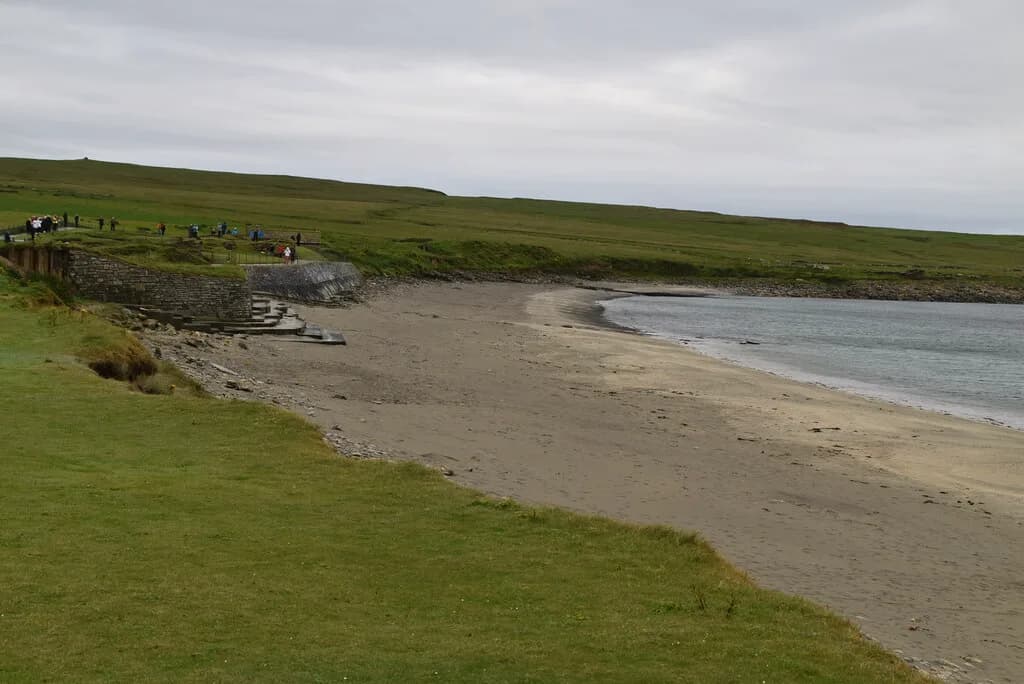
At low tide, Waulkmill is one of the biggest beaches in Orkney — a huge tidal sweep of sand opening onto the sheltered waters of Scapa Flow. At high tide there is barely a beach at all, so this is one to plan around a tide table. It is backed by one of Orkney's largest saltmarshes, a designated site of special scientific interest, which brings in birds: Slavonian grebes and long-tailed ducks winter here. Access is via a fairly steep run of wooden steps down from a small roadside parking area, and it is a bit of a slog back up, so it is quieter than the drive-up beaches. Sheltered, shallow and clear on a calm day, if properly cold.
Dingieshowe
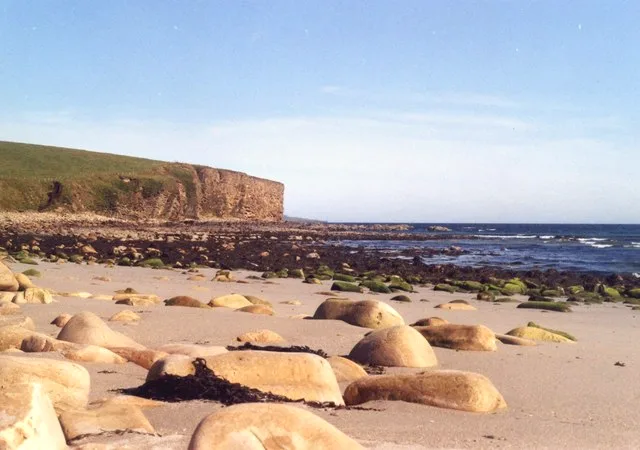
An almost-double crescent of golden sand backed by big dunes, on the narrow isthmus between St Andrews and Deerness. One side faces the open sea and gets powerful waves; the other shelters St Peter's Pool, a wide, shallow sandy lagoon that is ideal for paddling and for watching waders. The name comes from Old Norse for an assembly mound — the grassy hump here covers an Iron Age broch and was a Viking “thing”, where laws were set and disputes settled. There is a small car park, a public toilet block and wooden steps over the dunes, which makes it a firm family favourite.
Scapa Beach
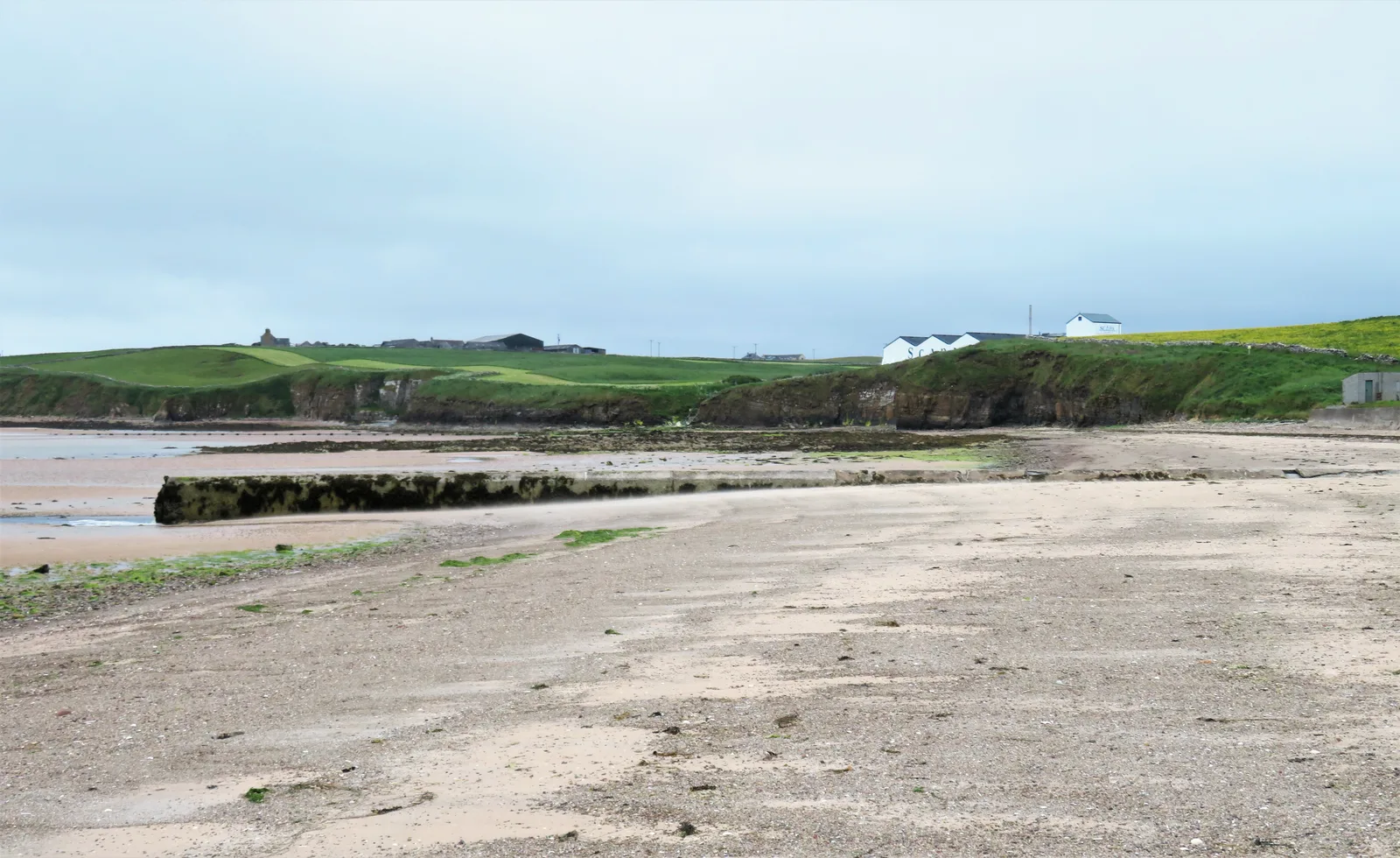
If you have no car, or only an hour, this is the one: a south-facing sandy bay on Scapa Flow barely a mile from Kirkwall, reachable on foot from town along the Crantit Trail. Sheltered from the worst of the ocean currents, it is a genuine swimming beach and a hub for windsurfers, kitesurfers and kayakers, as well as the town's dog-walkers. It carries real history too — the battleship HMS Royal Oak was torpedoed out in Scapa Flow in 1939 with the loss of 835 lives, and a buoy east of the bay marks the war-grave wreck. Easy, useful and quietly poignant.
Newark Bay
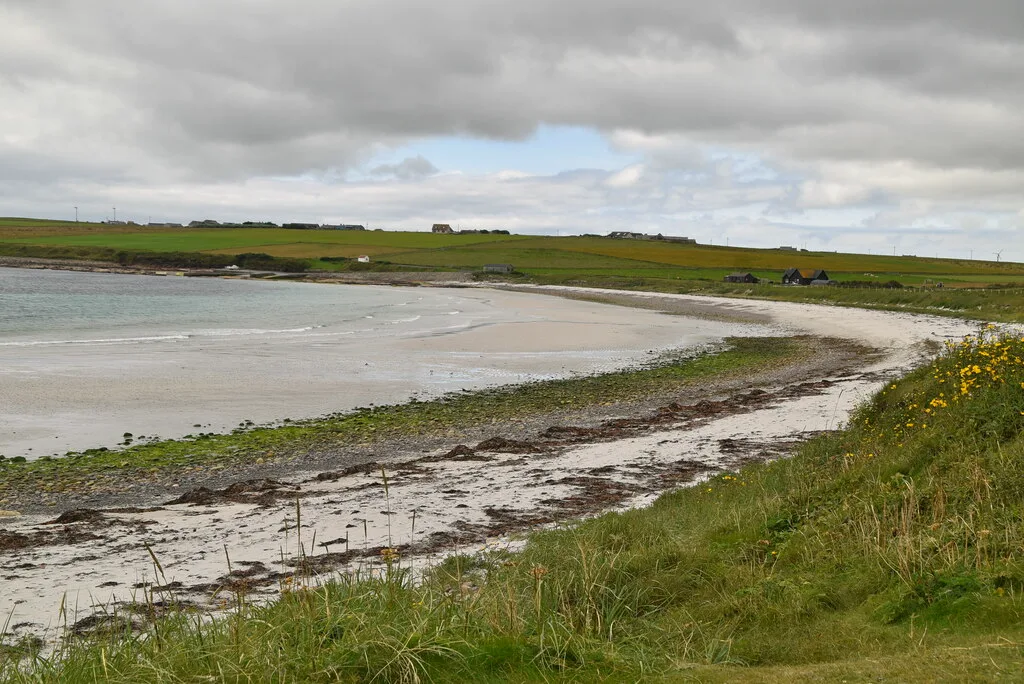
A quiet crescent of near-white sand on the more sheltered south-east coast, fringed with wildflowers and looking out toward the little island of Copinsay. It is one of the more reliable spots for seals — they bob offshore watching you as often as you watch them — and the rocks draw waders like purple sandpipers and ringed plovers. If seals and whales are your thing, our guide to Orkney's marine life maps out where and when to see them. There is a car park by the slipway at the eastern end and a picnic spot; note there is a second, different Newark Bay down on South Ronaldsay, so set your sat-nav for Deerness.
Rackwick
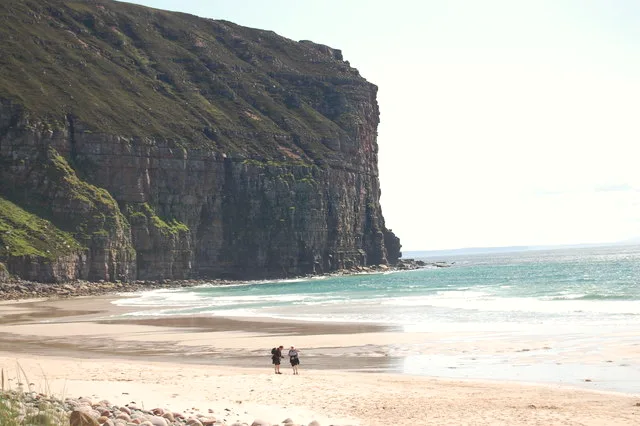
The most dramatic beach in Orkney by a distance — a wide bay of pink-tinged sand and giant sea-smoothed boulders, cradled in a valley beneath 200-metre red-sandstone cliffs. The sand shifts with the winter storms, so how much of it you get varies. This is also the trailhead for the Old Man of Hoy, the 137-metre sea stack about three hours' walk there and back. Reaching Rackwick is a small expedition in itself: a ferry to Hoy from Stromness or Houton, then a drive across the island, so give it the best part of a day. Our full guide to Hoy covers the ferries, the walk and where to stay on the island.
Whitemill Bay
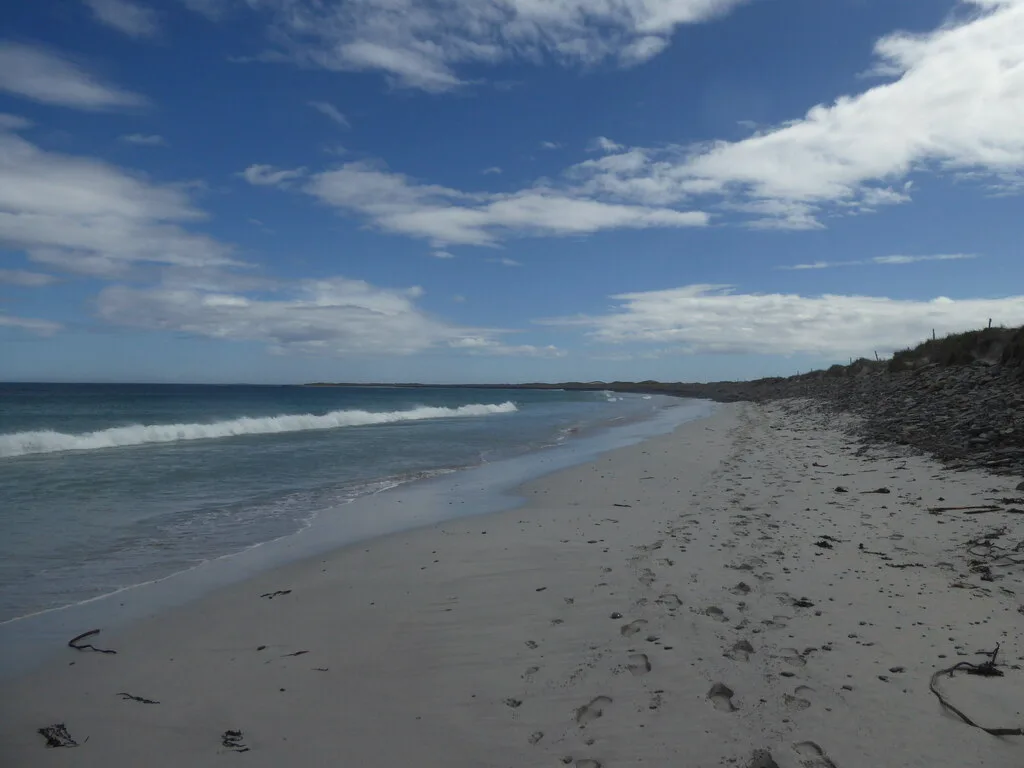
This is the one that looks Caribbean in photographs: white shell sand, turquoise shallows on a calm day, and a remote north-coast setting on Sanday that you will very often have entirely to yourself. Seals favour the rocks out at Whitemill Point, fulmars nest along the dune edge in season, and an old shipwreck lies near the eastern tip. There is a car park, a picnic bench and an information board behind the beach, but no other facilities, so bring everything you need. Sanday's other sands — and there are many — are covered in our guide to exploring Sanday.
Grobust
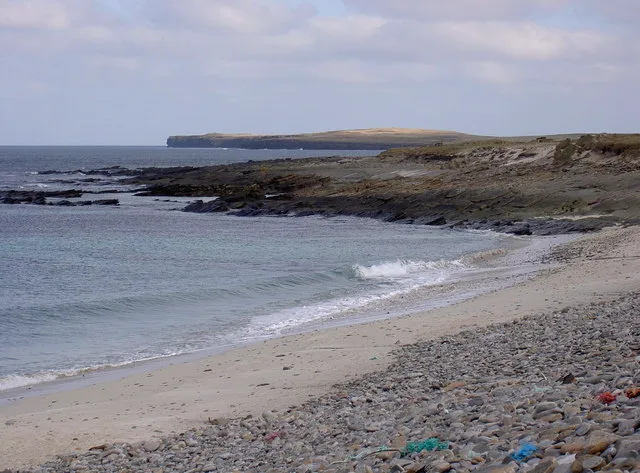
A lovely white-sand beach backed by dunes and wildflowers on Westray's north coast, usually shared with nobody but the seals. Behind the western end lies the Links of Noltland, a Neolithic and Bronze Age settlement half-buried in the dunes — this is where the “Westray Wife”, the oldest known depiction of a human face found in Scotland, was excavated in 2009. Like all the north-facing bays it can be lively in a wind, and being an exposed shore it does collect the odd bit of storm-cast debris, but on a bright still day it is about as close to having a beach to yourself as anywhere gets.
Sands of Evie
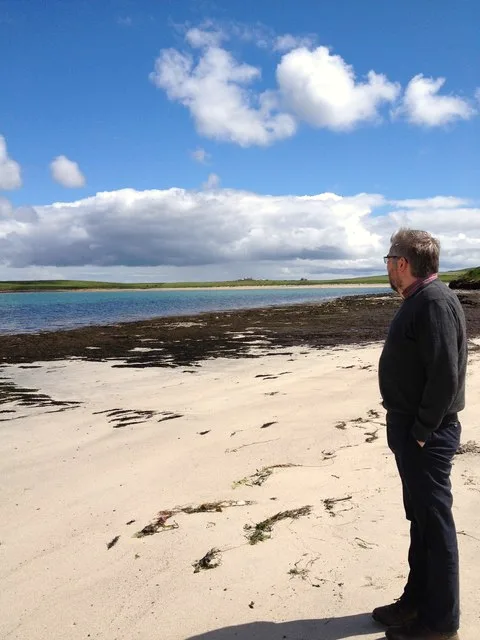
Also known as Aikerness, this is the beach for paddling with small children: sheltered by the Point of Hellia, shallow-shelving and huge at low tide, with warmish (by Orkney standards) water to splash in on a calm day. It looks out to the uninhabited island of Eynhallow and across to Rousay, and at the eastern end of the bay stands the Broch of Gurness, a 2,000-year-old Iron Age settlement well worth the short walk along the sand. There is parking and a toilet, which — with the sheltered water — makes it a reliable family stop on the north-west coast.
Swimming, Safety and What to Bring
Orkney beaches are unpatrolled, so a little planning goes a long way. The sheltered bays on Scapa Flow — Scapa Beach and Sands of Evie — are the gentlest for a dip; the Atlantic-facing shores like the Bay of Skaill and the exposed side of Dingieshowe can pick up real surf and rip currents, so read the water before you commit. A wetsuit turns a bracing gasp into an actual swim, and the routine is always dip-then-warm-up: bring layers and a flask.
- Tides matter at Waulkmill especially — check a tide table so you are not left with no beach.
- Dogs are welcome on the open sand across all of these, but keep them under control around seals, nesting fulmars and any livestock behind the dunes.
- Facilities are rare on the outer-island beaches (Whitemill, Grobust) — carry water, food and a bag for your litter.
- Footwear helps on the boulder-strewn shores like Rackwick and Dingieshowe.
Where you base yourself shapes which beaches are easy day trips: Deerness and Scapa from Kirkwall, the west-coast sands from Stromness, the outer-island beaches as full days out. Our homepage rounds up where to stay across Orkney, from harbour-side flats to coastal cottages with the sand on the doorstep.
Frequently Asked Questions
Does Orkney have sandy beaches?
Yes — Orkney has dozens of them, many of pale shell sand. Standouts include the Bay of Skaill below Skara Brae, Scapa Beach near Kirkwall, and Whitemill Bay on Sanday, whose white sand and turquoise shallows look almost tropical on a bright day.
Can you swim in the sea in Orkney?
You can, but it is cold-water swimming: the sea ranges from about 7°C in late winter to 13°C in August. The sheltered Scapa Flow beaches such as Scapa Beach and Sands of Evie are the safest for a dip; a wetsuit is strongly advised year-round.
What is the best beach in Orkney?
For sheer drama, Rackwick on Hoy — pink sand and boulders under towering cliffs — is hard to beat. For accessibility, Scapa Beach by Kirkwall wins; for that white-sand, turquoise look, Whitemill Bay on Sanday. The “best” depends on whether you want scenery, ease or solitude.
Are Orkney's beaches good for families?
Very. Dingieshowe in Deerness has dunes, a shallow lagoon (St Peter's Pool), a car park and toilets, while Sands of Evie offers sheltered, shallow water ideal for young children — plus the Broch of Gurness right beside it.
When is the best time to visit Orkney's beaches?
June to August brings the warmest (still-cool) water, the settled weather and the long midsummer daylight. That said, locals rate the beaches year-round — winter delivers dramatic surf and storm-cast, empty sands under big skies.
Why is the sand in Orkney so white?
Much of it is shell sand — ground-up shell fragments and pale quartz rather than dark mineral grains. That light-coloured floor is also what gives the shallows their turquoise colour when the sun is out.
Sources & Further Reading
Hero photo — © N Chadwick / Geograph, CC BY-SA 2.0. All beach photography on this page is genuine and licensed under Creative Commons (Geograph, CC BY-SA 2.0), credited per image.