Quick Navigation
- What Maeshowe is, and how a visit works
- What you will actually see
- The runes: Norse carvings in a Stone Age tomb
- The winter solstice sunset at Maeshowe
- Maeshowe tickets, tour times and opening hours
- Getting to Maeshowe and making a day of it
- Maeshowe: common questions
- How do I visit Maeshowe?
- Is Maeshowe worth visiting?
- Is Maeshowe older than the pyramids?
- What does Maeshowe mean?
- Sources and further reading
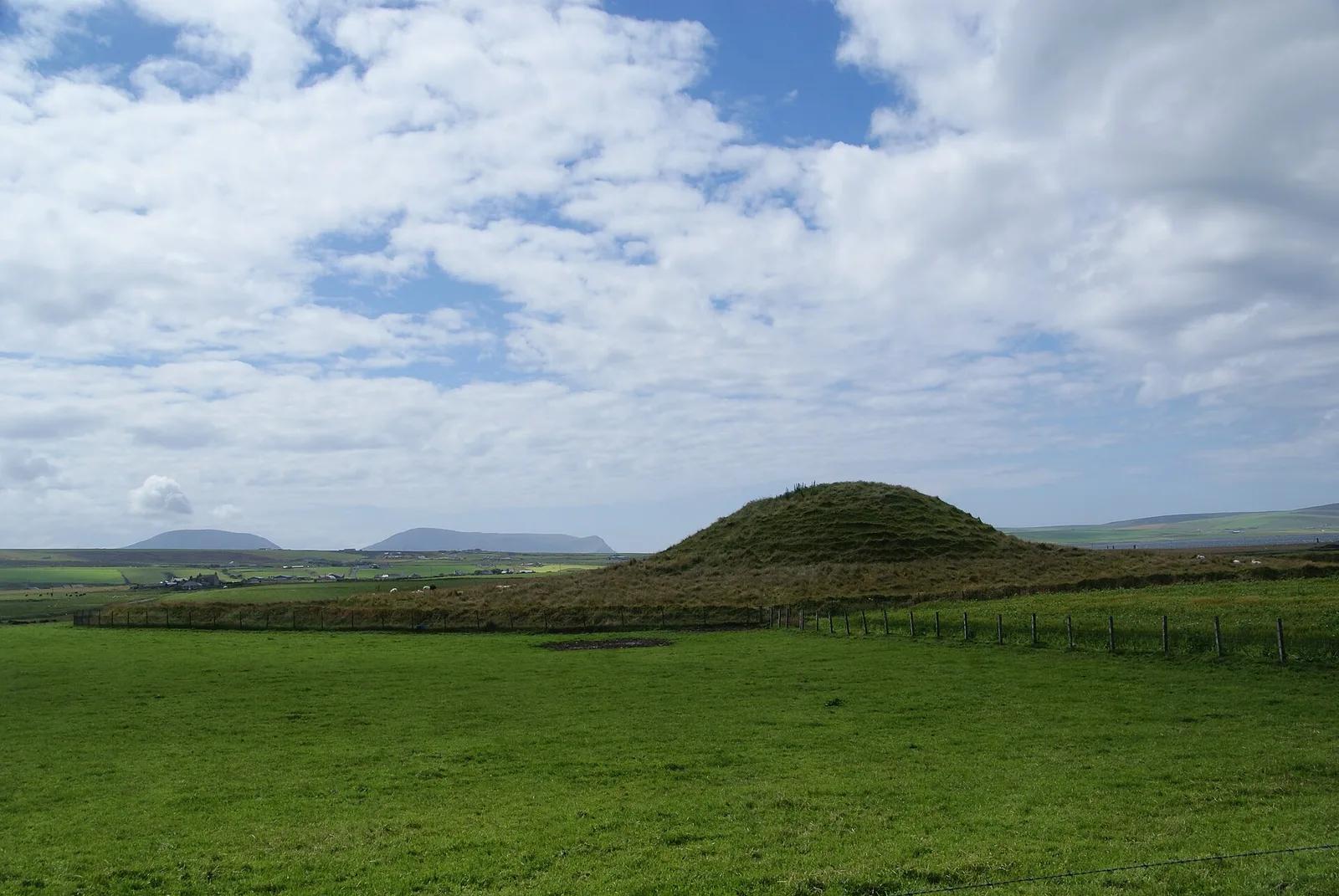
From the road, Maeshowe looks like nothing more than a big grassy mound in a field near Stenness. Step inside, stooping, and you are standing in what Historic Environment Scotland calls the finest Neolithic building to survive in north-west Europe, with Viking graffiti scratched across its walls. This Maeshowe visitor guide covers how the guided tours work, what you will see, the winter solstice sunset, and the ticket details worth knowing before you go.
What Maeshowe is, and how a visit works
Maeshowe is a chambered tomb on Orkney's West Mainland, one of the four main monuments of the Heart of Neolithic Orkney, which UNESCO inscribed as a World Heritage Site in 1999. Radiocarbon dates tentatively place its construction around 2700 BC. It is run by Historic Environment Scotland (HES), and unlike the nearby stone circles you cannot just wander in, because every visit is a guided tour.
On the day, a limited number of extra tickets may be sold at the visitor centre, first come, first served, and only in person. That is a fallback, not a plan, so book ahead whenever you can.
What you will actually see
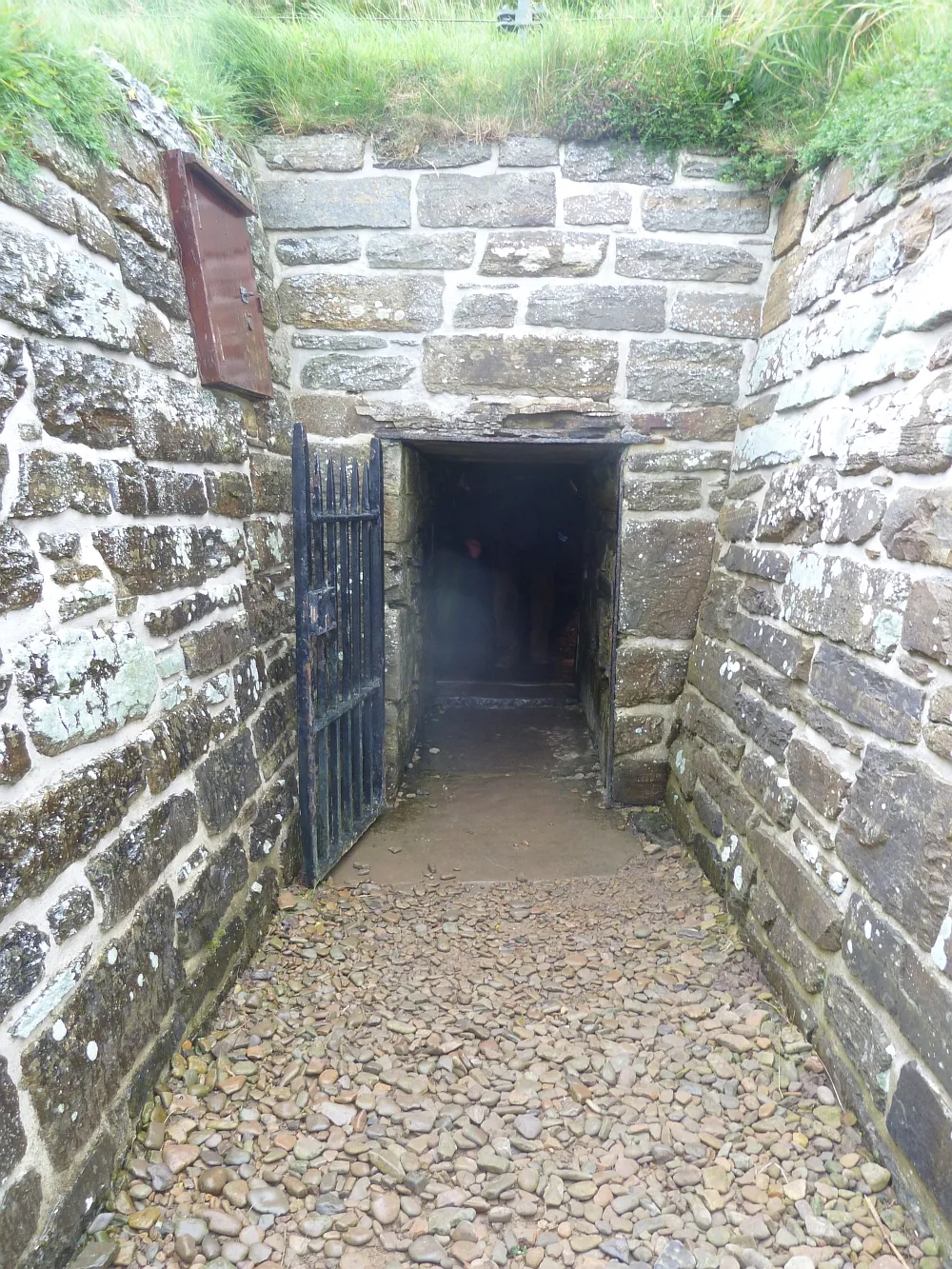
The tour starts with that walk from the shuttle, across the ditch that rings the mound, to a low entrance on the south-west side. The doorway is 119cm high and 70cm wide, so expect to stoop for the length of the passage. HES notes that each wall of the passage is formed mostly of a single sandstone slab weighing up to three tonnes.
Then the roof lifts away. The central chamber is about 4.7 metres square and 4.5 metres high, according to HES's Statement of Significance, with a massive upright standing stone at each corner and three small side cells opening off it. The chamber is lit electrically, and a metal barrier keeps visitors back from the walls.
Not everything is Neolithic. The antiquarian James Farrer opened the tomb in 1861 by digging in through the top of the mound and breaking through the roof. What you look up at today is a stone roof built in the 1860s, with a concrete raft above it, out of sight, added in the early 20th century. The original masonry still survives to at least four metres high.
The most surprising fact in HES's own assessment is what is missing. HES says only a single fragment of human skull was found here, and it is now lost. The chamber had been disturbed in the 12th century and cleared out by Farrer, so nobody can say for sure that Maeshowe was ever used as a place of burial at all. HES raises the possibility that it served a different purpose from other tombs, perhaps as a kind of temple.
Planning your trip
Staying overnight? Compare live prices and availability across Orkney on Booking.com.
Compare Orkney staysWe earn a small commission if you book through this link, at no extra cost to you.
The runes: Norse carvings in a Stone Age tomb
According to HES, Maeshowe was closed up after several hundred years of use, and around 3,000 years passed before Norsemen broke into the mound. They left behind what HES describes as the largest collection of runic inscriptions to survive outside Scandinavia. By its count there are at least 33 inscriptions, plus at least eight carved sketches, including the famous "Maeshowe Dragon", which some read as a lion. The runes date to the middle of the 12th century, when Orkney was still under Norwegian rule, as it remained until 1469.
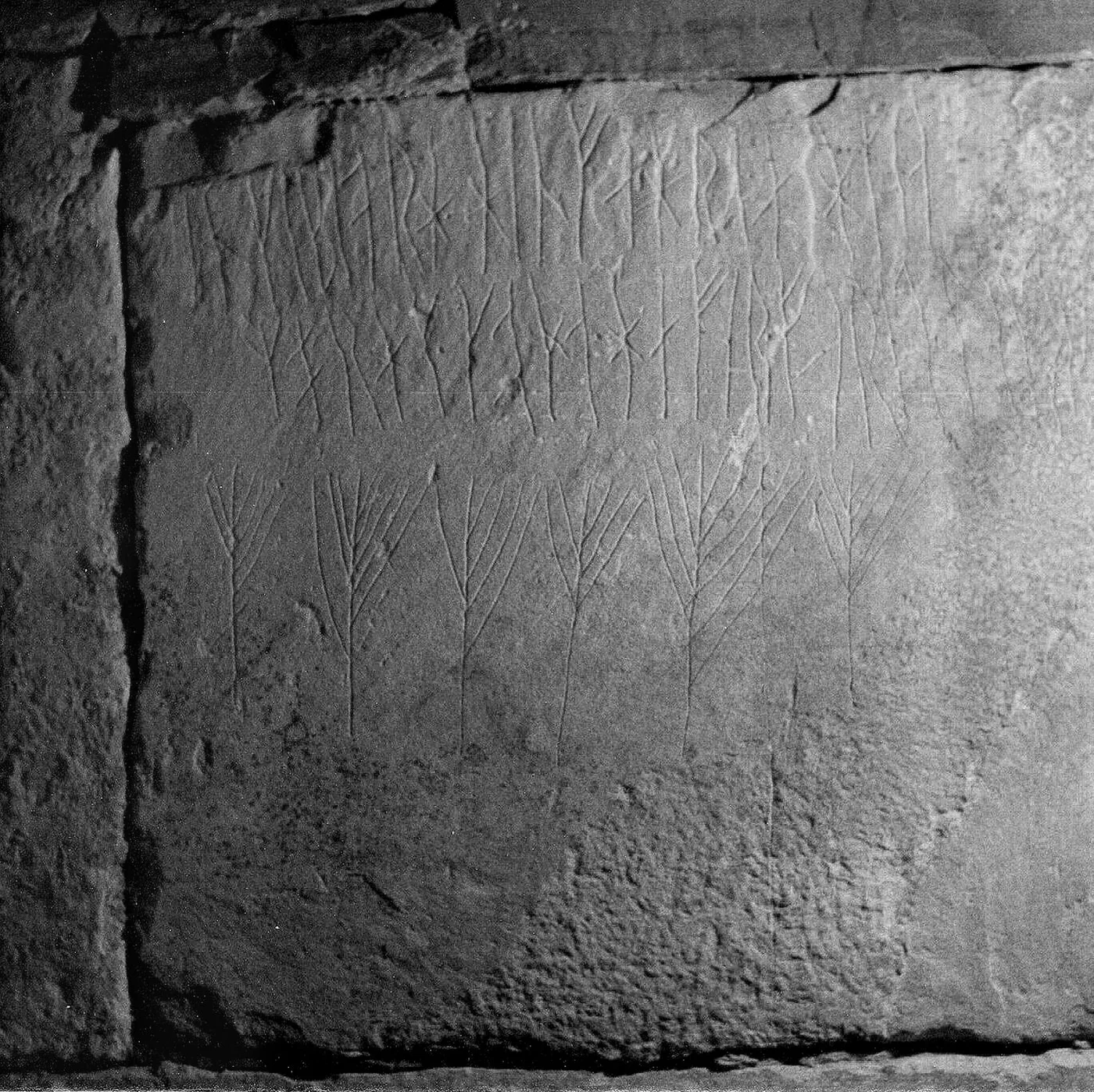
Some of the visitors can be matched to a written story. The Orkneyinga saga tells how Earl Harald Maddadarson's men, marching across Orkney in January 1153, sheltered in the mound during a snowstorm. The runes themselves suggest an earlier break-in, by Norse crusaders gathered in Orkney under Earl Rognvald Kali.
"During a snow-storm they took shelter in Maeshowe and there two of them went insane." Orkneyinga saga, as quoted by Historic Environment Scotland
Look closely at the stonework around the cell entrances too. HES notes that Neolithic carved marks survive there, peck-dressing and lightly incised lines, chevrons, crosses and lozenges, which are thousands of years older than the runes. Because photography is not permitted inside the cairn, the HES "Explore Maeshowe" app, with 360° views of the interior, is the way to look again once you are home.
The winter solstice sunset at Maeshowe
Maeshowe's passage is aimed at the midwinter sunset. For the three weeks before and after the winter solstice, HES says, the setting sun shines straight down the passage and lights up the back wall of the central chamber. In practice HES advises visiting in a window of about six weeks, roughly from the end of November to the middle of January, weather permitting, and booking the 2pm tour if you want to see it.
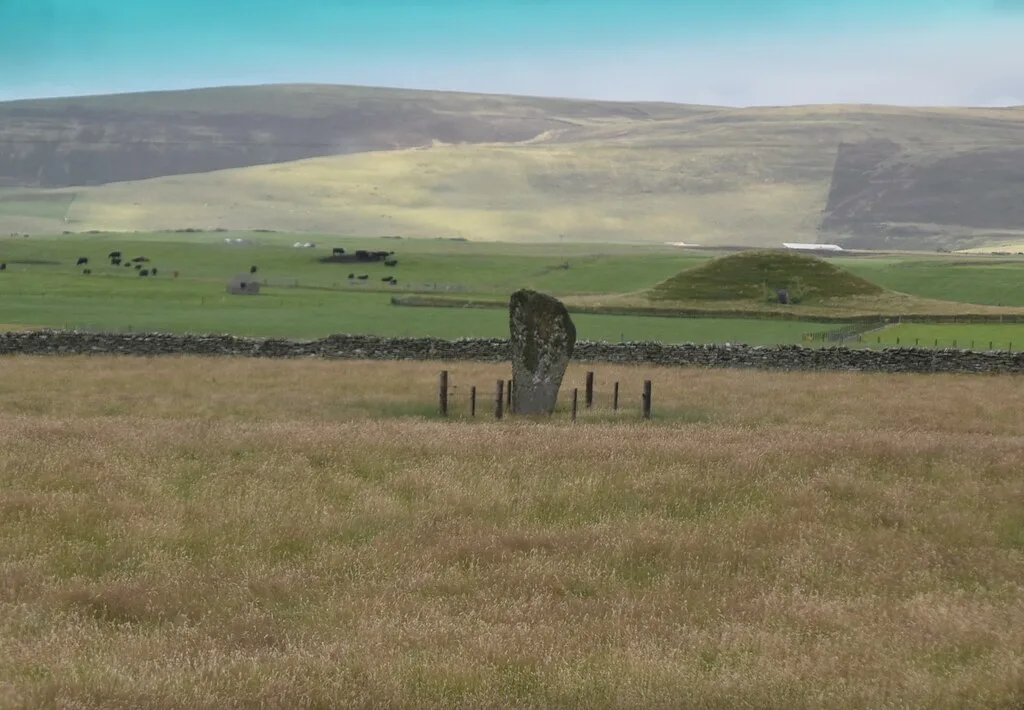
The alignment reaches beyond the mound. The Barnhouse Stone, a single standing stone about 800 metres to the south-south-west, marks the line of the midwinter sun setting behind Ward Hill on Hoy. There is an honest caveat in the archaeology, though. HES's Statement of Significance, drawing on a 1997 study by Mackie, notes that the passage is not centrally aligned on the setting sun, so we cannot be sure that lighting the chamber was the builders' purpose.
Two practical points. The effect needs a clear sky at sunset, which an Orkney December cannot promise, so treat it as a bonus rather than a certainty. And winter tours run only at 10am, 12 noon and 2pm, so the 2pm slot is the one to book.
Maeshowe tickets, tour times and opening hours
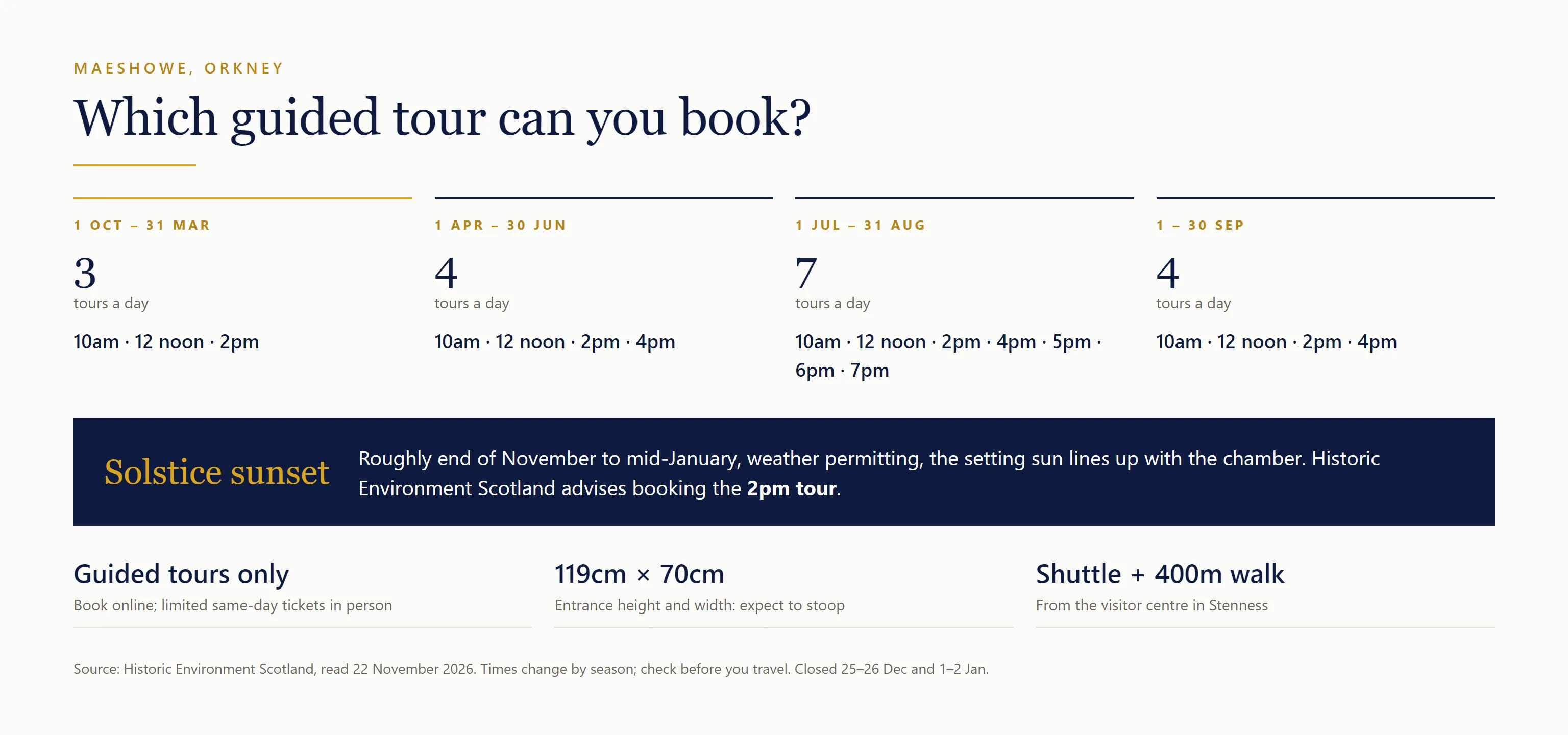
These are HES's published times and prices, read on 22 November 2026. They change from season to season, so check the HES Maeshowe page before you travel.
| Season | Open | Tour times |
|---|---|---|
| 1 October to 31 March | Daily, 10am to 4pm | 10am, 12 noon, 2pm |
| 1 April to 30 June | 9.30am to 5.30pm (5pm Fri and Sat) | 10am, 12 noon, 2pm, 4pm |
| 1 July to 31 August | 9.30am to 8pm Mon to Thu; 5.30pm Fri to Sun | 10am, 12 noon, 2pm, 4pm, 5pm, 6pm, 7pm |
| 1 to 30 September | Daily, 9.30am to 5pm | 10am, 12 noon, 2pm, 4pm |
Maeshowe is closed on 25 and 26 December and on 1 and 2 January.
| Ticket | Online | In person |
|---|---|---|
| Adult (16 to 64) | £10 | £11 |
| Concession (65 and over) | £8 | £9 |
| Child (7 to 15) | £5 | £5.50 |
| Historic Scotland member | Free | Free |
- Passes and discounts. HES's Explorer Pass gives free entry to its ticketed sites for 14 consecutive days, and Young Scot and National Entitlement Card holders can visit for £1.
- Carers. Visitors with disabilities pay standard prices, and up to two accompanying carers go free per booking.
- Access. There is no wheelchair access across the ditch or along the passage. HES notes the path to the tomb is gravel, stone and uneven grass, ending in a grassy slope.
- Dogs. Assistance dogs only.
Getting to Maeshowe and making a day of it
The Maeshowe Visitor Centre is on Ireland Road in Stenness (postcode KW16 3LB), with parking that includes accessible bays. HES says larger coaches cannot park there, and warns that the tomb is reached across a busy main road from the coach stop. HES also lists the site as reachable by public transport, and our guide to getting from Kirkwall to Maeshowe and the other Neolithic sites without a car covers the bus option.
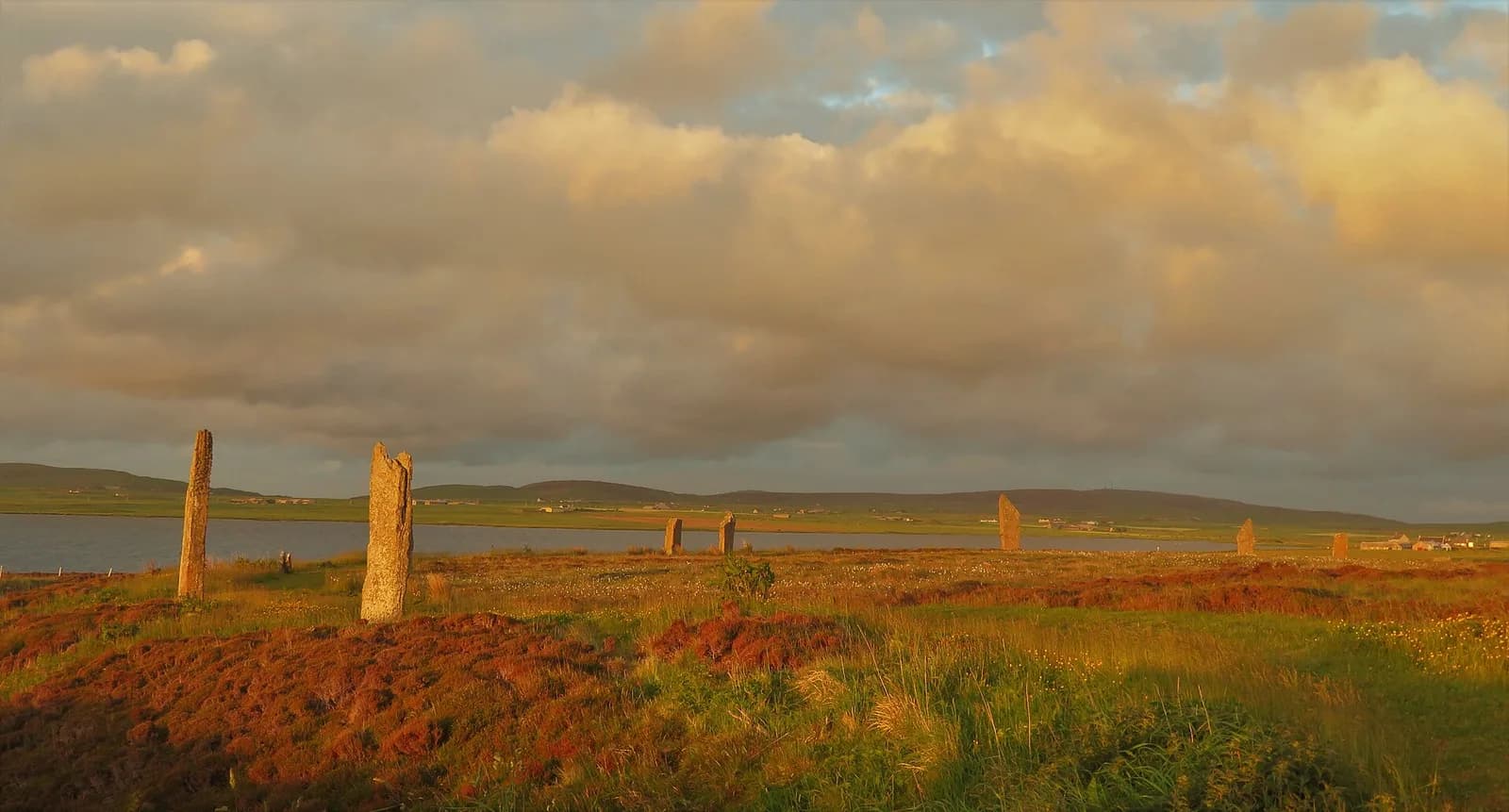
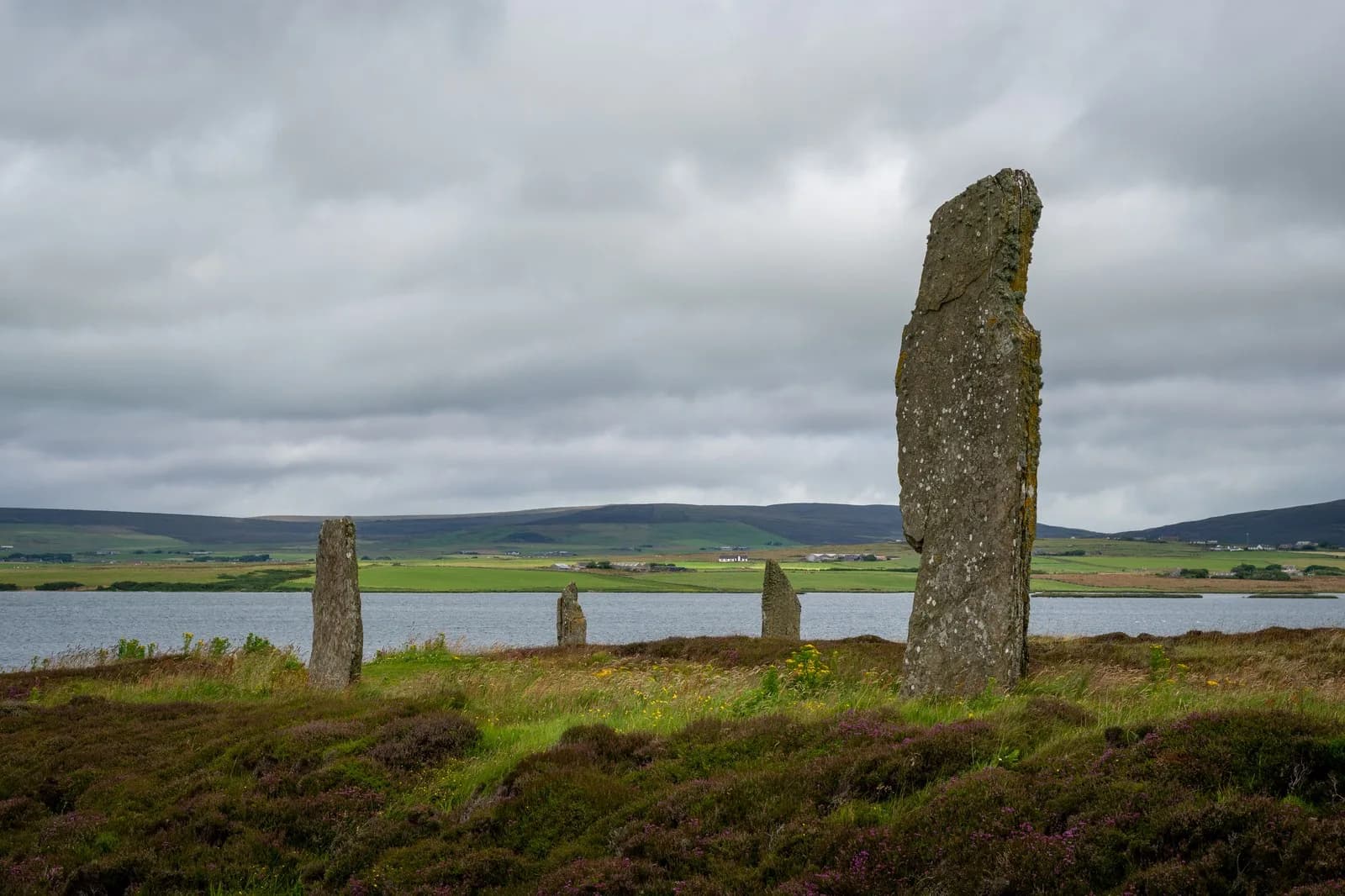
Maeshowe sits in the middle of the World Heritage landscape. HES puts the Stones of Stenness about a mile away and the Ring of Brodgar about two. Both are free to visit and open all year, as our guide to the Ring of Brodgar and Stones of Stenness explains. Add Skara Brae, the other ticketed site, using our Skara Brae tickets and opening hours guide, and you have a full Neolithic day. For the bigger picture of how the four monuments fit together, see our Heart of Neolithic Orkney guide.
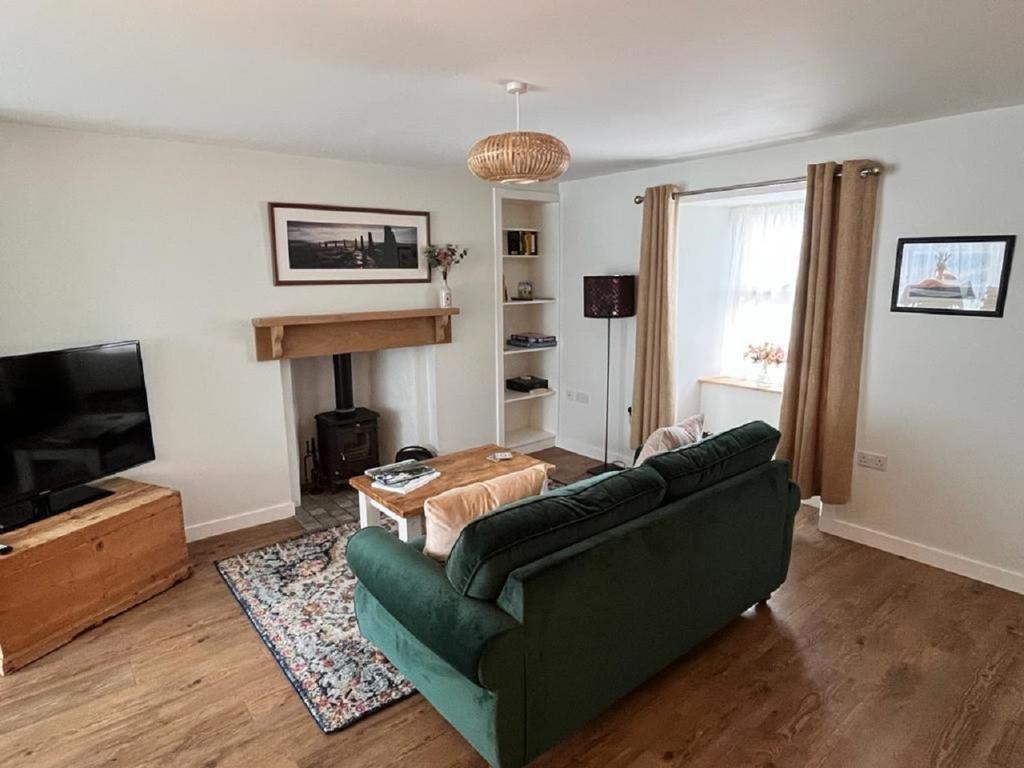
If you want to be close enough for the 2pm solstice tour without a long drive in the winter dark, staying in Stenness itself makes it easy. Nether Onston Cottage is a holiday home in Stenness, in the heart of this landscape.
Maeshowe: common questions
How do I visit Maeshowe?
Book a guided tour with Historic Environment Scotland, ideally online. Tours start at the Maeshowe Visitor Centre in Stenness, where a shuttle bus takes you to the site, followed by a 400m walk to the tomb.
Is Maeshowe worth visiting?
Yes, if you can manage a low, stooping passage. HES calls it the finest Neolithic building to survive in north-west Europe, and its Norse runes are the largest such collection outside Scandinavia.
Is Maeshowe older than the pyramids?
It is probably older than the Great Pyramid of Giza. HES's tentative radiocarbon date for Maeshowe is around 2700 BC, and the Great Pyramid was completed in the early 25th century BCE.
What does Maeshowe mean?
"Howe" comes from the Old Norse for "hill", which suits a tomb that looks like a grassy mound from outside. The exact origin of the full name is debated, and the Ordnance Survey spells it Maeshowe rather than Maes Howe.
Sources and further reading
- Maeshowe: plan your visit — Historic Environment Scotland. Booking, tour times, opening hours, prices, the entrance dimensions, access, parking and the solstice tour advice.
- Maeshowe: history and stories — Historic Environment Scotland. The passage slabs, the solstice light, the Norse runes, Norwegian rule and the Explore Maeshowe app.
- Maeshowe Chambered Cairn — Historic Environment Scotland. Ticket types, the Explorer Pass and Young Scot pricing.
- Maeshowe Statement of Significance — Historic Environment Scotland (2025 update). Dating, dimensions, the runes and the saga, Farrer's 1861 excavation, the roof, the skull fragment, the Barnhouse Stone and the name.
- Heart of Neolithic Orkney — UNESCO World Heritage Centre. Inscription in 1999 and the four main monuments.
- Great Pyramid of Giza — Encyclopaedia Britannica. Completion date of the Great Pyramid.
Facts in this guide were checked against these sources on 22 November 2026. Tour times and prices can change, so check Historic Environment Scotland before you travel.
Header photo: Maeshowe with the hills of Hoy beyond, by Bill Boaden / Geograph, CC BY-SA 2.0.